
OLD NOTEBOOKS: ‘It was as if lightning coursed within my chest. The impact lasted for a while, and for the next few weeks whenever I saw people, they seemed like a magician’s illusions in that they appeared to inherently exist but I knew that they actually did not.’ [‘How to Practice: The Way to a Meaningful Life’].
The Dalai Lama, in the sixties, reflecting on the Rope Seen As Snake metaphor, phenomena being dependent on conceptuality and his discovery that the “I” exists conceptually, dependent on mind and body; not an entity in itself.
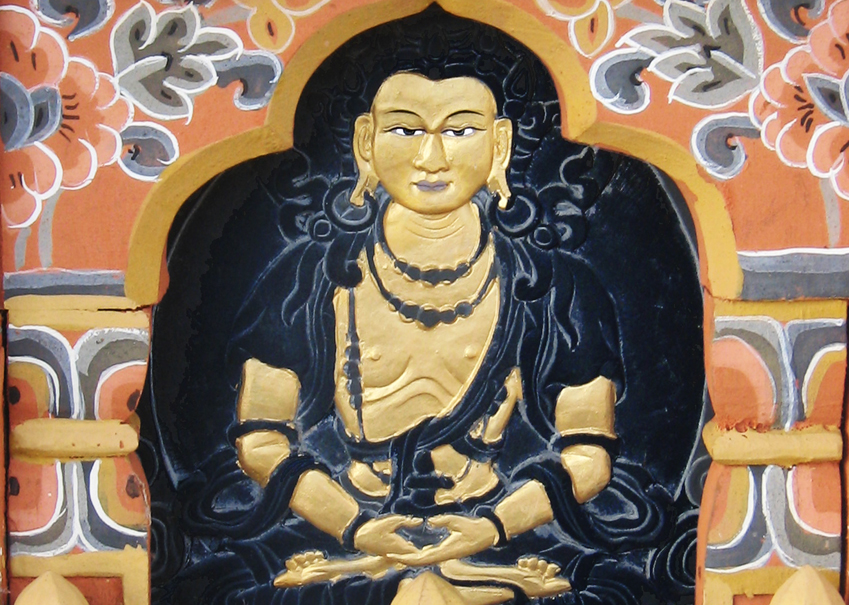
The Buddha identified no-self, [anatta], nobody at home, no self anywhere, anywhen, nowhere, now-here. The world is a construct, look, see, glimpse the nothingness situated at the centre of everything [śūnyatā]. Most people flinch at the thought, because in the West we are taught that the self is real. We are to hold the Self in high regard, a mutual propping-up of the illusion. Everywhere we look, our self-concept looks back at us like a mirror reflection. Our whole environment supports the fictional self, made to measure, tailored to fit, we live in a bespoke world. The Self we know as the body and mind is thought to be not something we ‘are’ so much as something we ‘possess’, I am ‘me’ and this is ‘mine – the opposite of what we are talking about here.
About the Rope Seen As Snake metaphor, there was a time, some years ago, I was alone in the Nontaburi house and I wrote a Post about the illusion: “The house is surrounded by trees, leaves filter a green light all around. There are birds, squirrels, lizards all kinds of critters. I see something move out on the path… is it a bird, dropped down from a branch to peck at something? There, it moves again – just a hop and it’s a few feet further on. I sit very still, don’t want to frighten it away. I see it now, sitting still, not moving.
After a long time waiting for it to change position, I decide to slowly get up and see what happens when I do that. But it’s still not moving… maybe it’s injured. I come closer… the bird is not a bird, it’s a large brown leaf curled into a shape, and blown by the wind across the surface of the path.
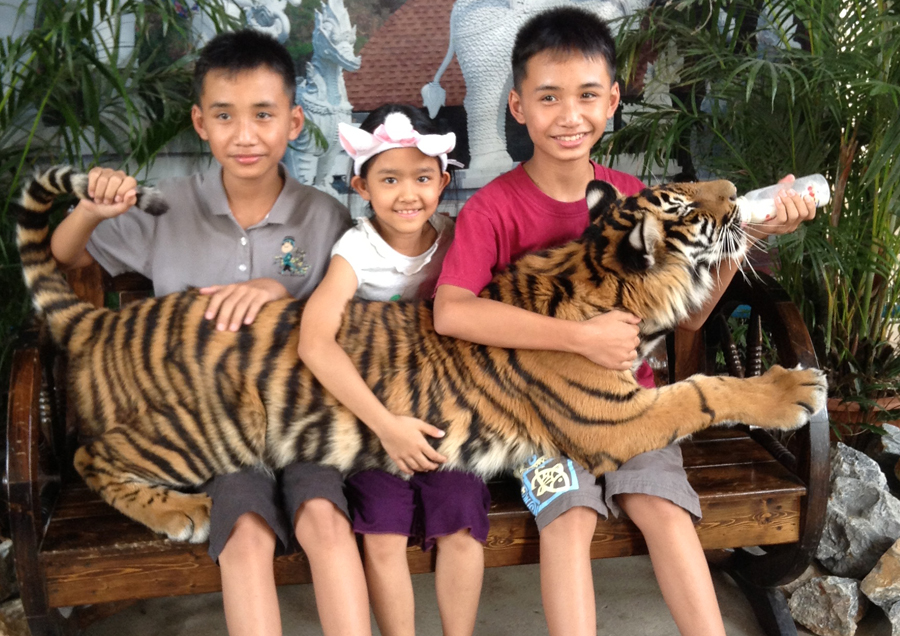
Step back and look at it again. It looks exactly like a bird, and just then a short gust of wind blows the leaf. The animation of it is absolutely convincing, but I see it now as a leaf, not a bird. How disconcerting, believing that something is there, then having to accept that it’s not.” In the same way, the mind is going around as if it were a bird, but it’s only a leaf in the wind. And we have the idea then that the “I” is a concept, not real. Compassion for those caught in the predicament of believing in the self, I was similarly held, looking for Truth in a battleground of untruths.The assumption is that if ‘I’ am my body, I am my feelings, I am my consciousness – then everything else is out ‘there, and if I’m in ‘here’, disconnected from everything out ‘there’. I’m isolated, alone, anxious – projecting a perceived self that I know, somehow, is not real. I need to resolve this issue of fearful uncertainty so I have a very busy life, work 5 days a week and spend time with friends at weekends. Together we go out and around looking everywhere for indications that align with that ‘Self’ held in high regard, visiting public parks and places of interest, taking ‘selfies’ with a nice background. ’Is everybody in the picture?’ Smile please… click! Everyone comes to see the image on the screen; let’s take another one… click! We all seem to be happy doing this, but there’s still that dissatisfied feeling, seeking a way to have whatever it takes to confirm the identity of that Self (held in high regard). This introspective state of mind allows another kind of ‘self’ to enter the picture, seeing the ‘self’ that is seeking. The seeking ‘self’ turns its attention to the seeing ‘self’ and is, at once, seen.
The self we self-create exists in a distorted reality, each of us as selves at the centre of our own universe. We act in our own self-interest, or as groups of like-minded ‘selves.’ It results in a conflict of interest between those whose lives and interests are, in fact, interdependent. Those of us who have let go of our selfish-selves, are part of a larger network of others, whose pains and pleasures and interests we share.
In a wider context there are scholars and spiritual leaders who say the awakened state is the state of no self. No self is the aspect that pervades all of reality. We are in a totality of consciousness, you can say we are part of God, therefore there is no individual self. When our soul merges with God there is no self – one drop in the ocean.
I am inspired by these speakers and professors and shall continue to listen to their words. In the meantime I’ll go on with the Buddha’s teaching and the ’nuts-and-bolts’ of how the process works, develops, evolves.
‘The deconstruction and reconstruction of the sense of self is necessary to become aware of the most deceptive of meta-narratives: the one we normally do not perceive because it is our ordinary, everyday reality – the ‘real world’ we take for granted but in fact is constructed.’ [David Loy: ’The Great Awakening’(4)
This post contains sections from two earlier posts:
Rope Seen As Snake
Thoughts Like Clouds.
Also excerpts from a talk by Ishwar Ji Puri
And a paper by Jay L Garfield “Why No Self”

 dhamma footsteps
You must be logged in to post a comment.