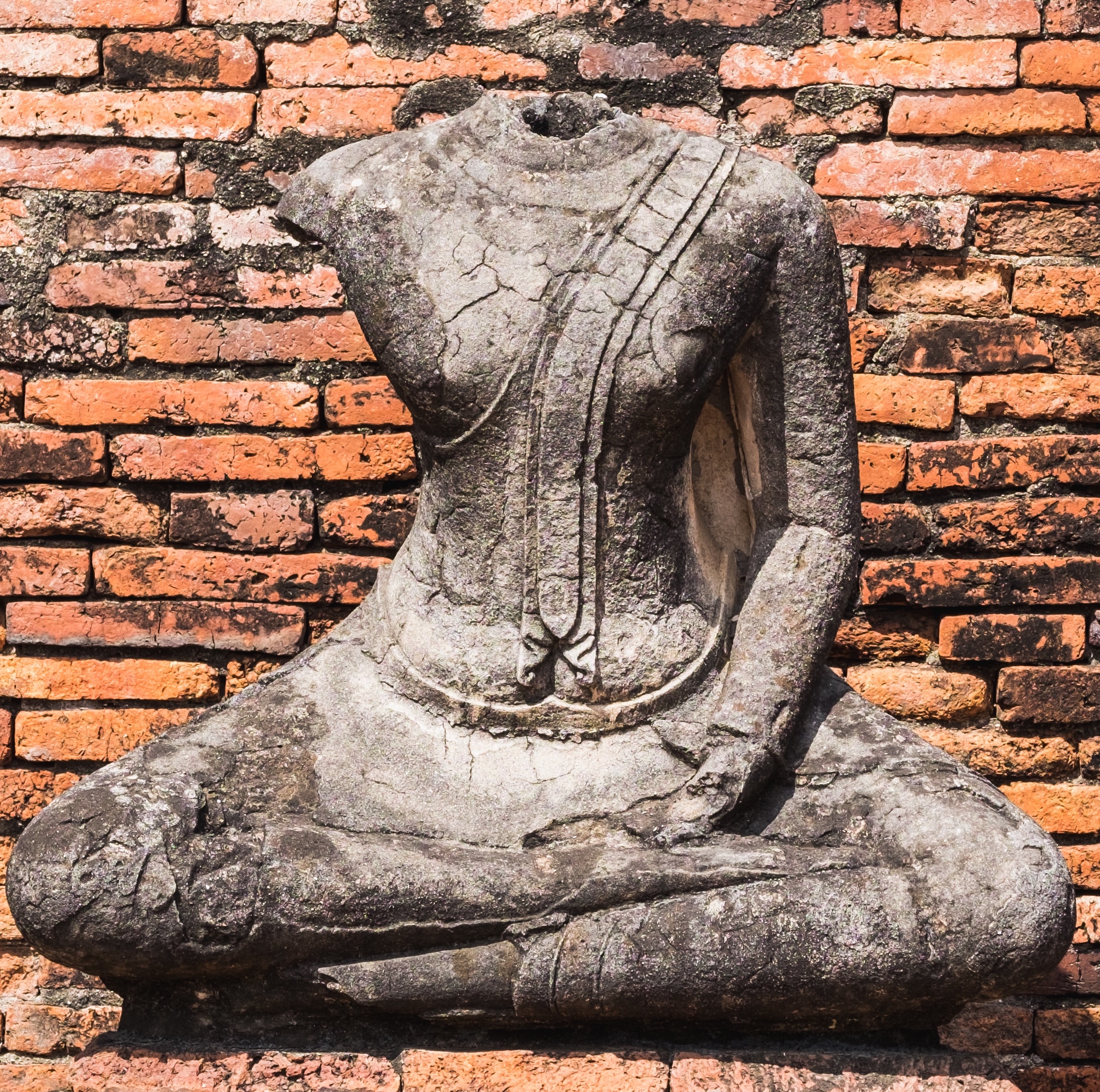
anattā, non-self

The Anattalakkhaṇa Sutta ‘is the second discourse delivered by the Buddha. The first is the Four Noble Truths. In Buddhism, the term anattā refers to the doctrine of “non-self” – that no unchanging, permanent self or essence can be found in any phenomenon. While often interpreted as a teaching denying the existence of a self, anattā is more accurately described as a strategy to attain non-attachment by recognizing everything as impermanent, while staying silent on the ultimate existence of an unchanging essence. According to Peter Harvey, while the Suttas criticize notions of an eternal, unchanging Self as baseless, they see an enlightened being as one whose empirical self is highly developed. This is paradoxical, in that “the Self-like nibbana state” is a mature self that knows “everything as Selfless”. An Arahat, states Harvey, has a fully enlightened state of empirical self, one that lacks the “sense of both ‘I am’ and ‘this I am'”, which are illusions that the Arahat has transcended. [Wikipedia]

There are many presentations of the Anattalakkhaṇa Sutta, the following is one of my favorites. It was published only a few days ago by Tashi Nyima in The Great Middle Way and is the inspiration for this post. Click on the link at the end of this text to find the original.

This is not me’

Any form, feeling, perception, volition, or consciousness whatsoever that is past, future, or present; internal or external; blatant or subtle; common or sublime; far or near, is to be seen as it actually is with right discernment: ‘This is not me. This is not mine. This is not my self.’

Seeing thus, the well-instructed disciples of the Noble Ones grow disenchanted with form, disenchanted with feeling, disenchanted with perception, disenchanted with fabrications, disenchanted with consciousness. Disenchanted, they become dispassionate. Through dispassion, they are fully released. With full release, there is the knowledge, ‘Fully released.’ They discern that ‘Birth is ended, the holy life fulfilled, the task done. There is nothing further for this world.’”

𑁋Buddha Shakyamuni, Anattalakkhana Sutta

[The following is a reblog of excepts from a post first published here ten years ago, titled Redefining the Question] April 12, 2013, 04:00 New Delhi: There’s no doctrine of God-worship in Buddhism, in Christianity, there is only belief – ‘I believe (I believe) in God. There’s no real teaching on how to understand life, the world. In Buddhism, there is the Anattā Teaching; the separate ‘self’ is an illusion, ‘a cluster of memories, thoughts, habits and conditioning’, maintained due to this basic human tendency to hold on to stuff. It’s not about self, it’s not about our origin, our Creator or what we are made of, it’s about how the whole thing works. It’s a 2600-year-old teaching about learning how to see what our hang-ups are, and easing the burden of emotionalism and wrong-view.

It’s not about living for our(selves): seeking, acquiring and hoarding, it’s about generosity, relinquishment and giving it all away. It’s about mindfulness and the way things exist, rather than what exists. It’s about realities that fit into our world today, exactly as it was in ancient times. The Buddha anticipated modern physics: all matter is energy; beings exist as “bundles of energies” (five khandhas). It’s not about ‘self’, it’s about non-self, anattā, it’s about consciousness, viññāna, and the perennial question: what is consciousness? Without a basic understanding of what the Buddhist non-self is, it’s impossible to contemplate the existential ‘is-ness’ of consciousness.

I go to lie down for an hour or so; still not yet dawn. Watch the in-breath/ out-breath, conscious of the sound of the ceiling fan above me in the shadows, constant spinning cycle that somehow says something about the weight of the rotary blades. It looks like how it sounds: a spinning propeller of an old-fashioned aircraft – consciousness of the visual image. Always there’s consciousness of something: consciousness of the smell of coffee and a breakfast crust of toast in the kitchen, the taste of it; consciousness of the soft bedding I’m lying in. There’s consciousness of thought and then there’s consciousness of no-thought – my perception of it… consciousness without an object, the still mind, unsupported consciousness – unconditioned? The non-dual perspective is that it’s like this anyway….

“The “empirical self” is the citta (mind/heart, mindset, emotional nature), and the development of self in the Suttas is the development of this citta.” [Peter Harvey, ‘The Selfless Mind: Personality, Consciousness and Nirvana in Early Buddhism.’]  Consciousness without an object in the sense that it is different from the basic functions of interacting with the world through sensory organs: eye, ear, nose, skin, mouth and mind; different from the state of being conscious of what’s going on in the body/mind organism, phassa, as a result of responses to the world outside. Not consciousness of… just consciousness itself – what is this? Is this the kind of consciousness that’s needed to find the answer to the question or to redefine the question, maybe, or whatever… is it the true self?

‘…this true self is also the fundamental source of all attachment to being and becoming… attachment to the allure of this primordial radiance of mind that causes living beings to wander indefinitely through the world of becoming and ceasing.’ [Luangta Maha Boowa]

Link to Tashi Nyima’s original post in The Great Middle Way:https://greatmiddleway.wordpress.com/2023/08/28/this-is-not-me-2/

the search for happiness

Looking back over the Japan trip (see previous post), I remember on the night we left Bangkok, I was finishing off packing for the six-hour journey and glanced at the bookshelf to see if there was a small book, I could read on the flight. Picked out a transcribed talk by Thai monk, Phra Payutto, a bilingual publication translated in English and titled: ‘Perfect Happiness.’  I thought, “Is there such a thing?” and was going to put it back on the shelf, but for some reason, slipped it into a zipped pocket on my cabin baggage and found that it fitted that space exactly. It’s as if the small book insisted on being there – and that’s how this Teaching I was talking about last week came to be with me again today.
At the airport I read bits and pieces of the English sections between the pages of Thai script… unable to get the sense of it right, except that, yes it was about happiness, but also suffering. Decided then, I needed to focus on this and get a clearer meaning of the word: suffering. So, I went to google and keyed in: “What Is suffering in Buddhism?” Then clicked on an item at the top of the list:
“Dukkha refers to the psychological experience—sometimes conscious, sometimes not conscious—of the profound fact that everything is impermanent, ungraspable, and not really knowable. On some level, we all understand this, yet we resist it. All the things we have, we know we don’t really have. All the things we see, we’re not entirely seeing. This is the nature of things, yet we think the opposite. We think that we can know and possess our lives, our loves, our identities, and even our possessions. We can’t. The gap between the reality and the basic human approach to life is dukkha, an experience of basic anxiety or frustration.” [from Suffering, Open the Real Path, by Norman Fischer]

There were other definitions but this was all pretty much the standard Buddhism terms I’m familiar with, and one sentence caught my eye: “On some level, we all understand this, yet we resist it.” But first I need to know about suffering in the Christian context. So, I keyed in: “What Is suffering in Christianity?” Then clicked on the first item on the list:
“The first truth about suffering is the recognition that it is alien to God’s plan of life. That might sound incredible, but to the Christian worldview, it is vital. Suffering is a product of the fall, a consequence of human sin against God (Romans 5:12; 1 Corinthians 15:21). Suffering is in our lives because we are living in a broken world. Some suffering is due to our sinful and wrong choices, but some is due simply to the world being fallen. This aspect of suffering should drive us to long for a better world, a world redeemed and freed from sin, a world that God will one day come again to establish (Romans 8:19-23). [Excerpt from Grand Canyon University:]
Suddenly I was a boy again, thinking about it and left with the distinct feeling that something bad happened in the past and that’s what is haunting us here today. That was the first time I had an idea of what the guilt complex must be like. Looking at it now, the phrase: “we all understand this, yet we resist it” is saying that, in Christianity, everything is in the hands of God means we don’t have to think about it anymore. In Buddhism however, there is no God so finding happiness and the end to suffering is something we do ourselves – according to the Buddha’s Teaching. The following is a short piece comprised of excerpts from Perfect Happiness the Print Copy, page 5, (the first criteria for relating to suffering and happiness) – ending on page 10.
“The Buddha urged us to understand suffering (dukkha) completely in order to have an insight into how we can be free of it. Suffering is there, only to be understood. The approach to understanding suffering can be divided into four criteria. The first is to refrain from creating extra, unnecessary suffering for yourself. This is necessary because we live in the world of nature and our lives proceed in line with conditioned phenomena. Conditioned things are impermanent, (aniccan) subject to stress (dukkha), and nonself (anatta), according to their nature. If we conduct ourselves unwisely, the dukkha of nature spills over as suffering in our hearts. We intensify and aggravate suffering, by going off in search of unnecessary suffering, and stacking it up in our hearts.


The dukkha inherent in nature is what it is. We have no conflict with this. We do not add to it, or pile on unnecessary suffering. By refraining in this way, we reach a level of ease and wellbeing; everything in the world exists according to its own natural dynamic. We can see how people relate to these things unskilfully, harbouring misguided attitudes and views, and unwittingly give rise to suffering. With clear discernment, we see how these worldly phenomena exist and proceed.
This rule applies also to the vicissitudes of life—turns of good fortune and misfortune, ‘worldly conditions.’ The sources of all our joys and sorrows, highs and lows. When we encounter these worldly winds, if we do not come to terms with them prudently, our happiness turns into sorrow, and any existing distress is exacerbated. Conversely, if we maintain clear discernment and skilful behaviour, our unhappiness turns into joy, and any existing delight is heightened. These worldly conditions befall human beings in line with the law of impermanence. There are four pairs of such conditions, namely:
gain & loss, fame & disrepute, praise & blame, pleasure & pain.
The Buddha said that these things are inherent in nature. By living in the world, they are inescapable. We all must face these conditions. If, when encountering these things, we maintain an incorrect bearing and behaviour, we inflict suffering on ourselves. When we obtain something good—some material reward—it is normal to feel delighted. Yet often, when people lose a possession, they grieve, because the object has vanished. If one responds to this loss unskilfully, by feeling gloomy and depressed, engaging in self-punishment, railing against life, etc., one only aggravates the situation and increases one’s misery.
So too with praise and blame. Everyone likes praise. Hearing words of praise, we feel happy and uplifted. But, when receiving blame, many people feel distress. What is the cause of this distress? It occurs because people allow these words of criticism entry into their hearts; having gained access, these words can cause torment and agitation…. but we can come to terms with these things and understand that this is the way of the world. The Buddha declared that by living in the world there is no escape from these worldly conditions. We can say, ‘Yes! I have met with these worldly winds. This is an aspect of truth. I will learn from these experiences!’ As soon as we can view these encounters as learning experiences, we have begun to adopt an appropriate attitude. ‘Ah, so things are this way. I’m beginning to see how things work in the world.’ We thus gain a firm foothold and realize contentment. This is the way of not accumulating unnecessary suffering.
Generally speaking, when people are buffeted by adverse worldly winds, they make a problem out of the situation, because they feel personally affected. But if they can alter their perspective, these encounters simply become learning experiences. Besides coming to terms with these situations, means we can also see them as an opportunity for spiritual training. Here, our entire attitudes and perspectives radically shift. We begin to see even those unpleasant and seemingly negative experiences as a test. With this shift in perspective, we gain from every experience. Both good and bad events are seen as a challenge of our character, a test of our skill and intelligence. As a consequence of this training and development, we become constantly stronger. In a sense everything becomes positive.
If we experience good fortune or encounter advantageous worldly conditions, we feel happy and at ease. We can then use that good fortune, for example. material gain, prestige, etc., to radiate this happiness outwards. We use it to perform good deeds and to assist others. In this way our happiness extends outwards and reaches a large number of people.
In the same way, if we experience misfortune or encounter adverse worldly conditions, we consider these situations as an opportunity for development. They become valuable life lessons—a means to hone mindfulness, problem solving, wise discernment, etc., leading to self-improvement. This is how disciples of the Buddha maintain the principle of reflecting on things skilfully. If we possess skilful refection, everything we encounter—both good and bad—is seen as a valuable and beneficial experience. Observing this principle is a fundamental of spiritual practice.

 (Continued next week.)

More information on Phra Payutto;
https://en.wikipedia.org/wiki/P._A._Payutto

Source for the original of this text: https://www.watnyanaves.net/uploads/File/books/pdf/661-Perfect-Happiness-Bilingual.pdf

Source for the header mage of the Buddha and Jesus:
https://owlcation.com/humanities/The-Many-Similarities-Between-Jesus-and-Buddha

Other images are of Shitennō-ji Temple in Osaka

furtherance

[Continued from last week] We got back to Bangkok from Osaka, Japan late Saturday night, 15 July. Even though, 2500 miles (4000 kms) away, the mind, still in Japan, shifts to the events that led up to M in Osaka finding the apartment next to the Buddhist temple, where she is now.
One curious coincidence I forgot to mention in last week’s post was the numbers of the street/apartment address contain her birthday date: I Chome (district) – 3 – 19: M’s birthday is March 19. She noticed it immediately of course, when she made her way to the address for the first time, not thinking too much if this was the place she would choose to stay, yes-or-no…  but if you like the karma of finding a location next to a Buddhist temple, as well as the birthday date/ number coincidence, and things just feel right, the conclusion is: of course, yes! So, she signed the contract and moved in. Since then we have walked around the grounds so many times of our quiet neighbour, resting here for the last 1,430 years,  we feel there’s a connection with this place, the oldest Buddhist temple in Japan, (Shitennō-ji;  四天王寺 (Temple of the Four Heavenly Kings).

Such a great expanse of historical time between then and now, and today the temple grounds are surrounded by the urban structures on all sides. So how relevant are the Buddha’s Teaching in Japan today? I see it everywhere, community orientated, living close together; similarities in cultural behaviour, the same characteristics of a Buddhist society as you find in Thailand. The Dharma lasts for ever – even if it’s wiped out by war or disaster… it comes alive again with the right kind of cultivation and the journey goes on. Circumstances cause things to change, evolve, according to karmic influences of this-and-that moving on in furtherance of the here-and-now that was the there-and-then,and the human condition as such.
“Dedicate whatever happiness you enjoy to all sentient beings, wishing that whatever you have gained from your own virtuous actions will help nurture and serve everyone. All that you do and experience, all your happiness and suffering, should lead to the development of bodhicitta.” [Sechen Rabijam Rinpoche from ‘Equanimity,’ Great Middle Way]

It was this idea of a birthday that reminded me of the Teaching that consciousness is birthed into every moment. There’s a talk by Thai monk, Phra Payutto, titled ‘Perfect Happiness’ that expresses this concept of generating happiness. The talk was given at the 84th birthday event of a local person, then transcribed in Thai and translated in English. I have selected excerpts here that convey the simplicity and profound beauty of the Buddha’s teaching which only Phra Payutto can communicate.

“Everyone is searching for happiness; however, some people may not realize that happiness is something we can generate on the spot, within our own hearts. Whenever we are endowed with such qualities as faith, love, a sense of friendship, joy, and clarity of mind, happiness arises spontaneously, in an instant.Today we are celebrating a birthday. If we think of a birthday as marking the day when our lives began—when we came into the world— then we are thinking of the past. We cannot go back in time and relive any past events, but we can in present time. The Buddha’s teachings, show us we are born in every moment, both physiologically and mentally. In terms of the mind, we can say there are both positive and negative births. Unwholesome states should be prevented from arising, understandably, and we strive to give birth to wholesome mind states: delight, joy, ease, inner clarity, faith, mindfulness, love, concentration, diligence, wisdom, etc. With the arising of such wholesomeness, our birthday celebrations are genuinely warranted.

Human beings naturally desire happiness and so, the teaching: ‘birth is suffering.’  may be unhelpful. But the Buddha was referring to an aspect of nature, to the reality of conditioned phenomena; what this means is that birth is subject to laws of nature: anicca (impermanence), dukkha (suffering) and anatta, (nonself). All things arise, are sustained, and then pass away. Everything is subject to change, unable to maintain its original state of existence. Everything exists according to causes and conditions. These are all attributes of nature, following a natural order.The dukkha inherent in nature, however, is not identical to the dukkha (‘suffering’) in the hearts of human beings. Dukkha arises, or does not arise, based on whether we relate to the dukkha inherent in nature wisely or unwisely. In the context mentioned above, the Buddha was simply describing a phenomenon inherent in nature, a truth of nature. Conditioned phenomena invariably conform to this teaching on the Three Characteristics, anicca, dukkha and anatta, but if we conduct ourselves unwisely, the dukkha inherent in nature turns into suffering in our hearts. Suffering arises because people relate to nature unwisely. If we leave the dukkha inherent in nature to its own devices—we leave it be, as it naturally is and do not allow it to create suffering in our hearts. He urged us to relate to suffering skilfully, and we will be happy. The way to become free of suffering and realize happiness is to understand and gain insight into suffering. By living our lives discerningly, we gradually experience more genuine and reliable forms of happiness and our suffering diminishes, to the extent of it being dispelled all together: all that remains is happiness.There is thus a special technique to be applied vis-à-vis suffering. Here are four practical guidelines on how to relate to suffering and happiness:

1. Refrain from creating extra, unnecessary suffering for oneself.

2. Do not forsake righteous forms of happiness.

3. Do not indulge in any sort of happiness, even righteous happiness.

4. Strive in order to realize higher forms of happiness.

If we are able to accord with these principles, it can be said that we are practising correctly.

[More next week]

infinite consciousness and the finite mind

Excerpts from a talk by Rupert Spira, titled “What is Reality?”

As a person, you have emerged from the universe, your body has been born from the earth so whatever you are as a person essentially must be the same as the universe from which you emerged. For the same reason… what a wave essentially is must be the same as what the ocean essentially is, because it is an emergence of that ocean. The reality of yourself and the reality of the world must be the same, the question then is what is that reality?

That reality is that which truly is. An illusion is not something that does not exist, it is something that does exist, but is not what it appears to be. Unlike, or instance, a square circle – not only does a square circle not exist, it doesn’t even appear as an illusion. What, then is an illusion? A landscape in a movie is an illusion, it does exist as something that is obviously there, but it is obviously not a real landscape. All illusions have a realty to them, and there must be something about the landscape in the movie that is real.

ln order to find out what is real we need to somehow penetrate through the illusion and touch its reality. We go up to the landscape in the movie, touch its reality, and we find the screen. We do exactly the same with this experience we are having, sitting together in this room. It is undoubtedly real, all experience is real, there is no such thing as an unreal experience. So, what is real about our current experience of the world? It could be an illusion, which doesn’t mean to say it’s not real, and doesn’t mean to say it doesn’t exist. It just means it may not be what it appears to be.

The way the world appears to be is directly correlated with our sense perceptions, our minds have the capacity of seeing, hearing, touching, tasting, and smelling and reality appears to us in the form of sights, sounds, tastes, textures and smells. There is a direct correlation between the perceiving apparatus and the world as it appears to be in accordance with the limitations of the apparatus through which it is perceived. So, do these sights, sounds, etc., we see out there, do they have their own standalone reality or do our minds confer upon them their appearance? For instance, what would the thing in itself be if we were to remove everything from it that our minds project on to it; the sights, sounds, tastes, textures, smells and concepts, perceiving and thinking, what would be left of reality? There would be no forms because these forms are what we see, hear, touch, taste, and smell. What would remain would be undoubtedly present, without any form it would be being itself – some would say, God’s being. When you go directly to that being in yourself you find the awareness that shines in each of us, the knowledge that ‘I am.’

The experience that I am is not mediated through thought or perception; I know that I am, I am not imagining it. So, is the ‘I’ that knows that I am, the same ‘I’ that knows I am, or is your being known by something other than itself? Are there two ‘I’s in you, one that is and the other that knows you are? It’s the same ‘I’, there is only one ‘I’ in you. Your being knows itself; it is self-aware. Here you could say that the Ultimate Reality of the universe is aware being, which is consciousness, and what we perceive as the world is the activity of reality, called Reality Consciousness, that moves or vibrates within itself, and that movement or vibration of consciousness, appears when viewed through our sense faculties as the physical world. When you fall asleep at night the activity of your own mind appears as a physical world from the perspective of a separate subject of experience in that world. So, what appears to us as a physical world is the activity of a universal mind or consciousness, whose nature is consciousness, not matter. It only appears as physical matter when perceived through the sense perceptions of a separate subject of experience within that world. There’s a beautiful line from Wordsworth’s “Lines Composed a Few Miles above Tintern Abbey,” dated July 13, 1798

“ [from line 106]…all that we behold from this green earth; of all the mighty world of eye, and ear,—both what they half create, and what perceive; well pleased to recognise in nature and the language of the sense, the anchor of my purest thoughts…”

This stunning realisation that, of this green earth, what we perceive is half created by us, half perceived by us. What he’s saying is that the reality of the world precedes the finite mind and is independent of it., and the mind creates its appearance but perceives its reality.  Our sense faculties, seeing, hearing, touching, tasting, and smelling create the way the word appears, the way reality appears to us. We perceive the reality of the world, we don’t create it, it’s already there.

To put it into more contemporary language, the world as we experience it is very close to quantum physics and I don’t want to go too far in this direction because I’m not a scientist. The world as we perceive it results from an interaction of infinite consciousness and a finite mind – a finite mind being a localization of infinite consciousness.

When we conceptualize independently existing selves and things, there is a separating-out… but it’s not what it seems. There’s something about this in Ian McGilchrist’s book “The Matter with Things.” He says: “Relationship precedes relata.” By this, he means relationship precedes things. What it means is that normally we think there are things – things come first, and then there are relationships between things. He’s suggesting it’s the other way round, there is relationship between the whole infinite consciousness and the finite mind and it is the interaction between these two that creates the appearance of things. So, things come about as a result of this interaction, rather than the relationship being created by the things. But don’t think Reality is just a dead, inert being or consciousness, it moves, it is moved but the whole cannot see itself … let me try to demonstrate first why the whole cannot see itself.

Look at this glass I’m holding, you see this glass from a single point of view and therefore see it as a single glass. If you were to take a snapshot of your view of the glass, then change your seat and go to the other side of the room, take another snapshot of the glass and superimpose the two images, like transparencies, one on top of the other, you’d now have two glasses looking roughly the same but it would begin to look blurred. Now, say you did that four times, eight times, 16 times, 32 times and you superimposed all the images on top of each other, it would begin to look like a Cubist painting, the integrity of the glass would begin to disintegrate, you’d see all different angles of the glass. Now keep on doing that, 64 times, 128 times, 200, 400, and so on from different points of view in space. The image would get darker and darker until it would be utter darkness and that’s why the whole cannot perceive reality, it cannot perceive the world directly – there’s no form.

From the point of view of the whole, consciousness has no view of the world directly, it cannot perceive itself directly, it just knows its own being but that being doesn’t appear in any form. In order for its movement to be perceived or known, it must be perceived or known through a localised perspective. That’s what each of our minds are; a localized point of view within consciousness, from which it is able to perceive its own movement, its own activity as an apparently physical world. The activity of consciousness is there prior to the finite mind but the finite mind lends the world its appearance. Hence the world that we experience is an interaction between these two segments of reality. It’s the same realty; infinite consciousness and the finite mind but they have to seem to separate in order to bring something into existence.

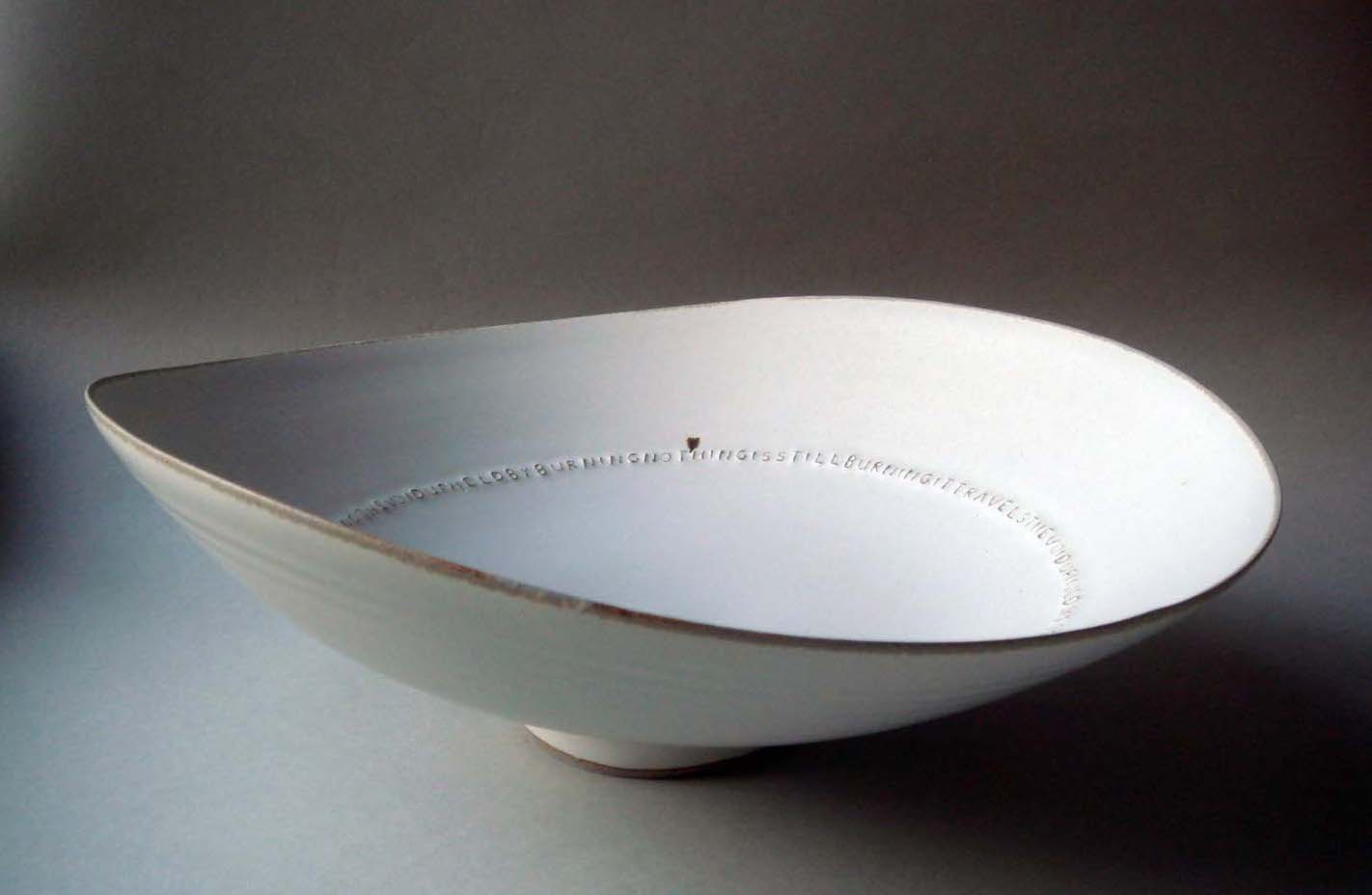
Image: Rupert Spira’s Open Bowl, 2007, a stoneware piece with embossed text under white titanium glaze. Acquired by Friends of the V&A in 2013.

Link to the Rupert Spira talk:https://www.youtube.com/watch?v=LyyojKcGDNY&t=1417s

About Rupert Spira, Wikipedia:https://en.wikipedia.org/wiki/Rupert_Spira

death and life in buddhism

Excerpts from: Care of the Dying – Buddhism HSE: Samye Ling, “Buddhism and Death” by Ken Holmes: “Kusala and Akusala” by Buddhistdoor Global BDG and: Abhidhamma in daily life, Chapter 10, “The First Citta in Life” by Nina Van Gorkom.

Buddhist teaching views life and death as a continuum, believing that consciousness (the spirit) continues after death and may be reborn. Death can be an opportunity for liberation from the cycle of life, death and rebirth.

Since Buddhism’s earliest days, Buddhist monks have gone to funeral grounds to meditate and contemplate death. This may seem macabre, to a modern Western mind, but for monks it is an invaluable and time-saving device. Most people have to wait decades – until parents or spouses die – to go through the unique learning cycle afforded by observing death at close hand; to see the biological shell as a guest-house in which the travelling consciousness sojourns but briefly, soon to go on to another place. This almost endless, age-old journey will involve staying in hundreds, thousands, of such temporary residences until liberating truths finally release the weary traveller.
Observing this ephemeral fragility of life can lead to an awakened appreciation of every precious moment of life. Each hour, each day, becomes a fresh opportunity for working for the long-term spiritual well-being rather than inconsequential material pleasure. On a deeper level, death is not only a physical reality but also a powerful metaphor for the psychological death of ego which must occur before the mind is liberated into limitless wisdom.

We are born in planes of existence where we can experience objects through the sense-organs. During previous lives as well as the present life we experienced colour, sound and other sense-objects. We were clinging to these objects in the past and we are clinging to them at present again and again, so that attachment has become a deep-rooted tendency. Attachment does not arise with each moment of consciousness, citta, but the tendency to attachment is “carried on” from one moment to the next moment, from life to life.

Cittas (moments of consciousness) arise and fall away and succeed one another, thus each citta conditions the next one. The last citta of the previous life (dying-consciousness) was succeeded by the first citta of this life. That is why tendencies one had in the past can continue by way of accumulation from one citta to the next one and from past lives to the present life. Since people accumulated different tendencies in past lives they are born with different tendencies and inclinations.

Since the first citta of a lifespan performs the function of rebirth there is only one patisandhi-citta in a life. There is no self which transmigrates from one life to the next life; there is only nama (mind) and rupa (body) rising and falling away. The present life is different from the past life but there is continuity in so far as the present life is conditioned by the past. Since the patisandhi-citta succeeds the last citta of the previous life the accumulated tendencies of past lives go on to the patisandhi-citta. Thus, inclinations one has in the present life are conditioned by the past.

There are many different types of citta and they can be classified by way of four groups: kusala cittas (wholesome cittas) akusala cittas (unwholesome cittas) vipakacittas (cittas which are result) kiriyacittas (cittas which are neither cause nor result). We may not know that both in a sense-door process (body) and in a mind-door process (mind) there are akusala cittas or kusala cittas arising. Because of our accumulated ignorance we do not clearly know our akusala cittas and kusala cittas and we do not recognize our more subtle defilements.

In Buddhism, all moral good and moral evil can be traced to six radical roots. All moral evil spring from the three radical roots of lobha (greed, covetousness), dosa (hatred, aversion) and moha (ignorance, delusion, mental confusion). All defilements and all unwholesome mental dispositions that manifest themselves either mentally, vocally or physically come into being. On the contrary, all moral good can be traced to three radical roots of alobha (non-greed, non-covetousness), adosa (non-hatred, non-aversion) and amoha (non-delusion, absence of ignorance). In other words, generosity, compassionate love and wisdom.

A mind obsessed with greed, malice and delusion is in bondage. It fails to see things in their proper pespective, and prevents one from acting properly. Thus it is called akusla or unskillful.

When kusala qualities are dominant, we experience mental health (arogya), mental purity (anavajjata), dexterity (cheka), mental felicity (sukha-vipaka). Such a mind is healthy and skillful.

It is said that kusala leads to Nibbana, the ultimate goal in Buddhism for nibbana means the complete elimination of all traces of self-eccentricity and ego-centric impulses. The more selfless acts (kusala) are done, the more selfless we become, and the closer we come to the realization of nibbana.

Hence, we must be mindful at all times for kusala and akusala thoughts and actions take us to opposite directions. We are the architects of our own fate. We are our own creators and destroyers.  We build our own heavens and hells.

https://www.wildmind.org/blogs/on-practice/parinirvana-day-authors

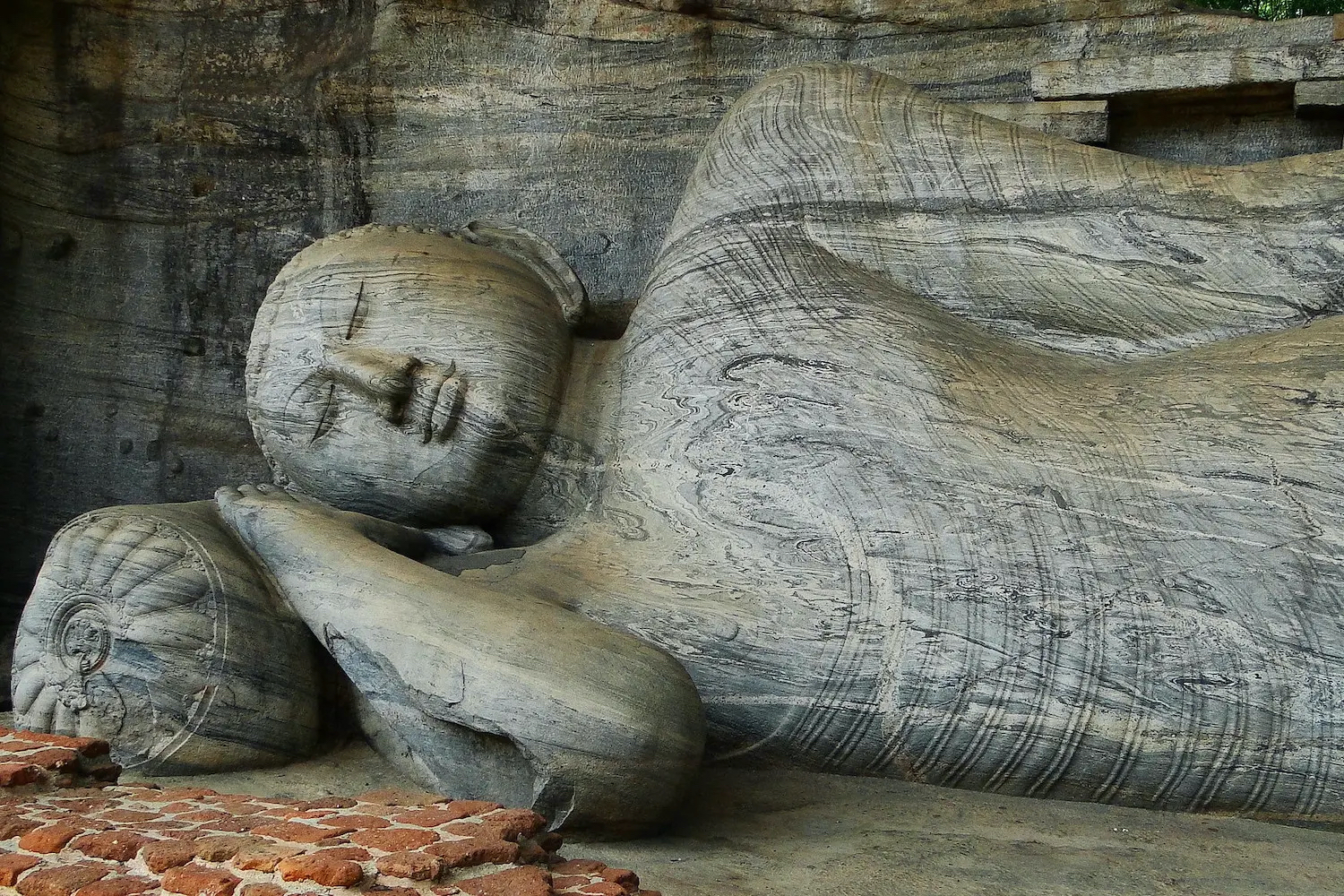
Image source: Parinirvana Buddha

selflessness

Excerpts from “A Path With Heart: A Guide Through the Perils and Promises of Spiritual Life” by Jack Kornfield (1993)

When Buddhists speak of emptiness and of no self, what do they mean? Emptiness does not mean that things don’t exist, nor does “no self” mean that we don’t exist. Emptiness refers to the underlying nonseparation of life and the fertile ground of energy that gives rise to all forms of life. Our world and sense of self is a play of patterns.

Any identity we can grasp is transient, tentative. When we are silent and attentive, we can sense directly how we can never truly possess anything in the world. Clearly, we do not possess outer things. We are in some relationship with our cars, our home, our family, our jobs, but whatever that relationship is, it is “ours” only for a short time. In the end, things, people, or tasks die or change or we lose them. Nothing is exempt.

We encounter another aspect of the emptiness of self when we notice how everything arises out of nothing, comes out of the void, returns to the void, goes back to nothing. All our words of the past day have disappeared. Similarly, where has the past week or the past month or our childhood gone? They arose, did a little dance, and now they’ve vanished, along with the twentieth century, the nineteenth and eighteenth centuries, the ancient Romans and Greeks, the Pharaohs, and so forth. All experience arises in the present, does its dance, and disappears. Experience comes into being only tentatively, for a little time in a certain form; then that form ends and a new form replaces it moment by moment.

As we open and empty ourselves, we come to experience an interconnectedness, the realization that all things are joined and conditioned in an interdependent arising. Each experience and event contains all others. The teacher depends on the student, the airplane depends on the sky.

When a bell rings, is it the bell we hear, the air, the sound on our cars, or is it our brain that rings? It is all of these things. As the Taoists say, “The between is ringing.” The sound of the bell is here to he heard everywhere—in the eyes of every person we meet, in every tree and insect, in every breath we take…

When we truly sense this interconnectedness and the emptiness out of which all beings arise, we find liberation and a spacious joy. Discovering emptiness brings a lightness of heart, flexibility, and an ease that rests in all things. The more solidly we grasp our identity, the more solid our problems become. Once I asked a delightful old Sri Lankan meditation master to teach me the essence of Buddhism. He just laughed and said three times, “No self, no problem.”

Jack Kornfield was trained as a Buddhist monk in Thailand, Burma, and India, and holds a Ph.D. in clinical psychology. He is a psychotherapist and founding teacher of the Insight Meditation Society and the Spirit Rock Center. His books include Seeking the Heart of Wisdom and Still Forest Pool.

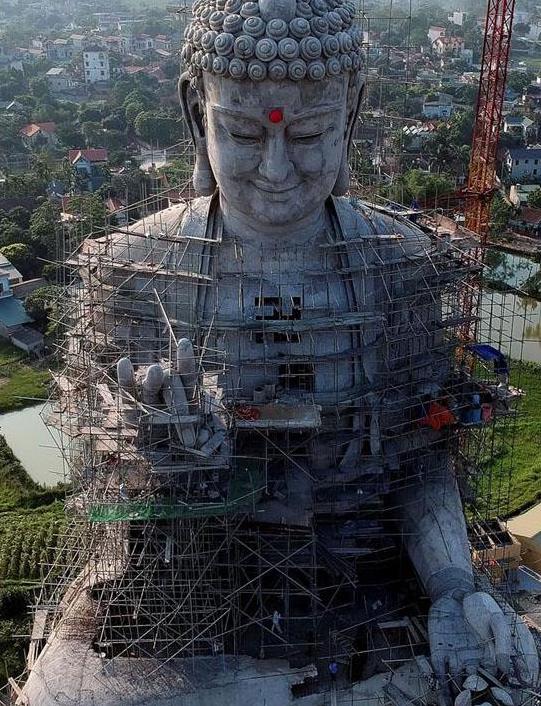
Image: Giant Buddha statue under construction at the Khai Nguyen Pagoda in Son Tay, on the outskirts of Hanoi, Vietnam, on May 18, 2019

the timeless time

[Excerpts from an article by Loch Kelly in “When am I?” : Tricycle : September 08, 2015. The writer explains something about the present moment that’s held my attention for a long time, vis-à-vis the concept of present moment awareness as in “Postcards from the Present Moment” : dhammafootsteps.com]

In Tibetan Buddhism, the Now is considered the “timeless time” that includes the three relative times of past, present, and future. We know not to get caught in the past or the future, but in order to be in the Now, we also have to let go of the present. The Now is not confined by relative clock time, yet it is also not pure timelessness. The Now is the meeting place of timeless spacious awareness with the relative world and its conventional time. The Now does not come and go, but includes everything all at once. When we’re aware of being in the Now, present moments come and go, like ripples and waves in the ocean of awake awareness.

We cannot enter present moments because they move too fast and change continuously. Contemporary Tibetan Buddhist teacher Mingyur Rinpoche says, “If you examine even the present moment carefully, you find that it also is made up of earlier and later moments. In the end, if you keep examining the present moment, you find that there is no present moment that exists either.”

One of the great insights we can get from mindfulness meditation practice is that each moment of experience arises and passes. Having a direct experience of this impermanence, from observing awareness, helps us let go of the attempt to calcify any single moment of time, to try to make something stable that is not. When we really get a feeling for the coming and going of moments, it helps us break the illusion of a solid, separate self, which gives us relief from suffering.

The present time is not the Now. When Gampopa, an 11th-century Buddhist teacher, said, “Don’t invite the future. Don’t pursue the past. Let go of the present. Relax right now,” he was pointing to the fact that trying to locate yourself in any of the three relative times, including the present, can cause suffering – it’s not always a benefit to strive to be in the present. While working as a psychotherapist, I saw that the distinguishing feature of clinical depression is feeling stuck in the present. As one client said, “It feels like there is only this present, unbearable pain and no hope of it changing.”

The most important thing to know is that we are always already in the Now—however, we are not always aware of being in the Now. You can only know the Now from awake awareness. Many of us have experienced being in the Now when we were “in the zone” or in a panoramic flow state, but we can’t be aware of being in the Now from our everyday, ego-identified state of mind. We can shift through the door of the Now into awake awareness, or when abiding in awake awareness, we can begin to notice the feeling of being in the Now. The purpose of clarifying and distinguishing the Now from the present and present moment is for us to be able to shift into being in the Now and know we are here.

From Shift Into Freedom: The Science and Practice of Open-hearted Awareness, by Loch Kelly.

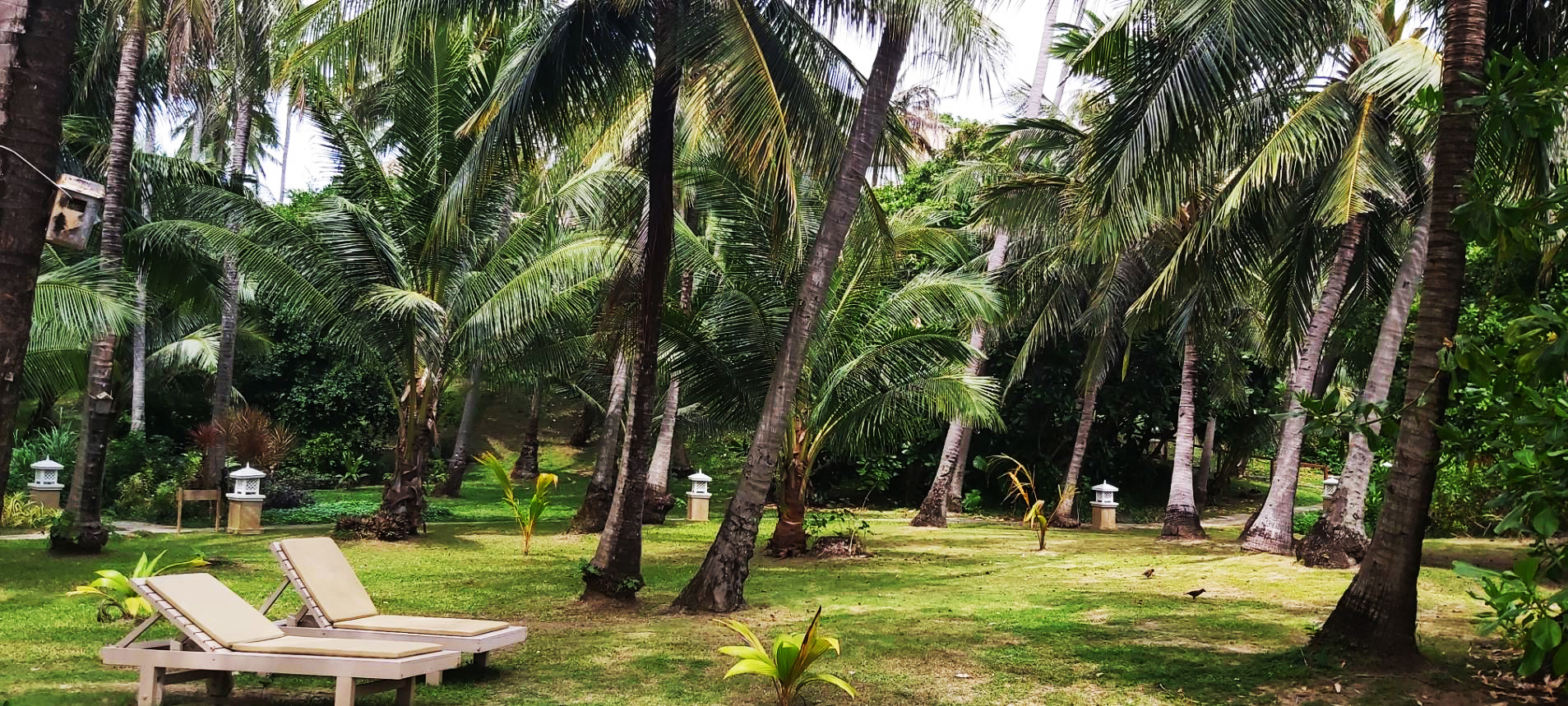
(Photo: Phuket coastal palms by Penn B.)

The Second and Third Jhānas

The Second Jhāna

Subsiding of the Wobble

POSTCARD#470: As the first jhāna deepens, the wobble lessens and the bliss consolidates. One comes to a state where vicāra is still holding on to the bliss with the most subtle of grasping, but this is not enough to cause any instability in the bliss. The bliss doesn’t decrease as a result of vicāra nor does mindfulness seem to move away from the source. The bliss is so strong that vicāra cannot disturb it. Although vicāra is still active there is no longer any vitakka,  no movement of mind back to the source of the bliss. The wobble has gone. this is a jhāna state described in the suttas as without vitakka but with a small measure of vicāra. (MN 128,31; AN VIII,63). It is so close to the second  jhāna that it is usually included in that jhāna.

As the bliss strengthens into immutable stability, there is no purpose for vicāra to hold on anymore. At this point the mind becomes fully confident, enough to let go absolutely. With this final letting go, born of inner confidence in the stability of the bliss, vicāra disappears and one enters the second jhāna proper.

The first feature, then, of the second jhāna described in the suttas is avitakka and avicāra meaning “without vitakka and without vicāra.” In experience, this means that there is no more wobble in the mind. The second feature is ajjhattam sampasādanam meaning “internal confidence.” In experience, this describes the full confidence in the stability of the bliss which is the cause for vicāra to cease.

Perfect One-pointedness of Mind

The third and most recognizable feature of the second jhāna is cetaso ekodibhāvanam or perfect one-pointedness of mind. When there is no longer any wobble, then the mind is like an unwavering rock, more immovable than a mountain and harder than a diamond. Such perfection in unyielding stillness is incredible. The mind stays in the bliss without vibration. This is later recognized as the perfection of the quality called samādhi.

Samādhi is the faculty of attentive silence, and in the second jhāna this attention is sustained on the object without any movement  at all. There is not even the finest oscillation at all. One is fixed, frozen solid fixed with “super glue,” unable even to tremble. All stirrings of mind are gone. There is no greater stillness of mind than this. It is called perfect samādhi , and it remains as a feature not only of this second jhāna but of the higher jhānas as well.

The Bliss Born of Samādhi and the End of All Doing

It is this perfection of samādhi the gives the bliss of the second jhāna its unique taste. The burden that affected the first jhāna, the affliction of movement, has been abandoned, everything stands perfectly still, even the knower. Such absolute stillness transcends the mental pain born of the mind moving, and it reveals the great bliss fuelled by pure samādhi. In the suttas, the bliss of the second jhāna is called the pīti-sukkha born of samādhi (samadhija pīti-sukkha) (DN 9.11). Such bliss is even more pleasurable, hugely so, than the bliss resulting from transcending the world of the five senses. One could not have anticipated such bliss. It is of a totally separate order. After experiencing the second jhāna, having realized two rare “species” of bliss that are extreme, one ponders what other levels of bliss may lie ahead.

Another salient feature of the second jhāna is that all doing, has totally ceased, even the involuntary activity that caused the wobbling has completely vanished, the doer has died. Only when one has experience of the second jhāha can one fully appreciate what is meant by the term “doer” – just as a tadpole can fully appreciate what is meant by the tern “water” only when water disappears during the frog’s first experience on dry land. Not only is the doer gone, it seems as if this apparently essential part of one’s eternal identity has been deleted from experience, What was seemingly obvious turns out to be a mirage, a delusion. One penetrates the illusion of free will using the data from raw experience. The philosopher (Sarte) who proposed “to be is to do” could not have known the second jhāna, where “being” is without any “doing.” These jhānas are weird, and they defy normal experience. But they are real, more real than the world.

Summary of the Second Jhāna

Thus the second jhāna is distinguished by another four collections of factors:

1 + 2. Avitakka-avicāra, ajjhattam sampasadanam:  experienced as the subsiding of the “wobble” from the first jhāna due to internal confidence in the stability of the bliss;

3. Cetaso ekodibhāvam: perfect one-pointedness of mind due to full confidence in the bliss. This is usually experienced as rocklike stillness or the perfection of samādhi;

4. Samādija-pītisukha: being the focus of this jhāna, the supramundane bliss generated by the end of all movement of the mind;

5. The end of all doing: seen as the first time the “doer” has completely gone.

The Third Jhāna

As the stillness of the knower continues, the stillness of the known grows ever more profound. Remember that in jhāna what is known is the image of the mind, and the mind is the knower. First the knower becomes still, then the image, the known, gradually becomes still.

In the first two jhānas this image of the mind is recognizes as a bliss that up until now has been called pīti-sukkha. In the third jhāna, the image of the mind has gone to the next level of stillness, to a very different kind of bliss.

Pīti Has Vanished

Prior to the third jhāna, all bliss had something in common, although it differed in its taste due to the distinguishing causes. That something in common was the combination of pīti plus sukha. Because they were always together, as inseparable as Siamese twins, it was not only pointless, but even impossible to tell them apart. 

It is only after the experience of the third jhāna that one can know what sukha is, and by inference what pīti was. The pīti of the second jhāna seemed more euphoric than anything else. Yet it is now seen as the lesser part of the bliss. Sukha is the more refined part.

Great Mindfulness, Clear Knowing, and Equanimity

With all jhānas, the experiences are next to impossible to describe. The higher the jhāna, however, the more profound the experience and the more difficult it becomes to describe, These states and their language are remote from the world. At a stretch, one may say that the bliss of the third jhāna, the sukha, has a greater sense of ease, is quieter, and is more serene. In the suttas it is accompanied by the features of mindfulness (sati), clear knowing (sampajañña), and equanimity (upekkhā), although these are said in the Anupada Sutta (MN III) to be present in all jhānas. Perhaps these features are emphasized  as qualities of the third jhāna in order to point out that in this very deep jhāna, one is exceptionally mindful, very clear in the knowing, and so still that one looks on without moving which is the root meaning of equanimity (upekkhā).

The Same Rocklike Stillness and Absence of a Doer

The third jhāna retains the perfect samādhi, the rocklike stillness, the absence of a doer, and the inaccessibility from the world of the five sensesaIt is distinguished from the second jhāna by the nature of the bliss, which has soared up to another level and appears as another species of bliss altogether. So much so that the suttas quote the enlightened one’s description of the third jhāna as “abiding in bliss, mindful, just looking on” (DN 9,12).

Summary of the Third Jhāna

Thus the third jhāna has the following features:    

1. The bliss has separated, losing the coarse part that was pīti;

2. The bliss that remains, sukha, exhibits the qualities of great mindfulness, clear knowing, and the sense of just looking on;

3. The same absolute rocklike stillness, and absence of a doer, as in the second jhāna.

Continued next week: 13th May 2022

The First Jhāna

The Wobble (Vitakka and Vicāra)

POSTCARD#469: All jhānas are states of unmoving bliss, almost. However in the first jhāna, there is some discernable movement. I call this movement the “wobble” of first jhāna. One is aware of great bliss, so powerful it has subdued completely the part of the ego that wills and does. In jhāna one is on automatic pilot, as it were, with no sense of being in control. However, the bliss is so delicious  that it can generate a small residue of attachment. The mind instinctively grasps at the bliss. Because the bliss of the first jhāna is fuelled by letting-go, such involuntary grasping weakens the bliss. Seeing the bliss weaken, the mind automatically lets go of its grasping, and the bliss increases its power again. The mind then grasps again, then lets go again, Such subtle involuntary movement gives rise to the wobble of the first jhāna.

This process can be perceived in another way. As the bliss weakens because of the involuntary grasping, it seems as if mindfulness moves a small distance away from the bliss. Then the mindfulness gets pulled back into the bliss as the mind automatically lets go. This back-and-forth movement is a second way of describing the wobble.

The wobble is, in fact, the pair of first jhāna factors called vitakka and vicāra. Vitakka is the automatic movement back into the bliss; vicārra is the involuntary grasping of the bliss. Some commentators explain vitakka and vicāra as “initial thought” and ”sustained thought” While in other contexts this pair can refer to thought, in jhāna they certainly mean something else. It is impossible that such a gross activity as thinking can exist in such a refined state as jhāna. In fact thinking ceases a long time prior to jhāna. In jhāna vitakka and vicāra are both subverbal and so do not qualify as thought. Vitakka is the subverbal movement of mind back into bliss. Vicāra is the subverbal movement of mind that holds on to the bliss. Outside of jhāna such movements of mind will often generate thought and sometimes speech. But in jhāna vitakka and vicāra are too subtle to create any thought. All they are capable of doing is moving mindfulness back into bliss and holding mindfulness there.

One-Pointedness (Ekaggatā)

The third factor of the first jhāna is one-pointedness, ekaggatā. One-pointedness is mindfulness that is sharply focused on a minute area of existence. It is one-pointed in space because it sees only the point-source of bliss, together with a small area surrounding the bliss caused by the first jhāna wobble. It is one-pointed in time because it perceives only the present moment, so exclusively and precisely that all notion of time completely disappears. And it is one-pointed in phenomena because it knows only one object – the mental object of pīti-sukha – and is totally oblivious to the world of the five senses and one’s physical body.

Such one-pointedness in space produces the peculiar experience, only found in jhāna, of non-dual consciousness, where one is fully aware but only of one thing, and from one angle, for timeless periods. Consciousness is so focused on the one thing that the faculty of comprehension is suspended a while. Only after the one-pointedness is dissipated, and one has emerged from the jhāna, will one be able to recognize these features of the first jhāna and comprehend them all.

The one-pointedness in time produces the extraordinary stability of the first jhāna, allowing it to last effortlessly for such a long period of time. The concept of time relies on measuring intervals from past to present or present to future of from past to future. When all that is perceived within the first jhāna is the precise moment of now, then there is no room for measuring time. All intervals have closed. It is replaced with timelessness unmoving.

One-pointedness of phenomena produces the exceptional occurrence of bliss upon bliss, unchanging throughout the duration of the jhāna. This makes the first jhāna such restful abode.

In academic terms, ekaggatā is a Pali compound meaning “one-peakness.” The middle term agga (Sanskrit agra ) refers to the peak of a mountain, the summit of an experience, or even the capital of a country (as in Agra the old Moghul capital of India). Thus ekaggatā is not just any old one-pointedness, it is a singleness of something soaring and sublime. The single exalted summit  that is the focus of ekaggatā in the first jhāna is the supreme bliss of pīti-sukha.

Joy Happiness (Pīti-sukha)

Indeed the last two factors of the first jhāna are pīti and sukkah, which I will discuss together since they are such a close-knit pair. In fact they only separate out in the third jhāna, where pīti cease and leaves sukha “widowed.” Therefore only after the third jhāna, can one know from experience what sukha is and what pīti was, Here it is sufficient to explain the pair as one thing.

These two factors of the first jhāna refer to the bliss that is the focus of mindfulness, and which forms the central experience of the first jhāna. Bliss is the dominant feature of the first jhāna, so much so that it is the first thing that one recognizes when reviewing after emerging from the jhāna. Indeed, mystic traditions more recent than Buddhism have been so overwhelmed by the sheer immensity, egolessness, stillness, ecstasy, ultimateness, and pure otherworldliness of the first jhāna thsy they have understood the experience as ‘union with God.’ However, the Buddha explained that this is but one form of supramundane bliss. The first jhāna is the first  level. Even though after emerging from the first jhāna, one cannot conceive of an experience more blissful. There is much more!  

Each level of bliss has a different “taste,” a quality that sets it apart. These different qualities can be explained by the diverse causes of the bliss. Just as heat generated by sunlight has a different quality than heat caused by a wood fire, which in turn is different from heat generated by a furnace, so bliss fueled by different causes exhibits distinguishing features.

The distinguishing feature of the bliss of first jhāna is that it is fueled by the complete absence of all five senses activities. When the five senses have shut down, including all echoes of the five senses manifesting as thoughts, then one has left the world of the body and material things (kāmaloka) and has entered the world of pure mind (rūpaloka). It is as if a huge burden has dropped away. Or, as Ajahn Chah used to describe it, it is as if you have had a rope tied tightly around your neck for as long as you can remember. So long, in fact, that you have become used to it and no longer recognize the pain. Then somehow the tension is suddenly released and the rope is removed. The bliss you then feel is the result of that noose disappearing. In much the same way, the bliss of the first jhāna is caused by the complete fading away of a heavy burden, of all that you took to be the world. Such  insight into the cause of the bliss of the first jhāna is fundamental to understanding the Buddha’s four noble truths about suffering.

Summary of the First Jhāna

In summary then, the first jhāna is distinguished by the five factors, here compressed into three.

1 + 2. vitakka-vicāra: experienced the “wobble,” being the fine subtle movement in and out of the bliss.

3. ekaggatā: experienced as nonduality, timelessness, and stillness.

4 + 5. pīti-sukha: experienced as a bliss surpassing anything in the material world, and fuelled by the complete transcendence of the world of the five senses.

Continued next week: 6th May 2022