discernment

[Editor’s Note: I’ve had to discontinue last week’s Phra Payutto text due to vision strain after treatment at the eye hospital on 31 July. I expect things to get back to normal in a few days. However, it’s also an opportunity to consider a completely different way of Teaching; from the flowing almost poetic language of Phra Payutto, to the minimalist expression of Luang Pu Dune. The following is taken from the introduction and text of the book: “The Gifts He Left Behind” compiled by Phra Bodhinandamuni. (Note: The term “Luang Pu” in Thai, means “Venerable Grandfather,” a title for respected senior Buddhist monastics.)

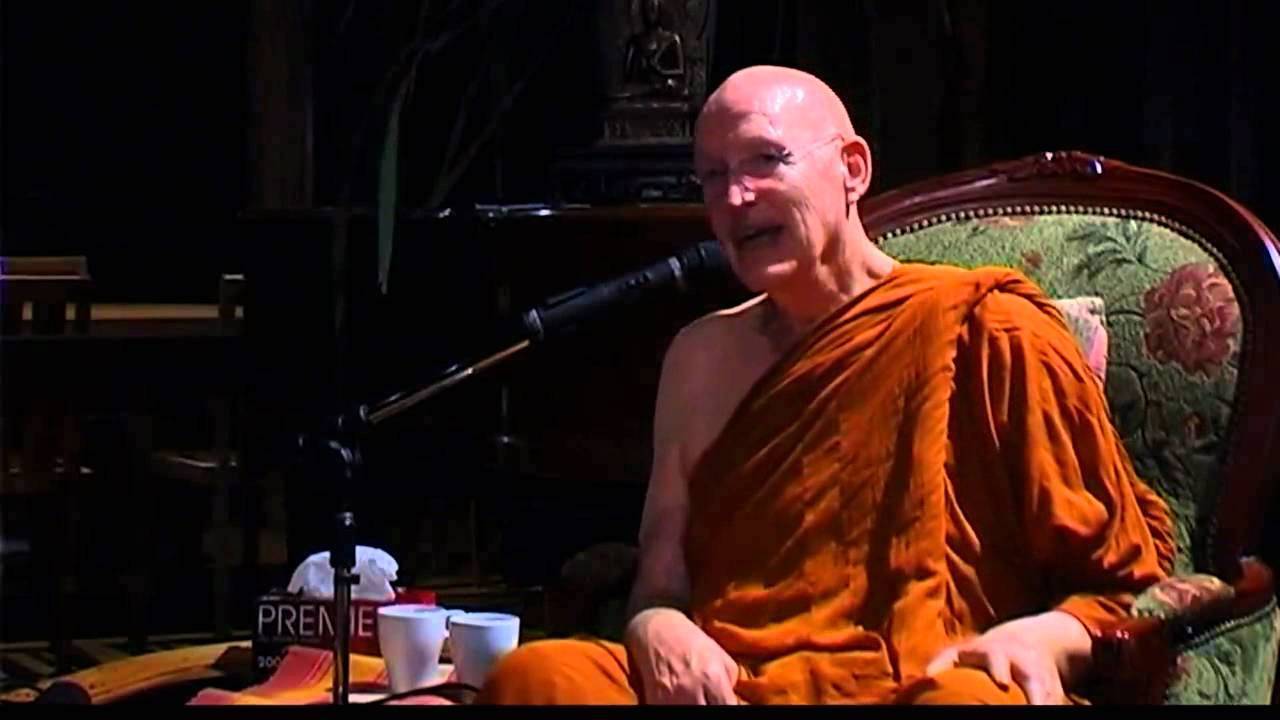
Luang Pu Dune (Ajahn Dune Atulo) 1888-1983, ordained at the age of 22 and after six years, disillusioned with his life as an uneducated town monk, he left to study in a temple in Ubon Ratchathani, where he befriended another monk, Ajahn Singh and together they reordained in the Dhammayut sect where they became disciples of Ajahn Mun.

After wandering for 19 years with Ajahn Mun through the forests and mountains of Thailand and Cambodia, Luang Pu received an order from his ecclesiastical superiors to head a combined study and practice monastery in Surin. It was thus that he took over the abbotship of Wat Burapha, in the middle of the town, in 1934. There he remained until his death in 1983.

Luang Pu’s Dhamma talks are extremely rare, this is because he never gave any formal sermons or discoursed at any great length. He simply taught meditation, admonished his students, answered questions, or discussed the Dhamma with other elder monks. He would speak in a way that was brief, careful, and to the point. In addition, he never gave sermons at formal ceremonies.

It was noteworthy — and amazing — that even though Luang Pu normally wouldn’t speak, or would speak as little as possible, he was still very quick and astute in his expression, never missing his mark. His words were brief but full of meaning, every sentence containing a message complete in itself. It was as if he would hypnotize his listeners, forcing them to ponder his words for a long time with their deepest discernment.

I lived with him to the end of his days, and have compiled this book of his short teachings, gathered from memory or from notes in my journal. I have included the events, locations, and people who were involved, to help make the passages easier to understand and more inviting to read.

Phra Khru Nandapaññabharana (currently Phra Bodhinandamuni) July 1, 1985

102. I remember that in 1976 two meditation teachers from the northern part of the Northeast came to pay their respects to Luang Pu. The way they discussed the practice with him was very delightful and inspiring. They described the virtues and attainments of the different ajaans with whom they had lived and practiced for a long time, saying that that luang pu had concentration as his constant mental dwelling; this ajaan dwelled in the Brahma attitudes, which is why so many people respected him; that luang pu dwelled in the limitless Brahma attitudes, which is why there was no limit to the number of students he had, and why he was always safe from dangers.

Luang Pu said, “Whatever level a monk has reached, as far as I’m concerned, he’s welcome to dwell there. As for me, I dwell with knowing.”

103 When those two monks heard Luang Pu say that he dwelled with knowing, they were silent for a moment and then asked him to explain what dwelling with knowing was like.

Luang Pu explained, “Knowing is the normality of mind that’s empty, bright, pure, that has stopped fabricating, stopped searching, stopped all mental motions — having nothing, not attached to anything at all.”

104. Luang Pu was pure in his speech because he liked to talk about the genuine truth. He’d speak only of the highest aims of the Buddha’s teachings; he’d refer only to the Buddha’s words that led solely to the end of suffering and stress. You could tell this from the Buddha’s teaching he quoted most often.

“Monks, there is that dimension where there is neither earth, nor water, nor fire, nor wind; neither the dimension of the infinitude of space, nor dimension of the infinitude of consciousness, nor dimension of nothingness, nor dimension of neither perception nor non-perception; neither this world, nor the next world, nor sun, nor moon. And there, I say, is neither coming, nor going, nor staying; neither passing away nor arising: unestablished, unevolving, without support. This, just this, is the end of suffering.”

Link: https://www.accesstoinsight.org/lib

/thai/dune/giftsheleft.html

the search for happiness

Looking back over the Japan trip (see previous post), I remember on the night we left Bangkok, I was finishing off packing for the six-hour journey and glanced at the bookshelf to see if there was a small book, I could read on the flight. Picked out a transcribed talk by Thai monk, Phra Payutto, a bilingual publication translated in English and titled: ‘Perfect Happiness.’  I thought, “Is there such a thing?” and was going to put it back on the shelf, but for some reason, slipped it into a zipped pocket on my cabin baggage and found that it fitted that space exactly. It’s as if the small book insisted on being there – and that’s how this Teaching I was talking about last week came to be with me again today.
At the airport I read bits and pieces of the English sections between the pages of Thai script… unable to get the sense of it right, except that, yes it was about happiness, but also suffering. Decided then, I needed to focus on this and get a clearer meaning of the word: suffering. So, I went to google and keyed in: “What Is suffering in Buddhism?” Then clicked on an item at the top of the list:
“Dukkha refers to the psychological experience—sometimes conscious, sometimes not conscious—of the profound fact that everything is impermanent, ungraspable, and not really knowable. On some level, we all understand this, yet we resist it. All the things we have, we know we don’t really have. All the things we see, we’re not entirely seeing. This is the nature of things, yet we think the opposite. We think that we can know and possess our lives, our loves, our identities, and even our possessions. We can’t. The gap between the reality and the basic human approach to life is dukkha, an experience of basic anxiety or frustration.” [from Suffering, Open the Real Path, by Norman Fischer]

There were other definitions but this was all pretty much the standard Buddhism terms I’m familiar with, and one sentence caught my eye: “On some level, we all understand this, yet we resist it.” But first I need to know about suffering in the Christian context. So, I keyed in: “What Is suffering in Christianity?” Then clicked on the first item on the list:
“The first truth about suffering is the recognition that it is alien to God’s plan of life. That might sound incredible, but to the Christian worldview, it is vital. Suffering is a product of the fall, a consequence of human sin against God (Romans 5:12; 1 Corinthians 15:21). Suffering is in our lives because we are living in a broken world. Some suffering is due to our sinful and wrong choices, but some is due simply to the world being fallen. This aspect of suffering should drive us to long for a better world, a world redeemed and freed from sin, a world that God will one day come again to establish (Romans 8:19-23). [Excerpt from Grand Canyon University:]
Suddenly I was a boy again, thinking about it and left with the distinct feeling that something bad happened in the past and that’s what is haunting us here today. That was the first time I had an idea of what the guilt complex must be like. Looking at it now, the phrase: “we all understand this, yet we resist it” is saying that, in Christianity, everything is in the hands of God means we don’t have to think about it anymore. In Buddhism however, there is no God so finding happiness and the end to suffering is something we do ourselves – according to the Buddha’s Teaching. The following is a short piece comprised of excerpts from Perfect Happiness the Print Copy, page 5, (the first criteria for relating to suffering and happiness) – ending on page 10.
“The Buddha urged us to understand suffering (dukkha) completely in order to have an insight into how we can be free of it. Suffering is there, only to be understood. The approach to understanding suffering can be divided into four criteria. The first is to refrain from creating extra, unnecessary suffering for yourself. This is necessary because we live in the world of nature and our lives proceed in line with conditioned phenomena. Conditioned things are impermanent, (aniccan) subject to stress (dukkha), and nonself (anatta), according to their nature. If we conduct ourselves unwisely, the dukkha of nature spills over as suffering in our hearts. We intensify and aggravate suffering, by going off in search of unnecessary suffering, and stacking it up in our hearts.


The dukkha inherent in nature is what it is. We have no conflict with this. We do not add to it, or pile on unnecessary suffering. By refraining in this way, we reach a level of ease and wellbeing; everything in the world exists according to its own natural dynamic. We can see how people relate to these things unskilfully, harbouring misguided attitudes and views, and unwittingly give rise to suffering. With clear discernment, we see how these worldly phenomena exist and proceed.
This rule applies also to the vicissitudes of life—turns of good fortune and misfortune, ‘worldly conditions.’ The sources of all our joys and sorrows, highs and lows. When we encounter these worldly winds, if we do not come to terms with them prudently, our happiness turns into sorrow, and any existing distress is exacerbated. Conversely, if we maintain clear discernment and skilful behaviour, our unhappiness turns into joy, and any existing delight is heightened. These worldly conditions befall human beings in line with the law of impermanence. There are four pairs of such conditions, namely:
gain & loss, fame & disrepute, praise & blame, pleasure & pain.
The Buddha said that these things are inherent in nature. By living in the world, they are inescapable. We all must face these conditions. If, when encountering these things, we maintain an incorrect bearing and behaviour, we inflict suffering on ourselves. When we obtain something good—some material reward—it is normal to feel delighted. Yet often, when people lose a possession, they grieve, because the object has vanished. If one responds to this loss unskilfully, by feeling gloomy and depressed, engaging in self-punishment, railing against life, etc., one only aggravates the situation and increases one’s misery.
So too with praise and blame. Everyone likes praise. Hearing words of praise, we feel happy and uplifted. But, when receiving blame, many people feel distress. What is the cause of this distress? It occurs because people allow these words of criticism entry into their hearts; having gained access, these words can cause torment and agitation…. but we can come to terms with these things and understand that this is the way of the world. The Buddha declared that by living in the world there is no escape from these worldly conditions. We can say, ‘Yes! I have met with these worldly winds. This is an aspect of truth. I will learn from these experiences!’ As soon as we can view these encounters as learning experiences, we have begun to adopt an appropriate attitude. ‘Ah, so things are this way. I’m beginning to see how things work in the world.’ We thus gain a firm foothold and realize contentment. This is the way of not accumulating unnecessary suffering.
Generally speaking, when people are buffeted by adverse worldly winds, they make a problem out of the situation, because they feel personally affected. But if they can alter their perspective, these encounters simply become learning experiences. Besides coming to terms with these situations, means we can also see them as an opportunity for spiritual training. Here, our entire attitudes and perspectives radically shift. We begin to see even those unpleasant and seemingly negative experiences as a test. With this shift in perspective, we gain from every experience. Both good and bad events are seen as a challenge of our character, a test of our skill and intelligence. As a consequence of this training and development, we become constantly stronger. In a sense everything becomes positive.
If we experience good fortune or encounter advantageous worldly conditions, we feel happy and at ease. We can then use that good fortune, for example. material gain, prestige, etc., to radiate this happiness outwards. We use it to perform good deeds and to assist others. In this way our happiness extends outwards and reaches a large number of people.
In the same way, if we experience misfortune or encounter adverse worldly conditions, we consider these situations as an opportunity for development. They become valuable life lessons—a means to hone mindfulness, problem solving, wise discernment, etc., leading to self-improvement. This is how disciples of the Buddha maintain the principle of reflecting on things skilfully. If we possess skilful refection, everything we encounter—both good and bad—is seen as a valuable and beneficial experience. Observing this principle is a fundamental of spiritual practice.

 (Continued next week.)

More information on Phra Payutto;
https://en.wikipedia.org/wiki/P._A._Payutto

Source for the original of this text: https://www.watnyanaves.net/uploads/File/books/pdf/661-Perfect-Happiness-Bilingual.pdf

Source for the header mage of the Buddha and Jesus:
https://owlcation.com/humanities/The-Many-Similarities-Between-Jesus-and-Buddha

Other images are of Shitennō-ji Temple in Osaka

furtherance

[Continued from last week] We got back to Bangkok from Osaka, Japan late Saturday night, 15 July. Even though, 2500 miles (4000 kms) away, the mind, still in Japan, shifts to the events that led up to M in Osaka finding the apartment next to the Buddhist temple, where she is now.
One curious coincidence I forgot to mention in last week’s post was the numbers of the street/apartment address contain her birthday date: I Chome (district) – 3 – 19: M’s birthday is March 19. She noticed it immediately of course, when she made her way to the address for the first time, not thinking too much if this was the place she would choose to stay, yes-or-no…  but if you like the karma of finding a location next to a Buddhist temple, as well as the birthday date/ number coincidence, and things just feel right, the conclusion is: of course, yes! So, she signed the contract and moved in. Since then we have walked around the grounds so many times of our quiet neighbour, resting here for the last 1,430 years,  we feel there’s a connection with this place, the oldest Buddhist temple in Japan, (Shitennō-ji;  四天王寺 (Temple of the Four Heavenly Kings).

Such a great expanse of historical time between then and now, and today the temple grounds are surrounded by the urban structures on all sides. So how relevant are the Buddha’s Teaching in Japan today? I see it everywhere, community orientated, living close together; similarities in cultural behaviour, the same characteristics of a Buddhist society as you find in Thailand. The Dharma lasts for ever – even if it’s wiped out by war or disaster… it comes alive again with the right kind of cultivation and the journey goes on. Circumstances cause things to change, evolve, according to karmic influences of this-and-that moving on in furtherance of the here-and-now that was the there-and-then,and the human condition as such.
“Dedicate whatever happiness you enjoy to all sentient beings, wishing that whatever you have gained from your own virtuous actions will help nurture and serve everyone. All that you do and experience, all your happiness and suffering, should lead to the development of bodhicitta.” [Sechen Rabijam Rinpoche from ‘Equanimity,’ Great Middle Way]

It was this idea of a birthday that reminded me of the Teaching that consciousness is birthed into every moment. There’s a talk by Thai monk, Phra Payutto, titled ‘Perfect Happiness’ that expresses this concept of generating happiness. The talk was given at the 84th birthday event of a local person, then transcribed in Thai and translated in English. I have selected excerpts here that convey the simplicity and profound beauty of the Buddha’s teaching which only Phra Payutto can communicate.

“Everyone is searching for happiness; however, some people may not realize that happiness is something we can generate on the spot, within our own hearts. Whenever we are endowed with such qualities as faith, love, a sense of friendship, joy, and clarity of mind, happiness arises spontaneously, in an instant.Today we are celebrating a birthday. If we think of a birthday as marking the day when our lives began—when we came into the world— then we are thinking of the past. We cannot go back in time and relive any past events, but we can in present time. The Buddha’s teachings, show us we are born in every moment, both physiologically and mentally. In terms of the mind, we can say there are both positive and negative births. Unwholesome states should be prevented from arising, understandably, and we strive to give birth to wholesome mind states: delight, joy, ease, inner clarity, faith, mindfulness, love, concentration, diligence, wisdom, etc. With the arising of such wholesomeness, our birthday celebrations are genuinely warranted.

Human beings naturally desire happiness and so, the teaching: ‘birth is suffering.’  may be unhelpful. But the Buddha was referring to an aspect of nature, to the reality of conditioned phenomena; what this means is that birth is subject to laws of nature: anicca (impermanence), dukkha (suffering) and anatta, (nonself). All things arise, are sustained, and then pass away. Everything is subject to change, unable to maintain its original state of existence. Everything exists according to causes and conditions. These are all attributes of nature, following a natural order.The dukkha inherent in nature, however, is not identical to the dukkha (‘suffering’) in the hearts of human beings. Dukkha arises, or does not arise, based on whether we relate to the dukkha inherent in nature wisely or unwisely. In the context mentioned above, the Buddha was simply describing a phenomenon inherent in nature, a truth of nature. Conditioned phenomena invariably conform to this teaching on the Three Characteristics, anicca, dukkha and anatta, but if we conduct ourselves unwisely, the dukkha inherent in nature turns into suffering in our hearts. Suffering arises because people relate to nature unwisely. If we leave the dukkha inherent in nature to its own devices—we leave it be, as it naturally is and do not allow it to create suffering in our hearts. He urged us to relate to suffering skilfully, and we will be happy. The way to become free of suffering and realize happiness is to understand and gain insight into suffering. By living our lives discerningly, we gradually experience more genuine and reliable forms of happiness and our suffering diminishes, to the extent of it being dispelled all together: all that remains is happiness.There is thus a special technique to be applied vis-à-vis suffering. Here are four practical guidelines on how to relate to suffering and happiness:

1. Refrain from creating extra, unnecessary suffering for oneself.

2. Do not forsake righteous forms of happiness.

3. Do not indulge in any sort of happiness, even righteous happiness.

4. Strive in order to realize higher forms of happiness.

If we are able to accord with these principles, it can be said that we are practising correctly.

[More next week]

taking refuge

Hotel room on the 17th floor, Osaka, Japan. Hi everyone, this is Tiramit with Jiab here visiting our Thai niece M… some readers will know of M when she was little with all her questions addressed to me as “Toong-Ting.” Now she is 19 and doesn’t call me that anymore, calls me “T-T” instead (sounds more like ‘dee dee’). M is fluent in English, now studying Japanese language, and aiming for a similar level of fluency or enough to get her up to college-level … after that, let’s see.

I’m amazed, M took responsibility for nearly everything to do with getting the apartment selected, location ok, rent ok, (Japan is not cheap). Size of rooms, tiny but ok. All the forms to fill in to do with her one-year visa and there was all the paperwork to do with sending the cattos to Japan.

All of this done online in Bangkok by M, reading enough Japanese from her one-year class in BKK before coming. Jiab helped with setting up the bank and the school facilitated some of the stuff, but M did most of it, also a couple of phone calls to the house agent in Japan and that was it!

She left for Osaka with Jiab (overnight flight from Bangkok), checked out the house agents, selected a place next to a Buddhist temple and there was some waiting in a coffee shop near to the temple to get the confirmation from the owner of the apartment. Then PING! … a text message saying ok, confirmed, and they had a moving-in date.

Ok so let’s get to the airport and they were back in Bangkok in three days. How was it done without a single hitch and in such a short time? Vipaka Kamma (karma) is the answer. We are all studying the Buddha’s teaching and actively involved with our Buddhist groups, so the apartment next to the temple just conjured itself up, and “dōzo,” there you are. This apartment was waiting for you, M and the cattos, rest here, rest assured, take refuge in the triple gem.

It wasn’t till after the apartment was confirmed that I did a google search on our nearby Shitennō-ji Temple, and found out about the founder, Prince Shōtoku, 1,430 years ago. So, I’ll leave you with a few Wikipedia paragraphs and see you this time next week back in Bangkok.

Shitennō-ji;  四天王寺 (Temple of the Four Heavenly Kings), regarded as the first and oldest Buddhist temple in Japan. The construction of Shitennō-ji was commissioned by Prince Shōtoku in the year 593 as part of a national project to promote Buddhism. The prince invited three Korean carpenters to come to Japan and lead the construction of Shitennō-ji.

The Prince is renowned for modernizing the government administration and for promoting Buddhism in Japan. Over successive generations, a devotional cult arose around the figure of Prince Shōtoku for the protection of Japan, the Imperial Family, and for Buddhism. Key religious figures claimed inspiration or visions attributed to Prince Shōtoku.

Shōtoku was an ardent Buddhist and is traditionally attributed the authorship of the Sangyō Gisho commentaries on the Lotus Sutra, the Vimalakirti Sutra, and the Śrīmālādevī (Siṃhanāda Sūtra). The first of these commentaries, Hokke Gisho, is traditionally dated to 615 and thus regarded as “the first Japanese text”, in turn making Shōtoku the first known Japanese writer.

There is a letter to Emperor Yang of Sui which contains the earliest known written instance in which Japan is referred to as “the land of the rising sun.”

He is also known for bearing the Sanskrit Dharma name Bhavyaśīla which was awarded to him by Bodhidharma. Bhava (भव) means being, worldly existence, becoming, birth, production, origin – also: habitual or emotional tendencies which lead to the arising of the sense of self, as a mental phenomenon.  Śīla (in Sanskrit) or sīla (in Pāli), means “behavioral discipline”, “morality”, “virtue” or “ethics” in Buddhism

A legend claims that when Bodhidharma came to Japan, he met with Prince Shōtoku whilst under the guise of a starving beggar. The Prince asked the beggar to identify himself, but the man did not reply. Instead of going ahead, Shōtoku gave him food, drink, and covered him with his purple garment, telling him to “lie in peace”.

The second day, Shōtoku sent a messenger to the starving man, but he was already dead. Hereupon, he was greatly grieved and ordered his burial. Shōtoku later thought the man was no ordinary man for sure, and sending another messenger, discovered the earth had not been disturbed. On opening the tomb there was no body inside, and the Prince’s purple garment lay folded on the coffin. The Prince then sent another messenger to claim the garment, and he continued to wear it just as before. Struck by awe, the people praised the Prince: “How true it is that a sage knoweth a sage.”

[A closing note about Shinto] Shinto is often cited alongside Buddhism as one of Japan’s two main religions, and the two often differ in focus; Shinto is a nature religion – the belief that the natural world is an embodiment of divinity, sacredness or spiritual power. The focus in Shinto is on adapting to life’s pragmatic requirements. While Buddhism emphasises the idea of transcending the cosmos, which it regards as being replete with suffering. The focus is on attaining liberation from the clinging to existence, marked by impermanence (anicca), dissatisfaction/suffering (dukkha), and the absence of lasting essence (anattā).

mindfulness, its friends and relatives

[Excerpts from an article in Ajahn Sucitto’s Blog]

What does ‘mindfulness’ mean?

A calm collected emotional state and a clear present-moment attention which can have many applications to improve how a human being functions, and mindfulness (sati) is commonly understood to provide just that. There’s also a referential quality; mindfulness connects present-moment experience to a frame of reference. An example of this is the teaching on the Four Foundations of Mindfulness: 1) Mindfulness of body, 2) Mindfulness of feeling, 3) Mindfulness of, mind-state, 4) Mindfulness of physical and mental processes (M.10, D.22). [These are also called the four frames of reference or four establishments of awareness.]

In this context, mindfulness is the kind of attention that refers bodily experience to the body, feeling is referenced to the realm of feeling, and the current state of mind to the domain of mind, and mental qualities – such as ill-will or goodwill that support mind-states – to themselves, just as they are. One isn’t referring them to ‘Self.’ This reference, clears out the judgemental feeling of Self, ‘How am I seen by others?’ and so on. In the practice of the Four Foundations, mindfulness replaces that tension and reaction to Self, with clarity and a steady calm, that allows mind-states to unravel and the great ‘unbinding’ of nibbāna.

Right view, virtue and attention

Reference to an object in and of itself is then part of what mindfulness offers, but there are other factors – I call them ‘friends and relatives’ who tag along with mindfulness so that motivation and application is clear, and there is the learning from what the frame of reference presents. For instance, take mindfulness in the Noble Eightfold Path with its eight factors: 1) right view, 2) right intention, 3) right speech, 4) right action, 5) right livelihood, 6) right effort, 7) right mindfulness, and 8) right concentration. Mindfulness is only one factor of an unfolding process which begins with right view and leads on through right speech and right action through right mindfulness and into samādhi – right unification of mind. In this process the most important factor is right view – the wise perspective that reminds us that everything we say, do or even think has results, for good or for bad.

Mindfulness then carries right view into living experience; by highlighting the mind-states that are the causes and results of our actions, it gets the mind to see which ones are for our true benefit. The requirement to establish virtue and awareness of the causes and effects of one’s actions indicate that in Dhamma practice, it’s not enough to notice that one’s body is doing something and sensations are arising –there’s a “How?” and a “Why?” Robbing a bank might require clarity, focus and calm, but they wouldn’t be themes for right mindfulness. So, for right mindfulness, the attentive aspect of mind has to connect with felt awareness of one’s approach and intention. This is because taken on its own, attention (manasikāra) is the aspect of mind that is rational, an object-defining tool. This is the function that gets tuned to high degrees of efficiency and speed; enabling people to race through piles of data, rapidly trading stocks and shares.  What they’re not referring to is their own awareness, mind as ‘heart’ or ‘citta’.

Clear comprehension and deep attention

Citta is the mind of feelings and impressions and of ‘how I am’; it is an empathic awareness. It is the all-important focus of mindfulness, because if it is steadied and cleared of wrong views and unknowing, there is liberation. So, mindfulness refers the objects of attention to this mental awareness (or ‘heart’) to know what it is being affected by, and how that affect arises and passes. This knowledge is called ‘clear comprehension’ or ‘full knowing’ (sampajañña); it is a vital relative of mindfulness and in our well-being. Without it, people lose themselves in whatever grabs attention, or get stressed out, leading to anxiety, stress, and depression. Our systems and cultures have lost touch with awareness and its fundamental nature. Instead, the message is that happiness and success only come through chasing and acquiring what’s ‘out there ‘– no inner home, just a centre that remains swampy, hungry and restless.

Right mindfulness is vital; it connects manas, the object-definer, to citta, awareness, the subjective sense. Mindfulness is there in the moment of holding the question ‘How am I with this?’ If we liken the mind to a hand: attention is like the fingers, and citta is like the palm. Fingers can probe, twiddle and touch, but are unable to collect anything. The palm can’t probe and inquire, but it receives, collects and fully feels what the fingers place in it. So citta has a storekeeper’s wisdom – it wants to know what is worth being in touch with, what can be held for one’s welfare. It certainly needs educating, and that is the function of ‘deep’ or ‘wise’ attention (yoniso manasikāra), the attention that selects which sense data mindfulness should bear in mind. There’s so much stuff the mind can get lost in, so deep attention is another friend of mindfulness. It requires skilful intention and clarifies what you’re experiencing. Deep attention means that rather than note every thought that runs through your head, can it be included in one word? Restlessness, anxiety? Irritation, friendliness? Then mindfulness lets it sit in awareness. So, when right view and deep attention guide mindfulness, it draws manas and citta together; you know where your actions and thoughts are coming from, you’re ethically attuned.

Clear comprehension helps you to come to terms with what you’re experiencing. For example, as you attend to how your body feels and how you sense it internally, you establish mindfulness of body. By directing your attention to how your body feels in itself, you establish the embodied sense that gets you grounded and stable. You more fully get to know what the body is about – you know it not as a self-image but as a base of consciousness, and a resource for the mind. As you get embodied, feeling, both physical and mental, becomes more evident. Then if you attend to feeling in itself without rejecting, resisting or sinking into it, clear comprehension makes you less reactive. The mind is left clear and balanced and you don’t have to make a ‘Self’ out of it. Mental feelings and states of mind reveal their true nature: they’re not ‘Self’, not fixed things at all. You get to know the mind; you know it goes through moods, but they change and you can still arrive at clarity.

Samādhi and wisdom

As the various reactions and distractions die down, the fingers of attention and the palm of awareness can meet with no aim other than that meeting. Then you have samādhi – the mind is unified. Through mindfulness, attention comes home to awareness, and finding that this is a very comfortable place to be, intention settles into appreciation and ease. Putting aside self-judgements, an assessment of what is really useful can take place. So, to avoid having its attention hijacked, mindfulness has to be established and made firm. Mindfulness is thus involved with wisdom.

In meditation retreats we are supported by the energy of patient persistence, without getting side-tracked by self-criticism or doubt. Mindfulness has to be established and re-established through patience and a lot of kind encouragement so that the fingers of attention don’t keep grabbing hot coal! Knowing what burns or stabs the heart, or entangles it, is up to each of us to find out. Keep that patient persistence going, mindfulness needs enthusiasm, or ‘eagerness’. In this way persistence (viriya) and eagerness (atapi) become two more members of the mindfulness team. Don’t get put off by the idea of making an effort, because right energy comes from interest and fullness of heart, not blind will. When something gives us good results or is interesting to do, then energy is not a problem. So, we need to recall and be mindful of why we do what we do, whether that’s cultivating samādhi or cooking a meal; keep it relevant. Get interested in how your mind or body work, use mindfulness with interest; then the application of right effort is a way of it coming more fully into your life. With mindfulness you learn how to train, encourage, gladden and soothe the mind in a range of activities.

Investigation

The Buddha presents the examples of two cooks; both present their master, the king, with his meal – but one does and one doesn’t notice what food the king enjoys. The one who doesn’t notice serves the same food every day, regardless – and gets fired. The one who notices what food the king chooses from the meal; continues to refine the meal he prepares in line with what most satisfies his master – and gets promoted (S.47.8). The point is that mindfulness needs to attend to ‘the sign of the mind.’ This is beautiful: as it clears itself of its burdens and inner conflicts, the citta will present subtle signs of luminosity, ease, vastness or stillness. Any of these may be a key to be picked up, held and explored. So, we need to look and feel more deeply into what meditation theme the citta picks up readily and enjoys.

‘Picking up the sign of the mind’ is the entry to the mystical experience, when the heart attunes to a felt sense that isn’t coming from one’s normal personality programs. The required fine-tuning comes through another of mindfulness’ friends, one that tastes the mental qualities that support any state of mind. This is ‘investigation of qualities’, dhammavicaya. It has to be applied to the citta as in: ‘What effect is this having on my mind?’ or ‘What is there at the periphery of attention?’ Through investigation, unnecessary feelings get weeded out, such as: forcefulness, ambition, or ideas about what we should be experiencing. All are replaced by a more subtle invitation into Truth. In this way, citta educates manas in the ways of directly-experienced wisdom. And manas pays back by casting that wisdom into concepts that form the storehouse of one’s contemplative know-how.

As a member of a team, mindfulness frees the mind from the burden of self-consciousness, self-hatred and self-orientation – the shift that is the heart of awakening. For some it will bring fresh life to its forgetful Buddhist parent. And for others it’s an open opportunity. Eventually how we use it is our own ongoing responsibility.

Ajahn Sucitto

Image source and Malcom Huxter text on Mindfulness

https://insighttimer.com/blog/mindfulness-in-buddhism-secular-meditation/

notes on nibbāna 3

Excerpts from: The Magic of the Mind: An exposition of the Kāḷakārāma Sutta by Ven. Kaṭukurunde Ñāṇananda Mahathera: Suppose a magician should hold a magic-show at the four cross-roads; and a keen-sighted man should see it, ponder over it and reflect on it.

The news of the magician’s arrival has spread far and wide, and eager crowds are now making for the large hall where he is due to perform today. You too buy a ticket and manage to enter the hall. There is already a scramble for seats, but you are not keen on securing one. for you have entered with a different purpose in mind. You have had a bright idea to outwit the magician – to play a trick on him yourself. So, you cut your way through the thronging crowds and stealthily creep into some concealed corner of the stage.

The magician enters the stage through the dark curtains, clad in his pitchy black suit. Black boxes containing his secret stock-in-trade are also now on the stage. The performance starts and from your point of vantage you watch. And as you watch with sharp eyes every movement of the magician, you now begin to discover, one after the other, the secrets behind those “breath taking’ miracles of your favourite magician. The hidden holes and false bottoms in his magic boxes, the counterfeits and secret pockets, the hidden strings and buttons that are pulled and pressed under the cover of the frantic waving of his magic-wand.

Very soon you see through his bag of wily tricks so well, that you are able to discover his next ‘surprise well in advance. Since you can now anticipate his ‘surprises’ they no longer surprise you. His ‘tricks’ no longer deceive you. His ‘magic’ has lost its magic for you. It no longer kindles your imagination as it used to do in the past. The magician’s ‘hocus-pocus’ and ‘abracadabra’ and his magic-wand now suggest nothing to you – for you know them now for what they are, that is, ‘meaningless’. The whole affair has now turned out to be an empty-show, one vast hoax – a treachery.

In utter disgust, you turn away from it to take a peep at the audience below. And what a sight! A sea of craned necks, eyes that gaze in blind admiration; mouths that gape in dumb appreciation; the ‘Ah!’s and ‘Oh!’s and whistles of speechless amazement. Truly, a strange admixture of tragedy and comedy which you could have enjoyed instead of the magic-show, if not for the fact that you yourself were in that same sorry plight on many a previous occasion.

Moved by compassion for this frenzied crowd, you almost frown on the magician as he chuckles with a sinister grin at every applause from his admirers. “How is it,” you wonder, “that I have been deceived so long by this crook of a magician?” You are fed up with all this and swear to yourself “Never will I waste my time and money on such empty shows, Nev-ver. The show ends. Crowds are now making for the exit. You too slip out of your hiding place unseen, and mingle with them.

KāḷakārāmaSutta

At one time the Buddha was staying at Saketa in Kalaka’s monastery:

“Whatsoever in the world that is seen, heard, sensed, cognized, attained, sought after and pondered over by the mind – all that is known to the Tathāgata [Tathāgata is the word the Buddha uses in the Pāli Canon when referring to himself or other Buddhas], but the Tathāgata has not taken his stand upon it, or made an approach by way of craving or views. He sees a form with the eye, but in him there is no desire and lust (for it) He hears a sound with the ear…… smells a fragrance with the nose. He tastes a flavour with the tongue, touches a tangible with the body, cognizes an idea with the mind, but in him there is no desire-and-lust; he is well released in mind.

“Thus, a Tathāgata does not conceive’ of a visible.” [refers to the stage in sense perception when one egotistically imagines or fancies a perceived ‘thing’ to be out there in its own right, which results in a subject-object dichotomy perpetuating the conceit: ‘self,’ ‘I’ and ‘mine’] The Tathāgata does not conceive’ of a thing as apart from sight;’ he does not conceive of an unseen: He does not conceive of a ‘thing-worth-seeing’;’ he does not conceive about a seer.

[The terms ‘thing-worth-seeing, -hearing, -cognizing etc’ are pointing to the habit we have of imputing inherent value or substance to perceptions, thoughts and emotions. Without such imputation they do not possess any such solidity or worth]. Thus, the Tathägata being such-like in regard to all phenomena seen, heard, sensed and cognized, is ‘Such’. These modes of conceiving represent ‘the plane of voidness'(suññatabhumi).

“This barb I beheld, well in advance, whereon mankind is hooked, impaled. I know, I see ’tis verily so’- no such clinging for the Tathāgatas. Having seen this barb well in advance:” janami passami tatheva tam: A phrase often cited in the Pali Canon as representing the stamp of dogmatism characteristic of speculative views.

A clue to the difficulties experienced by the Buddha in coming to terms with the world, may be found in your own unusual experience at the magic-show. To all intents and purposes, you saw the magic performance. Yet, there are difficulties involved in any unreserved affirmation or denial. The position of a Tathägata who has fully comprehended the magical illusion that is consciousness, is somewhat similar. He too has seen all the magical performances in the form of sense data enacted on the stage of consciousness. And yet he is aware of the limitations in any categorical affirmation or negation. Whereas the worldling is wont ‘to take his stand upon’ the knowledge he has “grasped’, the Tathagata regards that tendency as a ‘barb’ in spite of (or because of) the fact that he has ‘fully understood’. In other words, he has seen the magic-show so well as to ‘miss the show from the wording’s standpoint.

The question of ‘seeing what-is-shown’, brings us to the relationship between sign and significance. Sense-perception at all levels relies largely on signs. Sense-objects are therefore signs which have become significant in themselves owing to our ignorance that their significance depends on the psychological mainsprings of greed, hatred and delusion. This, in other words, is a result of reasoning from the wrong end (ayoniso manasikara) which leads both the philosopher and the scientist alike into a topsy-turvydom of endless theorising.

If, with mindfulness and wisdom, the tendency to ‘go out’ into perceptions, thoughts and emotions is restrained, and one just allows seeing to be seeing, hearing to be hearing etc., the whole papañca-drama does not get launched in the first place [papañca: conceptual proliferation]. The heart then rests at ease, open and clear; all perceptions conventionally labelled as ‘myself or ‘the world’ are seen as transparent, if convenient, fictions.

[Note on the word Atammayata:

Literally it means ‘not made of that,’ and refers primarily to the quality of experience prior to, or without, a subject/object duality arising. This insight leads us into a contemplation of the relationship of the apparent subject and object – how the tension between the two generates the world of things and its experiencer, and more importantly how, when that duality is seen through, the heart’s liberation is the result.]

Image source and a text on papañca:

https://conciergepsychologyla.com/blog/papanca/

notes on nibbāna 2

Excerpts from “The Island: An anthology of the Buddha’s teaching on Nibbana” Ajahn Pasanno & Ajahn Amaro

Atammayata

The term atammayata cannot be found in the Pali Text Society Dictionary. Readers will find it difficult to discover references to it in scholarly works, whether they come from West or East. The meditation masters of Tibet, Burma or Zen do not seem to be interested in it. Mention it to most Buddhists and they will not know what you are talking about. Yet there is clear evidence in the Pali Canon that the Buddha gave this word significant meaning.

Atammayata appears in a number of Pali suttas and each context suggests that the term has important meaning. The traditional commentators’ standard explanation, although vague, describes it as the awakened state of the Arahant, or fully awakened, perfected being. Buddhadasa Bhikkhu, from Suan Mokkhabalarama in southern Siam, first took note of this word about thirty years ago. The contexts in which he found atammayata convinced him that its meaning is important.

The word literally means ‘not made of that.’ It can also be rendered as ‘non-identification,’ focusing on the subject side of the equation. Other translators have it as ‘non-fashioning’ or ‘unconcoctability’ – thus hinting more at the object dimension of it. Either way, it refers primarily to the quality of experience prior to, or without, a subject/object duality arising. This insight leads us into a contemplation of the relationship of the apparent subject and object – how the tension between the two generates the world of things and its experiencer, and more importantly how, when that duality is seen through, the heart’s liberation is the result.

Looking now at the Buddha’s words to Bahiya: Bahiya repeatedly asked the Buddha to teach him the Dhamma even though it was an inconvenient time for the Buddha: “It is difficult to know for certain, revered sir, how long the Lord will live or how long I will live. So, sensing the urgency in Bahiya’s demeanour, the Buddha gave the following Teaching: “ In the seen there is only the seen, in the heard, there is only the heard, in the sensed there is only the sensed, in the cognized there is only the cognized: This, Bahiya, is how you should train yourself. ”

“When, Bahiya, there is for you in the seen only the seen, in the heard, only the heard, in the sensed only the sensed, in the cognized only the cognized, then, Bahiya, there is no ‘you’ in connection with that. When, Bahiya, there is no ‘you’ in connection with that, there is no ‘you’ there. When, Bahiya, there is no ‘you’ there, then, Bahiya, you are neither here nor there nor in between the two. This, just this, is the end of suffering.” [ ~Ud 1.10] Bahiya realized full enlightenment even as he heard the few words of this teaching, kneeling in the dust and clamour of Savatthi  town that morning; and furthermore, true to his own sense of the fragile nature of existence, moments later he was impaled by a runaway cow and breathed his last.

This abandonment of subject/object dualities is largely contingent upon the correct apprehension of the perceptual process, and thus the breaking down of the apparent inside/outside dichotomy of the observer and the observed. A spectacularly thorough analysis of the perceptual process and the inability to find oneself anywhere within it (as demonstrated in the brief teaching to Bahiya) is to be found in a key text that revolves around the Buddha’s pressing of Ananda, his closest disciple and ever-watchful attendant, to describe exactly where his mind is: “It is the fault of your mind and eyes that you flow and turn. I am now asking you specifically about your mind and eyes: where are they now?” [~ the Śūraṅgama Sūtra]. The investigation is scrupulous in the extreme, with the trusty Ananda repeatedly being confounded by the Buddha’s wisdom – as he regularly was. Every nuance of object, sense organ and sense consciousness, every possible dimension of subject and object, are explored and demonstrated to be no abiding place for an independent identity. At its conclusion the analysis arrives at the same conclusion as the teaching to Bahiya: any clinging whatsoever to this/that, here/there, subject/object, inside/outside or anything in between is synonymous with dukkha; abandon such clinging and dukkha necessarily ceases.

In the Vedanta, we read that to be wholly and exclusively aware of Brahman is at the same time to be Brahman. The origins of this seem to lie in a theory of sense perception in which the grasping hand supplies a dominant analogy. It takes the shape of what it apprehends. Vision is similarly explained: the eye sends out some kind of ray which takes the shape of what we see and comes back with it. Similarly thought: a thought conforms to its object. This idea is encapsulated in the term tanmayata, ‘consisting of that’: that the thought of the gnostic or meditator becomes con-substantial with the thing realized. [~ Richard Gombrich] That is to say, with the opposite quality, in a-tammayata, the mind’s ‘energy’ does not go out to the object and occupy it. It neither makes an objective ‘thing’ or a subjective ‘observer’ knowing it; hence ‘non-identification’ refers to the subjective aspect and ‘non-fabrication’ mostly to the objective. The reader should also carefully bear in mind the words “The origins of this idea…” and not take the Vedic concept and imagery as representing the Buddhist use of the word entirely accurately. In the state of atammayata, in its Buddhist usage, there is no actual ‘becoming con-substantial’ with the thing that is being known…

In the final triad of the nine insights as outlined by Ajahn Buddhadasa, three qualities describe the upper reaches of spiritual refinement: sunnata – voidness or emptiness; tathata – thusness or suchness; atammayata – nonidentification or ‘not-thatness. When the qualities of emptiness and suchness are considered, even though the conceit of identity might already have been seen through, there can still remain subtle traces of clinging; clinging to the idea of an objective world being known by a subjective knowing even though no sense of ‘I’ is discernible at all. There can be the feeling of a ‘this’ which is knowing a ‘that,’ and either saying “Yes” to it, in the case of suchness, or “No” in the case of emptiness. Atammayata is the closure of that whole domain, expressing the insight that “there is no ‘that.” It is the genuine collapse of both the illusion of separateness of subject and object and also of the discrimination between phenomena as being somehow substantially different from each other.

Of the ten obstacles or fetters (samyojana) that stand in the way of enlightenment, the ninth is uddhacca – restlessness. The restlessness to which this refers is not the fidgeting of the uncomfortable meditator; it is the subtlest of feelings that there might be something better over there or just in the future; a feeling that ‘that’ (which is out of reach) might have more value in some way than ‘this.’ It is the ever-so-insidious addiction to time and its promises. Atammayata is the utter abandonment of this root delusion: one sees that in ultimate truth there is no time, no self, no here and no there. So rather than “Be here now” as a spiritual exhortation, perhaps instead we should say: “Let go of identity, space and time,” or: “Realize unlocated, timeless selflessness.”

The aim of all these teachings on atammayata is to show us that the dualities of subject and object (‘me and the world’), do not have to be brought into being at all. And when the heart is restrained from ‘going out,’ and awakens to its fundamental nature, a bright and joyful peace is what remains. This is the peace of Nibbana.

Image source: https://commons.wikimedia.org/wiki

/File:Dazu_rock_carvings_baoding_buddhas.JPG

notes on nibbāna

Ajahn Sumedho

A difficulty with the word ‘nibbāna’ is that its meaning is beyond the power of words to describe. It is, essentially, undefinable. Another difficulty is that most of us are conditioned see Nibbāna as something unobtainable – as so high and so remote that we’re not worthy enough to try for it. Or we see Nibbāna as a goal, as an unknown, undefined something that we should somehow try to attain. if you work hard, keep the sīla, meditate diligently, become a monastic, devote your life to practice, then your reward might be that eventually you attain Nibbāna – even though we’re not sure what it is.

Ajahn Chah would use the words ‘the reality of non-grasping’ as the definition for Nibbāna: realizing the reality of non-grasping. That helps to put it in a context because the emphasis is on awakening to how we grasp and hold on even to words like ‘Nibbāna’ or ‘Buddhism’ or ‘practice’ or ‘sīla’ or whatever. The Buddhist way is not to grasp. But that can become just another statement that we grasp and hold on to. It’s a Catch 22: No matter how hard you try to make sense out of it, you end up with this limitation of language and perception.

You have to go beyond language and perception. And the only way to go beyond thinking and emotional habit is through awareness of them, through awareness of thought, through awareness of emotion. ‘The Island that you cannot go beyond’ is the metaphor for this state of being awake and aware, as opposed to the concept of becoming awake and aware.

In meditation classes, people often start with a basic delusion that they never challenge: the idea that “I’m someone who grasps and has a lot of desires, and I have to practice in order to get rid of these desires and to stop grasping and clinging to things. I shouldn’t cling to anything.” That’s often the position we start from. Eventually, we realize that no matter how much we try to get rid of desire and not grasp anything, no matter what we do – become a monk, an ascetic, sit for hours and hours, attend retreats over and over again, do all the things we believe will get rid of these grasping tendencies – we end up feeling disappointed because the basic delusion has never been recognized.

This is why the metaphor of ‘The Island that you cannot go beyond’ is so very powerful, because it points to the principle of an awareness that you can’t get beyond. It’s very simple, very direct, and you can’t conceive it. You have to trust it. You have to trust this simple ability that we all have to be fully present and fully awake, and begin to recognize the grasping and the ideas we have taken on about ourselves, about the world around us, about our thoughts and perceptions and feelings.

The way of mindfulness is the way of recognizing conditions just as they are. We simply recognize and acknowledge their presence, without blaming them or judging them or criticizing them or praising them. We allow them to be, the positive and the negative both. And, as we trust in this way of mindfulness more and more, we begin to realize the reality of ‘The Island that you cannot go beyond.’

When I started practising meditation, I felt I was somebody who was very confused and I wanted to get out of this confusion and get rid of my problems and become someone who was not confused, someone who was a clear thinker, someone who would maybe one day become enlightened. That was the impetus that got me going in the direction of Buddhist meditation and monastic life. But then, by reflecting on this position that “I am somebody who needs to do something,” I began to see it as a created condition. It was an assumption that I had created. And if I operated from that assumption then I might develop all kinds of skills and live a life that was praiseworthy and good and beneficial to myself and to others but, at the end of the day, I might feel quite disappointed that I did not attain the goal of Nibbāna.

Fortunately, the whole direction of monastic life is one where everything is directed at the present. You’re always learning to challenge and to see through your assumptions about yourself. One of the major challenges is the assumption that “I am somebody who needs to do something in order to become enlightened in the future.” Just by recognizing this as an assumption I created, that which is aware knows it is something created out of ignorance, out of not understanding. When we see and recognize this fully, then we stop creating the assumptions.

Awareness is not about making value judgments about our thoughts or emotions or actions or speech. Awareness is about knowing these things fully – that they are what they are, at this moment. So, what I found very helpful was learning to be aware of conditions without judging them. In this way, the resultant karma of past actions and speech as it arises in the present is fully recognized without compounding it, without making it into a problem. It is what it is. What arises ceases. As we recognize that and allow things to cease according to their nature, the realization of cessation gives us an increasing amount of faith in the practice of non-attachment and letting go.

The attachments that we have, even to good things like Buddhism, can also be seen as attachments that blind us. That doesn’t mean we need to get rid of Buddhism. We merely recognize attachment as attachment and that we create it ourselves out of ignorance. As we keep reflecting on this, the tendency toward attachment falls away, and the reality of non-attachment, of non-grasping, reveals itself in what we can say is Nibbāna. If we look at it in this way, Nibbāna is here and now. It’s not an attainment in the future. The reality is here and now. It is so very simple, but beyond description. It can’t be bestowed or even conveyed; it can only be known by each person for themselves. So, we have to continue bearing with our emotional reactions and allow things that arise to cease, to appear and disappear according to their nature, then we find our stability not in achievement or attaining, but in being – being awake, being aware.”

I’m reminded of the Buddha’s response to Kappa’s question in the Sutta Nipāta:

For the sake of those people stuck in the middle of the river of being, overwhelmed by death and decay, I will tell you where to find solid ground.

    “There is an island, an island which you cannot go beyond. It is a place of nothingness, a place of non-possession and of nonattachment. It is the total end of death and decay, and this is why I call it Nibbāna [the extinguished, the cool.

    “There are people who, in mindfulness, have realized this and are completely cooled here and now. They do not become slaves working for Māra, for Death; they cannot fall into his power.”~ SN 1092-5 (Ven. Saddhatissa trans.)

“Excerpts from an Introduction by Ajahn Sumedho to ‘The Island,’ Ajahn Pasanno & Ajahn Amaro

beginningless time (part 2)

Gary Horvitz

The individual aspect of karma, how we are ensnared in habits of mind is what comes with us from previous lives. It follows us into this life and influences what we create now by conscious or unconscious action. This is the material of our practice, the essence of our personal version of delusion. To have any influence over our unique way of navigating time—and identity—our practice must orient to the level of our habitual view and decisions about time. Imagine breaking the spell of time. Suddenly we have a different view of what is enough or what is too little.

Samsara is also dying and recreating itself in every instant. We are all doing it together. We are all subject to its terms. We perpetuate those terms with every conscious act. Being asleep to micro-events of our lives, we are wanderers, constantly re-creating ourselves without realizing our true relationship to what we take for granted as ‘events.’ If we are to have any influence on the terms of living in samsara, this is where our attention must go. The more we become aware of Awareness and our common entrapment, bringing that into our daily life, the more we might regard our predicament as a perpetual purgatory. The inner character of every instant always seems just beyond our grasp. What’s more important is to realize that by this very knowing we are always presented a choice of view and of conduct. Even so, the discipline we apply to resting effortlessly in our daily existence and the attention we bring to the activity of mind is all influenced by the fundamental limitation to which we are all subject. That limitation is time.

The flow of our individual negotiation with time is what Mahayana might call relative karma. It’s relative by virtue of the artificiality of viewing ourselves in isolation from others, separate from the collective field, the universe of sentient beings. The bodhisattva is an enlightened being devoted to serving others and concerned with the welfare of all. Such a being has seen through the array of habitual decisions about time and untangled from them entirely. S/he has developed Awareness transcending time, entering a unitary dimension including collective activity, thought, and behavior. The accomplishment of the bodhisattva is to remain stable within the absolute condition of all beings while acting as an open heart at the relative level to elevate their karmic condition; that is, retaining a degree of individuality while acting for the collective. In the case of the bodhisattva, maintaining this balance is entirely natural, completely effortless.

The notion of collective karma, group, tribal or ethnic karma, organizational karma, national or even planetary karma, is not a Western distortion. There are many references to the idea of collective karma in Buddhist literature. To think this way is not a departure from Buddhist orthodoxy. From a relative view, such decisions certainly do occur at the group, tribal, national, and global level. A national leader may commit acts of violence. Whether the karmic seeds of such actions spread to individual members of the group may depend on whether that leader is supported or opposed. Since membership in the group is continuously changing from one day to the next or one year to the next, we cannot assign karmic effects to those members a year or a generation later for the actions of their predecessors. But if there is no such thing as an independent actor and if causality itself is difficult to pin down, how can we explain any of this?

When attempting to tease out the factors effecting developmental decisions and collective actions, we inevitably encounter conflicting values and the difficulty of assigning their relative importance, the relative participation of individuals in hierarchies of relevancy and influence. What is the greater good or the greater harm? Such views occur within the relative realm. The question remains: how to expand our view to access the inter-subjective, the deeper and unspoken common agreements that define a group? How else can we discern what is happening at the interbeing level of process and decision-making to evaluate or realize the developmental potential of the whole? Our discomfort may be eased by remembering that such complex karmic conditions are rooted in beginningless time.

From the absolute view, all phenomena being equal, there is no such thing as good or evil. These distinctions dissolve as we uncover the activity of mind assigning such attributes to what is no other than a value-free arising. This is very difficult to grasp, let alone accept, given our religious, social, and cultural conditioning. Yet all phenomena are both ‘here’ in the relative sense of time, judgment, and evaluation and are also ‘not here’ in the sense that the ground from which they arise is not conditioned on conventional reality whatsoever. Such arising is based on something else entirely—a pure, unobstructed, unconditioned ‘space’ in which, paradoxically, neither time nor space have any meaning at all.

If all phenomena are the same, arising independently of any judgments or projections, then karma is defined by our intrinsic conditioning (or hardwiring) to see the world in polarities. The Vajrayana and Dzogchen definition of true liberation is that all phenomena, the continuous effervescence of everything, is instantaneously recognized as the expression of essence nature (emptiness) before any attributes can be assigned or any value judgments can be made. Everything remains free of memory or plans, free of past or future. Liberation is the instantaneous evaporation of all attachment, reversing the continuous ‘flow into oneself,’ becoming free of all polarities, free from any tendency—or even capacity—to make such distinctions, which is to say, the extinction of time. Such a capacity may not seem very useful in the relative world…unless we recall the union of the Two Truths operating as one Mind, flowing out of ourselves, giving ourselves to both the time-bound and timeless nature of every act, regardless of whether extended or received.

About “Just Passing Through”

https://substack.com/@garyhorvitz

beginningless time (part 1)

Gary Horvitz

From the view of awakened mind, the term beginningless is a non sequitur. It names a condition that cannot exist. Yet Hindu and Buddhist teachings refer to the karmic panorama of numberless lives stretching into beginningless time. As with the word infinity, a condition having no beginning and no end has no reference points whatsoever. We have no way to understand beginningless other than from a conventional definition of time. Beginningless is the best we can do to refer to the nonexistence of time altogether.

Modern physics theorizes the beginning of the universe (the beginning of time) to be the Big Bang, but there’s no reason to assume the Big Bang denotes a beginning of consciousness. When modern science speaks of consciousness, it’s a reference to ego-awareness. When Buddhists speak of beginningless time, they are referring to what preceded the beginning of the known universe and what will remain after it.

Time is nature’s way of preventing everything from happening all at once.

—Woody Allen

Allen may not be a quantum Jedi master, but he was onto something. In a quantum universe, some things do happen simultaneously, a condition called ‘entanglement’ in which atoms at a distance seem to ‘know’ each other and mimic behavior. But those entangled atoms arise from the same source. Relative consciousness can only imagine ‘everything’ as seemingly unrelated discrete events, jumbled together without order, arising in random fashion, crowding each other out as they compete for ‘space,’ clamoring for the limited resource of our attention in the chaos of phenomena. This would be an inaccurate view. As quantum theorists suggest (Bohr and Barad), there is no such thing as an objective event removed from the observer. Theoretically, events only arise as a function of our interaction with them. It would be more accurate to assume all events are intra-actions. There is no objectivity we can claim. We are engaged with co-arising phenomena in an endless flow of becoming and disappearing. It’s difficult to comprehend this reality. To the relative mind, this flow appears as the instantaneous partition of perception into binary categories (this and that, etc), imputing relative qualities to everything. We are constantly making up ideas and concepts about perception, including thoughts in relation to the timing of ‘events’ we perceive or imagine existing.

Is there any true substance to time at all? Not really. From a practical view, like money, time is a currency we use to organize our lives, our relationships, to prioritize and make sense of our self-care and interactions. Like money, its value is arbitrary, shifting on a daily or even moment-to-moment basis according to our changing priorities, health, age, and personal pursuits. Have you noticed how the value of money is also elastic, shifting just as quickly according to our material circumstances? Time is another tool we employ to create permanence. Our aggregate accomplishments over a lifetime may be viewed as a record of our relationship with permanence. It’s a key component of consensus reality, to be sure, but it’s also no more real than money.

Absolute reality is not some unconventional form of time, unfamiliar to us as we hurry to our next destination. There is no sequence of events. There are no events. There are no discrete moments; no procession from one thing to another because there is only one thing (which is not a thing at all): everything, free of any limiting or defining conditions—cognizant awareness, emptiness that knows itself. It is time-less. All that arises is a manifestation of the spontaneous dynamic unceasing creativity of Being without limitation or variation. The term beginningless is a conception arising from a relative view, intrinsically based in time, dubiously limited by karma. Normally, we are not capable of another view.

How might we extricate ourselves from the reflexive time-based mode of mentation to create space in our universe for a timeless view? The Sanskrit meaning of samsara is ‘continuous flow’—the repeating cycle of all the transitional events of human existence: birth, life, death, and rebirth. The root of the word samsara means ‘flowing into’ or ‘wandering through.’ It could also be thought of as spinning in circles. If we only thought of the transitional events (birth, death, and reincarnation) as features of samsara, we would be overlooking the continuous flow of moment-to-moment ‘events’ in between these major transitions. We are continuously wandering, always spinning into ourselves. Can we imagine anyone ‘flowing out of themselves?’ Why yes, we can. I would put the saints of history into this category, people completely flowing out of karma, out of themselves, whose entire beings come to represent an absolute and common truth: Jesus, Buddha, Rumi, Padmasambhava, Longchenpa, Mother Teresa, Meister Eckhart, Sheikh Ibn Al-Arabi, Garab Dorje, Neem Karoli Baba, Nisargadatta, Ramana Maharshi, Thich Nhat Hanh and so many more. What the hell, I’ll even include Dolly Parton—strictly in a spiritual sense. These are enlightened beings. The rest of us are still flowing into ourselves.

Despite quantum theory calling the substance of karma into question, we still regard karma as the essential feature of samsara. Our habits of thought and our immediate actions fuel samsara as we helplessly fall into duality over and over in a continuing moment-to-moment dependent co-origination of the phenomenon we call time. Our conceptual frameworks reflect the ways we are embedded in time. Language also reflects these conceptual frameworks.

Part 2 next week 09 June 23

About “Just Passing Through”

https://garyspontaneouspresencenet.substack.com/p/table-of-contents-and-introduction?utm_source=profile&utm_medium=reader2