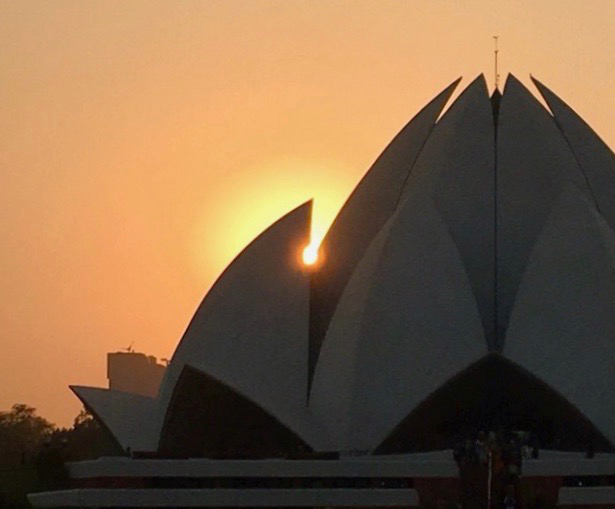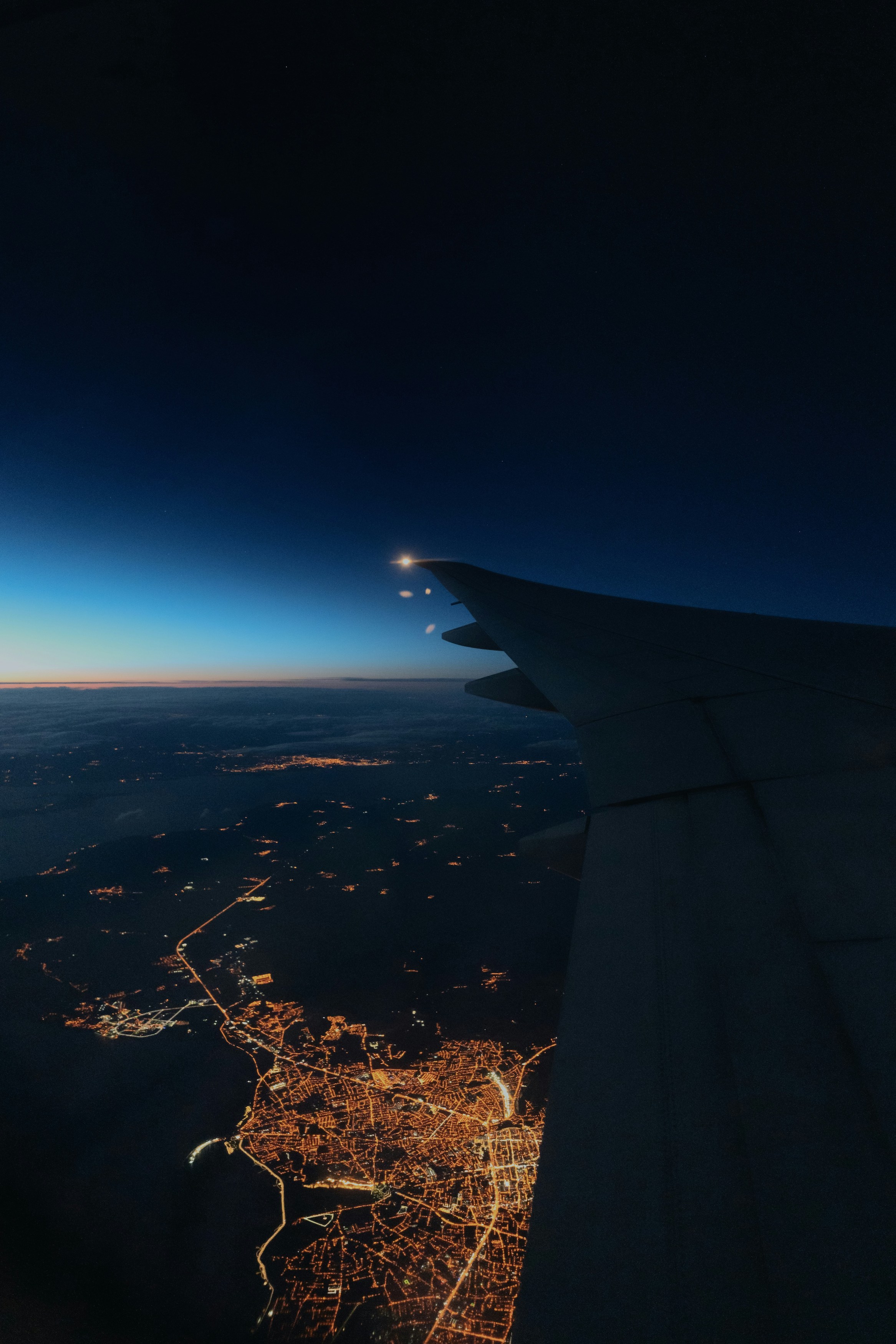
over other horizons

New Delhi: Carrying stuff upstairs, laptop under arm with spiral notepad, pen held in teeth, phone in pocket, water bottle neck clasped between first and third fingers. Pause at the top of the stairs to turn the door handle (how much better it would be if we had three hands), it opens by practiced handle-lever push down with thumb, and timed shoulder-shove. Out into the bright daylight of the roof terrace, carrying everything to the table, and unload piece by piece.

Bring the chair over and sit… now maybe I can relax for a bit in this warm spring-like weather. But the voices start up again as if they’ve been waiting off-stage for their big entry: What’s with all this control-freakery? Why try to do everything at once? Leaving on Saturday 28th night, red-eye flight to Bangkok, change for the Chiang Mai flight and arrive there early Sunday morning on 1st March. I know it’ll be hot in Chiang Mai and as we get nearer to April, hotter still. Then 1st May to UK because I have to get a new passport (no pages left), and two weeks later, back to Thailand on a tourist visa. One week later, the return to Delhi before my India visa runs out… and I need to have that renewed too. Then, to crown it all, it’ll be impossibly hot by the time I get back here, temperatures reaching their peak, 46°C.

Intrusive thinking about ticketing, schedules, filling in forms; uninvited thoughts gate-crash the party, insist on getting attention and shouting out: What’ll happen if the flight from Delhi doesn’t arrive in Bangkok on time, and I miss the flight to Ch’Mai? Noisy internal dialogues about the whole itinerary – I need to ease out from this clamour of conjured-up scenarios, imponderables and enigmas – searching for something creates the idea that it is lost. Delete the ‘my’ in my-self. They’re not ‘my’ thoughts; I don’t need them – the generosity of letting go. None of it is ‘mine’, I don’t think these thoughts, these thoughts think me. I don’t breathe the air – the air breathes me. Cognitive functions synchronize things so the world appears the way it does. I don’t see the world; the brain selects what is seen. Sounds are heard, but there’s no listener. The ear is a musical instrument. The body is a sensory-acoustic device that plays an immense chord of vibrating harmonics at 432 Hz, the natural frequency of the universe.

Mind contemplating the experience of ‘me’ seated on the chair; aware of the pressure points where legs touch the seat, bearing the weight, arms on armrests, and everything else is empty space, just this invisibility. I’m not aware of the mass of internal organs… slightly unnerving; get up and walk around. Feet appear down below on floor surface: left, right, left, right. The roof-terrace enters my vision, floor, wall, the plants – objects seem to pass through the body. Meanwhile, far away over other horizons, another place begins to stir with aliveness; this time on Sunday I’ll be ‘there’ in Ch’Mai – or Ch’Mai will be here in ‘me’…. First posted February 27, 2015 titled Endless horizons.

“And men go abroad to wonder at the heights of the mountains, and the mighty waves of the sea, and the wide sweep of rivers, and the circuit of the ocean, and the revolution of the stars, but themselves they consider not.”
[St. Augustine]

The photo of the sea at St Andrews comes from Sue Vincent’s post: The Elasticity of Time

an almost silent whoosh

an almost silent whoosh

New Delhi: Large birds of prey slowly circling above; they make a sound like the mewing of cats. I’m on the roof terrace, watching them. They’ve seen something and I’m curious to see if I’ll witness the dramatic plunge to Earth to catch the prey. Reminds me of a time I was in Pondicherry, South India, walking through a quiet district in the French-speaking Tamil part of town. Not much going on, turn a corner and on the other side of the path there’s this mother hen fussing around agitatedly with her brood of little chicks: chee-eep, cheep, cheep, cheep, cheep. And the hen is making loud cluck-cluck, cluck-cluck noises, strutting around, strangely fast, unusual body movements; it was like a dance – didn’t look right somehow. The mother hen was dashing about and jumping backwards and forwards and the little chicks were falling over themselves trying to keep up with her. Wow, what is going on here? I stopped to watch.

Then suddenly there was an almost silent WHOOSH down from above. A movement of the air and a large bird of prey with outstretched talons ‘falling’ from sky to earth in a great wide arc; at its widest point, so near to the ground, going at a tremendous speed. I saw it further down the road sailing back upwards in the momentum of its fall, and up in this large curve then winging its way back into the higher altitudes. Amazing… an almost silent whoosh of feathers and outstretched talons just in front of me. But it missed the target! It didn’t get what it was after, the mother hen had saved the chicks with her strange dance. And it’s possible that my being there, having just turned around the corner at exactly the right instant, had caused the bird of prey to misjudge the distance to its target; the kamma of the moment – a fortunate turn of events for these cute little chicks. Mother hen and her happy brood went on with their day: cheep, cheep, cheep, cheep, cheep… story with happy ending.

It really cheered me up – the feeling that everything is right in the world! It helped me a lot too with a problem I was having with an irate person in the office who’d gotten the idea that I was at fault concerning something I’ll not go into right now. Not easy but it only lasted a short time. She was wrong, and I was completely sure about that but there was no hope of convincing her; so, it was just a case of dodging the angry remarks fired at me like heat-seeking missiles. The strange thing about this was, the missiles were not hitting the intended target. It was intense but I was not emotionally harmed. I was able to see what was going on and be one step removed – not unaffected by it of course – but the fierce eyes, the anger, the voice did not cause injury: the missile misses its aim and all that’s felt is the wind of it as it goes by.

So, I was feeling a bit like the little chicks who escaped the sharp talons of the Great Bird of Prey. My mind was transparent, a large empty space; nothing there – no target. Just this freshness, clear comprehension, and seeing with alertness, yet detached from it, knowing it’s Mind that’s the real threat. It’s understood in a moment and after that the system does it by itself; it’s not a ‘mine field’, it’s a mind-mine field. When I think of it now and see these birds of prey suspended in the air, they’re harmless. When I’m not thinking about the threat, it’s not there. The birds hold my attention, their patient observing …
First posted November 29, 2013:

‘Mindfulness is what keeps the perspective of appropriate attention in mind. Modern psychological research has shown that attention comes in discrete moments. You can be attentive to something for only a very short period of time and then you have to remind yourself, moment after moment, to return to it if you want to keep on being attentive. In other words, continuous attention—the type that can observe things over time—has to be stitched together from short intervals. This is what mindfulness is for. It keeps the object of your attention and the purpose of your attention in mind.’ [Thanissaro Bhikkhu, ‘Mindfulness Defined‘]

mindfulness and the sound of rain

First posted August 2, 2015: New Delhi: 6.30am, wake up, turn over and watch the ceiling fan spinning… waves of air movement and coolness on the surface of wet eyes blinking. There’s this rhythmical creak. The fan needs to have oil. A familiarity with the small sound; it’s been going on all night as I was sleeping – half-awake, I’ve been singing a song in my head around the rhythm of it. A curious rising tone, it’s as if it were a question: creak? And, occasionally but not always, there’s a lesser sound, in offbeat syncopation, a small ‘quack’ sound, like a duck, a flat tone, not complying with the question; quack, a response that’s sort of dismissive: quack… creak? quack… creak? creak? … quack. Sometimes the rhythm alters and the ‘quack’ comes before the ‘creak?’ – as if the creak? is asking the quack to confirm what it just said, quack… creak? (What did you say?) creak?

There’s a limit to this kind of entertainment, even in a house where there’s no TV. Time to get up, the air seems different, humid, what is it? Upright position, legs swing over the bed; mindfulness of bare feet on cold floor… switch off the fan and the creak-quack-creak? slows down, stops. I hear rain on the roof window. Go through to the front room and look out; yes, it’s raining. An unusual darkness, heavy grey clouds up there form a kind of low-ceilinged sky. Pixel-filtered light has the quality of mother-of-pearl. Jiab’s slippers are outside, small puddles of rainwater beginning to form in the hollows where her feet have shaped the rubber – we live in a house where you leave your shoes by the door, step inside and walk around barefoot… I should have taken them in.

I bring my chair to sit by the open door and look out at the rain, open the glass doors, take in the slippers, warm air enters. It’s always hot… when I first experienced monsoon weather, I thought the rain would make it cool, but it just makes the ‘hot’ wet.

So, I sit there and listen for a while. The rain is a vast sea of tiny finger-snapping sounds. Individual collisions with the concrete seem to jump out of context with a sharpness – noticeable against a background of random pitter-patter sounds that are always just on the edge of hearing – as if the listening process itself chooses the sound. Mindful of the mechanisms of focusing, receiving the ‘world’ in this unknowing pre-selected form.

Somehow it answers a question I’ve been pondering over for a while, but can’t quite remember what it was… what was it? Maybe I haven’t gotten round to seeing it as a question yet… answer arrives before the question? Mindful about the fact that I can’t get to where I want to get to, but seem to be trying anyway – mindfulness of mindlessness. Mindfulness of the times when I forget to be mindful – the tendency to fall into the dream, into the fiction I’ve created; the unaware habituality. Mindfulness as a lightness, an alertness surrounding thoughts. Intermittent rain continues for the rest of the morning.

“Everything is created twice, first in the mind and then in reality.” [Robin S. Sharma]
note: the phrase ‘low-ceilinged sky’ comes from the title of an album by Stefan Andersson: Under a Low-Ceilinged Sky
: https://www.youtube.com/watch?v=MS7J7APu6lQ

alert 2

First posted September 8, 2012: GVA Switzerland: First dawn light and a black crow, last phantom of the night, flies in from the lakeside with louder and louder calls until it passes below our 7th floor balcony and the sound gets fainter as it disappears behind the building, then into the distance … CRAWCRAW. I’m sitting here, alert, and listening to that sound until nothing can be heard at all. No object to activate ear consciousness. It’s the Sunday morning GVA sleep-late feeling; only the zzz zzz zzz ZZZs coming from all the apartment buildings around. Look out the window, nobody about, streets are empty. I listen for the slightest sound but there isn’t anything… only the act of listening. It’s a novelty for me because I’m used to the hub-bub of Asian cities. Awareness poised, waiting for some object to come into range of the receptors. Without an object, awareness goes on forever. I can hear some sounds that are very far away, therefore I have an idea of ‘faraway-ness’. Beyond the range of receptors there is the great empty dome of sky, the void, suññatā1, spreading out around all things and present in all things

Attention drifts away and a series of incidental thought episodes appear; an anthology of short stories, then it’s all gone again in a moment. The empty space returns, the interval; why this pause? What is this still point where there’s no thought?

‘… (the) still point is not in the mind, it’s not in the body; this is where it’s incapable of being expressed in words, ineffable. The still point isn’t a point within the brain. Yet you’re realising that universal silence, stillness, oneness where all the rest is a reflection and seen in perspective…. personality, kamma, the differences, the varieties … are no longer deluding us because we’re no longer grasping at them.’ [‘The Way It Is’, Ajahn Sumedho, page 123]

The period of pause lasts as long as it takes for the next thought to arise and the tendency to create an identity for it, but before that happens there is this state of nothing. A non-event is taking place; everything gradually stops shifting around, settles down; time begins to stretch out and it all moves incredibly slowly. I forget and attention wanders again.

A pigeon flutters in, comes to rest on the balcony rail, folds away its wings, and there’s this small sigh. Quite a deep bird-sized sigh, filling its lungs with air, releasing it and a little ‘bob’ of the fat round body: ah, that’s nice….it looks at me with extended neck curiously then gets involved in preening feathers in strangely revealing postures.

I hear Jiab in the back room, doing things. She arrived from Phnom Penh yesterday. Not jet-lagged, she says, but we do have to do the laundry at this unusually early time in the morning. The laundry room is in the mezzanine of the building, so off we go, very quietly, one step at a time, downstairs, 6:00AM, past all the sleeping doorways of other people’s apartments, carrying the laundry in bags and trying to be really silent because the whole thing is a bit like being in a graveyard.

Then Jiab wants to sneeze… Oh no! It’s held for a moment then escapes. A surprisingly loud short sound like the bark of a small dog. The noise of it echoes around the tiled corridor and staircase, the window glass panels vibrate for a moment; metal rails hum in resonance and there’s the echo of it all through the stairwell. Dynamic. The silence is shocked by it! We spend some time after that trying to control the intense laughter as we go quietly down with our heavy bags.

1suññatā: (Śūnyatā) the absence of inherent existence in all phenomena.

‘Alert to the needs of the journey, those on the path of awareness, like swans, glide on, leaving behind their former resting places.’ [Dhammapada verse 91]

‘Ked’

First posted June 21, 2013: New Delhi: I leave the door open that leads to the roof terrace and come downstairs. Kusum is in the kitchen, cleaning up. She says: You no close door up? Pointing, so that I can understand her English; large black eyes look at me, migrant worker from Assam, North-East India, near to Myanmar. Then she’s smiling in a kind of patient way when I start to explain I’d like to have the door open, to get fresh air? Looking at me like, does she have the energy to tell me this? Ked come in. You know Ked? …raises her voice because maybe I’m deaf or something, Ked come in, you open door. And I’m thinking… what’s Ked? And there’s that incredulous look. You no unerstan’ Ked?Ked come in door, come down stair, into house steal food from all th’ trash‘n make a mess everywhere! And then I understand Ked is ‘Cat’… pronunciation difference. She sees the dawning of recognition on my face. Ahh… she says on my behalf, nods her head and with a final flash of these eyes, goes back to her work; like I need to be told everything. I go upstairs to close the door then decide to step out on the roof terrace where the air is cool and nice.

Wow, Kusum having a bad day. I make a mental note to always close the door leading to the roof terrace. She’s right, of course, about ked, cat; instinct and the window of opportunity – or door, in this case. There’s also monkey, of course, and rat, and all the other freeloaders and opportunists around here in the world of Wild Life; claws, wings, beak and teeth, quick and clever; skills evolved from the age of the dinosaurs. The ability to grasp, snatch, hold and eat. Human beings in the Western world similarly motivated, driven by desire. Reacting to the sensory world – sights, sounds, smells, tastes, touch, mental objects, and grabbing at these with extraordinary speed. The habituality of it inherited from former lives… the reason I was reborn in this world is that I’m attached to everything I love and hate… and I keep coming back for more of the same! It’s the relentless search to feel good about everything, and avoid feeling bad about everything when the good feeling falls apart.

Loving kindness and compassion for those stuck on the consumer treadmill without any good reason beyond the treadmill itself (dukkha). Earning just enough money to pay for what it takes to make us feel good for a short time, then we’re feeling bad again. All we really want is some stability and calm but it seems to be so hard to find.

It’s a characteristic of the system that it creates the predicament. Most people think there’s no way out, even though the opportunity is there (Third Noble Truth). It’s like the example of being locked up in a prison cell for years. Then, one day somebody reaches in through the window and gives you the key to the door, so you can open it and you’re free. But instead of doing that, if you’re a ‘believer’, you put the key in a special place and pray to it every day, believing you’ll be able to endure all the hardships of your prison cell by worshipping the key. You don’t know what to do, doubt, uncertainty, fear, confusion. Other people, ‘non-believers’, disagree with your worshipping; they say, we don’t believe in religion or anything, so they decide the best thing to do is just get rid of the key and throw it out the window.

The key is not an end in itself. Just a key; meditation practice, mindfulness, just the intention to be mindful is enough. Back off from the automatic pull; the sense of something out there that I’m drawn towards… and the internal sense of ‘me’. There’s nothing there, only the Five Khandas (Five Aggregates): form, feeling, perception, mental formations and consciousness. ‘… stopping the mind, stopping the flow of thoughts that are proliferating, stopping the flow of moods that get drawn into either attraction or aversion. We return to a clear center, to awareness’ [Ajahn Pasanno, ‘On Becoming and Stopping’]. No holding on to anything, no holding on to the teachings even. Learning how to use the key. Maybe it’ll take a lifetime, but what else is there to do that’s as valuable as this? Allowing everything to arise and fall away. Cessation. No remainder. Nothing whatsoever is to be clung to: sabbe dhamma nalam abhinivesaya.

The story about the key comes from ‘Religious Conventions and Sila Practice’, Ajahn Sumedho, Cittaviveka 1992. Photo: the door to the roof terrace – entry point for Ked

the quiet space

First posted August 28, 2020: Bangkok: Switch off the TV and switch off the media in my head, their weapons of mass distraction that blind and deafen the population. Leave it alone, disengage from all things hateful before it starts burning down the house. Enter the quiet space and the silence is deafening, random notes of birdsong far away and beneath that, a deep quietude. It’s so remarkably neutral, I feel I’m sometimes not here at all. Seated on the sofa, watching my own breathing, I need to clear the mind of self, starting with the word ‘self’ itself.

Focus on nothing, despite the tendency to think of nothing as something. Nothing becomes both subject and object… what’s happening? I am not here, incognito perhaps, concealed in a makeshift identity. I don’t really know, it all seems to vanish as each new day dawns and deletes the memory of the previous day, an hour passes, replaces the hour before it and I can’t remember anything that recently happened.

A shipwreck of unrelated remembered things is cleared away and forgotten. Does anything still linger? An immediate awareness of self, held in the act of endless seeking, comes to an end. There is no seeker but there is seeking. There is seeking but no object. Seeking non-objects means seeking the motionless space in which the answer is, before the question is asked. The place where everything is and is not.

No-self, nothing exists anywhere, any time, ever. Deathlessness is the death of death… this too shall pass, the fragility of newly born beings, finely tuned creaturely beings which appear briefly, limited lifespan, and all that remains is the breathtaking tracery of what all this was, on an immense scale, a moment before it passed.

Lifetimes of sensory input, arising and passing away, karma of circumstances. A story is created in the mind, a few pieces get stitched together, switched around, and let’s say this is how it began: ‘Once upon a time.’ A story inside a story (inside a story) leading back through all the generations of previous segments of the story like this and linked to a lineage of ancient stories interconnected through a great number of former lives in the distant past.

An alertness is all there is, receiving the world and, since we are also the world, so to speak, it’s an all-inclusive enfolding, unfolding, and remaining in the present continuous form, ‘listening’ and ‘seeing’ and here comes the in-breath hurriedly at first, followed by the long, long out-breath. The in-breath comes again and so on like that until the mind forgets and most of it, then all of it, drifts into the past tense and gets forgotten.

“There is no thing there. There is no real substance, no solidity, and no self-existent reality. All there is, is the quality of experience itself. No more, no less. There is just seeing, hearing, feeling, sensing, cognizing. And the mind naming it all is also just another experience.” [Ajahn Amaro]

non-objects

First published 12 December, 2015: Delhi Everything is new in this house, familiar things from the old house still wrapped up in boxes bearing the company’s logo. Now browsing around the rooms and the cupboards here and there, looking for something I need. Moving around the guys who work for the shipping company without getting in their way, looking on shelves, looking and looking for this thing and not finding it. Finding other things, but the thing I’m looking for remains unfound. I go into the bedroom, open a cupboard door. Door latch goes click, look inside; things I recognize everywhere but not what I’m looking for… wait a minute, what am I looking for? Pause for a moment and realize I’ve forgotten what it was.

Close the door: click, and go away. The act of closing that door, the click sound, seems to bring closure to the search – there’s a sense I discovered it’s not in that cupboard so I can take that off the list and check out other places. But… wait a minute, that’s not it. No, what I discovered was that I’d forgotten what it was I was looking for… when that cupboard door is opened, a strange vacuum sucks away the identity of things in the mind. It comes as a shock. I’m focused on the empty space where it used to be… insisting on something that’s not there, non-objects. Seeing the awareness of seeking, as if there were two minds: the seeing mind sees the mind that seeks; a restless, searching for things-that-got-lost mind. Then this seeking mind notices that it’s been seen, and there’s a shift, the awareness of non-objects… awareness of ‘awareness’ itself. The motionless space surrounding everything.

No idea what I’m looking for, trying this and that to figure out how I will ever recognize it if I don’t know what it is. All memorable characteristics and every single thing about it gone. Reluctant to give up the search, I’m there in the midst of the most remote possibility sometime after that, noticing some familiarity shouting out at me… why is that object seeming to seek my attention? Pick it up and remember the thing; seeking seen in a created world of being lost.

I know that nothing has ever been real
Without my beholding it.
All becoming has needed me.
My looking ripens things
And they come toward me, to meet and be met.
[Rilke, ‘Love Poems to God’]

buddhists and christians

First published November 9, 2012: Chiang Mai: A very nice short flight here to Chiang Mai from Bangkok yesterday, 1 hour 10 minutes. They serve a small meal; it was like going upstairs to have lunch in the clouds, then it’s time to come down again. During the flight I was able to have a discussion with somebody I met there about Christianity and Buddhism – is there ‘something’ there (God) or is there not anything? And ‘not anything’ implies something that cannot be verbalised.

It is a bit like tight-rope walking for me as a Western Buddhist and now 30 years in Asia but still subject to the conditioning of the Church and childhood memories of it in the West. With my Christian companion here, there is agreement on many things. The main thing we agree about is that human beings may experience a certain kind of realization that there is no ‘self’, no identity, nothing there; nothing in the mind/body organism, it’s a construct. There’s a feeling of ‘lack’, and the shock that comes with this discovery causes dismay, distress, etc. Christians say the realization of emptiness is the absence of God, and this knowledge facilitates the entry of God, the creator of everything. This is what fills the emptiness; a significant turning point for all Christians.

Buddhists encounter this feeling of ‘lack’ in the same way but will not ‘fill’ it with anything, rather, they contemplate the emptiness of it in depth; examine the associated emotional reactions with mindfulness and come to see that, this  is how it is. Śūnyatā, the emptiness, the lack of ‘self’ is everywhere and in all things. The understanding that everything is without ‘self’ helps Buddhists to contemplate the constructed nature of the mind. It’s possible to see the whole picture; how everything works and where we go from here. It’s an open-ended, investigative approach that may lead to an understanding of the non-duality of the observed world and the observer of it, together as a oneness. What the Christians call God must be inside this, because it is all-inclusive. There cannot be anything outside of it.

Christians will depend on the attachment to a belief in God for guidance and that’s how they see the world; they might say that ‘emptiness’ for the Buddhist is the Buddhist sense of God? And Buddhists could consider it this way, but the Buddha didn’t see any point in going further with that because the important thing is to make sure you are seeing reality correctly; not caught in wishful thinking. Necessary because working only with belief and faith and no pragmatic teachings means there are all kinds of things that can go wrong with it. Christians are focused on this, what it is believed to be; Buddhists say conceptualizing a God leads to attachment, tanha; the desire for, and attachment to, ideas and ideals, views, opinions, theories, conceptions and beliefs. [Dhamma-tahā, Walpole Rahula].

If I say the word ‘God’ to myself, something comes into my mind, the word ‘God’ has an immediate emotive effect. Certain assumptions arise and the mind is already closed around it; it’s a ‘special’ thing [Ajahn Jagaro]. When Christians talk about God, what they’re referring to (I think) is the God they are creating in their own minds – their loving devotion to a personal god: a deity who can be related to as a person, but God is beyond everything that is conceived or thought about. There is no adequate analogy, words cannot describe it. It cannot even be imagined because it is beyond space and time. Buddhists stay separate from the God concept because to become involved with it means making assumptions about a kind of consciousness that is totally different from ordinary mind states. This is not to say there is no God, for me, at this time, it is impossible to express in words what God could be. Then there’s a stewardess announcement: The plane is starting its descent, please put your fold-away table up, arm rest down, and chair forward. A small clutter of prepositions, and I get lost in the directions for a moment. Then we’re on firm ground again.

the forever turning

First published May 3, 2017: New Delhi: House agent came to the door, saying they are going to demolish the building, and when would be a good time for the architect to come to see the house – it was said like how we decide to delete a message on the phone. We knew about the plan and are prepared, but the emphatic bluntness of it… what’s gone is gone, the forever turning wheel. “Don’t let the sun go down on me.” My world is tipping over, mind driven by some kind of energy, a curiosity and desire to get involved with it. Words come out grouped in chunks, searching for a connection as if they had a volition of their own.

The characteristic mind reaction when confronted with an immutable truth; when I understood that my PHN headache is a permanent condition. As Jude says, the mind is creative no matter what the stimuli. Imagination let loose like a racehorse, goes careering off then is yanked back unwillingly and all kinds of fearful things arise, created by the struggle. How to have mindfulness so I can catch that creative awareness before I get hijacked by how bad it seems.

World-wide monitoring of events, immediate media coverage, on the spot reporting in a here-and-now performance starring ‘he’ who is about to be demolished: boom, crash, bang! It’s finished before it began, the whole scene gets folded into itself and packed away, gone – like it never happened, no evidence remains. Grab the bags and let’s get out of here. ‘I’ become ‘him’ over there, third person singular, object pronoun, making an escape out the window into the garden before the walls cave in. Away in the car through a swirling cloud of masonry brick dust, and onto the long straight road to the airport.

Check-in for the overnight flight to Bangkok, thinking of tomorrow and the day after tomorrow … I’d like it if the whole thing could be put on fast-forward so I can get it over and done with, but it hasn’t even started yet. I’m here on the plane and in my mind, are pictures of a house falling down around my ears.

The flight is a directionless experience. Look out the window, total darkness, no sense of moving forward, we could be flying sideways. When I try to think of it, there’s the image of a journey that leads from here to there, the route we take is an elevated highway in the sky, we’re in a long silver night coach with the moon and stars and stewardesses with the drinks trolley. Occasional air turbulence suggests small bumps on an otherwise very smooth road surface – sufficient to tip me over and fall asleep, with not even the sense that we’re going anywhere… just the noise of the engines and hiss of the air.

The present moment is not an absolute. It’s something that we’re [unconsciously] fabricating, and the goal of the practice is to learn how to fabricate it in a new [nirvanic] direction…. The present is here to be used, and the teachings are here to teach us how to use it wisely” [Thanissaro Bhikkhu, “The Use of the Present,” 2016-11-28]

the bird is the messenger

First published August 19, 2017: Delhi: It’s as if a note was tied around its tiny leg bringing us the news; we’re moving from here at the end of September. After that, three months in temporary accommodation, then we’re leaving India for good.

There it is again, the tiny bird in the bush outside, and I’m inside the room, trying to get a clear photo of it through the window glass. There were three of them there, the other two out of sight right now. They move so fast, quicker than thinking. It’s the Purple Sunbird, olive green as youngsters and these are so small, almost not there at all. I blink my eyes and they disappear… the quickening. See one for an instant then it’s gone – takes my breath away.

Even now, it all seems to be coming an end – a cancellation of everything that remains, no time to settle, before we’re gone. The disappearance of the past, a new direction, and return to Bangkok – return to “GO”… time is just slippin’ away.

It doesn’t seem so long ago that we came to this house, characteristics of the shift from house A to house B. At the edge of my vision, household items look at me as I pass… poised in a choreography of dance steps, ready for their next move. The great leap… percussive landing, clatter, scrape, bump and hastily take up their positions in new rooms and the packaging is tidied away

In the morning, we wake up in somebody else’s house… a familiarity of objects out of context in these new surroundings. I’m in someone else’s life – stepped out of my own life, into theirs. Same world, just a different angle on how it’s seen, felt and understood– same sensory awareness mechanism creates the kaleidoscope of different coloured lights.

Where am I? Maybe I’ll find myself in the Lost and Found Department. Searching among the ghosts there, for a Self gone missing – but if it can’t be found, any one will do. I can bear with the tendency for “self” to think it’s different from all the other “selves” going around thinking they’re different too.

Who am I? The world is how I/you perceive it, he/she, perceives it. We/you and they see and look into each other’s eyes. A window opens into another realm inhabited by him, her and them. The sense of their presence inter-lacing with the presence of others before them and as yet nothing of our own. Generations and generations of karma in an arrangement of cause and conditions and interconnected lives

I remember coming here with the house agent. Walking up the path, open the door… ghosts of previous tenants rush away to their hiding places in a whisper of movement. For me there’s only the dust of empty houses I’ve viewed everywhere in the city – looking for somewhere to sit in a room with no furniture. Leaning thus, in a doorframe, and maybe this will do. Maybe here we can invent a life we’ll be happy with. Awareness takes it all in, puts it away in a new folder. A new reference point: ‘this’ is where the heart is, home is where I hang my hat.

Death is drawn to sound
like a slipper without a foot, a suit without its wearer,
comes to knock with a ring, stoneless and fingerless,
comes to shout without a mouth, a tongue, without a throat.
Nevertheless its footsteps sound
and its clothes echo, hushed like a tree.
[Excerpt from Pablo Neruda, “Death Alone”]