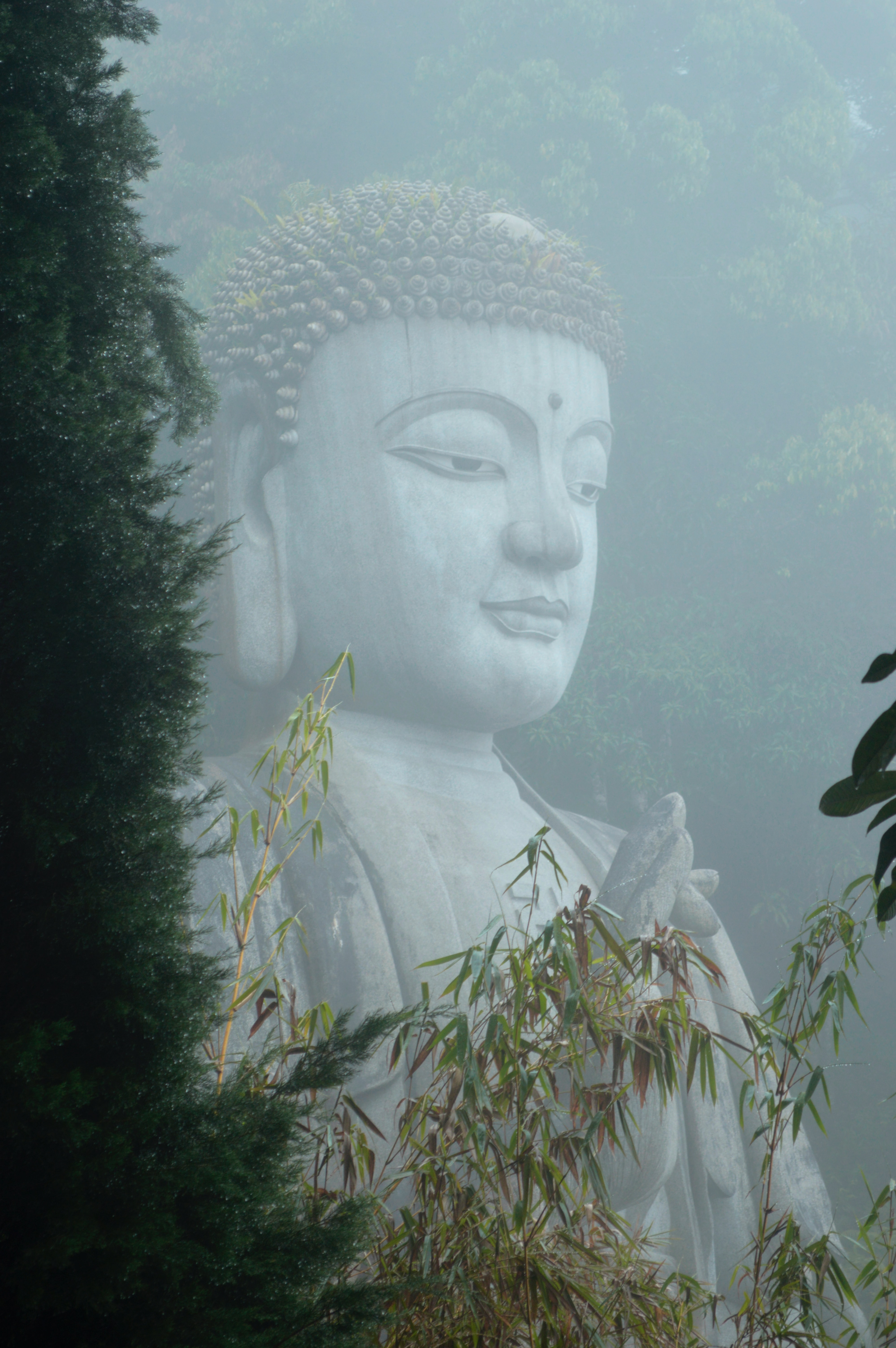
off the wheel, part two

With Gratitude and Respect, this is the second part of a a summary of “Off the Wheel”, by Ajahn Amaro in 2021.

In Thailand last century, there was a very prominent writer, thinker, and teacher named Ajahn Buddhadasa. He emphasized that the way to make the teaching on dependent origination really useful is to understand it and apply it to our everyday life, our moment-by-moment experience. The Buddha’s teaching is essentially practical, so pointing to the use of this teaching here and now, discovering how it can help us here in this very lifetime, is much more pertinent than talking about its relevance in past lives or future lives. Ajahn Buddhadasa confined his teachings of dependent origination to how it describes the arising of dukkha here and now, how it comes into being in our present experience.

So, how can we be free of the addiction to becoming? The cycle of becoming bhavacakka is our drug of choice to which we are all habituated, whether it is ‘becoming’ based on sense-pleasure, or becoming born of noble aspirations or caring for our family. The objects of becoming can vary from those which are reasonably wholesome to those which are downright destructive, but the process works in exactly the same way irrespective of the object, and if we don’t understand how it works, we are inevitably trapped in that endless cycle of addiction. The Buddha’s teaching helps us to recognize that trap and to break free from it.

The first exit point is at the point of dukkha itself. You’ve already arrived. You’ve woken up. You find yourself barefoot, surrounded by broken glass, thinking, “How did I get into this?” The Buddha said (A 6.63) that suffering, dukkha, ripens in two ways: it either ripens in further suffering, in which case you just keep repeating the cycles over and over again, or you ask yourself: “How did this happen? I said I wasn’t going to get caught in this again, but here I am —there has to be an alternative.”

There is a feeling, an intuition in the heart of that other way. At some level you realize that freedom from addiction must be a possibility. And that very intuition is what the Buddha refers to as faith, saddha. This is how suffering can be a cause for the arising of faith that addiction and endless suffering can’t be the only possibility. There has to be an alternative, and even if you haven’t figured out what the alternative is or how to find it, something in the heart is saying that this is how to find the way to become free of dukkha. So, the suffering you experience is a cause for the arising of faith, and that faith is a cause for a sense of delight or gladness—the potential that this addictive habit can be broken. This brings about a relaxation, a calming of the body and the mind arrives at a quality of sukha, happiness or contentment.

When the heart is content and at ease, it is natural for the mind to focus on the present moment. When there is sukha, it becomes a basis for samādhi. Samādhi is then a cause for the arising of insight. The knowledge and vision of the way things are, leads to letting go, non-attachment. The heart sees that everything is impermanent, empty, and not self. Habits of attachment and identification are relinquished. That letting go leads to freedom and to full enlightenment, full liberation.

Another point where we can exit the cycle. is the link between feeling and craving, between vedanā and taṇhā. Most meditation teachers refer to this as the weakest link in the cycle. – there can be a clear and unconfused mindfulness with regard to feelings, whether pleasant, painful, or neutral. Where it all goes wrong is when the mind buys into those feelings, trying to get rid of a painful feeling, grasps hold of a pleasant feeling, or actively ignores a neutral feeling. That’s when the confusion really kicks in and there is craving, clinging, and becoming.

Before it develops to this stage, the realm of feeling, as it is, can be the easiest point at which to break the cycle; you see there is a pleasant feeling, you see there is a painful feeling, you see there is a neutral feeling; but the heart is not ensnared by the feeling, not caught in it. Be aware that the mind is always drawn beyond the feeling, adding on to it all the shoulds and shouldn’ts, and chasing after how it ought to be—being caught up in the follow-up to a feeling.

This practice is all about working with the feeling that is actually present; for example, somebody comes to you, very upset about something and is asking you to fix it. Your habitual reaction is to feel you should do something. But if instead you say to yourself, “This is the feeling of someone-is-upset-and-asking-me-to-fix-it—that is what this is,” in a strange and mysterious way, you enable yourself to attune more completely to what is actually present. Out of that attunement, what is appropriate and helpful for the situation can arise. If we are busy trying to figure things out or just reacting from memory and hoping to sort things out without reflecting, we don’t notice that we’re already caught up in the experience, we haven’t noticed our own conceptual proliferations, and therefore our response is skewed. This is a helpful practice, you can use it any time—when you’re queuing for food, feeling the standing-in-the-queue-at-lunchtime-trying-not-to-think-about-that-last-piece-of-cake feeling; or reading a book and feeling the I-wonder-if-I’m-almost-at-the-end-of-the- chapter feeling.

We bring attention to the actuality of what is present, and taking the trouble to do that opens up to us a huge amount of psychological space that is always present and always available. Often, though, we are unaware of that spaciousness because we get drawn into trying to fix things—either trying to grab hold or take advantage of a pleasant situation or trying to fend off or get away from a difficult or painful situation. But if we simply bring our attention to what is here, what is present, then we are able to employ the qualities of mindfulness and wisdom.

One of the disciples of Luang Por Dun asked him if he still experienced anger. Luang Por Dun answered that the anger was there, but he didn’t accept it. He gave this answer in a very matter-of-fact way. It was as if he was saying that anger was there, but there was no place for it to land. The delivery arrives, but he doesn’t sign for it, so it’s returned to sender. The feeling of aversion and negativity can be there, but there’s no place for it to land, there’s nothing for it to hang on to. The feeling of aversion or anger arrives at the door, but there’s nobody to sign for the delivery. So it does not give rise to any kind of unwholesome action or speech.

This is why the meditation upon feeling is a very helpful practice. Just try to stay in the realm of feeling and watch as feeling tries to drift toward craving. There’s a big difference between liking and wanting, or not liking and hating. They’re not the same things. We can hear something or feel something that we do not like; we can recognize that we do not like it—it is an ugly sound or a painful feeling—but we don’t have to contend against it. We don’t have to hate it. Liking or disliking can be completely peaceful. But as soon as they transmute into wanting or hating, there is a distortion. You can’t be peaceful and hate at the same time. That doesn’t work. But if there is an ache or a pain in the body, you can dislike it but still be at peace with it. There can be a clarity: “Ouch, I don’t like that.” But no contention arises against it, no hatred toward it. That is a prime opportunity and an important area of the practice to develop. In feeling there is no intrinsic confusion or alienation. There can be a complete and comprehensive quality of clarity and peacefulness in relationship to feeling.

The last exit point from the bhavacakka, which I’ll just mention very briefly, is not to let the whole thing begin in the first place. As the mind is trying to drift into avijjā, ignorance, notice that. When mindfulness starts to slip, don’t allow avijjā to come into being. Don’t let that dulling or obscuration arise.

This is something to practice when the mind is very clear and awake in meditation. You can see the mind being drawn toward a sound or a memory or a feeling—it is almost like a tugging at your body or your clothes. You can feel the mind being drawn into wanting to attach to this, wanting to have an opinion about that or to remember this, or to absorb into a like or a dislike. Don’t let that happen. Don’t let that complication arise. Just stay with the quality of vijjā—awakened awareness, knowing. Be that very knowing. Watch those urges. Be aware of the mind trying to lurch toward an opinion or a memory or a sound, lurching toward avijjā. And then, having seen that, calmly say “No”—do not allow that ignorance to arise. This is the most subtle but also the primary and most complete way of breaking the cycle—not to let the cycle arise in the first place.

Link to the original: https://link.springer.com/article/10.1007/s12671-021-01621-9

off the wheel

Ajahn Amaro
[Excerpts from an article in Two Parts, link to original at the end of this text. This is Part 1]

When we talk about rebirth, people often think in terms of past lives, future lives—in what you could call a metaphysical way, beyond the scope of our everyday vision and perceptions. That perspective is understandable, and yet when the term “rebirth” or “the cycle of birth and death” is referred to, it is not always referring to a sequence of events over a number of lifetimes.

The Buddha does indeed refer matter-of-factly to our past lives and future lives in many instances throughout the teachings. That’s a very common way of speaking.

But when talking about the process of rebirth, what causes it and how it is brought to an end, particularly the teachings on what is called dependent origination, the Buddha is often referring to more of a moment-to-moment experience. The Commentaries tend to focus more on dependent origination as a process which takes place over the course of several lifetimes, but careful study has shown that in the Suttas themselves, a full two-thirds of the Buddha’s teachings on the subject refer to it as a momentary experience, a process that is witnessed in the here and now, in this very lifetime.

The cycle of dependent origination describes how a lack of mindfulness, a lack of awareness of experience, leads to dissatisfaction—the arising of dukkha. The first link of the whole sequence is avijjā: ignorance, not seeing clearly, nescience. This is the catalyst for the entire process. The root cause of suffering is, not seeing clearly. avijjā. If there’s vijjā, if there is knowing, and awareness, then suffering does not arise—there might be pain, but dukkha, anguish, dissatisfaction will not be caused.

As soon as avijjā is there, this leads to the fundamental delusion of subject and object. Avijjā, ignorance, leads to formations, sankhara – that which is compounded, that which is formed. When there is ignorance, when the mind doesn’t see clearly, this creates the foundation for the subject/object division. The subject/object division strengthens in the next stage of the sequence: formations lead to consciousness. Consciousness in turn leads to nāma-rūpa—body and mind. Once there is ignorance, there is the subject/object duality (a “here” and a “there”), which is like a whirlpool that gets stronger and stronger until it conditions the world of the senses.

The saḷāyatana, the six senses, are conditioned by that separation between subject and object, the knowing and the known. The spinning energy of the vortex makes it seem that seeing, hearing, smelling, tasting, touching, and thinking are all personal. Once there is the substantial feeling of a subject “here” and an object “there”, this gives rise to the impression that there is a “me” who is seeing, hearing, smelling, tasting, touching, and thinking. Attachment to the senses then strengthens that duality, and the vortex gains energy.

When something is seen, heard, smelled, tasted, touched, or thought about, when one of the sense organs contacts an object, that is what we call “sense contact” (phassa). Sense contact leads to feeling, vedanā. When there is phassa, there is an effect from that sense contact, a raw feeling that is either pleasant, painful, or neutral. That feeling then conditions craving, taṇhā. A pleasant feeling coupled with ignorance lead to a desire for more. An unpleasant feeling coupled with ignorance lead to a desire to get rid of. A neutral feeling coupled with ignorance is taken as a subtle kind of pleasant feeling; thus, the mind inclines toward desire, and craving rapidly escalates. If these conditions are not seen clearly, if ignorance persists, then craving leads to clinging (upādāna) and the clinging leads to becoming (bhava). As you reach bhava, what you can see is a rising wave of absorption. First of all, there is, say, a pleasant feeling. The mind thinks, “Ooh, what’s that?” and then “Oh, wow! I’d like one of those!”

Just so this isn’t too theoretical, imagine you are queuing up to get food. You see how many slices of cake there are left. As you approach the front of the queue you are thinking, “There are only three slices left and there are five people in front of me. Hmm…look at that person in front of me. Is he a cake kind of a person?” The mind sees an object; then there’s the craving and craving leads to clinging. You think, “I really deserve a piece of cake. I really need to have a piece of cake.” And then that clinging conditions becoming: “I’ve gotta have it! I’ve gotta have it!, and getting that cake becomes the only important thing in the world. Suddenly the whole universe has shrunk to taṇhā upādāna bhava—“craving, clinging, becoming.” The world narrows to that desire object. Bhava is that quality of the mind which is committed to getting its desire object. It is the thrill of riding the wave. When you see that last person in the food queue pass by the cake and you realize, “Yes! I’m gonna get it!”, bhava is that thrill of guaranteed getting, acquisition.

The peak of excitement is the moment when you know that you’re going to get the desired object. At that moment you are guaranteed to get the object of your desire, but it hasn’t reached you yet. That is the moment of maximum excitement—when you actually get the piece of cake and take a bite, from there on it’s all downhill. The moment of getting is already the beginning of the disappointment.

A. A. Milne, the author of Winnie the Pooh, makes this same observation: “Well!” said Pooh, “What I like best…” and then he had to stop and think because although eating honey was a very good thing to do, there was a moment just before you began to eat it which was better than when you were but you didn’t know what it was called.” (That was written in 1928, so he probably hadn’t yet come across a translation of bhava.)

Even before you’ve got the honey in your mouth, you’ve reached the height of excitement—this is bhava. This is becoming. And as the Buddha pointed out, living beings are committed to becoming, they relish becoming, they adhere to becoming. “Becoming” is the drug of choice. We love that feeling because at that point life is very, very simple. “I want it, I’m going to get it—yes!”

Everyone has their own particular desire objects, but in a way the specific object of desire is secondary to the actual process of desire and becoming. All of us will have particular things that we find compelling, where the mind picks that object up and gets deeply absorbed in it. What things really have a pull for you? The achievements of your children? The publication of your books? Or it could be getting any kind of affirmation. It can be wholesome or unwholesome, but in that process of bhava, the mind becomes completely absorbed, though it hasn’t quite got the object yet.

After bhava the next link in the chain of dependent origination is jāti, which is birth. This is the point of no return. Now you’ve purchased the item, now you’ve got it. Shortly after comes the bill. Having acquired the desired object, there is a price to pay. what follows is sorrow, lamentation, pain, grief and despair.

Having got what we wanted; we then get the whole package that comes along with it. If it was something pleasant, we are faced with the desire for more. If you are particularly enthusiastic about wonderful food, once you’ve eaten it you’ll find you are left with an empty plate, and you may think to yourself, “Oh! I’d better go and get some more.”

So, we end up with that feeling of despondency—you got what you wanted but then it didn’t really satisfy you, or it wore out, or it was so sweet at the beginning and then it turned into hard work. You thought it was going to be so great that you didn’t realize you were going to get all this other not-so-nice stuff with it. Thus, whatever shape it takes, whether it’s subtle or coarse, that dukkha feeling is one of disappointment, desolation, sadness, incompleteness; that sense of barrenness in the heart, feeling lonely, unsatisfied, insecure. Suddenly there is dukkha, it can happen very, very fast. The mind is caught by a sense object. There is the thought, “Oh, that looks interesting.” And there you are, you’ve eaten that slice of cake, in spite of the fact that you are supposed to be on a diet. The whole process of dependent origination can happen literally in a finger-snap.

But here we have time to contemplate the process, and see how it works. We can recognize that there are different elements to it. There are different ways of breaking free. This cycle is called bhavacakka, “the cycle of becoming” or “the wheel of rebirth.” It is called a cycle because at its end, it leaves us feeling incomplete, lonely, or sad, and the way we deal with that kind of unhappiness is by resuming the cycle as soon as the possibility of another gratification comes along.

This is how the deluded mind works—irrespective of whether the object is wholesome, unwholesome, or neutral, this is exactly how it works. The mind is caught in these cycles of dependency, cycles of addiction. With his teaching, the Buddha is trying to help us free the heart from this addictive process; the main form of which is addiction to becoming. The bhavacakka, the cycle of becoming—that is our drug of choice to which we are all habituated, whether it is becoming based on a coarse sense-pleasure, or becoming born of noble aspirations or caring for our family. The objects can vary from those which are reasonably wholesome to those which are downright destructive, but the process works in exactly the same way irrespective of the object, and if we don’t understand how it works, we are inevitably trapped in that endless cycle of addiction. The Buddha’s teaching helps us to recognize that trap and to break free from it. [Continued in Part Two: 07 December 23]

Link to the original: https://link.springer.com/article/10.1007/s12671-021-01621-9

time & timelessness

Ajahn Amaro

Let go of attachment to the body, to personality, to feelings of “I am.” By letting go of self, by not creating an identification, an individuality, an “I,” we are not creating bondage to the feeling of self. Let go of the sense of location. Let go of the feeling of place, recognizing, awakening to the fact that awareness is unlocated. Non-locality is the nature of the mind. It does not exist fixed in any one place. Space does not apply in the realm of the mind, the nāma khandhā. Here, there, everywhere, nowhere— “where” does not apply. Let go of self, let go of place, and let go of time. In the Bhaddekaratta Sutta (M 131) the Buddha describes the ideal abiding, the ideal solitude. One who is wise lets go of thoughts of the past, lets go of thoughts about the future, and lets go of creations about the self here in the present moment. This is the ideal solitude, the ideal abiding, the ideal security of the here and now, of the paccuppanna dhamma, the ever-present dhamma.

When the heart rests in this quality—this awareness, vijjā, this knowing, attentive to the present reality—there is letting go of time. A conditioned mind habituated to Monday, Tuesday, Wednesday, to four o’clock, five o’clock, six o’clock, tends to see the past as solid reality stretching off into the infinite behind us. It creates the future, stretching off endlessly ahead of us. Dates that are still to come seem like real days, real months, real years, while the present seems like an insignificant little sliver, squashed between the vast and incalculable past and future, back to the Big Bang and beyond, off into the infinite possibilities of what is to come. This little sliver, this tiny unimportant moment between a vast past and a vast future, may seem insignificant, nothing very much. But this is simply our conditioned perception of time.

When there is wisdom, we bring attention moment by moment to the felt experience of this life. There is a watching, a contemplating of how the world is formed, how life is experienced and shaped. We see the past is a memory, constructed here and now. The future is an imagined fantasy. Future and past—these words refer to formless potentialities, concepts that are generated and fabricated here and now. The image of the past, the memory of the past arises here and now. The imagined future is here and now. And the closer we look, the closer it is seen that the present is actually an infinite plain of being—the future and the past are insignificant little threads dangling in the breeze like broken spider webs, nothing very much at all. The absolute reality of Dhamma, the very fabric of nature, is here and now. Dhamma is sandiṭṭhiko, apparent here and now, akāliko, timeless, paccuppanna, ever-present.

This present is where time and timelessness meet. When we gather together to chant, to meditate, that is linear time intersecting with the infinity of the akāliko dhamma, the timeless reality, sandiṭṭhiko, apparent here and now, paccuppanna, ever-present. Moment by moment, day by day, the timeless meets with the time-bound, with the attributes of the seeming self—this body, this personality, this name, this role in society. Who am I? What is the room I live in? My role as a retreatant, as a monastic, as a listener, as a speaker… is what? Those personal qualities meet the fundamentally non-personal. The role of space, me sitting in my spot here on the central cushion, you in your spot, your mat, your place; this is the reality of three-dimensional location meeting the non-locality, the unlocated quality of mind. This is the task: to attend to this meeting point of self and not-self, time and timelessness, place and placelessness. This is the mysterious Middle Way where we respect both those realities. If there is clinging to the unconditioned or the formless, there is a loss of harmony, a loss of attunement to the realm of form. If there is clinging to the realm of form, identity and time and place, there is a loss of attunement to the timeless reality. The Middle Way is to attend to both; to the meeting point, the mysterious balancing point of the conditioned and the unconditioned, the created and the uncreated.

The word the Buddha coined to refer to himself is Tathāgata. It is composed of two parts: “tatha” or “tath” which means “such” or “thus”, and “gata” or “āgata” which mean, respectively, “to go” or “to come.” The two halves together make Tathāgata, but as you can see, there is an inherent ambiguity in the word. For millennia there has been a debate over whether the Buddha meant “tath-āgata” (come to suchness, come to thusness, one who is totally immanent) or “tathā-gata” (one who is gone to suchness, utterly gone, transcendent). Is the Buddha principle totally here or totally gone? Is it immanence, embedded, embodied in the living world, the sense world; or is it totally transcendent, beyond, utterly unentangled? In Pali, the “a” at the beginning of a word means it is negative, so gata means to go, āgata means to come. What did the Buddha mean? Why did he choose this word to refer to himself? Did the Buddha mean totally “here” or totally “gone”?

The Buddha was very fond of wordplay and double meanings. It seems that he coined this word deliberately because of its ambiguity. It means both totally here and totally gone; utterly immanent, fully attuned to the sense world, to earth, water, fire and wind; but giving them no footing—utterly transcendent, unentangled. So, the Buddha principle participates fully and harmoniously in the sense world, attuned to earth, water, fire and wind; to conditionality; to sights, sounds, smells, taste, touch, thought, emotion. It is completely attuned, heartfully in harmony with all things, and yet is completely transcendent of all things; simultaneously utterly unentangled, without conflict, without confusion, without division—totally here, totally gone, heartfully participating and totally equanimous, unidentified, unattached. To the thinking mind, this can seem bewildering, but the heart knows that Middle Way, that point of intersection. So, we train ourselves to trust that. This is the occupation for the practitioner, the saint, one given to sanctus, peace. “Something given and taken”; we give our attention to this moment and we receive the gift of this moment, the gift of Dhamma—letting go of self, giving our attention, receiving the presence of the reality of the Dhamma itself. We receive that presence “in a lifetime’s death, in love, ardour, selflessness and self-surrender.”

When the left and right eyes operate in a balanced way, they give us a sense of the three-dimensional world. So too, the eye which sees the conditioned and the eye which sees the unconditioned together give us a realistic orientation in the world of form and the world of the formless. Sustaining and maintaining a respect for both realities is what orients the heart, helps us to know and sustain that Middle Way, being that middleness itself. The thinking mind can flounder and become bewildered. But we don’t have to figure it out. Balancing on a bicycle or a tightrope is not a conceptual activity; it is a whole-body learning. Finding the Middle Way is not a conceptual learning; it is a whole-body, a whole-being learning, a whole-being training.

When we find that point of balance, when that Middle Way is embodied, present, known, this is the great delight of the heart. There is a quality of freedom and spaciousness. We can really enjoy our life. In the verses of Hui Neng, the Sixth Patriarch of the Ch’an Buddhist school of China, it is said:

In this moment there is no thing that comes to be,
in this moment there is no thing that ceases to be,
thus in this moment
there is no birth and death to be brought to an end.
Therefore this moment is absolute peace;
and though it is just this moment,
there is no limit to this moment
and herein is eternal delight.

Excerpts from an article by Ajahn Amaro, source: https://link.springer.com/article/10.1007/s12671-020-01531-2

the non-location of mind

Ajahn Amaro

The world is constructed and patterned by our own conditioning; the world that we experience is built up, formed and framed by the experiences of a lifetime. If we are willing to consider the possibility that the world we experience is in fact fabricated, formed by the patterns of consciousness within our minds, we will see that this is indeed true. Being able to experience the world in this way changes our relationship to it. If the world is in our mind, there isn’t really an “out there”. It’s all “in here”. It’s all known here. It’s all patterns of mental events taking place and forming within awareness. When we are able to shift perception in this way, we are able to move the flow of our thoughts and events from “out in the world”, and recognize that it all happens in here.

There is a quality of integration, a sense of wholeness, which comes with opening the mind in this way. This integration can be particularly apparent in walking meditation. There can be the feeling that “I” am walking and the world around me includes trees, birds, grass and the sky, and at night the stars and planets. But then we recollect that the world is in the mind, that it all happens here. There is no “there”. It’s all “here”. It is all known within the same sphere of consciousness, of awareness.

When you shift the perception in this way, notice how it affects you. We are able to recognize the fact that when we close our eyes, the visual world vanishes. When we open our eyes, the visual world reappears. We directly know the fact that our experience of the world is fabricated by our senses—the world that we know is all happening here, within this mind. It is known here. Through being able to see that, what we experience is a continuous flowing process, a single integrated process. This makes it easier to abide in the quality of knowing, awakened awareness. The heart receives and knows that flow of perception and experience. And along with attending to the different patterns of perception, thought, feeling, of movement, flow and change, there is also a wonderful quality of stillness.

Luang Por Chah would say that the mind is like still, flowing water. It flows insofar as its perceptions, thoughts and moods, its sights, sounds, smells, tastes, touches, thinking and emotions, all come and go and change. There is a continuous flow. But there is also stillness. There is that which is aware of all the mental activity of perception, of thought, of feeling—and that awareness is not going anywhere. That awareness is outside of the world of space and time. That awareness is perfectly still. It is not something which is subject to movement or change. It is the ever-present quality of knowing – the one who knows”, that which is aware.

So, your mind is like still, flowing water. There is stillness and there is movement; the two interpenetrate and permeate each other completely and without conflict. There is movement, like the body moving up and down on the walking meditation path, but that which knows the movement isn’t going anywhere. That which knows the movement is outside the realm of time and space. It is ever-present, yet it is not caught up in the movement. While you are walking, at the same time as there is the perception of the body moving, the body is walking up and down, but that which knows the body is always here. Just as in your entire life, everything you have ever known or experienced has happened through your mind—it has only ever happened here.

Throughout your life, you will always be “here”. When you were driving in your car last week, or even when you were a little baby in your hometown and didn’t think in words, you have always been “here”; there was always a “here-ness”, wherever you were. So, we bring our attention to this quality to which Ajahn Chah was referring, this quality of stillness in the still flowing water of life, this quality that is always happening “here”. This knowing quality is free from bondage to the realm of time and space. It is unlocated.

Buddhist teachings refer a lot to anicca, dukkha, anattā, impermanence, unsatisfactoriness and not-self, and how to use them as reflections to loosen the habits of attachment and identification. Those habits can be quite subtle, pervasive and strong.

The feeling of self is a particularly strong habit. So, in our practice, we emphasize the importance of clearly seeing the self-creating habits of the mind and learning how to loosen the grip on those habits; how to let them go completely and free the heart from self-view. But those bonds can be invisible as well as strong. Even when the self-creating habit is seen clearly, and even when there is a letting go of it, there can still unbeknownst to us, be a strong bondage.

Be aware that the idea: “It’s all happening here,” is not understood as everything is happening in “my” mind, the mind is creating the feeling of locatedness. The mind is attached to the notion that it is happening “here”, at this spot. It’s an attachment to the feeling of place or the feeling of location that the mind creates—the sense of “here-ness”, in this spot, this geographical centre where things are felt.

Look closely at that feeling of locatedness and the sense of things happening here, and bring to mind the word “here” or say to yourself, “It’s all happening here”. By bringing attention to it, the contrived here-ness can fall away together with a whole extra layer of letting go. Awakened awareness, knowing, is free from bondage to the realm of time and space as well. It is timeless and unlocated.

I find it is also helpful to recollect that Dhamma is essentially unlocated in the world of three-dimensional space. Location is a useful tool in the physical world but in the world of mind, location, place does not apply. Three-dimensional space only refers to the physical world, to the rūpa-khandha. Mind, the nāma-khandhā, does not have any relationship to three-dimensional space, because mind has no material substance. Mind has no physical form; therefore, three-dimensional space has no fundamental relationship to the mind.

Ask the question: “Where is the mind?” This illuminates the presumption: “It is here”. For in the clear light of awakened awareness, the wisdom faculty recognizes that even any kind of ‘hereness’ is not it either. It is important to look at all the different habits of attachment and identification, even if they are very, very subtle.

Though we may have no sense of self, it can be that that “no sense of self” is being experienced here. And that “hereness” is also to be let go of in the practice of liberation. Dhamma is absolutely real, but it’s completely unlocated. You cannot say that the Dhamma is any “where”. You might say, “But it’s everywhere!” But by looking at that whole dimension of experience it can be recognized that “whereness” does not apply. Allow that recognition to have its effect upon the citta.

Excerpted from The Breakthrough by Ajahn Amaro, Amaravati Publications, 2016.

Ajahn Amaro

With RESPECT & GRATITUDE, this text was edited from a much larger text to fit into the Dhamma Footsteps blog format.

Source: https://link.springer.com/article/10.1007/s12671-021-01737-y

papañca

There is a wonderful book called Why Zebras Don’t Get Ulcers by the scientist Robert Sapolsky. The thesis of it is that if you are a zebra, you are on the menu for the average lion out on the savannah. When you see a lion coming towards you, you need stress and you need to get stressed fast. Zebras need to be afraid. They need to move quickly. They get as much sugar into the system as possible, get the heart beating rapidly and pump the whole system with adrenalin, so they can move as quickly as possible. Within a couple of minutes, either they will have got away or they will have been caught and killed. So, they only need to stay stressed for a couple of minutes.

We human beings however, can keep it going for a couple of months or years, so we get ulcers. The stress reaction is sustained through our papañca, through our conceptual thought and our capacity to remember and imagine. We start incessantly imagining, can’t let go of painful things in the past, or what might happen in the future. We create ongoing anxiety, maintain the stress reaction hour after hour, day after day, week after week. We make ourselves ill with anxiety, restlessness, rage, rapacity and depression.

So, if you want to avoid ulcers you need to work on papañca. Papañca (conceptual proliferation) is the habit of buying into our thoughts, believing in them and creating images of past and future, and going off and inhabiting them — building castles in the air and going to live there.

 We find ourselves in the situation: “me here and the world out there.” There is a state of tension between the two, either tension with something I want which I haven’t got, or something I’m afraid is going to get me and want to get away from. There is a duality. And that subject-object duality is rigidly fixed into place, and the dukkha arising from that. This whole process, from the beginning with the simple perception through to the end with “me here” and “the world out there”, happens very quickly. So, learning to track this process and seeing how it begins requires the development of mindfulness and wisdom. The mind has to be trained not to follow the habitual pathways of papañca.

When you see the mind has wandered off into some kind of conceptual labyrinth, into trains of thought and association, take the trouble to follow it back. This is the practice of following the string of thoughts and associations back to its origin. It might not seem a terribly fruitful exercise, but in my experience, it is very revealing. Over and over again we realize that the mind gets caught up in excitements or fantasies, fears and anxieties, or gets lost in rewriting the past, and that all this is completely void of substance.

We also go back and revisit mistakes we made, glorious moments, or things which were memorable or painful — we re-inhabit them and bring them to life. Whenever we are aware that the mind is caught up in a proliferation, we need to take the trouble to catch that process like netting a butterfly. Catch that thought. Actually, a butterfly is a very appropriate symbol, since the Greek word “psyche” means not just “the mind” but “butterfly”. So, a psychologist is someone who studies this very butterfly nature.

So, catch that particular fluttering piece of papañca, and follow the sequence of thoughts and associations back to where they came from. Every time we will notice that it was started by just a random thought that popped into the mind — there was a smell from the kitchen which triggered the memory of a particular food, or the sight of somebody’s shawl triggered the memory of Aunt Matilda’s dress. Following it back, we realize that it was just a smell, just a sound, just a random memory. That is all. When we get to the source, the origin, it is utterly unburdensome, uncomplicated.

The further you trace it back to the source, the less there is a sense of a “me here” and “the world out there” – a solidly, definitely divided experience. There is just hearing, seeing, smelling, tasting, touching. “In the heard there is only the heard, in the hearing there is only the hearing. The same with seeing, smelling, tasting, touching. There is no sense of self embedded within that. It is just the world as it is experienced.

We tend to think, “I am in here, the world is out there, and I am perceiving the world.” But I find it extremely helpful to keep recognizing that we don’t experience the world — we experience our mind’s representation of the world. This is something that the Buddha pointed to (e.g., at S 2.26, S 35.116): “That in the world by which one is a perceiver of the world, a conceiver of the world — this is called “the world” in the Noble One’s discipline. And what is it in the world though which one does that? It is with the eye, the ear, the nose, the tongue, the body and the mind.” That is “the world” in terms of the Buddha’s teaching. Obviously, we can talk about this planet as being the world, or the stars and galaxies and space being the world. But it is important to recognize that when we are trying to live in a reflective way, develop the qualities of wisdom and understanding and free the heart, the most helpful way of understanding the world is just exactly as I have been describing — the world is sights, sounds, smells, taste, touch, thought. That is the world because that is the world as we know it.

I’m not saying that the whole world is an illusion conjured up by us as individuals. There is a substrate. There is a basis on which our perceptions are formed. But what we know about the world is constructed from the information that our senses weave together. That is the coordinating capacity of the mind. The mind is the sixth sense which draws the first five senses together and coordinates them. The world the mind creates is the world that we know. The world is put together by our minds. These perceptions are all we can know. All we have ever known has been through the agency of this mind. We create a world where things have colors — this is black, that is brown — but these are constructed realities, fabricated perceptions. They don’t have any intrinsic existence. “Personhood,” “individuality”, our name is a construct, as is our notion of individuality. We construct these things and live with them for useful reasons. But the more we take them to be absolute truths, then the more we are stuck in sīlabbata parāmāsa, attachment to conventions.

When we recognize that the world is created through our thoughts and perceptions, that we build this world, that it is a caused, dependent thing, we can also see that it arises and therefore ceases. It is a process that is known through our awareness, and it is in this awareness that “the world ends”.

Once the world is known for what it is, once we have seen the comings and goings of the world — the world is caused, the world arises, the world ceases — the heart is able to be freed from identification with the world, the heart is liberated from the world.

Ajahn Amaro
Excerpts from a longer article titled: “Puncture Your Papañca”
: https://link.springer.com/article/10.1007/s12671-021-01746-x

The article was transcribed from a talk titled: “Conceptual Proliferation (Papañca)”: https://www.youtube.com/watch?v=xzUPNw8YTCY

a leaf on a tree

Ajahn Chah
[Excerpts from a longer Dhamma talk titled: The Path to Peace]
It is the mind which gives orders to the body. The body has to depend on the mind before it can function. However, the mind itself is constantly subject to different objects contacting and conditioning it before it can have any effect on the body. As you turn attention inwards and reflect on the Dhamma, the wisdom faculty gradually matures, and eventually, you are left contemplating the mind and mind-objects, which means that you start to experience the body, rūpadhamma, as arūpadhamma, formless. Through your insight, you’re no longer uncertain in your understanding of the body and the way it is. The mind experiences the body’s physical characteristics as arūpadhamma or formless objects, which come into contact with the mind. Ultimately, you’re contemplating just the mind and mind-objects—those objects which come into your consciousness. Now, examining the true nature of the mind, you can observe that in its natural state, it has no preoccupations or issues prevailing upon it. It’s like a piece of cloth or a flag that has been tied to the end of a pole—as long as it’s on its own and undisturbed, nothing will happen to it. A leaf on a tree is another example. Ordinarily, it remains quiet and unperturbed. If it moves or flutters, this must be due to the wind, an external force. Normally, nothing much happens to leaves—they remain still. They don’t go looking to get involved with anything or anybody. When they start to move, it must be due to the influence of something external, such as the wind, which makes them swing back and forth. It’s a natural state. The mind is the same. In it, there exists no loving or hating, nor does it seek to blame other people. It is independent, existing in a state of purity that is truly clear, radiant and untarnished. In its pure state, the mind is peaceful, without happiness or suffering—indeed, not experiencing any feeling at all. This is the true state of the mind. The purpose of practice, then, is to seek inwardly, searching and investigating until you reach the original mind; also known as the Pure Mind, the mind without attachment.”

The Pure Mind doesn’t get affected by mind-objects. In other words, it doesn’t chase after the different kinds of pleasant and unpleasant mind-objects. Rather, the mind is in a state of continuous knowing and wakefulness, thoroughly mindful of all its experiencing. When the mind is like this, no pleasant or unpleasant mind-objects it experiences will be able to disturb it. The mind doesn’t become anything. In other words, nothing can shake it. Why? Because there is awareness. The mind knows itself as pure. It has evolved its own true independence, has reached its original state. How is it able to bring this original state into existence? Through the faculty of mindfulness wisely reflecting and seeing that all things are merely conditions arising out of the influence of elements, without any individual being controlling them.”

“This is how it is with the happiness and suffering we experience. When these mental states arise, they’re just happiness and suffering. There’s no owner of the happiness. The mind is not the owner of the suffering—mental states do not belong to the mind. Look at it for yourself. In reality, these are not affairs of the mind, they’re separate and distinct. Happiness is just the state of happiness; suffering is just the state of suffering.”

You are merely the knower of these things. In the past, because the roots of greed, hatred, and delusion already existed in the mind, whenever you caught sight of the slightest pleasant or unpleasant mind-object, the mind would react immediately—you would take hold of it and have to experience either happiness or suffering. You would be continuously indulging in states of happiness and suffering. That’s the way it is as long as the mind doesn’t know itself—as long as it’s not bright and illuminated. The mind is not free. It is influenced by whatever mind-objects it experiences. In other words, it is without a refuge, unable to truly depend on itself. You receive a pleasant mental impression and get into a good mood. The mind forgets itself. In contrast, the original mind is beyond good and bad. This is the original nature of the mind. If you feel happy over experiencing a pleasant mind-object, that is delusion. If you feel unhappy over experiencing an unpleasant mind-object, that is delusion. Unpleasant mind-objects make you suffer and pleasant ones make you happy—this is the world. Mind-objects come with the world. They are the world. They give rise to happiness and suffering, good and evil, and everything that is subject to impermanence and uncertainty.

As you reflect like this, penetrating deeper and deeper inwards, the mind becomes progressively more refined, going beyond the coarser defilements. The more firmly the mind is concentrated, the more resolute in the practice it becomes. The more you contemplate, the more confident you become. The mind becomes truly stable – to the point where it can’t be swayed by anything at all. You are absolutely confident that no single mind-object has the power to shake it. Mind-objects are mind-objects; the mind is the mind. The mind experiences good and bad mental states, happiness and suffering, because it is deluded by mind-objects. If it isn’t deluded by mind-objects, there’s no suffering. The undeluded mind can’t be shaken. This phenomenon is a state of awareness, where all things and phenomena are viewed entirely as dhātu (natural elements) arising and passing away – just that much. It might be possible to have this experience and yet still be unable to fully let go. Whether you can or can’t let go, don’t let this bother you. Before anything else, you must at least develop and sustain this level of awareness or fixed determination in the mind. You have to keep applying the pressure and destroying defilements through determined effort, penetrating deeper and deeper into the practice.

Having discerned the Dhamma in this way, the mind will withdraw to a less intense level of practice, which the Buddha and subsequent Buddhist scriptures describe as the Gotrabhū citta. The Gotrabhū citta refers to the mind which has experienced going beyond the boundaries of the ordinary human mind. It is the mind of the puthujjana (ordinary unenlightened individual) breaking through into the realm of the ariyan (Noble One) – however, this phenomenon still takes place within the mind of the ordinary unenlightened individual like ourselves. The Gotrabhū puggala is someone, who, having progressed in their practice until they gain temporary experience of Nibbāna (enlightenment), withdraws from it and continues practising on another level, because they have not yet completely cut off all defilements. It’s like someone who is in the middle of stepping across a stream, with one foot on the near bank, and the other on the far side. They know for sure that there are two sides to the stream, but are unable to cross over it completely and so step back. The understanding that there exist two sides to the stream is similar to that of the Gotrabhū puggala or the Gotrabhū citta. It means that you know the way to go beyond the defilements, but are still unable to go there, and so step back. Once you know for yourself that this state truly exists, this knowledge remains with you constantly as you continue to practise meditation and develop your pāramī. You are both certain of the goal and the most direct way to reach it.

Editor’s note: I found a section of this talk in the website “Path and Press: an existential approach to the Buddha’s Teaching.” From here I found a reference to the original source: “The Path to Peace. Here are the links”

https://pathpress.wordpress.com/2019/08/25/ajahn-chah-and-the-original-mind/

https://www.ajahnchah.org/book/Path_Peace.php#foot6828

is there an end

[Excerpts from an article by Ajahn Sucitto]

In the flow of events of people and things and ups and downs, I get jangled and tense. Is there an end to this?’ It’s good to remember one of Ajahn Chah’s sayings: ‘The only thing that has to end is the desire that it all end.’ Kamma, the restless search of the self: that’s what has to end. We’re living in the field of kamma, of mental patterns and programs that have been established in us from what we’ve participated in. And as long as we’re centred in and attached to, that field of kamma, we are in the ups and downs of ‘me’ and ‘mine,’ duality of ‘me and other.’ Subject/object, experienced as ‘I and myself’ – in which ‘I’ becomes the agent, the cause and ‘me’ is the mind-state that I refer to at any given time. These two breed the notion of ‘myself’ an ongoing accumulation of what I’ve done or what has happened to me. Sometimes ‘I’ don’t like ‘myself’ and the mind projects a range of other possibles and desirables on how my ‘self’ could be. Consciousness creates more and more possibles to get, or get away from, to become: the impulse is to act. More kamma, is created dependent on how good or bad myself seems to be.

It means we remain in the game of winning and losing, subject to the agency of cause and effect that can only bring ‘not-quite enough’ as a result. The Buddha called it ‘dukkha’, the ‘unsatisfied’ sense. ‘All that arises is of the nature of dukkha, and all that ceases is dukkha.’ That’s the nature of the game of cause and effect. But the ‘I’ sense can’t get out of the game (even with death, there is re-birth): so maybe I’m fairly okay for a while, but not completely okay – when you reflect on it, the ‘me’ sense can never be okay, because holding on to anything changeable and unstable must give rise to dukkha. We can attribute this dukkha to domestic situations or cosmic laws, but isn’t the basis of dukkha in any situation the ‘me’ sense that tags onto it? If the ‘me’ sense is not involved, things are just the way they are: the restlessness, the hurt feeling, the thirst can cease of their own accord. It is a mindful and compassionate holding of present conditions, holding past reactions and hopes and assumptions, to be with how things really are.

Contact and interpretation create kamma

Where I’ve lived for the past of couple of years, there is building work going on; the sound of electric saws and people banging and crashing. So, I have to manage this. The sound itself is doing what sound is supposed to do. Sounds have no malice in them. Yet they impinge on my mindfulness of breathing in a random and incisive way. And when they do, they get interpreted as invasive, intrusive, and agitating. What is simply a sound, becomes a perception, and the fresh kamma impulse is: ‘Let me get out of here.’ However, I watch and check my reactions, because following the agitation of the mind gives agitated results. So, I work with the perception instead; I listen to the sound and reflect on how my mind is interpreting it. Reflecting on it this way I can make the sound a meditation object, a moment at a time. Then it becomes something that is neutral, the mind can leave it alone, and there’s no need to ‘defend’ the mind against the sound.

Review attitudes and assumptions

One doesn’t hang on to contact-impressions; and any of the ‘me’ positions. The mind can open its awareness of a state, and slip into that awareness rather than inro any of the perceptions and interpretations that arise along with it. Then mind-states don’t have to arise; to that extent we’re out of the loop of kamma. Of course, not creating a state is easier said than done, and there are all kinds of triggers of kamma, but they teach us that suffering and stress only stop with letting go. So, it’s good when one has the simple opportunity to focus on having one’s buttons pushed: we can notice where the hanging on is occurring and bring a focus to that.

Say I start off with a perception that meditation that equals quiet, equals things happening in a very steady way. Although there’s a lot of truth to that idea, often we can’t start from that place, we have to start in the jungle of the heart. Our challenge is to find a wise foundation in that jungle of the heart without going into, ‘Oh I can’t, my mind’s a mess. No, no, this isn’t it. I can’t do it.’ If we set up the perception of meditation as something serene, then it’s very difficult to start meditating at all. The wise way is to begin where you are: with hindrances, defilements, past kamma, confusion, wondering how to get it right, getting it wrong – and work with being able to witness and let go of those mind-states. You find support in the simplicity of the body’s presence, or the aspiration and spacious kindness of the mind that meets these challenges. Otherwise, the mind lingers and generates a self-view: ‘I am someone who is inherently lacking in something.’ Or it might generate a view: ‘Meditation is impossible.’ Such impressions are difficult and haunting.

The trick is to cultivate non-reactive attention… mindfulness to know the mood as a mood, as a condition that arises in the mind. Whether it’s me, the way I am, past kamma, or whatever, right now it’s an impression, a perception full of felt meaning. With that understanding as a support, mindfulness and full awareness can stand apart from the mood. We can say, ‘This is the mood. Let it be what it has to be. Moods feel like this.’ It’s the same as saying, ‘Hammers and electric saws sound like this.’ A mood is not a person. It’s not something whose nature is fixed. Any fixing comes from the lingering bias of wanting to figure it out, control and change it; to be an ‘I’ who can get out of the mood, and a self who has done so.

If that bias isn’t relinquished, there is the arising of an ‘I’ who can’t control or get out of, it and this ‘I’ creates myself as a failure or whatever. So, however it operates this bias, called ‘conceit’, gives the potential ‘I am’ view its foothold: ‘I am a dumped-on being’, ‘I am an angry person’, and so on – then based upon this entity, the process continues: ‘Because I am this, well, I’ll do that’ or ‘Because I am this, I need some of that,’ and so forth. And so fresh kamma gets triggered based upon that fundamental inclination.

However, rather than generate conceit and views in our meditation, the encouragement is to attend to the confusion or passion or regret or doubt as it’s happening, so that we handle it, acknowledge its energies, its effects on the body. That disengagement from making anything out of it is what lets it pass.

Preparing the Meeting Place

This disengagement from self-view is a skill that seems modest and yet is liberating. It comes with the skill of fully meeting experience, rather than half meeting, half avoiding, or meeting it in order to do something to it or glean information, happiness, or enlightenment from it. Developing it takes time. It takes capacity as well as willingness, because our system isn’t always strong enough, clear enough, or balanced enough to meet things directly. It’s like when you’re sick, and your energies are low, the body’s not capable of carrying what it can when its healthy. And when the mind is tense, or undernourished, then it can’t handle stress so well as when it’s in balance. And sometimes it’s simply the case that an edgy mental state arises because of stressed physical condition. It’s not all inner demons!

Consequently, we need to prepare a meeting place, an awareness that can meet what arises without contracting. Doing just this is the ‘kamma that leads to the end of kamma.’ The basis of this is training in mindfulness: staying with contact without formulating a self and a reaction. This means that for a moment you cannot know how things should be, or what to do. Allow yourself this mindful uncertainty, that opens the essential space for a response rather than a reaction to arise. So, when the feeling and the impression or ‘meaning’ come up, just wait right there. Don’t work from previous models. Don’t make a ‘me’ out of it. Then hold your awareness where it subsides. This is the place where kamma can end: in that place where there’s no laying down of more residues. So, we practise handling attention, contact and volition, the will to do. And with skill in that, the world of ‘me and it’ changes by itself.

The best place to meet impressions is in mindfulness of the body. That is, if I sense the mind in terms of bodily as well as emotive results, or in terms of shifts of energy – say I feel a shrinking, or a flaring or a hardening – then that steadier meeting place has more capacity to receive rather than react than if I just take it all through the mind. The body doesn’t conceive; it doesn’t generate the ‘me’, that is the creation of the mind. Therefore, preparing the meeting place is about being embodied, staying very much with that bodily presence as we go about our lives. We already know this: we suggest someone sits down before we give them bad news; we take a deep breath before we embark on a challenge. But in Dhamma-practice we develop just this. It’s a matter of letting the entire system digest the experience, rather than the heart or head alone.

Another way in which we prepare the meeting place is in terms of the mode of attention. Attention can be reaching out to have and hold an agreeable experience. It can be contracted and withdrawn in order to minimise the impact of a disagreeable experience. ‘Now what will the next moment bring…’ The best place is to have attention aware of the space around things; so that I’m not drawn in or drawn out. Impressions don’t have to crystallise, so attention can be on the space as well as the thing, and the ‘me,’ helps the meeting to be more spacious and less impacting.

Finally, there’s volition, motivation: the ‘how’ I attend; so that the aim is for whatever is met to come to its place of rest. This ‘how’ motivates inquiry into direct experience. Then I can see when I stop making a big ‘I am’ and ‘I want’ and ‘I can’t stand this’ at the meeting place where contact and impressions arise. So kamma doesn’t keep getting created. This purity of mind is of non-attachment and non-pushing away. When the meeting place is prepared with body, heart and mind it inspires a ‘this world’ form of devotion. There is the willingness to be here and receive the uncomfortable and the frightening without tightening up around them. And in the present one can feel more spacious.

All that rests on good kamma. So, we honour the clear boundaries of morality, the present moment objectivity of mindfulness, the strength that comes from samadhi, the wisdom that comes with contemplating kamma and self. These are assets. We can benefit from developing them. And they are to be developed by working on them with the sensations and moods of our lives, from the coarse to the refined and sublime. The field of kamma is the best place to find the ending of kamma. And it’s the ending of that – the ceasing of habitual impressions and reactions – that comprises Awakening.

Ajahn Sucitto’s home page: https://ajahnsucitto.org/

contemplating deathlessness

[I was googling my way through a progression of Buddhist terms and landed on a listing of Ajahn Sumedho Dhamma talks and some transcripts in the 1980’s. There was one titled “Beyond Belief,” given in1988. The opening paragraphs caught my attention, particularly the statement, “The body is in the mind.”]

“From the appearance of the five khandhas – rupa, vedanā, saññā, sankhara, viññāṇa – and the unquestioned belief that they are oneself – then it always seems that the mind is in the body, doesn’t it?

To most people, if you ask, “Where’s your mind?” they will point to their head, or their hearts. But if you investigate the way things are, following the teachings of the Buddha, then you begin to realise that the body is in the mind.

Mind is really what comes first – the body is just the receptor. It’s a sensitive receptor, like a radio, or radar, or something like that. It’s not a person, it’s not anything other than merely an instrument. When that view of being within the five khandhas is seen through and let go of, then there’s a realisation of what we can call deathlessness.” [Ajahn Sumedho 1988]

[I stumbled over the word: ‘deathlessness,’ so I googled it: ‘Deathlessness refers to a condition where there is no death, because there is also no birth, no coming into existence, nothing made by conditioning, and therefore no time.’ Another one (linked to an article by Ajahn Amaro, which follows) describes ‘deathlessness’ as abiding in the consciousness that is completely beyond conditioned phenomena—neither supporting them nor supported by them.]

“One of the most significant teachings the Buddha gave on the subject of Deathlessness is what you might call the motto of Amaravati. When the monastery first opened, this theme was used by Luang Por Sumedho over and over again: ‘Mindfulness is the path to the deathless. Heedlessness is the path to death. The mindful never die. The heedless are as if dead already.’[Dhp 21] Over and over again, Luang Por Sumedho would use this as a topic. It’s one of the reasons why this monastery is called Amaravati, the Deathless Realm.

When there’s heedlessness, it is as if we are dead. It appears as if there is birth and death because the mind attaches to the born and dying. We don’t create the deathless. It is not something that can be lost or gained, it is awakened to, it is realized. And through its realization it is recognized that birth and death are just appearances, just a seeming. It is like the sun appearing to rise and appearing to set. It only does so because the earth is spinning. If the earth didn’t spin, the sun would appear to sit in the same place all the time. Birth and death appear to be happening, because of the mind’s attachment to sight, sound, taste, smell, touch. Being a good person, a bad person, success and failure, healthy and sick, gaining and losing; because of the mind’s attachment to all these births and deaths, it seems like we are being born and we’re dying.

As Luang Por Sumedho said over and over again: ‘There is nobody being born, nobody dying. It’s just conditions of mind that are changing. There is no person truly being born, no person who really dies.’ Because of the mind’s attachment to the world of perception, thought, feeling, memory, attachment to the four elements of the material world, it seems that way. It is very convincing.

The path of insight, the path of investigation, helps us to examine the nature of experience. What seems to be ‘me being born, moving around in that world out there, and who will die one day,’ when it is examined closely it’s recognized that the world is happening in our field of experience.

As the Buddha said: ‘That whereby one is a perceiver of the world, and a conceiver of the world, that is called “the world” in this Dhamma and discipline. And what is that whereby one is a perceiver of the world, and a conceiver of the world? The eye, the ear, the nose, the tongue, the body, the mind …’[SN 35.116]

The world is the world of our experience. It’s our mind’s construction of the world. That is what is experienced. And that is born, takes shape and dissolves, moment by moment. The sounds (that we hear), the feelings of the body, moods of irritation, enthusiasm, alertness, sleepiness, comfort, discomfort, these are patterns of consciousness, organic patterns of change, arising, taking shape, dissolving. That is the world. There is no other world we can meaningfully speak about. We can only talk about the world of our own experience. Even if we use machines and devices to measure them, those patterns will still all appear only within the sphere of our perceptions.

When we take a statement like: ‘There is nobody born, there is nobody who dies, only conditions of mind that change,’ it is not to be believed or rejected, but to be picked up and explored. There is hearing (the sounds of our environment), the sound of a plane flying overhead, the sound of a bird. We say the sensation is ‘in my body, in me’; the sound of the plane is ‘outside me’. But they are both experienced in the same place. The bird is in the tree. The plane is high in the sky. But they are both known here in the mind.

The world is in the mind, the world we experience is woven by our mind; it is woven into being – arising, passing away – moment by moment. But that which knows the world, that which is the lokavidū – the knower of the world – what is that? Where is that? It is the most real thing there is, this quality of knowing, yet it has no shape, no form. It is not a person, it does not begin or end, it is not here or there. It is totally real but completely intangible. How mysterious. But when the heart is allowed to embody that quality of knowing, awakened awareness, then that is the realization of the Deathless, the Unborn and Undying itself. That which knows the born and dying is not the born and dying. That which knows inspiration is not inspired. That which knows regret and pain is not pained. That which knows suffering is not suffering. This is why liberation is possible.

When the Buddha said that ‘… the mindful do not die’, he did not mean that the body of a mindful person is never going to stop breathing and rot away. No. The Buddha’s body died, just like anyone else’s. When he said that the mindful never die, it meant that when the mind is awake it is not identified with the born and the dying. It is akāliko, timeless, ajāta, unborn, amara, undying. It is outside of the realm of time, individuality and space; not definable in terms of time, personality, location: ‘There is neither a coming nor a going, nor a standing still. Neither progress, nor degeneration. Neither this world, nor the other world.’[Ud 8.1] It boggles the mind: our familiar perceptions are formed in terms of here and there, inside and outside, mine and yours, progress, degeneration. But this quality of Dhamma itself – of which this awareness, this knowing faculty is the primary attribute – it is indefinable, unlocatable. As Luang Por Chah would ask: ‘If you can’t go forward and you can’t go back and you can’t stand still, where can you go?’ All that can be done is to let go of those habits of identifying with being a person who is here in this place and passing through time. When the mind lets go of time, individuality, location, then that puzzle is solved.”

Excerpts from a Dhamma article by Ajahn Amaro – Mindfulness is the Path to the Deathless, 26th May 2016

Original:https://amaravati.org/dhamma-article-ajahn-amaro-mindfulness-path-deathless/

Ajahn Sumedho, “Beyond Belief” 1988, transcript, original:https://www.wisdomlib.org/buddhism/essay/beyond-belief

two paths: inward/outward

[Excerpts from an article by Nic Higham]

1. The inward-facing path differentiates between our self and the objects of experience. It is a path of negation, exclusion and elimination: I am not this, not this. In theological terms, it is the Via Negativa; in the Zen tradition, the Great Death. On this Path we discover what we are not. It is the movement in understanding from ‘I am something’ to ‘I am nothing’ the path of wisdom or discrimination. The mind turns its attention away from objective experience towards its own essence or reality. This is the essence of meditation or prayer.

In meditation the simple experience of being aware is extricated from everything that we are aware of and the mind falls inwards. As it does so it is gradually (occasionally, or suddenly) divested of its finite, limited qualities and, at some point, stands revealed as pure mind, original mind or infinite consciousness – the fundamental, underlying reality of the apparent duality of mind and matter.

The culmination of the inward-facing path is the recognition of the presence, the primacy and the nature of awareness – or, in religious language, spirit or God’s infinite being – which transcends all knowledge and experience. However, it is not yet the full experiential understanding in which awareness itself, or God’s infinite being, is known and felt to pervade and saturate all knowledge and experience, and indeed to be its sole substance and reality. It is to recognise the transcendent nature of awareness but not its immanence.

2. The outward-facing path is one of openness, inclusion and allowing: I am this, am this. It is a path in which the apparent separation between our self and anyone or anything is dissolved. It is a path of unconditional love. It is the Via Positiva. It is the Great Rebirth in the Zen tradition. This path is the means by which we recognise the inherently peaceful and unconditionally fulfilled nature of our being. It is the cure for suffering, the direct path to peace and happiness.

In the outward-facing path we recognise that our being is shared with everyone and everything. It is the remedy for conflict and the means by which kindness, harmony and justice are restored to humanity. On this Path we discover what we are. The movement in understanding from ‘I am nothing’ through ‘I am everything’ to simply ‘I’ could be called the path of love. This is also the moment at which the traditional spiritual path of renunciation becomes the Tantric path of embrace and inclusion. It is the moment at which the full spectrum of experience is welcomed, explored and celebrated for what it truly is.

In the final stage of this exploration the distinction between consciousness and its objects collapses completely. Experience is not just known by consciousness; it does not just appear in consciousness; consciousness is all there is to experience. To begin with, as we take our stand knowingly as aware Presence, the mind, body and world recede into the background. When the presence and primacy of our self has been established, objects come close again, closer than close. They dissolve into our self and reveal themselves as none other than the shape that our self is taking from moment to moment. Presence is so utterly and intimately one with every appearance, it says ‘Yes’ so unreservedly to every experience, that it is also known as love.

So, to summarise, we move from the formulation, ‘I am something’ to ‘I am nothing’, from ‘I am nothing’ to ‘I am everything, from’ I am everything’ to ‘I am’ or ‘Awareness is, from there to simply ‘I’ and from ‘I’ to… we truly fall silent there. To begin with, we understand objects as appearing to Consciousness. Then we understand that they appear in Consciousness. Then we understand that they appear as Consciousness. Consciousness knows itself in and as the totality of experience. Once the essential, irreducible nature of the mind has been recognised, and its inherent peace and unconditional joy accessed, it is necessary to face ‘outwards’ again towards objective experience, realigning the way we think and feel, and subsequently act, perceive and relate, with our new understanding.

Excerpts from an article by Nic Higham

[Credit: Rupert Spira
The Nature of Consciousness: Essays on the Unity of Mind and Matter – by Rupert Spira
Being Aware of Being Aware – by Rupert Spira
The Transparency of Things: Contemplating the Nature of Experience – by Rupert Spira
Presence, Volume I: The Art of Peace and Happiness – by Rupert Spira
Being Myself – by Rupert Spira
Presence, Volume II: The Intimacy of All Experience – by Rupert Spira]

Link to Nic Higham’s original: https://nisargayoga.org/what-are-the-inward-and-outward-facing-paths/

the outward-facing path

A Short Editorial: recent pages of this blog tell the story of how the Buddha’s Teachings in 500 BCE spread from North India by way of the Old Silk Road to the Far-East, and by the 7th Century CE, Buddhism had been accepted in every country in Asia. Also, a mention is made on the extraordinary effort of Early Chinese Buddhists who wanted to study the original Buddhist Scriptures and made the overland journey from Eastern China back to North India on foot, a distance of some 4000 miles, not including the return journey to China. It is noted that travellers on the trade routes also brought Buddhism to the West from North India, through the Middle East and Greece… but there it went no further. Buddhism remained completely unknown in Europe for about two thousand years!

The obstruction was caused by the Early Christian Church, and I think it’s important not to avert the eye from this part of our history because, for one thing, it explains why I’m burdened with Christian guilt even though I been a Buddhist for the last 30 years. I found a book in India that gave me some ease from this heavy weight I’ve been made to carry, and last week the blog had a section on the author, Keith Sherwood’s views on the Christian concept of ‘Separation.’ The following sections of text were not included in last week’s post.

“Although Jesus came preaching that each person was inherently like Him and that they had direct access to the Father (the universal field of energy and consciousness) by surrendering to Him through the person of the Holy Spirit, Christian theology became rigid and dogmatic, emphasizing the form rather than the spirit of Jesus’ teaching. In the Judaic tradition there is the belief that the Hebrew people are chosen by God but have become separated from Him and the Jewish people are inherently different from their brothers, inherently separate.  At the heart of these notions is the institutionalisation of separation.

We don’t accept a person’s original state as one of separation, and we don’t accept separation as objectively the truth. Although a person might not experience their inner life consciously and might do those things which constantly push them further from an experience of it, it remains that on the unconscious level they have never been separate and can never be separate from the universal field. S/he exists within the universal field whether they believe it or not, or whether they consciously experience it or not. S/he has always been and always will be in the Tao, Brahma, what Christians call the “mind of Christ.” Moreover, on the unconscious level they continually experience, communicate, and receive nourishment from the universal field.” [Excerpts from ‘Chakra Therapy’ by Keith Sherwood]

So, I’ve come to understand and accept that this is simply how it is. I have to find my way back to ‘the universal field of consciousness.’ In the course of this investigation, I discovered the following piece by Rupert Spira on Yoga Meditation, which has helped me tremendously in freeing the body from ‘the tyranny of concepts and images’ that has its origins in the indoctrination of Christian Separation.

[A note first, by Rupert Spira, about non-duality: “Non-duality is the recognition that underlying the multiplicity and diversity of experience there is a single, infinite and indivisible reality, whose nature is pure consciousness, from which all objects and selves derive their apparently independent existence. The recognition of this reality is not only the source of lasting happiness within all people; it is the foundation of peace between individuals, communities and nations, and it must be the basis for any sustainable relationship with the environment.”]

Many people who have a clear understanding that their essential nature is ever-present, unlimited consciousness, awareness or knowing continue to feel that they are located within and share the limits and destiny of the body.

It’s like the old Zen master who, when asked on his death bed how he was, replied, ‘Everything is fine, but my body is having a hard time keeping up’. Although his mind was spacious and clear, there was still some aspect of his experience that had not yet been fully colonised by his understanding.

Likewise, for many people who have been on a spiritual path for years, if not decades, there is often a discrepancy between their understanding and the way they feel the body and perceive the world. In spite of the fact that we understand that reality is a single, infinite and indivisible whole, made of pure, empty, luminous awareness, we still feel that our body is something solid, dense, limited and located, and that the world is something other than ourself, at a distance from ourself, made out of solid, dense, inert stuff called matter.

The purpose of yoga meditation, or the outward-facing path, is to realign the way we feel the body and perceive the world with non-dual understanding. This realignment of our experience takes place naturally over time, but the purpose is to cooperate with that process. In this exploration we are only interested in the felt experience of the body – not the idea, the image or the memory of the body – and the actual experience of the world – that is, seeing, hearing, touching, tasting and smelling.

For many people, their feeling of the body is so profoundly filtered through their idea or image of the body that it seems to conform to it. So, in these contemplations we go deeply into the raw experience of the body, tasting it from the inside, liberating it from the tyranny of concepts and images, experiencing it as it is – transparent, empty, luminous, weightless, free – without the slightest rejection of any aspect of experience.

Likewise, we learn to perceive the world in a way that is consistent with the non-dual understanding, namely, that everything is the activity or vibration of consciousness, which, filtered through the limitations of our own minds, appears as a multiplicity and diversity of objects and selves.

This is the vision of the world presented by the great poets and artists. They are the free-thinkers for whom the unity of being has not been eclipsed by the apparent multiplicity and diversity of objects and selves, each separate and distinct from one another. As the German poet Lisel Mueller said, ‘I will not return to a universe of objects that do not know each other, as if islands were not the lost children of one great continent’.

Artists are those who are free enough and humble enough not to mistake the limitations of their own mind for reality, but who realise that what we see is but a partial view of reality. That’s why William Blake said, ‘The tree which moves some to tears of joy is in the eyes of others only a green thing that stands in the way’. The world is not what we see; it is the way we see.

Consider the possibility that nature or reality is the imagination or activity of one universal consciousness that assumes the form of each of our minds, through which it refracts itself into an apparent multiplicity and diversity of objects and selves.

William Blake, again, said, ‘Every bird that cuts the airy way is an immense world of delight enclosed by the five senses.’ In other words, the pure delight or joy that accompanies the knowledge of simply being – that is, consciousness’s knowledge of itself – refracts itself through the limited faculties of thought and sense perception and appears to itself as objective experience, without ever actually being or becoming anything other than its own infinite, indivisible self. As the Sufis say in religious language, ‘Wherever you look, there is the face of God’.

Rilke expressed the same idea, in his Sonnets to Orpheus, ‘Dare to say what “apple” truly is. This sweetness that feels thick, dark, dense at first; then, exquisitely lifted in your taste, grows clarified, awake and luminous, double-meaninged, sunny, earthy, real – Oh knowledge, pleasure –inexhaustible.’

Through yoga meditation, we attempt to feel the body and perceive the world in a way that is consistent with the understanding that the universe is the activity of a single, infinite and indivisible whole, made of pure, empty, luminous consciousness. This is the means by which we feel and live the non-dual understanding at all levels of our experience.

Rupert Spira