buddhism & the old silk road

The Silk Road opened around 139 BCE when China was unified under the Han dynasty. It is thought however, that significant trade occurred for about 1,000 years beforehand. In terms of the development of Buddhism, these early times were notable because of King Ashoka (reigned 322-185 BCE in North India), best known for his renunciation of war, after the conquest of the Kalinga in 261 BCE, and subsequent conversion to Buddhism. He carved Dhamma lessons into cliff rock, onto pillars, and in caves throughout India (some are still visible today), in the hope that he could provide inspiration and guidance to the people of his extensive kingdom. Three languages were used, Prakrit, Greek and Aramaic. The Prakrit inscriptions were written in scripts which a commoner could read and understand; the practice of honesty, truthfulness, compassion, benevolence, nonviolence, and considerate behaviour toward all.

After the death of King Ashoka, Buddhism in India went into decline. There was a large-scale reform in Hinduism led by Adi Sankaracharya and the Buddha became a part of Hindu history as an avatar of Vishnu. Another factor for the decline was the Muslim invasion of India and Islamic destruction of Buddhist temples, shrines, and institutions, at Taxila and Nalanda universities. Buddhist monks sought refuge in Nepal and Tibet.  

By this time however, the Buddha’s Teachings had found their way to Central and East Asia by way of the Old Silk Road. The “silk road” itself was an interconnected network of Eurasian trails followed by caravans transporting Chinese silk and other goods to and from China, through Central Asia to the Middle East and Mediterranean countries (distance 6,400 kilometres, 4,000 miles). Few individuals crossed the entirety of the Silk Road, instead relying on a succession of middlemen based at various stopping points along the way. In addition to goods, the network facilitated an exchange of ideas, religions, especially Buddhism.

Buddhism is associated with the rise of the Kushan Empire, present-day Uzbekistan, Afghanistan, Pakistan and Northern India. Kushan coins show that all along the Silk Road kings and rulers had built monasteries and temples. This combination of patronage, the founding of monasteries, and the rise of Buddhist scholarship all contributed to make Buddhism a very significant presence all over Central Asia.

The greatest success in the spreading of Buddhism came with its introduction to China, where it reinvigorated the existing philosophy, culture, and literature. The Silk Road also reached Korea and Japan. Its encounter with Daoism and Confucianism helped establish deep roots among the peoples of East Asia. Here Buddhism became a religious and spiritual presence as well as the catalyst for greater links with Eurasia.

From the 4th century onward, Chinese pilgrims also started to travel on the Silk Road to India, the origin of Buddhism, in order to get improved access to the original scriptures, the most famous of these is Xuanzang. At age 27, he began his seventeen-year overland journey to India, making his way through various central Asian cities, and through to Northern India. He also spent some time at Nalanda Buddhist monastic university (mahavihara) in ancient Magadha in modern day Bihar, India where he studied with the monk, Śīlabhadra.

On his return to China in 645 CE, Xuanzang was greeted with much honor but he refused all high civil appointments offered by the still-reigning emperor, Emperor Taizong of Tang. Instead, he retired to a monastery and devoted his energy to translating Buddhist texts until his death in 664 CE. According to his biography, he returned with “over six hundred Mahayana and Hinayana texts, seven statues of the Buddha and more than a hundred śarīra relics (pearl or crystal-like bead-shaped objects that are apparently found among the cremated ashes of Buddhist spiritual masters).

During the fifth and sixth centuries C.E., merchants played a large role in the spread of Buddhism. The moral and ethical teachings of Buddhism were found to be an appealing alternative to previous religions. As a result, merchants supported Buddhist monasteries along the Silk Roads. In return, the Buddhists gave the merchants somewhere to stopover. Merchants then spread Buddhism to foreign encounters as they travelled. Merchants also helped to establish diaspora within the communities they encountered and over time, their cultures were based on Buddhism. Because of this, these communities became centers of literacy and culture with well-organized marketplaces, lodging, and storage.

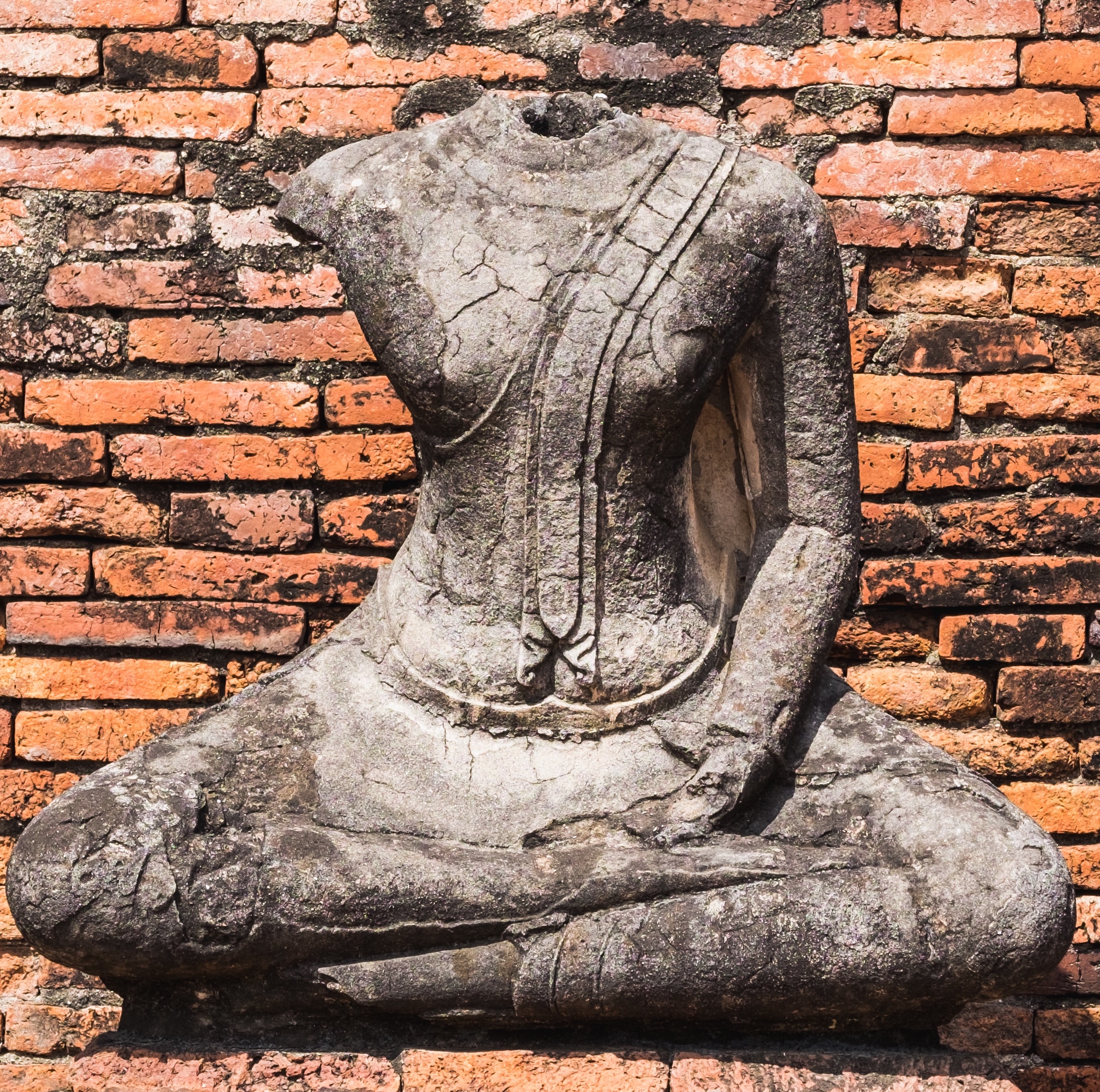
At the Mediterranean end of the Silk Road, the Greeks were the first Europeans to embrace Buddhism, centuries before the advent of Christianity, and there is evidence that the first sculptors to depict the Buddha in the form of statues were of Greek descent. These were the first anthropomorphic representations of the Buddha himself. Before this innovation, the Buddha was only represented through his symbols (an empty throne, the Bodhi Tree, Buddha footprints, the Dharmachakra, the Dharma Wheel).

Buddhism flourished under the Indo-Greeks, the Milindapañha (English publication:  available: ‘Questions of Milinda’) dated between 100 BC and 200 AD, is a dialogue between the Indian Buddhist sage Nāgasena, and the 2nd century BC Indo-Greek King Menander I of Bactria, in Sāgalā, present-day Sialkot. The book speaks of the encounter of two civilizations — Hellenistic Greece and Buddhist India — and is of continuing relevance as the wisdom of the East meets the modern Western world. King Milinda poses questions about dilemmas raised by Buddhist philosophy that we might ask today. And Nagasena’s responses are full of wisdom, wit, and helpful analogies.

Great Buddhist scholars always looked at the Silk Road as a connecting thread with what they regarded as the founding values of Buddhism. With the 7th Century invasion of Islam in Central Asia, the transmission of Buddhism started to disappear. An increasing Muslim dominance all along the route made it difficult for Buddhist monks and pilgrims to travel between India and China, and the Silk Road transmission between Eastern Buddhism and Indian Buddhism eventually came to an end.

Buddhism recovered in China during the Song Dynasty (960–1279), the “golden age” of Chan (known today as Zen).  Chan Buddhism spread south to Vietnam as Thiền and north to Korea as Seon, and, in the 13th century, east to Japan as Japanese Zen. Pure Land Buddhism also became popular during this period and was often practiced together with Chan.

(More next week)

Buddha Daibutsu, Kamakura

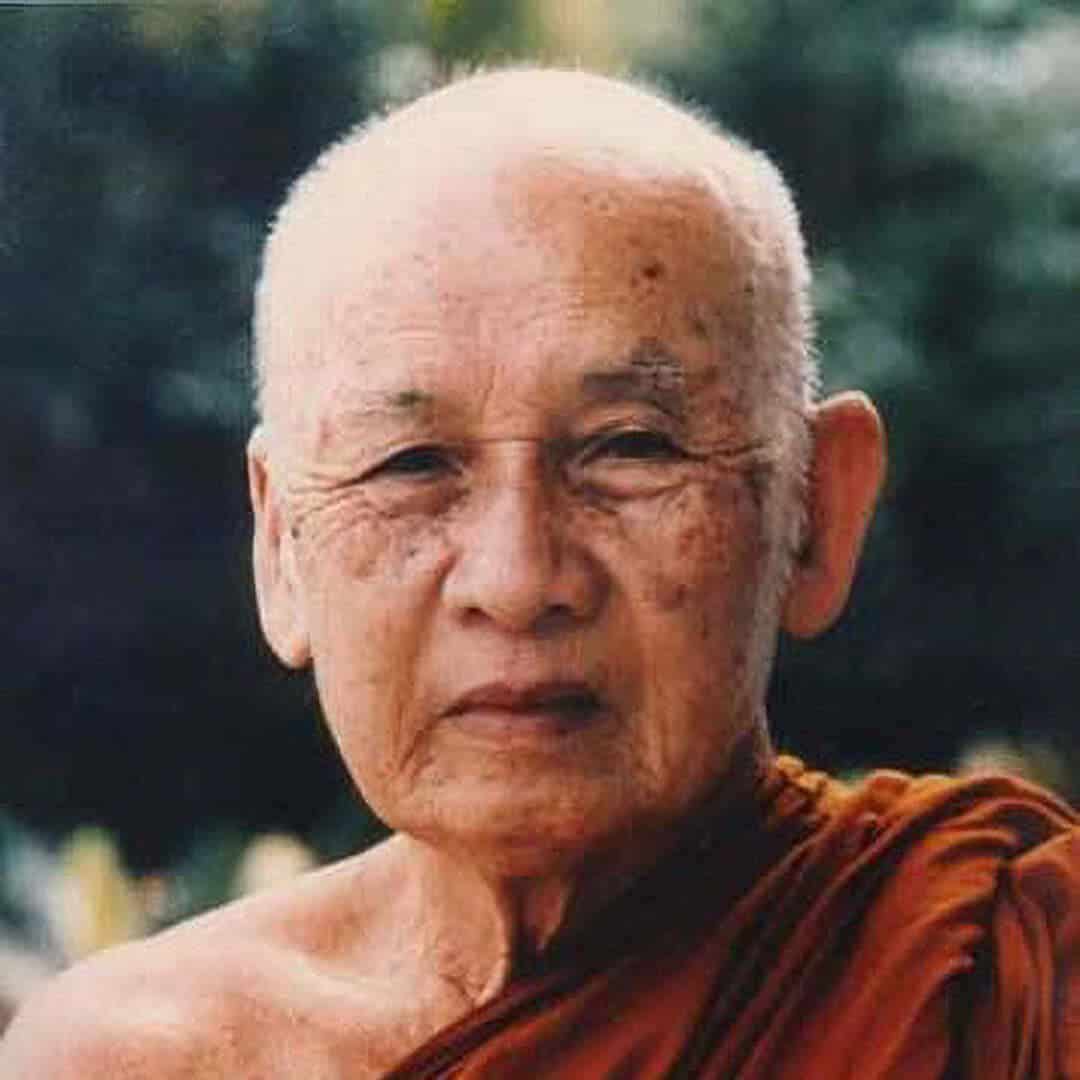
Header Image: 4th Century Chinese pilgrim monk, Xuanzang
anattā and artificial intelligence

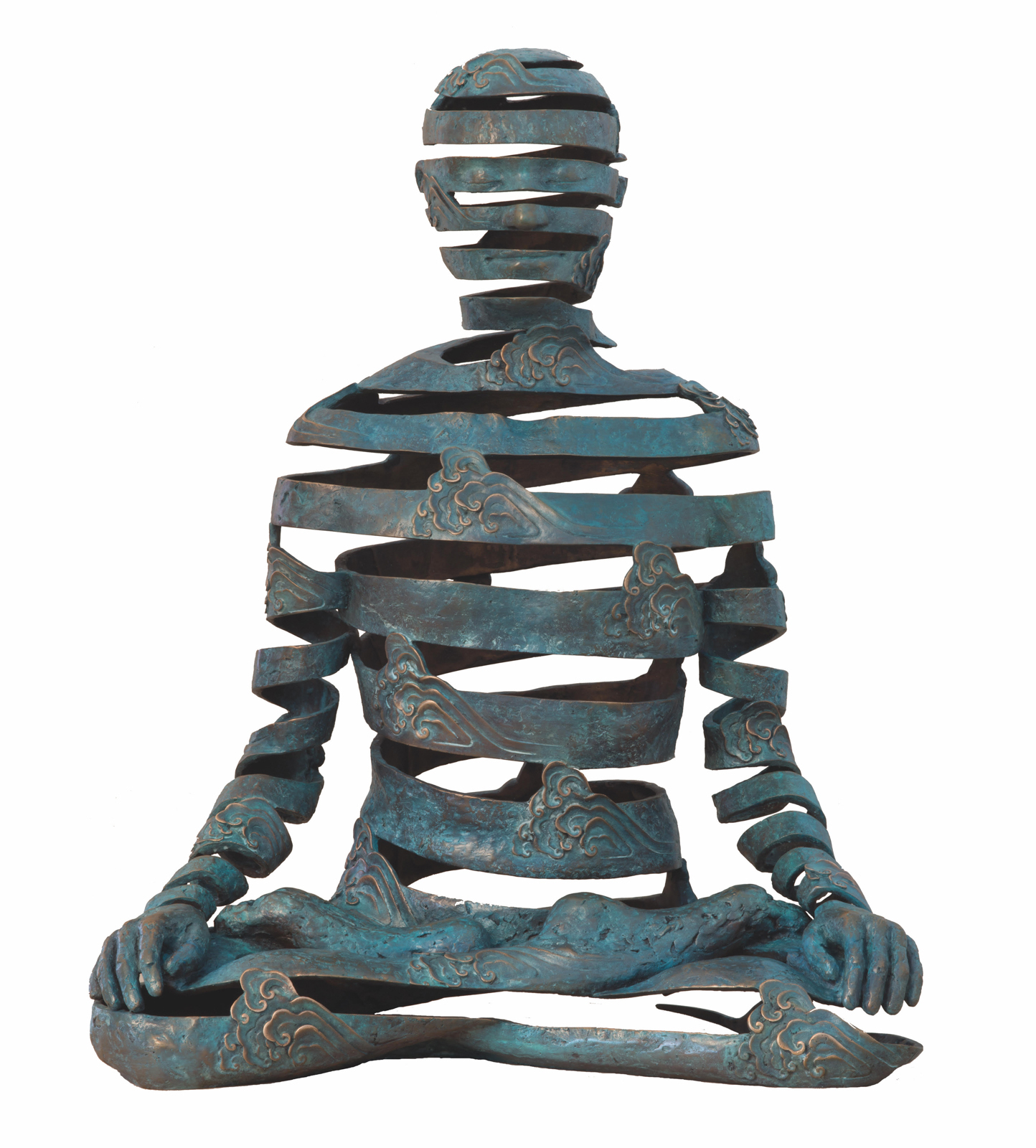
The Buddhist concept of anattā appears in a thought window: “non-self” – no unchanging, permanent self or essence can be found in any phenomenon. And to begin with, there is the story of Vajira, a Buddhist nun (bhikkhuni), one of the earliest women adepts in Buddhist history.
While Vajira was meditating, she was confronted by Mara, a malignant celestial demon king, and he asked about the origin and creator of her “Being”, i.e., her soul. She responded by comparing one’s “Being” to a chariot, showing that it had no permanent existence but was made up of constituent parts: Is it the wheels, the framework, the ropes, the spokes of the wheel?’ None of these things are the chariot but the aggregate of such physical parts composed in certain ways is conventionally understood as a chariot. Just as, with an assemblage of parts, the word ‘chariot’ is used, when the 5 aggregates (khandas) are present in a human, there’s the convention ‘a being.’

Returning to present-times, the following is a transcript of parts of a dougsdharma video by onlinedharma.org: “As the chariot is being taken apart, at what point in the dis-assembly does the chariot cease to be a chariot? Consider the assertion of non-self: What we are is a complex process, a causally inter-related set of parts essentially that creates a sense of self over a period of time. This radically displaces our ordinary everyday sense of self, replacing it with a much wiser and deeper understanding of the way things really are. I would assert that a similar kind of thing happens when we contemplate the complexity of artificial intelligence because, after all, it’s got to have these incredibly complex trained neural networks behind it. In the same way we might say human utterances come out of a very complex network of neurons – literal neurons rather than artificial neurons in a computer.

Let’s look again at how a person is like a chariot made up of parts, in particular five parts which are known as the Five Aggregates. [1. form (the body) 2. sensations (vedana) 3. perceptions (sañña) 4. mental activity or formations (sankhara) 5. consciousness (viññāna)]

All of these five groups of processes are causally interrelated and causally interacting. That causal interrelation among these five different parts is what creates our idea of a self, a person. Then, it’s important to remember that each of these parts can be broken down into further parts.

Form, the human body, can be broken down into the elements and each of the four mental parts can be broken down into subparts. It’s a complex interrelation of many different parts that are basically coming into being and going out of existence over a period of time.

 A lot of this I think, mirrors and reflects what we are seeing now in artificial intelligence; that the self is no different from a very complex causally interreacting machine except for the biology part of it. Now, certainly we can’t see a computer’s mental parts just as we can’t see the mental parts of another human being that is standing in front of us – we infer them based on the behaviour of the object in front of us.

If we see the person in front of us behaving in the way a normal person does, we assume that they have a mind, they have mental parts. Now we may think that the artificial intelligence programs around us are too simple, that they don’t quite meet the criteria of sentience or intelligence. It’s possible we believe that, maybe we’re right, that’s true. But if it is, I would submit that we only need to wait because these programs are getting exponentially more complex, more powerful over time, new versions of these programs will be coming out in the next few years and so these points we’re going to have to meet in the future and probably in the near future.

I think nothing displaces our literal sense of self more than the contemplation of these kinds of artificial intelligences. And the idea that we can now create something that is in certain very deep respects indistinguishable from a human in the way that it interacts with the world. Following that line of thought, I decided to ask one of these programs, the most famous publicly available one which is ChatGPT a question about this about what it made of this relationship between contemporary advances in artificial intelligence and the Buddhist concept of non-self and it had an interesting response.”

Some experts have suggested that the development of advanced AI could challenge our conventional notions of self and identity, raising questions about what it means to be conscious and self-aware. For example, if we were to create an AI system that was capable of learning and evolving in ways that resembled human cognition, would we consider that system to have a ‘self’ or a sense of identity?

In this sense the Buddhist concept of non-self could be seen as a helpful framework for understanding the relationship between consciousness and self in the context of AL. By recognizing that the self is not a fixed unchanging entity, bt rather a dynamic and ever-evolving process, we may be better equipped to grapple with the challenges and opportunities presented by advances in AI and related technologies,

So, I’ll just leave that response there and say that we ae living now in pretty amazing times.”

~~~~~~~~~~~~~~

Link to doug’s dharma video. Start from the beginning or join the talking at 13.31: https://www.youtube.com/watch?v=hp0zpOYkqMI

anattā, non-self

The Anattalakkhaṇa Sutta ‘is the second discourse delivered by the Buddha. The first is the Four Noble Truths. In Buddhism, the term anattā refers to the doctrine of “non-self” – that no unchanging, permanent self or essence can be found in any phenomenon. While often interpreted as a teaching denying the existence of a self, anattā is more accurately described as a strategy to attain non-attachment by recognizing everything as impermanent, while staying silent on the ultimate existence of an unchanging essence. According to Peter Harvey, while the Suttas criticize notions of an eternal, unchanging Self as baseless, they see an enlightened being as one whose empirical self is highly developed. This is paradoxical, in that “the Self-like nibbana state” is a mature self that knows “everything as Selfless”. An Arahat, states Harvey, has a fully enlightened state of empirical self, one that lacks the “sense of both ‘I am’ and ‘this I am'”, which are illusions that the Arahat has transcended. [Wikipedia]

There are many presentations of the Anattalakkhaṇa Sutta, the following is one of my favorites. It was published only a few days ago by Tashi Nyima in The Great Middle Way and is the inspiration for this post. Click on the link at the end of this text to find the original.

This is not me’

Any form, feeling, perception, volition, or consciousness whatsoever that is past, future, or present; internal or external; blatant or subtle; common or sublime; far or near, is to be seen as it actually is with right discernment: ‘This is not me. This is not mine. This is not my self.’

Seeing thus, the well-instructed disciples of the Noble Ones grow disenchanted with form, disenchanted with feeling, disenchanted with perception, disenchanted with fabrications, disenchanted with consciousness. Disenchanted, they become dispassionate. Through dispassion, they are fully released. With full release, there is the knowledge, ‘Fully released.’ They discern that ‘Birth is ended, the holy life fulfilled, the task done. There is nothing further for this world.’”

𑁋Buddha Shakyamuni, Anattalakkhana Sutta

[The following is a reblog of excepts from a post first published here ten years ago, titled Redefining the Question] April 12, 2013, 04:00 New Delhi: There’s no doctrine of God-worship in Buddhism, in Christianity, there is only belief – ‘I believe (I believe) in God. There’s no real teaching on how to understand life, the world. In Buddhism, there is the Anattā Teaching; the separate ‘self’ is an illusion, ‘a cluster of memories, thoughts, habits and conditioning’, maintained due to this basic human tendency to hold on to stuff. It’s not about self, it’s not about our origin, our Creator or what we are made of, it’s about how the whole thing works. It’s a 2600-year-old teaching about learning how to see what our hang-ups are, and easing the burden of emotionalism and wrong-view.

It’s not about living for our(selves): seeking, acquiring and hoarding, it’s about generosity, relinquishment and giving it all away. It’s about mindfulness and the way things exist, rather than what exists. It’s about realities that fit into our world today, exactly as it was in ancient times. The Buddha anticipated modern physics: all matter is energy; beings exist as “bundles of energies” (five khandhas). It’s not about ‘self’, it’s about non-self, anattā, it’s about consciousness, viññāna, and the perennial question: what is consciousness? Without a basic understanding of what the Buddhist non-self is, it’s impossible to contemplate the existential ‘is-ness’ of consciousness.

I go to lie down for an hour or so; still not yet dawn. Watch the in-breath/ out-breath, conscious of the sound of the ceiling fan above me in the shadows, constant spinning cycle that somehow says something about the weight of the rotary blades. It looks like how it sounds: a spinning propeller of an old-fashioned aircraft – consciousness of the visual image. Always there’s consciousness of something: consciousness of the smell of coffee and a breakfast crust of toast in the kitchen, the taste of it; consciousness of the soft bedding I’m lying in. There’s consciousness of thought and then there’s consciousness of no-thought – my perception of it… consciousness without an object, the still mind, unsupported consciousness – unconditioned? The non-dual perspective is that it’s like this anyway….

“The “empirical self” is the citta (mind/heart, mindset, emotional nature), and the development of self in the Suttas is the development of this citta.” [Peter Harvey, ‘The Selfless Mind: Personality, Consciousness and Nirvana in Early Buddhism.’]  Consciousness without an object in the sense that it is different from the basic functions of interacting with the world through sensory organs: eye, ear, nose, skin, mouth and mind; different from the state of being conscious of what’s going on in the body/mind organism, phassa, as a result of responses to the world outside. Not consciousness of… just consciousness itself – what is this? Is this the kind of consciousness that’s needed to find the answer to the question or to redefine the question, maybe, or whatever… is it the true self?

‘…this true self is also the fundamental source of all attachment to being and becoming… attachment to the allure of this primordial radiance of mind that causes living beings to wander indefinitely through the world of becoming and ceasing.’ [Luangta Maha Boowa]

Link to Tashi Nyima’s original post in The Great Middle Way:https://greatmiddleway.wordpress.com/2023/08/28/this-is-not-me-2/

knowledge of a strange and marvellous nature

[Editorial Note: I’ve been re-reading “Autobiography of a Forest Monk” by Venerable Ajahn Thate 1902-1994 [The book is available online, look for the link at the end of this text]. Ajahn Thate’s autobiography was originally published in 1974, on his seventy-second birthday. He was involved in monastic life from an early age, through his family, and it interests me to read that he studied “indigenous Dhamma and Korm scripts” at the age of nine.]

I asked my wife Jiab about this and she recognised the word ‘korm,’ saying that when she was a child, she had seen these Buddhist texts, inscribed in Indo-Cambodia characters. So, for the first time I found a direct reference to the extent of Buddhist Teaching coming from Northern India into Thailand.

Wikipedia tells me that Buddhism was introduced into Southeast Asia [“the golden peninsula”], in the 3rd century BC, by way of monks sent by King Ashoka in India. This resulted in a mixture of Mahayana Buddhism, Brahmanism and indigenous animistic religion in the region and that continued until the 13th century CE when Theravada Buddhism became the state religion of Cambodia. One of the kings had sent his son to Sri Lanka to be ordained as a Buddhist monk and study Theravada Buddhism according to the Pali scriptural traditions.

After 10 years the prince returned to Cambodia and promoted Buddhist traditions according to the Theravada training, he had received, galvanizing and energizing the long-standing Theravada presence that had existed throughout the Angkor empire for centuries. More than 900 temples were built in Cambodia and Thailand, Mahayana Buddhism and Hindu Khmer Empire dominated much of the Southeast Asian peninsula. After the slow diminishing of Buddhism in India, Buddhist monks came from Sri Lanka and slowly converted the Buddhism in Burma to Theravada tradition. This was followed by the introduction of Theravada Buddhism in Thailand, Laos and Cambodia. Theravada tradition later replaced the previous forms of Buddhism and was made the official state religion in Thailand with the establishment of the Thai Kingdom of Sukothai in the 13th century AD.

Returning now to Ajahn Thate’s autobiography, his monastic life began at the age of eighteen with novice ordination and at twenty-two he became a monk; however, the young Ajahn Thate had already been on tudong in the forests with older monks and was quick to learn the hazards. At the time, they monks were following the trails and narrow footpaths deep in the forest asking hill tribe people if they had seen their teacher, Ajahn Mun.… and I’d like to pick up the narrative this time at 22.2:

“There had been no news of Ven. Ajahn Mun for two years. That left the two of us, Ven. Ornsee and myself, to seek him out and our wanderings through the forests and mountains were all aimed at this… about half way along the trail we heard the roar of a tiger not far away from us. I was almost frightened to death by the idea of a tiger being so close but I didn’t let on to my friend — he had been born and raised in an agriculturally developed area and so didn’t know the sound of a tiger. If I had told him, I knew I would instantly draw him into my state of trepidation. Going beyond the range of the tiger’s roar we lost the trail and so were forced to find a place to spend the night in the jungle. I was so afraid of the tiger that I lay sleepless throughout the night. There was a heavy dew and it was extremely cold yet my friend lay there snoring loudly all night. While I was terrified with the thought that the tiger might hear him and we would be killed — he blissfully slept through it all.

On another occasion I had left Ven. Ornsee and went off to stay alone. One day I heard a tiger roar and became so terrified by its noise that I began to tremble and shake so much that I couldn’t sleep and my meditation wouldn’t settle down at all. Some local people helped to chase it away by firing threatening shots with their guns and by hurling firebrands at it. It fled for a moment but then came back again. In the early morning, when the villagers were going out to work in the fields, they would sometimes spot the tiger crouching in the jungle ahead of them. They would then run away — although I never heard that it had done any harm to anyone.

No matter how I tried to sit in meditation, it just didn’t seem to come together. At that point I was still unaware that it was all to do with my fear of the tiger. My whole body would be soaked in sweat. “Hey!”, I thought, “what’s all this about then? I’m cold and yet I’m still sweating”. I tried removing the blanket wrapped around me and saw that I was still trembling. I felt exhausted with not being able to progress with my meditation. Then I thought of lying down to rest a little and refresh myself, ready for future efforts. At that very moment, I heard the tiger roar out and my whole body started shivering and shaking, as if I had a malarial fever. It was then I realized that this was all due to my fear of the tiger’s roar.

I sat up and established mindfulness, settling the mind in stillness on a single object and ready to sacrifice my life. Hadn’t I already accepted death? Wasn’t that the reason for my coming to live here? Aren’t tiger and human both a fabrication of the same four elements? After death, won’t both end in the same condition? Who eats whom — who is the one who dies and who is the one that doesn’t die? When I was willing to relinquish and investigate in this dauntless, single-minded way, I could no longer hear the noise of the tiger.

Whenever I afterwards heard the tiger’s roar, my mind remained quite unconcerned. I now saw it just as air reverberating from a material form, causing sound. Ever since childhood, I had had a natural tendency to be easily upset, being of a rather nervous disposition. The sound of the tiger had brought up some past conditioning that had caused my unconscious fear. During that night I again heard the tiger roar from a nearby mountain top and this helped to concentrate my mind in seclusion. I called up the virtues and qualities of the Lord Buddha as my meditation object and from this arose knowledge of a strange and marvellous nature, in different ways never imagined or experienced before.

Link: https://www.accesstoinsight.org/lib

/thai/thate/thateauto.html

one-pointedness

Editor’s note: Continuing on the Forest Monk theme, I was looking into the followers of Ajahn Mun and came across Ajahn Thate (1902 – 1994), a contemporary of Luang Pu Dune, born in the same geographical area. There is a short e-book: “Steps Along the Path” by Phra Ajaan Thate Desaransi (Phra Rajanirodharansi) translated from the Thai by Thanissaro Bhikkhu in 1994. When Ajahn Thate was active (1930s), the whole of the North – North East of Thailand was a vast area of original forest, stretching across the borders of Burma and Cambodia.

I’ve selected a few paragraphs and excerpts from the book here, that are insightful re: meditation development, in particular one-pointedness:

(2) “… train the mind to develop concentration (samādhi) and absorption (jhāna) through the practice of tranquillity meditation. Once the mind is adept at maintaining a steady focus, we can then develop clear insight (vipassanā) based on an understanding of the Three Characteristics of inconstancy (aniccā), suffering (dukkhā)), and (anattā) not-self. This will lead us to pure knowledge and vision of things as they actually are, and thus to release from all things detrimental and defiling.

3. For Buddhism, the true aim in developing concentration and absorption is to gather one’s mental energies and make them steady and strong in a single point. This then forms the basis for the knowledge and discernment capable of gaining true insight into all conditions of nature and eliminating all that is detrimental and defiling from the heart. Thus, stillness of mind is developed not simply for other, external purposes, such as the various fields of science. Instead, it’s meant specifically for use in cleansing the heart of such defilements as the five Hindrances (nivarana) But when you have practiced to the point of proficiency, you can use your stillness of mind in any way you like, as long as that use isn’t detrimental to yourself or to others.

4. In training the mind — which is a mental phenomenon — there is tutoring, first by listening to the explanations of those who are already skilled. Followed by a determination to practice in line with those explanations, basing your initial efforts on a sense of trust and conviction if your own independent explorations into cause and effect don’t succeed.

By and large, people who start out by exploring cause and effect on their own don’t reach their desired goal because they lack the proper approach. They miss the true path, tending instead to be biased in favor of their own opinions. To develop first a sense of trust in the individual giving the training and in the practices in which one is being trained until the mind is firm and unwavering, and then to begin exploring and figuring things out, in line with the way they really are: This is what will give satisfactory results.

This is because any beginning exploration of cause and effect is usually a matter of looking at things from the outside, following external influences — i.e., “This person says that… That person says this.” But to investigate and explore cause and effect exclusively within the bounds of the body — i.e., “What is this body of mine made of? How does it come about so that its parts are complete and able to perform their functions well? What is it to be used for? What keeps it going? Is its fate to develop or to deteriorate? Is it really mine?” — and then, going on to mental phenomena — “Do greed, anger, delusion, love, hatred, and so forth, arise at the body or at the mind? What do they come from? When they arise, are they pleasant or stressful?” — to reason and explore things strictly internally in this way is, in and of itself, training the mind.

But if your stillness of mind isn’t yet strong enough, don’t go reasoning in line with the books you may have read or the things you may have heard other people say, because even though you may think things through, it won’t lead you to the truth. In other words, it won’t lead you to a sense of dispassion and detachment. So instead, explore and investigate things in line with the causes and effects that actually arise from the mind in the present.

5. The mind investigating and figuring things out in line with its own personal reasonings in this way will tend to focus exclusively on examining a single spot in a single object. This is called one-pointed concentration. This is a gathering of the mind’s energies so that they have great strength, able to uproot attachments — mistaken assumptions — and to cleanse the mind so that it is, for the moment, bright and clear. At the very least, you will experience peace — an extreme sense of well-being in body and mind — and perhaps knowledge of one sort or another: knowledge of a strange and striking sort, for it arises, not from mental imaginings, but from the causes and effects of the truth acting in the present, in a way that has never happened before. Even if it is knowledge of something you may have suspected all along, only now is it your own, making your mind bright, driving away all doubt and uncertainty about matters that may have been occupying your thoughts. You will say to yourself with a sense of deep satisfaction and relief, “So that’s how it is!”

Those whose sensitivities are dull, though, won’t be convinced and delighted with their knowledge until someone else confirms it or they see teachings of the Buddha in books bearing witness to what they have learned. This is in line with the fact that the Buddha’s followers are of various sorts.

This type of knowledge — no matter how much or how wide-ranging it is — won’t weigh on your nerves. On the contrary, it’s a form of calm and true well-being that will greatly brighten and refresh your nerves. At the same time, it will refine your mind and manners in a way that will be very inspiring to others. Whatever you say or do, you will do mindfully, with hardly any careless lapses. Once this happens to you, you should then try to maintain all these traits and not grow careless or complacent.

[Note: We can pause the text here in order to investigate “one-pointedness.” Some Dhamma Footsteps’ readers may remember Ajahn Brahm’s reference to the subject in “Mindfulness, Bliss and Beyond.” Click on this Link:https://dhammafootsteps.com/2022/05/06/the-second-and-third-jhanas/

Buddhasassana Link to another commentary on “one-pointedness of mind” (ekaggatā). Click here:https://www.budsas.org/ebud/bd8p/bd8p_17.htm

Link to the original text:https://www.accesstoinsight.org/lib/thai/thate/stepsalong.html

Details about the image of Ajahn Thate, above: https://commons.wikimedia.org/wiki/File:Statue_of_Luang_Pu_Thet_

Desaransi,_Thai_Human_Imagery_Museum.jpg

discernment

[Editor’s Note: I’ve had to discontinue last week’s Phra Payutto text due to vision strain after treatment at the eye hospital on 31 July. I expect things to get back to normal in a few days. However, it’s also an opportunity to consider a completely different way of Teaching; from the flowing almost poetic language of Phra Payutto, to the minimalist expression of Luang Pu Dune. The following is taken from the introduction and text of the book: “The Gifts He Left Behind” compiled by Phra Bodhinandamuni. (Note: The term “Luang Pu” in Thai, means “Venerable Grandfather,” a title for respected senior Buddhist monastics.)

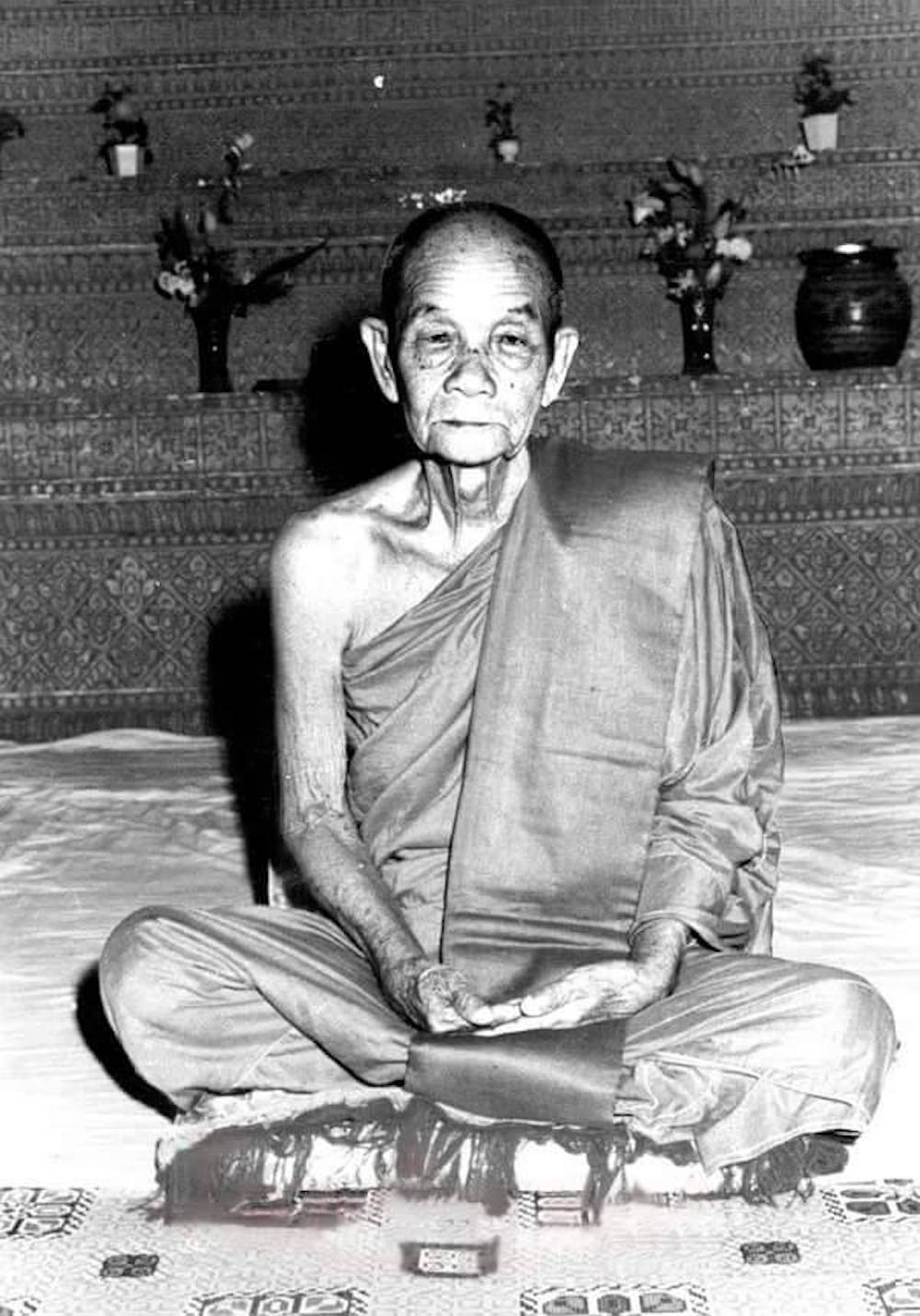
Luang Pu Dune (Ajahn Dune Atulo) 1888-1983, ordained at the age of 22 and after six years, disillusioned with his life as an uneducated town monk, he left to study in a temple in Ubon Ratchathani, where he befriended another monk, Ajahn Singh and together they reordained in the Dhammayut sect where they became disciples of Ajahn Mun.

After wandering for 19 years with Ajahn Mun through the forests and mountains of Thailand and Cambodia, Luang Pu received an order from his ecclesiastical superiors to head a combined study and practice monastery in Surin. It was thus that he took over the abbotship of Wat Burapha, in the middle of the town, in 1934. There he remained until his death in 1983.

Luang Pu’s Dhamma talks are extremely rare, this is because he never gave any formal sermons or discoursed at any great length. He simply taught meditation, admonished his students, answered questions, or discussed the Dhamma with other elder monks. He would speak in a way that was brief, careful, and to the point. In addition, he never gave sermons at formal ceremonies.

It was noteworthy — and amazing — that even though Luang Pu normally wouldn’t speak, or would speak as little as possible, he was still very quick and astute in his expression, never missing his mark. His words were brief but full of meaning, every sentence containing a message complete in itself. It was as if he would hypnotize his listeners, forcing them to ponder his words for a long time with their deepest discernment.

I lived with him to the end of his days, and have compiled this book of his short teachings, gathered from memory or from notes in my journal. I have included the events, locations, and people who were involved, to help make the passages easier to understand and more inviting to read.

Phra Khru Nandapaññabharana (currently Phra Bodhinandamuni) July 1, 1985

102. I remember that in 1976 two meditation teachers from the northern part of the Northeast came to pay their respects to Luang Pu. The way they discussed the practice with him was very delightful and inspiring. They described the virtues and attainments of the different ajaans with whom they had lived and practiced for a long time, saying that that luang pu had concentration as his constant mental dwelling; this ajaan dwelled in the Brahma attitudes, which is why so many people respected him; that luang pu dwelled in the limitless Brahma attitudes, which is why there was no limit to the number of students he had, and why he was always safe from dangers.

Luang Pu said, “Whatever level a monk has reached, as far as I’m concerned, he’s welcome to dwell there. As for me, I dwell with knowing.”

103 When those two monks heard Luang Pu say that he dwelled with knowing, they were silent for a moment and then asked him to explain what dwelling with knowing was like.

Luang Pu explained, “Knowing is the normality of mind that’s empty, bright, pure, that has stopped fabricating, stopped searching, stopped all mental motions — having nothing, not attached to anything at all.”

104. Luang Pu was pure in his speech because he liked to talk about the genuine truth. He’d speak only of the highest aims of the Buddha’s teachings; he’d refer only to the Buddha’s words that led solely to the end of suffering and stress. You could tell this from the Buddha’s teaching he quoted most often.

“Monks, there is that dimension where there is neither earth, nor water, nor fire, nor wind; neither the dimension of the infinitude of space, nor dimension of the infinitude of consciousness, nor dimension of nothingness, nor dimension of neither perception nor non-perception; neither this world, nor the next world, nor sun, nor moon. And there, I say, is neither coming, nor going, nor staying; neither passing away nor arising: unestablished, unevolving, without support. This, just this, is the end of suffering.”

Link: https://www.accesstoinsight.org/lib

/thai/dune/giftsheleft.html

furtherance

[Continued from last week] We got back to Bangkok from Osaka, Japan late Saturday night, 15 July. Even though, 2500 miles (4000 kms) away, the mind, still in Japan, shifts to the events that led up to M in Osaka finding the apartment next to the Buddhist temple, where she is now.
One curious coincidence I forgot to mention in last week’s post was the numbers of the street/apartment address contain her birthday date: I Chome (district) – 3 – 19: M’s birthday is March 19. She noticed it immediately of course, when she made her way to the address for the first time, not thinking too much if this was the place she would choose to stay, yes-or-no…  but if you like the karma of finding a location next to a Buddhist temple, as well as the birthday date/ number coincidence, and things just feel right, the conclusion is: of course, yes! So, she signed the contract and moved in. Since then we have walked around the grounds so many times of our quiet neighbour, resting here for the last 1,430 years,  we feel there’s a connection with this place, the oldest Buddhist temple in Japan, (Shitennō-ji;  四天王寺 (Temple of the Four Heavenly Kings).

Such a great expanse of historical time between then and now, and today the temple grounds are surrounded by the urban structures on all sides. So how relevant are the Buddha’s Teaching in Japan today? I see it everywhere, community orientated, living close together; similarities in cultural behaviour, the same characteristics of a Buddhist society as you find in Thailand. The Dharma lasts for ever – even if it’s wiped out by war or disaster… it comes alive again with the right kind of cultivation and the journey goes on. Circumstances cause things to change, evolve, according to karmic influences of this-and-that moving on in furtherance of the here-and-now that was the there-and-then,and the human condition as such.
“Dedicate whatever happiness you enjoy to all sentient beings, wishing that whatever you have gained from your own virtuous actions will help nurture and serve everyone. All that you do and experience, all your happiness and suffering, should lead to the development of bodhicitta.” [Sechen Rabijam Rinpoche from ‘Equanimity,’ Great Middle Way]

It was this idea of a birthday that reminded me of the Teaching that consciousness is birthed into every moment. There’s a talk by Thai monk, Phra Payutto, titled ‘Perfect Happiness’ that expresses this concept of generating happiness. The talk was given at the 84th birthday event of a local person, then transcribed in Thai and translated in English. I have selected excerpts here that convey the simplicity and profound beauty of the Buddha’s teaching which only Phra Payutto can communicate.

“Everyone is searching for happiness; however, some people may not realize that happiness is something we can generate on the spot, within our own hearts. Whenever we are endowed with such qualities as faith, love, a sense of friendship, joy, and clarity of mind, happiness arises spontaneously, in an instant.Today we are celebrating a birthday. If we think of a birthday as marking the day when our lives began—when we came into the world— then we are thinking of the past. We cannot go back in time and relive any past events, but we can in present time. The Buddha’s teachings, show us we are born in every moment, both physiologically and mentally. In terms of the mind, we can say there are both positive and negative births. Unwholesome states should be prevented from arising, understandably, and we strive to give birth to wholesome mind states: delight, joy, ease, inner clarity, faith, mindfulness, love, concentration, diligence, wisdom, etc. With the arising of such wholesomeness, our birthday celebrations are genuinely warranted.

Human beings naturally desire happiness and so, the teaching: ‘birth is suffering.’  may be unhelpful. But the Buddha was referring to an aspect of nature, to the reality of conditioned phenomena; what this means is that birth is subject to laws of nature: anicca (impermanence), dukkha (suffering) and anatta, (nonself). All things arise, are sustained, and then pass away. Everything is subject to change, unable to maintain its original state of existence. Everything exists according to causes and conditions. These are all attributes of nature, following a natural order.The dukkha inherent in nature, however, is not identical to the dukkha (‘suffering’) in the hearts of human beings. Dukkha arises, or does not arise, based on whether we relate to the dukkha inherent in nature wisely or unwisely. In the context mentioned above, the Buddha was simply describing a phenomenon inherent in nature, a truth of nature. Conditioned phenomena invariably conform to this teaching on the Three Characteristics, anicca, dukkha and anatta, but if we conduct ourselves unwisely, the dukkha inherent in nature turns into suffering in our hearts. Suffering arises because people relate to nature unwisely. If we leave the dukkha inherent in nature to its own devices—we leave it be, as it naturally is and do not allow it to create suffering in our hearts. He urged us to relate to suffering skilfully, and we will be happy. The way to become free of suffering and realize happiness is to understand and gain insight into suffering. By living our lives discerningly, we gradually experience more genuine and reliable forms of happiness and our suffering diminishes, to the extent of it being dispelled all together: all that remains is happiness.There is thus a special technique to be applied vis-à-vis suffering. Here are four practical guidelines on how to relate to suffering and happiness:

1. Refrain from creating extra, unnecessary suffering for oneself.

2. Do not forsake righteous forms of happiness.

3. Do not indulge in any sort of happiness, even righteous happiness.

4. Strive in order to realize higher forms of happiness.

If we are able to accord with these principles, it can be said that we are practising correctly.

[More next week]

taking refuge

Hotel room on the 17th floor, Osaka, Japan. Hi everyone, this is Tiramit with Jiab here visiting our Thai niece M… some readers will know of M when she was little with all her questions addressed to me as “Toong-Ting.” Now she is 19 and doesn’t call me that anymore, calls me “T-T” instead (sounds more like ‘dee dee’). M is fluent in English, now studying Japanese language, and aiming for a similar level of fluency or enough to get her up to college-level … after that, let’s see.

I’m amazed, M took responsibility for nearly everything to do with getting the apartment selected, location ok, rent ok, (Japan is not cheap). Size of rooms, tiny but ok. All the forms to fill in to do with her one-year visa and there was all the paperwork to do with sending the cattos to Japan.

All of this done online in Bangkok by M, reading enough Japanese from her one-year class in BKK before coming. Jiab helped with setting up the bank and the school facilitated some of the stuff, but M did most of it, also a couple of phone calls to the house agent in Japan and that was it!

She left for Osaka with Jiab (overnight flight from Bangkok), checked out the house agents, selected a place next to a Buddhist temple and there was some waiting in a coffee shop near to the temple to get the confirmation from the owner of the apartment. Then PING! … a text message saying ok, confirmed, and they had a moving-in date.

Ok so let’s get to the airport and they were back in Bangkok in three days. How was it done without a single hitch and in such a short time? Vipaka Kamma (karma) is the answer. We are all studying the Buddha’s teaching and actively involved with our Buddhist groups, so the apartment next to the temple just conjured itself up, and “dōzo,” there you are. This apartment was waiting for you, M and the cattos, rest here, rest assured, take refuge in the triple gem.

It wasn’t till after the apartment was confirmed that I did a google search on our nearby Shitennō-ji Temple, and found out about the founder, Prince Shōtoku, 1,430 years ago. So, I’ll leave you with a few Wikipedia paragraphs and see you this time next week back in Bangkok.

Shitennō-ji;  四天王寺 (Temple of the Four Heavenly Kings), regarded as the first and oldest Buddhist temple in Japan. The construction of Shitennō-ji was commissioned by Prince Shōtoku in the year 593 as part of a national project to promote Buddhism. The prince invited three Korean carpenters to come to Japan and lead the construction of Shitennō-ji.

The Prince is renowned for modernizing the government administration and for promoting Buddhism in Japan. Over successive generations, a devotional cult arose around the figure of Prince Shōtoku for the protection of Japan, the Imperial Family, and for Buddhism. Key religious figures claimed inspiration or visions attributed to Prince Shōtoku.

Shōtoku was an ardent Buddhist and is traditionally attributed the authorship of the Sangyō Gisho commentaries on the Lotus Sutra, the Vimalakirti Sutra, and the Śrīmālādevī (Siṃhanāda Sūtra). The first of these commentaries, Hokke Gisho, is traditionally dated to 615 and thus regarded as “the first Japanese text”, in turn making Shōtoku the first known Japanese writer.

There is a letter to Emperor Yang of Sui which contains the earliest known written instance in which Japan is referred to as “the land of the rising sun.”

He is also known for bearing the Sanskrit Dharma name Bhavyaśīla which was awarded to him by Bodhidharma. Bhava (भव) means being, worldly existence, becoming, birth, production, origin – also: habitual or emotional tendencies which lead to the arising of the sense of self, as a mental phenomenon.  Śīla (in Sanskrit) or sīla (in Pāli), means “behavioral discipline”, “morality”, “virtue” or “ethics” in Buddhism

A legend claims that when Bodhidharma came to Japan, he met with Prince Shōtoku whilst under the guise of a starving beggar. The Prince asked the beggar to identify himself, but the man did not reply. Instead of going ahead, Shōtoku gave him food, drink, and covered him with his purple garment, telling him to “lie in peace”.

The second day, Shōtoku sent a messenger to the starving man, but he was already dead. Hereupon, he was greatly grieved and ordered his burial. Shōtoku later thought the man was no ordinary man for sure, and sending another messenger, discovered the earth had not been disturbed. On opening the tomb there was no body inside, and the Prince’s purple garment lay folded on the coffin. The Prince then sent another messenger to claim the garment, and he continued to wear it just as before. Struck by awe, the people praised the Prince: “How true it is that a sage knoweth a sage.”

[A closing note about Shinto] Shinto is often cited alongside Buddhism as one of Japan’s two main religions, and the two often differ in focus; Shinto is a nature religion – the belief that the natural world is an embodiment of divinity, sacredness or spiritual power. The focus in Shinto is on adapting to life’s pragmatic requirements. While Buddhism emphasises the idea of transcending the cosmos, which it regards as being replete with suffering. The focus is on attaining liberation from the clinging to existence, marked by impermanence (anicca), dissatisfaction/suffering (dukkha), and the absence of lasting essence (anattā).

mindfulness, its friends and relatives

[Excerpts from an article in Ajahn Sucitto’s Blog]

What does ‘mindfulness’ mean?

A calm collected emotional state and a clear present-moment attention which can have many applications to improve how a human being functions, and mindfulness (sati) is commonly understood to provide just that. There’s also a referential quality; mindfulness connects present-moment experience to a frame of reference. An example of this is the teaching on the Four Foundations of Mindfulness: 1) Mindfulness of body, 2) Mindfulness of feeling, 3) Mindfulness of, mind-state, 4) Mindfulness of physical and mental processes (M.10, D.22). [These are also called the four frames of reference or four establishments of awareness.]

In this context, mindfulness is the kind of attention that refers bodily experience to the body, feeling is referenced to the realm of feeling, and the current state of mind to the domain of mind, and mental qualities – such as ill-will or goodwill that support mind-states – to themselves, just as they are. One isn’t referring them to ‘Self.’ This reference, clears out the judgemental feeling of Self, ‘How am I seen by others?’ and so on. In the practice of the Four Foundations, mindfulness replaces that tension and reaction to Self, with clarity and a steady calm, that allows mind-states to unravel and the great ‘unbinding’ of nibbāna.

Right view, virtue and attention

Reference to an object in and of itself is then part of what mindfulness offers, but there are other factors – I call them ‘friends and relatives’ who tag along with mindfulness so that motivation and application is clear, and there is the learning from what the frame of reference presents. For instance, take mindfulness in the Noble Eightfold Path with its eight factors: 1) right view, 2) right intention, 3) right speech, 4) right action, 5) right livelihood, 6) right effort, 7) right mindfulness, and 8) right concentration. Mindfulness is only one factor of an unfolding process which begins with right view and leads on through right speech and right action through right mindfulness and into samādhi – right unification of mind. In this process the most important factor is right view – the wise perspective that reminds us that everything we say, do or even think has results, for good or for bad.

Mindfulness then carries right view into living experience; by highlighting the mind-states that are the causes and results of our actions, it gets the mind to see which ones are for our true benefit. The requirement to establish virtue and awareness of the causes and effects of one’s actions indicate that in Dhamma practice, it’s not enough to notice that one’s body is doing something and sensations are arising –there’s a “How?” and a “Why?” Robbing a bank might require clarity, focus and calm, but they wouldn’t be themes for right mindfulness. So, for right mindfulness, the attentive aspect of mind has to connect with felt awareness of one’s approach and intention. This is because taken on its own, attention (manasikāra) is the aspect of mind that is rational, an object-defining tool. This is the function that gets tuned to high degrees of efficiency and speed; enabling people to race through piles of data, rapidly trading stocks and shares.  What they’re not referring to is their own awareness, mind as ‘heart’ or ‘citta’.

Clear comprehension and deep attention

Citta is the mind of feelings and impressions and of ‘how I am’; it is an empathic awareness. It is the all-important focus of mindfulness, because if it is steadied and cleared of wrong views and unknowing, there is liberation. So, mindfulness refers the objects of attention to this mental awareness (or ‘heart’) to know what it is being affected by, and how that affect arises and passes. This knowledge is called ‘clear comprehension’ or ‘full knowing’ (sampajañña); it is a vital relative of mindfulness and in our well-being. Without it, people lose themselves in whatever grabs attention, or get stressed out, leading to anxiety, stress, and depression. Our systems and cultures have lost touch with awareness and its fundamental nature. Instead, the message is that happiness and success only come through chasing and acquiring what’s ‘out there ‘– no inner home, just a centre that remains swampy, hungry and restless.

Right mindfulness is vital; it connects manas, the object-definer, to citta, awareness, the subjective sense. Mindfulness is there in the moment of holding the question ‘How am I with this?’ If we liken the mind to a hand: attention is like the fingers, and citta is like the palm. Fingers can probe, twiddle and touch, but are unable to collect anything. The palm can’t probe and inquire, but it receives, collects and fully feels what the fingers place in it. So citta has a storekeeper’s wisdom – it wants to know what is worth being in touch with, what can be held for one’s welfare. It certainly needs educating, and that is the function of ‘deep’ or ‘wise’ attention (yoniso manasikāra), the attention that selects which sense data mindfulness should bear in mind. There’s so much stuff the mind can get lost in, so deep attention is another friend of mindfulness. It requires skilful intention and clarifies what you’re experiencing. Deep attention means that rather than note every thought that runs through your head, can it be included in one word? Restlessness, anxiety? Irritation, friendliness? Then mindfulness lets it sit in awareness. So, when right view and deep attention guide mindfulness, it draws manas and citta together; you know where your actions and thoughts are coming from, you’re ethically attuned.

Clear comprehension helps you to come to terms with what you’re experiencing. For example, as you attend to how your body feels and how you sense it internally, you establish mindfulness of body. By directing your attention to how your body feels in itself, you establish the embodied sense that gets you grounded and stable. You more fully get to know what the body is about – you know it not as a self-image but as a base of consciousness, and a resource for the mind. As you get embodied, feeling, both physical and mental, becomes more evident. Then if you attend to feeling in itself without rejecting, resisting or sinking into it, clear comprehension makes you less reactive. The mind is left clear and balanced and you don’t have to make a ‘Self’ out of it. Mental feelings and states of mind reveal their true nature: they’re not ‘Self’, not fixed things at all. You get to know the mind; you know it goes through moods, but they change and you can still arrive at clarity.

Samādhi and wisdom

As the various reactions and distractions die down, the fingers of attention and the palm of awareness can meet with no aim other than that meeting. Then you have samādhi – the mind is unified. Through mindfulness, attention comes home to awareness, and finding that this is a very comfortable place to be, intention settles into appreciation and ease. Putting aside self-judgements, an assessment of what is really useful can take place. So, to avoid having its attention hijacked, mindfulness has to be established and made firm. Mindfulness is thus involved with wisdom.

In meditation retreats we are supported by the energy of patient persistence, without getting side-tracked by self-criticism or doubt. Mindfulness has to be established and re-established through patience and a lot of kind encouragement so that the fingers of attention don’t keep grabbing hot coal! Knowing what burns or stabs the heart, or entangles it, is up to each of us to find out. Keep that patient persistence going, mindfulness needs enthusiasm, or ‘eagerness’. In this way persistence (viriya) and eagerness (atapi) become two more members of the mindfulness team. Don’t get put off by the idea of making an effort, because right energy comes from interest and fullness of heart, not blind will. When something gives us good results or is interesting to do, then energy is not a problem. So, we need to recall and be mindful of why we do what we do, whether that’s cultivating samādhi or cooking a meal; keep it relevant. Get interested in how your mind or body work, use mindfulness with interest; then the application of right effort is a way of it coming more fully into your life. With mindfulness you learn how to train, encourage, gladden and soothe the mind in a range of activities.

Investigation

The Buddha presents the examples of two cooks; both present their master, the king, with his meal – but one does and one doesn’t notice what food the king enjoys. The one who doesn’t notice serves the same food every day, regardless – and gets fired. The one who notices what food the king chooses from the meal; continues to refine the meal he prepares in line with what most satisfies his master – and gets promoted (S.47.8). The point is that mindfulness needs to attend to ‘the sign of the mind.’ This is beautiful: as it clears itself of its burdens and inner conflicts, the citta will present subtle signs of luminosity, ease, vastness or stillness. Any of these may be a key to be picked up, held and explored. So, we need to look and feel more deeply into what meditation theme the citta picks up readily and enjoys.

‘Picking up the sign of the mind’ is the entry to the mystical experience, when the heart attunes to a felt sense that isn’t coming from one’s normal personality programs. The required fine-tuning comes through another of mindfulness’ friends, one that tastes the mental qualities that support any state of mind. This is ‘investigation of qualities’, dhammavicaya. It has to be applied to the citta as in: ‘What effect is this having on my mind?’ or ‘What is there at the periphery of attention?’ Through investigation, unnecessary feelings get weeded out, such as: forcefulness, ambition, or ideas about what we should be experiencing. All are replaced by a more subtle invitation into Truth. In this way, citta educates manas in the ways of directly-experienced wisdom. And manas pays back by casting that wisdom into concepts that form the storehouse of one’s contemplative know-how.

As a member of a team, mindfulness frees the mind from the burden of self-consciousness, self-hatred and self-orientation – the shift that is the heart of awakening. For some it will bring fresh life to its forgetful Buddhist parent. And for others it’s an open opportunity. Eventually how we use it is our own ongoing responsibility.

Ajahn Sucitto

Image source and Malcom Huxter text on Mindfulness

https://insighttimer.com/blog/mindfulness-in-buddhism-secular-meditation/

notes on nibbāna 3

Excerpts from: The Magic of the Mind: An exposition of the Kāḷakārāma Sutta by Ven. Kaṭukurunde Ñāṇananda Mahathera: Suppose a magician should hold a magic-show at the four cross-roads; and a keen-sighted man should see it, ponder over it and reflect on it.

The news of the magician’s arrival has spread far and wide, and eager crowds are now making for the large hall where he is due to perform today. You too buy a ticket and manage to enter the hall. There is already a scramble for seats, but you are not keen on securing one. for you have entered with a different purpose in mind. You have had a bright idea to outwit the magician – to play a trick on him yourself. So, you cut your way through the thronging crowds and stealthily creep into some concealed corner of the stage.

The magician enters the stage through the dark curtains, clad in his pitchy black suit. Black boxes containing his secret stock-in-trade are also now on the stage. The performance starts and from your point of vantage you watch. And as you watch with sharp eyes every movement of the magician, you now begin to discover, one after the other, the secrets behind those “breath taking’ miracles of your favourite magician. The hidden holes and false bottoms in his magic boxes, the counterfeits and secret pockets, the hidden strings and buttons that are pulled and pressed under the cover of the frantic waving of his magic-wand.

Very soon you see through his bag of wily tricks so well, that you are able to discover his next ‘surprise well in advance. Since you can now anticipate his ‘surprises’ they no longer surprise you. His ‘tricks’ no longer deceive you. His ‘magic’ has lost its magic for you. It no longer kindles your imagination as it used to do in the past. The magician’s ‘hocus-pocus’ and ‘abracadabra’ and his magic-wand now suggest nothing to you – for you know them now for what they are, that is, ‘meaningless’. The whole affair has now turned out to be an empty-show, one vast hoax – a treachery.

In utter disgust, you turn away from it to take a peep at the audience below. And what a sight! A sea of craned necks, eyes that gaze in blind admiration; mouths that gape in dumb appreciation; the ‘Ah!’s and ‘Oh!’s and whistles of speechless amazement. Truly, a strange admixture of tragedy and comedy which you could have enjoyed instead of the magic-show, if not for the fact that you yourself were in that same sorry plight on many a previous occasion.

Moved by compassion for this frenzied crowd, you almost frown on the magician as he chuckles with a sinister grin at every applause from his admirers. “How is it,” you wonder, “that I have been deceived so long by this crook of a magician?” You are fed up with all this and swear to yourself “Never will I waste my time and money on such empty shows, Nev-ver. The show ends. Crowds are now making for the exit. You too slip out of your hiding place unseen, and mingle with them.

KāḷakārāmaSutta

At one time the Buddha was staying at Saketa in Kalaka’s monastery:

“Whatsoever in the world that is seen, heard, sensed, cognized, attained, sought after and pondered over by the mind – all that is known to the Tathāgata [Tathāgata is the word the Buddha uses in the Pāli Canon when referring to himself or other Buddhas], but the Tathāgata has not taken his stand upon it, or made an approach by way of craving or views. He sees a form with the eye, but in him there is no desire and lust (for it) He hears a sound with the ear…… smells a fragrance with the nose. He tastes a flavour with the tongue, touches a tangible with the body, cognizes an idea with the mind, but in him there is no desire-and-lust; he is well released in mind.

“Thus, a Tathāgata does not conceive’ of a visible.” [refers to the stage in sense perception when one egotistically imagines or fancies a perceived ‘thing’ to be out there in its own right, which results in a subject-object dichotomy perpetuating the conceit: ‘self,’ ‘I’ and ‘mine’] The Tathāgata does not conceive’ of a thing as apart from sight;’ he does not conceive of an unseen: He does not conceive of a ‘thing-worth-seeing’;’ he does not conceive about a seer.

[The terms ‘thing-worth-seeing, -hearing, -cognizing etc’ are pointing to the habit we have of imputing inherent value or substance to perceptions, thoughts and emotions. Without such imputation they do not possess any such solidity or worth]. Thus, the Tathägata being such-like in regard to all phenomena seen, heard, sensed and cognized, is ‘Such’. These modes of conceiving represent ‘the plane of voidness'(suññatabhumi).

“This barb I beheld, well in advance, whereon mankind is hooked, impaled. I know, I see ’tis verily so’- no such clinging for the Tathāgatas. Having seen this barb well in advance:” janami passami tatheva tam: A phrase often cited in the Pali Canon as representing the stamp of dogmatism characteristic of speculative views.

A clue to the difficulties experienced by the Buddha in coming to terms with the world, may be found in your own unusual experience at the magic-show. To all intents and purposes, you saw the magic performance. Yet, there are difficulties involved in any unreserved affirmation or denial. The position of a Tathägata who has fully comprehended the magical illusion that is consciousness, is somewhat similar. He too has seen all the magical performances in the form of sense data enacted on the stage of consciousness. And yet he is aware of the limitations in any categorical affirmation or negation. Whereas the worldling is wont ‘to take his stand upon’ the knowledge he has “grasped’, the Tathagata regards that tendency as a ‘barb’ in spite of (or because of) the fact that he has ‘fully understood’. In other words, he has seen the magic-show so well as to ‘miss the show from the wording’s standpoint.

The question of ‘seeing what-is-shown’, brings us to the relationship between sign and significance. Sense-perception at all levels relies largely on signs. Sense-objects are therefore signs which have become significant in themselves owing to our ignorance that their significance depends on the psychological mainsprings of greed, hatred and delusion. This, in other words, is a result of reasoning from the wrong end (ayoniso manasikara) which leads both the philosopher and the scientist alike into a topsy-turvydom of endless theorising.

If, with mindfulness and wisdom, the tendency to ‘go out’ into perceptions, thoughts and emotions is restrained, and one just allows seeing to be seeing, hearing to be hearing etc., the whole papañca-drama does not get launched in the first place [papañca: conceptual proliferation]. The heart then rests at ease, open and clear; all perceptions conventionally labelled as ‘myself or ‘the world’ are seen as transparent, if convenient, fictions.

[Note on the word Atammayata:

Literally it means ‘not made of that,’ and refers primarily to the quality of experience prior to, or without, a subject/object duality arising. This insight leads us into a contemplation of the relationship of the apparent subject and object – how the tension between the two generates the world of things and its experiencer, and more importantly how, when that duality is seen through, the heart’s liberation is the result.]

Image source and a text on papañca:

https://conciergepsychologyla.com/blog/papanca/