nothing in itself

A village near Hat Yai: Silence all around in the heat of the afternoon, save for the sudden ‘crack’ of roof tiles expanding in the high temperature. Birds and insects for the most part quiet, an isolated single syllable: ‘chirp’ sound, then quiet again. I look up, anorexic chicken is standing in my open doorway because it sees me sitting inside. It’s thinking maybe some food will get flung out of the door because this is what usually happens. The cranium darts forward in an inquiring sort of a way and it watches me with one eye then maneuvering around in stages to watch me with the other eye and I used to think this was funny and cute but now I realise, sadly, that no matter how much loving-kindness I could extend to that creature transfixed in its observation of me, it is motivated by food, only; there’s just the process driving itself and not much further on in evolutionary terms than its dinosaur ancestor. So I make the single sound: ‘SH!’ that I learned from Jiab’s mum and it’s gone.

I’ve got the fan positioned just right in the room, seated on the cushion, body getting grounded – all internal processes and organs settled, gravity helps. It takes about five minutes. Thought movements start to get slower and it’s possible to monitor the situation and bring attention to the breath. Then it drifts off and I have to bring it back again to the breathing pattern and focus on that for a while.

And there are times when it seems like there is only this continuing present moment, kind of surging through from the past and into the future in one constant movement – like standing at the bow of a small ship plunging through the waves, rising and falling; moving forwards but no landmarks in the sea to say you are going anywhere.

When I look around for the landmarks to gauge my progress, and try to picture it in my mind, that sensation of standing at the bow of a small ship fades away and that’s how I learn not to push aside the experience and put in a constructed ‘self’ in its place, with the thought that ‘I’ am doing this. ‘… impossible to be aware of an experiencer because it is always the experience itself that momentarily occupies that space.’ [Alan Watts, ‘The Wisdom of Insecurity’] So the sensation of being on the ship returns and around it there is periodically the experience of moments of nothing – and that’s not ‘nothing’ as in ‘not much happening’, but ‘nothing’ in itself. It seems like a worthwhile thing to focus on this for the time being.

‘Nothing is after all just nothing. It cannot be a place that resembles an idea of nothingness. A place involves area, or extension. It is defined by coordinates and boundaries. It is not nothing. It is room. Nothing has no room, nor can anything be located within nothing. Nothing cannot have an inside or an outside. It cannot destroy, swallow, or terminate. As nothing, it can have no energy or effect. As nothing, it cannot be a thing, a realm, a state, or anything. It is absolutely nothing to fear. It is nothing to hope for.’ [Robert Thurman]

The focus finds a comfortable place and I just let it sit there for a while then, as the afternoon dwindles away, squirrels get argumentative, great hosts of squabbles and a periodic shrill chattering fills the air.

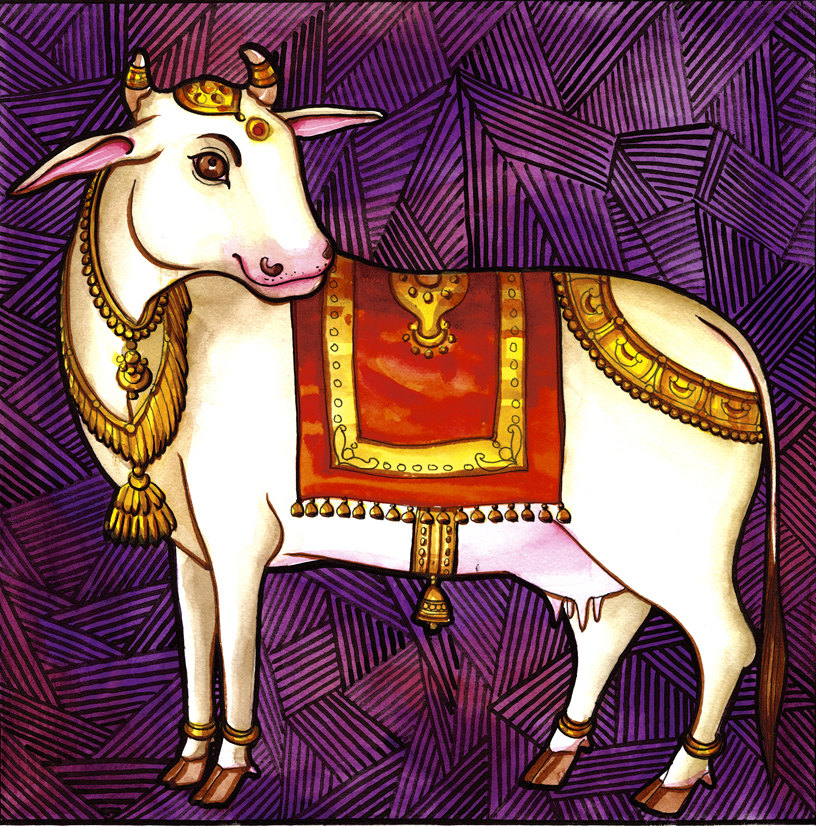
Loving-Kindness to Animals 1

flying gull

I was on a cliff path by the sea, in the North of Scotland, cold and windy, and there were all these nesting gulls making a terrific high-pitched screaming sound. Suddenly this large gull flew past my head, so close I could see its eye looking at me as it passed. I felt its body heat, was aware of the complexity of its massed intestinal organs, lungs, heartbeat and all this in just that ‘gull’ moment caught zooming through the air. Some piece of it’s time zone made an impact on me – an unexpected contact with a living creature in nature that you don’t normally have. It was protecting its nest, I was the predator, a wild animal on two legs; an egg thief coming to steal away its offspring.

I hurried on out of the nesting area, chased away by the gull, and spent some time in thought about the carnivorous relationship I have with the animal world. A friend told me about these two girls, twins in fact, who had their 15th birthday and their parents asked them what they would like to have as a birthday gift. After some discussion – twins always have to agree on birthday gifts – they decided they would like to ‘liberate’ a lobster. I saw on a webpage  that scientists believe lobsters can live to 100 years but the normal life span is about 15 years. I’d not heard of the Lobster Liberation Front before. Mum and Dad said OK to the plan and they went around all the storage areas where lobsters are kept for consumption in sea food restaurants, chose a lobster, bought it, put it in a bucket went out to sea in a boat and set it free.

I am a vegetarian, mostly, it’s a sensitive area. The fact that I sometimes eat animal products is not something I like to think about. There was one time in rural Thailand I was walking with Jiab in the fields around her home, and she takes me to see the little cow they have there. It has a bamboo bell around its neck: takata-takata. We stop and look at the cow, and it looks at us. A miniature creature, it comes towards me with cautious movements and swinging head in motion with the way it walks, raises it’s head and points a snuffling, sniffing wet snout in my direction; large snorts, extends long tongue and sticks it in it’s nostril (how do they do that?), comes a bit closer and quite a bit of sniffing of the air around me – not in Jiab’s direction. This cute little cow is curious about me due to a certain familiar milky smell coming through the pores of my skin? Thais don’t drink much milk so I was thinking, wow! here is proof that the (Western) body releases a noticeable odour of milk. I know this little cow has never been near to a Western person before in its life. The smell was familiar; a naïve recognition of an upright, standing-on-it’s-hind-legs member of the species – a cow person?

But we are carnivores. And there’s this unpleasant conceit about being at the top end of the food chain bothering me now while eating a breakfast of grains, nuts, fruit and cow’s milk. Jaws move in a slightly circular motion; down up, down, up, down, grind, grind, and swallow. I’m an animal too. I consume the environment, whether it’s other animals, fish, vegetables, eggs, milk – we are the cow’s babies (there’s a thought!). And cutting up vegetables is a bit of a sacrifice really; every time I start to cook food there is the opportunity for this kind of contemplation. Vegetables and fruit may not have the obvious characteristics of sentient beings but we may eat their reproductive organs along with everything else [link to: Buddhism and Beef].

There’s a couple of lines of text somewhere in an essay by Tan Ajahn Buddhadassa, that I cannot find at the moment; it’s about consciousness of all the things we eat, bits of animals, poultry and fish and how all their ghosts will come back to haunt us in the end. Pretty scary, nowhere to run, everything we are: mental, physiological, flesh, blood, and bones is a composite of what we have eaten, internalized. And it extends back through the generations to the beginning of time. The cellular substance of what we are is a genetic composite of all kinds of animal fats and enzymes and there’s just no getting away from it.

So, it has to be about being aware of the reality of it all. Contemplating the eating of meat helps me to see the true extent of my voracious appetite for all consumables. Things I feel drawn to consume surround me – and I mean, here, non-food items: ‘mind’ hungers for mind object. Consciousness is dominated by habitual ‘mind’. Remove habitual ‘mind’ and there may be something like a deluge of reality comes along and with it comes a deluge of understanding. Somewhere in there is an explanation for the fact that people eat animals.

When Acharn Mun was at the end of his life, weak and lying in a village in NE Thailand, a very large number of his followers began to assemble. He asked the bhikkhus to take him away from the village because the villagers would have to kill many animals to feed those people. They took him to a nearby town where there were market places and various kinds of prepared food could be easily obtained. Shortly after that Ajahn Mun passed away.

‘From the day of my ordination I have never thought of harming (animals), let alone killing them. I have always extended my loving-kindness to them, never neglecting to share with them all the fruits of my merit. It would be ironic if my death were to be the cause of their deaths (‘The Venerable Phra Acharn Mun Bhuridatta Thera, Meditation Master’, page 201 – 202).

[link to: Ajahn Mun Bhuridatta Thera, Wiki]

[link to: Image source]