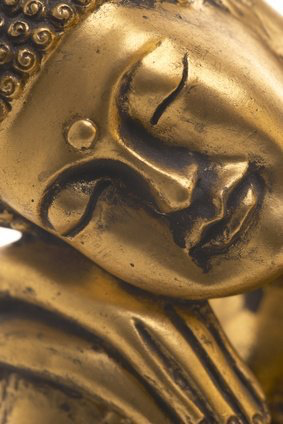
the fifth hindrance – doubt

POSTCARD#438: Bangkok: Doubt can be toward the teaching, about the teacher, or toward yourself. Regarding doubt toward the teaching, you should have enough confidence by now to know that some beautiful results come from practicing meditation. You may have experienced many of them already. Allow those positive experiences to strengthen your confidence that meditation is worthwhile. Sitting in meditation, developing the mind in stillness, and especially developing the mind in jhānas are all tremendously worthwhile and will give you clarity, happiness, and understanding of the Buddha’s teachings.

With regard to teachers, they are often like coaches of sports teams. Their job is to teach from their own experience and, more important, to inspire students with words and deeds. But before you put your confidence in a teacher, check them out. Observe their behavior and see for yourself if they are practicing what they preach. If they really know what they are talking about, then they will be ethical, restrained, and inspiring. Only if teachers lead by example—a good example, that is—should you place your confidence in them.

Self-doubt—which thinks, “I’m hopeless, I can’t do this, I’m useless, I’m sure everyone else who practices meditation, except me, has got jhānas and is already enlightened”—is often overcome with the help of a teacher who inspires and encourages you. It’s the teacher’s job to say, “Yes, you can achieve all of these things. Many other people have achieved them, so why not you?” Give yourself encouragement. Have confidence that you can achieve whatever you want. In fact, if you have sufficient determination and confidence, then it’s only a matter of time before you succeed. The only people who fail are those who give up.

Doubt can also be directed toward what you are experiencing now: “What is this? Is this jhāna? Is this present-moment awareness?” Such doubts are hindrances. They are inappropriate during meditation. Just make the mind as peaceful as you can. Let go and enjoy the peace and happiness. Afterward, you can review the meditation and ask, “What was that? That was really interesting. What was happening there?” That’s when you’ll find out whether or not it was a jhāna. If while meditating the thought “Is this jhāna?” arises, then it cannot be jhāna! Thoughts like that can’t come up within these deep states of stillness. Only afterward, when you review those states, can you look back and say, “Ah, that was a jhāna.”

If you get into any difficulty in your meditation, stop and ask yourself, “Which of the hindrances is this?” Find out what the cause is. Once you know the cause, then you can remember the solution and apply it. If it’s sensory desire, just take the attention away from the five senses little by little and apply it to the breath or the mind. If it’s ill will, do some loving-kindness. For sloth and torpor, remember “give value to awareness.” If it’s restlessness and remorse, remember “contentment, contentment, contentment” or practice forgiveness. And if it’s doubt, be confident and be inspired by the teachings. Whenever you meditate, apply the solutions methodically. That way, the obstacles you experience won’t create long-term barriers. They’re things that you can recognize, overcome, and move beyond.

Preview of next week’s text:

“All the Hindrances emanate from a single source. They are generated by the control freak inside of you that refuses to let things go. Meditators fail to overcome the hindrances because they look for them in the wrong place. It is crucial to success in meditation to understand that the hindrances are to be seen at work in the space between the knower and the known. The hindrances’ source is the doer, their result is lack of progress, but their workshop is the space between the mind and its meditation object. Essentially, the five hindrances are a relationship problem.”

More next week Saturday 02 October 2021
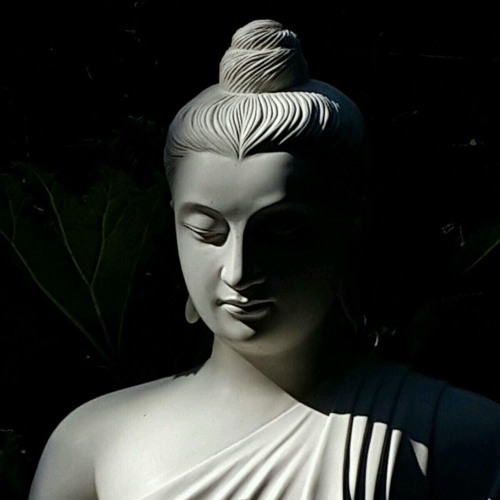
the fourth Hindrance, restlessness and remorse

POSTCARD#437: Bangkok: The fourth hindrance is among the most subtle of hindrances. The main  component of this hindrance is restlessness of mind. But first let me briefly address the matter of remorse. Editor’s note: Here, Ajahn Brahm tells us the story of Angulimāla. I have moved it the end of this Chapter where you can read it there, for a wider picture of remorse.

Remorse

Remorse is the result of hurtful things that you may have done or said. In other words, it is a result of bad conduct. If any remorse comes up in meditation, instead of dwelling on it, you should forgive yourself. Everyone makes mistakes. The wise are not people who never make mistakes, but those who forgive themselves and learn from their mistakes. Some people have so much remorse that they think they can never become enlightened. Forgiveness, letting go of the past, is what overcomes remorse.

Restlessness

Restlessness arises because we do not appreciate the beauty of contentment. We do not acknowledge the sheer pleasure of doing nothing. We have a fault-finding mind rather than a mind that appreciates what’s already there. Restlessness in meditation is always a sign of not finding joy in what’s here. Whether we find joy or not depends on the way we train our perception. It’s within our power to change the way we look at things. We can look at a glass of water and perceive it as very beautiful, or we can think of it as ordinary. In meditation, we can see the breath as dull and routine, or we can see it as very beautiful and unique. If we look upon the breath as something of great value, then we won’t get restless. We won’t go around looking for something else. That’s what restlessness is, going around looking for something else to do, something else to think about, somewhere else to go—anywhere but here and now. Restlessness is one of the major hindrances, along with sensory desire. Restlessness makes it so hard to sit still for very long.

I begin meditation with present-moment awareness, just to overcome the coarse restlessness that says, “I want to be somewhere other than right here, right now.” No matter what this place is, no matter how comfortable you make it, restlessness will always say it’s not good enough. It looks at your meditation cushion and says it’s too big or too small, too hard or too wide. It looks upon a meditation retreat center and says, “It’s not good enough. We should have three meals a day. We should have room service.”

Beware of finding fault in your meditation. Sometimes you may think, “I’m not going deep enough. I’ve been watching the present moment for so long, and I’m not getting anywhere.” That thought is the very cause of restlessness. It doesn’t matter how the meditation is going in your opinion. Remember that contentment is the opposite of a faultfinding mind. You should develop the perception of contentment with whatever you have, wherever you are, as much as you can. Be absolutely content with your meditation and it will go deeper. If you’re dissatisfied with your progress, then you’re only making it worse. So learn to be content with the present moment. Forget about jhānas, just be content to be here and now, in this moment. As that contentment deepens, it will actually give rise to jhānas.

Watch the silence and be content to be silent. If you’re truly content, you don’t need to say anything. Don’t most inner conversations take the form of complaining, attempting to change things, or wanting to do something else? Or escaping into the world of thoughts and ideas? Thinking indicates a lack of contentment. If you’re truly contented, then you’re still and quiet. See if you can deepen your contentment, because it is the antidote for restlessness.

Even if you have an ache in the body and don’t feel well, you can change your perception and regard that as something quite fascinating, even beautiful. See if you can be content with the ache or pain. See if you can allow it to be. A few times during my life as a monk I have been in quite severe pain. Instead of trying to escape, which is restlessness, I turned my mind around to completely accept

the pain and be content with it. I have found that it is possible to be content with even severe pain. If you can do that, the worst part of the pain disappears along with the restlessness. There’s no wanting to get rid of it. You’re completely still with the feeling. The restlessness that accompanies pain is probably the worst part. Get rid of restlessness through contentment, and you can even have fun with pain.

Develop contentment with whatever you have—the present moment, the silence, the breath. Wherever you are, develop that contentment, and from that contentment—out of the very center of that contentment—you’ll find your meditation will deepen. So if you ever see restlessness in your mind, remember the word contentment. Contentment looks for what is right, and it can keep you still. But restlessness will always make you a slave. The tyrant is the faultfinding mind. Subdue this tyrant through contentment.

After you’ve overcome the more general forms of restlessness, a very refined form often occurs at the deeper stages of meditation. I am referring to the time when you first see a nimitta. Because of restlessness, you just can’t leave it alone. You mess around with it. You aren’t content with the nimitta as it appears right now. You want something more. You get excited. Restlessness is one of the hindrances that can easily destroy the nimitta. You’ve arrived already. You don’t have to do any more. Just leave it alone. Be content with it and it will develop by itself. That’s what contentment is—complete non-doing, just sitting there watching a nimitta blossom into a jhāna. If it takes an hour, if it takes five minutes, if it never even happens, you’re content. That’s the way to get into jhānas. If the nimitta comes and goes, that’s a sign of restlessness in the mind. If you can sustain attention effortlessly, restlessness has been overcome. 

The story of Angulimāla (MN 86)

Angulimāla was a serial killer. He killed 999 people. He cut off a finger from each of his victims and put them in a garland he hung around his neck. The one-thousandth victim was to be the Buddha but, of course, you can’t kill a buddha. Instead the Buddha “killed him,” killed his bad ways, killed his defilements. Angulimāla became a Buddhist monk. Even a serial killer like Angulimāla could achieve the jhānas and become fully enlightened. So have you ever killed anybody? Are you a serial killer? You probably haven’t done anything like that. If such people can become enlightened, surely you can. No matter what bad things you’ve done in your past or what you feel remorseful about, always remember Angulimāla. Then you won’t feel so bad about yourself.

Continued next week, September 24th 2021, with the Fifth Hindrance, Doubt (Vicikicchā).

the third Hindrance—sloth and torpor

POSTCARD#436: Bangkok: I don’t need to describe sloth and torpor in detail, because I’m sure we know it all too well through our experience of meditation. We sit in meditation and don’t really know what we are watching, whether it’s the present moment, silence, the breath, or whatever. This is because the mind is dull. It’s as if there are no lights turned on inside. It’s all gray and blurry.

Making Peace with Sloth and Torpor

The most profound and effective way of overcoming sloth and torpor is to make peace with the dullness and stop fighting it! When I was a young monk in the forest monasteries in Thailand and became sleepy during the 3:15 A.M. sitting, I would struggle like hell to overpower the dullness. I would usually fail. But when I did succeed in overcoming my sleepiness, restlessness would replace it. So I would calm down the restlessness and fall back into sloth and torpor. My meditation was like a pendulum swinging between extremes and never finding the middle. It took many years to understand what was going on.

The Buddha advocated investigation, not fighting. So I examined where my sloth and torpor came from. I had been meditating at 3:15 in the morning, having slept very little, I was malnourished, an English monk in a hot tropical jungle – what would you expect! The dullness was the effect of natural causes. I let go and made peace with my sleepiness. I stopped fighting and let my head droop. Who knows, I might even have snored. When I stopped fighting sloth and torpor it did not last all that long. Moreover, when it passed I was left with peace and not with restlessness. I had found the middle of my pendulum swing and I could observe my breath easily from then on.

Dullness in meditation is the result of a tired mind, usually one that has been overworking. Fighting that dullness makes you even more exhausted. Resting allows the energy to return to the mind. To understand this process, I will now introduce the two halves of the mind: the knower and the doer. The knower is the passive half of the mind that simply receives information. The doer is the active half that responds with evaluating, thinking, and controlling. The knower and the doer share the same source of mental energy. Thus, when you are doing a lot, when you have a busy lifestyle and are struggling to get on, the doer consumes most of your mental energy, leaving only a pittance for the knower. When the knower is starved of mental energy you experience dullness.

At a retreat I led in Sydney a few years ago, a retreatant arrived late from her high-stress job as an executive in the city. In her first sitting that evening her mind was almost as dead as a corpse. So I gave her my special teaching on how to overcome her sloth and torpor: I told her to rest. For the next three days she slept in until dawn, went back to bed again after breakfast, and had a long nap after lunch. What a brilliant meditator! After three days of no fighting, giving hardly any mental energy to the doer but letting it flow to the knower, her mind brightened up. In another three days she had caught up with the rest of the group in her progress through the stages. By the end of the retreat she was way ahead and one of the star meditators of that retreat.

The most profound and effective way to overcome sloth and torpor is to stop fighting your mind. Stop trying to change things and instead let things be. Make peace not war with sloth and torpor. Then your mental energy will be freed to flow into the knower, and your sloth and torpor will naturally disappear.

Giving Value to Awareness

Another method for overcoming sloth and torpor is to give more value to awareness. All Buddhist traditions say that human life is valuable and precious, especially a life like this one where you have encountered the Buddha’s teachings. Now you have the opportunity to practice. You may not realize how many lifetimes it has taken and how much merit you’ve had to accumulate just to get where you are now. You’ve invested lifetimes of good karma to get this close to the Dhamma. Reflecting like this means you will incline less to sloth and torpor and more to bright awareness.

The path of meditation sometimes comes to a fork in the road. The left path leads to sloth and torpor while the right path leads to bright awareness. With experience you will recognize this fork. This is the point in meditation where you can choose between the alley to sloth and torpor or the highway to mindful stillness. Taking the left path you give up both the doer and the knower. Taking the right path you let go of the doer but keep the knower. When you value awareness you will automatically choose the right path of bright awareness.

Sloth and Torpor and Ill Will

Sometimes sloth and torpor is the result of ill will, the second hindrance. When I used to visit Australian prisons to teach meditation, I would often hear the following prison proverb: “an extra hour of sleep is an hour off your sentence.” People who don’t like where they are will try to escape into dullness. In the same way, meditators who easily get negative will tend to drift into sloth and torpor. Ill will is the problem.

 In our monastery in Thailand we would meditate all night once a week. During those all-night sittings, sloth and torpor would regularly conquer me an hour or two after midnight. Since it was my first year as a monk, I reflected that less than twelve months previously I would spend all night at parties, rock concerts, and clubs. I recalled that I never experienced sloth and torpor when listening to the music of the Doors at 2 A.M. Why? It became clear that when you are enjoying what you are doing then you don’t tend to get sloth and torpor, but when you don’t like what you are doing then sloth and torpor comes in. I did not like those all-night sits. I thought they were a stupid idea. I did them because I had to. I had ill will, and that was the cause of my sloth and torpor. When I changed my attitude and put joy into the all-night sittings, making them fun, then sloth and torpor rarely came. So you should investigate whether your sloth and torpor is the result of an attitude problem—the attitude of ill will.

Using Fear

When I was a lay Buddhist I attended a Zen retreat in the north of England. It was very early in the morning, and the meditation hall was freezing cold. People had their blankets around them. When you meditate with a blanket anywhere close to you, you tend to get sleepy. The teacher was walking up and down with a big stick, and the fellow next to me who had started nodding got hit. Everyone’s sloth and torpor suddenly disappeared right then. We only needed one person to get hit and that was enough. The  problem was that the fear that woke me up remained with me, preventing further progress. Experience teaches that you can’t generate wholesome states like peace and freedom by using unwholesome methods like fear or violence.

In the old forest tradition of northeast Thailand, monks would meditate in dangerous places such as platforms high in the trees, on the edge of cliffs, or in jungles full of tigers. The ones who survived said they got good meditation, but you never heard from the monks that didn’t survive!

Continued next week 17 September 2021, with the remaining two hindrances: restlessness and remorse (uddhacca-kukkucca) and doubt (vicikicchā)

These are Excerpts from Mindfulness, Bliss and Beyond A Meditators Handbook by Ajahn Brahm

the second hindrance – ill will

POSTCARD#435: Bangkok: [Editors note: Last week we learned something about how the hindrances stop you from entering into the jhānas. This week we understand the extent to which Ill Will (vyāpāda) obstructs or weakens wisdom and strengthens delusion.] Text begins here: The second hindrance, ill will or vyāpāda, is a major obstacle to deep meditation, especially for Western meditators. The usual understanding of this second hindrance is anger toward another person. But that is not the full extent of ill will, because it is more likely to be toward yourself or even toward the meditation object.

Ill Will toward Yourself

Ill will toward yourself can manifest as not allowing yourself to bliss out, become peaceful, or become successful in meditation. There are many people who have very deep guilt complexes. This is mostly a Western trait because of the way that many of us have been brought up. Ill will toward yourself is something that you should watch out for in meditation. It may be that is the main hindrance that’s stopping you from getting deep into meditation.

We feel we don’t deserve so much bliss. You do deserve so much bliss! Why should you not? There’s nothing against it. There are some kinds of bliss in this world that are illegal. There are others that break the Buddhist precepts, cause disease, or have terrible side effects. But jhānas have no bad side effects, they’re not illegal, and the Buddha specifically encouraged them. If you look very carefully at the way you meditate, you may find that you encounter the hindrance of ill will, but not at that last step before jhānas. You encounter it at some earlier stage of meditation. An aversion to inner happiness is a sure sign of guilt. When someone is found guilty, punishment usually follows – guilt and punishment are inseparable in our culture and in our minds. If we feel guilty about something, the next thing we think of is punishing ourselves—denying ourselves some type of pleasure, happiness, or freedom.

Goodwill toward Yourself

To overcome that hindrance of Ill-Will, do some loving-kindness meditation. Give yourself a break. Say to yourself, “The door to my heart is open to all of me. I allow myself happiness. I allow myself peace. I have goodwill toward myself, enough goodwill to let myself become peaceful and to bliss out on this meditation.” If you find it hard to extend loving-kindness toward yourself, ask why. There may be a deep-seated guilt complex inside, and you still expect punishment. You haven’t given yourself unconditional forgiveness.

A beautiful ethic of Buddhism is that it does not matter what anyone else does to you or how long they have done it to you; it doesn’t matter how unfair, cruel, or undeserving their treatment has been—you may still forgive them absolutely. I hear people saying that sometimes there are things you cannot forgive. That’s not Buddhism! There’s nothing, absolutely nothing, you can’t forgive in Buddhism. Some years ago, a demented man went to a primary school in Scotland and killed many small children. At the religious service after the massacre, a prominent cleric asked God not to forgive this man, arguing that some things you cannot forgive! My heart sank when I heard that a religious leader would not offer forgiveness and show the way to heal people’s pain in the aftermath of tragedy.

As far as Buddhism is concerned, you can forgive everything. Your forgiveness is healing. Your forgiveness solves old problems and never creates new ones. But because of ingrained attitudes you may have toward yourself, you think you cannot forgive yourself. Sometimes the problem is buried deep inside – it could be you’ve forgotten how things ended up like this, you just know there is something inside of you that you feel guilty about, that you can’t forgive. You have some reason for denying yourself freedom, jhāna, and enlightenment. That ill will toward yourself may be the main reason why your meditation is not successful. Check that one out.

Ill Will toward the Meditation Object

Ill will toward the meditation object is a common problem for people who have been meditating on the breath without much success yet. I say “yet” because it’s only a matter of time to me . Everyone will have success if they follow the instructions. But if you haven’t succeeded yet, you may have some ill will toward meditation or the meditation object. You may sit down and think, “Oh, here we go again,” “This is going to be difficult,” “I don’t really want to do this,” “I have to do this because it’s what meditators do,” or “I’ve got to be a good Buddhist, and this is what Buddhists are supposed to do.” If you start the meditation with ill will toward meditation, doing it but not liking it, then it’s not going to work. You are putting a hindrance in front of yourself straight-away.

I love meditation. I enjoy it so much. Once when I led a meditation retreat I said to my fellow monks upon arriving, “Great, a meditation retreat!” I got up early every morning really looking forward to it. “Wow, I’m on meditation retreat. I don’t have to do all the other stuff that I do in the monastery.” I love meditation so much, and I’ve got so much goodwill toward it that there isn’t the slightest bit of aversion. Basically I’m a “meditation junkie,” and if you’ve got that sort of attitude, then you find that the mind, as the Buddha said, “leaps toward meditation” (AN IX, 41). As for the meditation object, the breath, we’ve had such good times together, my breath and I. We’re the best of friends. If you regard the breath with that sort of goodwill, you can see why it’s so easy to watch the breath in your meditation.

The opposite, of course, is when you know you have to be with the breath and you don’t like it. You’ve had so much difficulty with the breath, you just want to escape. Unfortunately people do develop such ill will toward the breath. If it’s not pointed out to them, they will regard meditation as a chore. There’s no happiness in it. It becomes something like weight-lifting: “No pain, no gain.” You lift weights until it really hurts – if that’s the way you enter meditation, then you’ve got no hope.

So cultivate goodwill toward the meditation object. Program yourself to delight in this meditation. Think, “Wow! Beautiful! All I’ve got to do is just sit and do nothing else—nothing to build, no letters to write, no phone calls to make. I just need to sit here and be with my good old friend, my breath.” If you can do that, you’ve abandoned the hindrance of ill will, and you’ve developed the opposite—loving-kindness toward your breath.

To sum up, ill will is a hindrance, and you overcome that hindrance by compassion to all others, forgiveness toward yourself, loving-kindness toward the meditation object, goodwill toward the meditation, and friendship toward the breath. You can have loving-kindness toward silence and the present moment too. When you care for these friends who reside in the mind, you overcome any aversion toward them as meditation objects. When you have loving-kindness toward the meditation object, you do not need much effort to hold it. You just love it so much that it becomes effortless to be with.

Image note: Buddha-Maitreya will be the fifth and future Buddha of the bhadrakalpa, and his arrival will occur after the teachings of Gautama Buddha are no longer practiced

Text continued next week: 10 September 2021