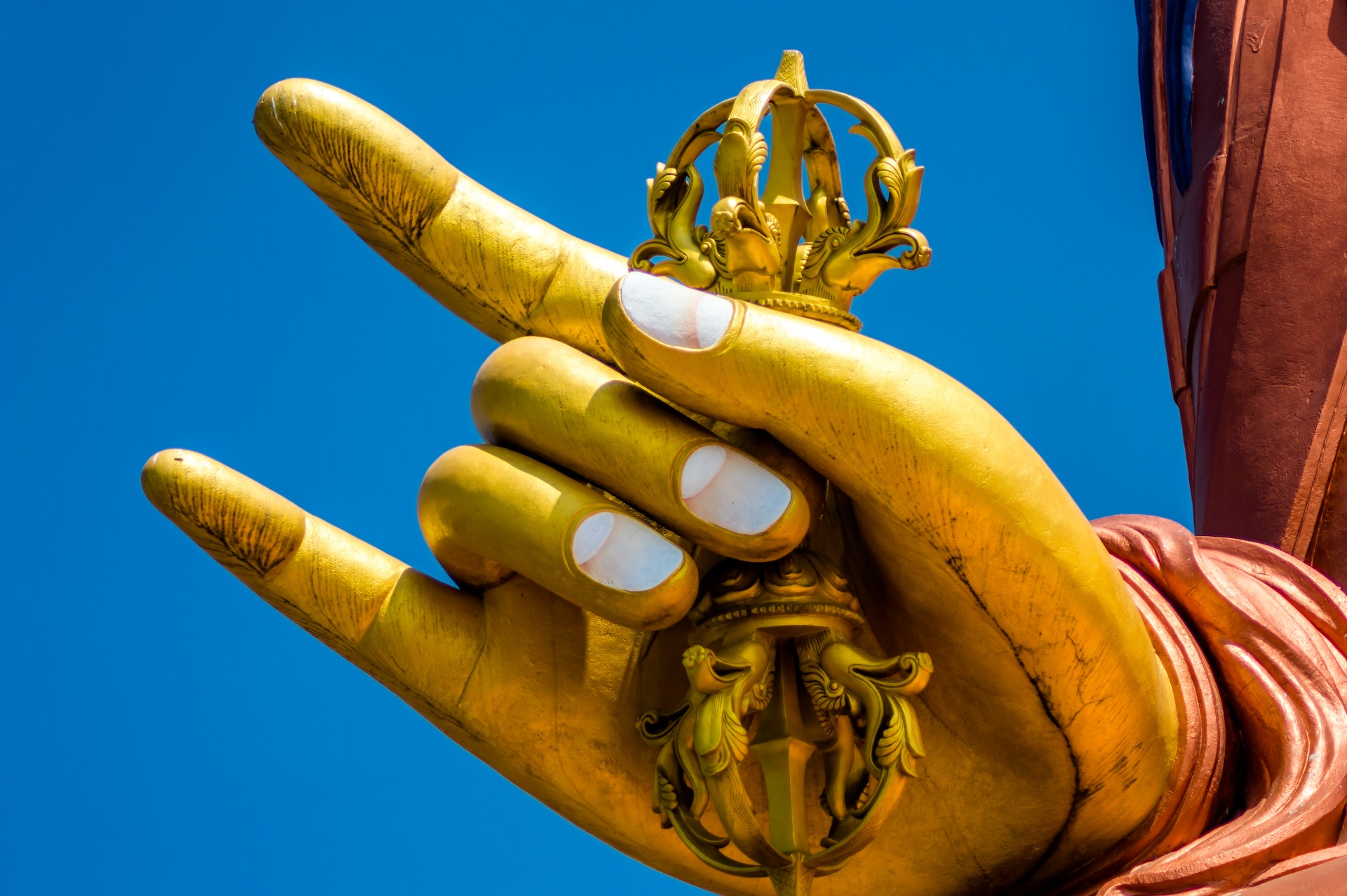
the paradoxical dance

[Editor’s note: I came to be a follower of the Buddha by way of the Theravadin path, so the Mahayana direction remained a mystery to me, for many years. Likewise, the Zen Koan: “A koan is a question or answer posed by a Zen master that is difficult to answer and challenging to those seeking solutions. It directly challenges one’s fundamental concept of self, acting like a sharp weapon that pierces through the self to reveal the Buddha nature within.” It’s only recently that my curiosity has turned in that direction. The following article answers the question, what is a koan?]

The paradoxical dance of seeking and finding wears different costumes in different traditions. In Zen it’s usually known as the gateless gate: Until you crack the combination and pass through, you can’t fully understand the meaning of the great Zen teachings—but then all your mental effort inevitably proves fruitless before this enigmatic and impenetrable barrier. You need to bring your whole being, not just your mind, to the process and allow the paradox to transform you from the inside. Many Zen koans pose some version of this paradox, disorienting the mind and evoking an answer from another dimension of knowing.

Consider the well-known Mahayana teaching: All beings are inherently enlightened, but because of their attachments and distorted views they can’t realize this fact. I can still remember how these words short-circuited my mind the first time I heard them. Hmm, I mused, if we can’t realize it, then how can we possibly say we’re enlightened? But if we’re really enlightened, why can’t we realize it?

As a neophyte practitioner, I understood these words to mean that deep down inside me there was this enlightened nature that I somehow needed to discover and meditation was a kind of excavation project designed to unearth it. For years I kept digging, sitting intensive retreats, contemplating koans, emptying my mind to make room for the influx of awakening. I was spurred on in this archaeological exploration by my teachers, who offered encouragement in private interviews and lavished authority and cachet on those who passed koans quickly. Eventually I just wore myself out with the digging, so I set aside my shovel (and my monk’s robes) and went back to living a more ordinary life. Yet the paradox continued to gnaw at me, silently, from the inside.

The fact is, once you’re gripped by the core paradox and recognize that consensus—that everyday reality is merely a reflection of some deeper truth that’s close at hand but hidden from view—you’ve embarked on a search that you can never really abandon, no matter how far you seem to stray. The Zen masters say that encountering the paradox is like swallowing a red-hot iron ball you can neither disgorge nor pass through. Until you digest this ball, you can never be completely at peace.

Throughout the centuries zealous Zen students have meditated long hours struggling to resolve this paradox, only to return home and discover their “original face.” In the Rinzai Zen tradition, practitioners bellow mu (the key word from one of the most important koans) for hours in their fervor to break through the gate, and the tradition’s stories are filled with notable examples of those who took their practice to even greater extremes, standing in the snow for hours, sitting at the edge of a precipice, walking on foot from master to master. “Monasteries are places for desperate people,” my first Zen teacher used to say, by which he meant people whose suffering, urgency, or intensity drives them forward on their long and often lonely search.

Many centuries ago, the Persian mystic poet Rumi described his own divine desperation in these words:

I have lived on the lip of insanity, wanting to know reasons, knocking on a door. It opens.I’ve been knocking from the inside!

Judging from this poem, Rumi struggled for a long time to penetrate the paradox with his mind, but the door eventually opens by itself, almost in spite of his efforts, and reveals that he’s been living in the secret chamber all along. Rumi’s epiphany when he discovers that he’s been looking from the inside out mirrors the surprise, relief, and delight of those seekers who wear themselves out attempting to unravel the paradox and drop to the ground, exhausted—only to discover that they’ve never strayed from home, even in their most desperate moments. “No creature ever falls short of its own completeness,” says Zen master Dogen. “Wherever it stands it does not fail to cover the ground.”

Needless to say, this intense longing to crack the code and reveal the truth at the heart of reality is as ancient and universal as humankind itself. You could say that it’s in our DNA. According to the Sufis, God said to the Prophet Muhammad, “I am a hidden treasure, and I want to be known.” In His yearning to be loved and experienced, God set in motion an evolutionary pattern that reached its pinnacle in the human capacity for spiritual awakening. God, or Truth, in other words, is seeking to awaken to itself through you, to see itself everywhere through your eyes and taste itself everywhere through your lips. “That which you are seeking,” wrote an anonymous sage, “is always seeking you.”

Taken from an article in Tricycle: Encountering the Gateless Gate

From Wake Up Now: A Guide to the Journey of Spiritual Awakening, © 2007 by Stephan Bodian. Reprinted with permission from McGraw-Hill Professional.
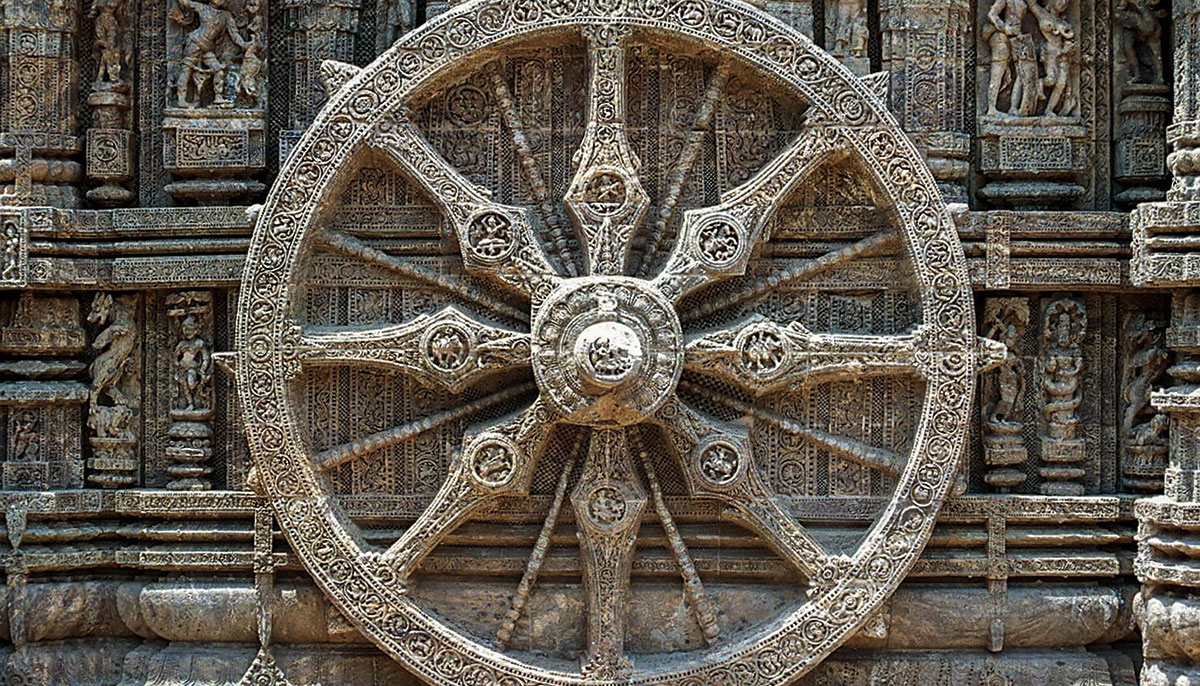
the eightfold path

Excerpts from an article by Ajahn Sucitto – I decided to publish this today because I just realised it contains everything that is meaningful to me in the Buddha’s Teachings

The first and most important point about the factors of the eightfold path is that they are a way of living. They are not philosophical concepts, beliefs, or descriptions of an Ultimate Truth, or Divinity. They lead to an awakening to Truth, but do not define it. The eight factors of this Eightfold Path are: 1) right view, 2) right intent (or right attitude), 3) right speech, 4) right action, 5) right livelihood, 6) right effort, 7) right mindfulness, and 8) right concentration. I’ll give details on these factors later.

The Buddha’s realisation was that the experience of Truth was consonant with the ending of dukkha. And dukkha – whether this be depression, anxiety, frustration, or a more general sense of pointlessness – concerns us all in the here and now of our lives. It’s not a matter of belief. Nor, in Buddhism, do you have to believe that there is such a thing as liberation or Truth; just put an end to suffering and stress, and you’ll know Truth for yourself.

So, the Buddhist approach is through direct experience, of which the first thing to consider is where both our innermost pain and our most reliable sense of wellbeing are to be found. Circumstances such as illness or good fortune come and go; but what lingers with us are internal conditions- a sense of being trusted and at peace, or of having regret or hatred gnawing away at our hearts. If we have peace of mind, we can weather through the rough patches; but guilt, hatred or depression can cloud the brightest day. A millionaire or a king can be beset with worry and mistrust.  And a penniless monk like the Buddha can dwell in ease and fulfilment. Suffering and its cessation lie in our minds and hearts.

Mind and heart: we have an awareness that is affected by and responds to experience. This awareness is what the Buddha would encourage a listener to attend to when putting the teachings to the test. In dialogue he would encourage the inquiry: how does it feel if someone abuses you, kills your friends and relatives? Is that suffering or not? And how is it when people treat you with generosity and kindness? And if you act in either of these ways, which brings about the results that will give you most wellbeing? So, using your own wisdom, how should you best act? Applying reasoned inquiry in this way, the Buddha would sketch in the outline of his Dhamma.

In a nutshell, the eightfold Path can be seen as covering ethics, meditation and understanding. Be with what’s happening, and guide your responses with an understanding of how to let go of the stress. Easy enough in theory, but I could see that I needed some training. Meditation takes us to where we’re really being affected in the present moment, but that’s where we tend to react blindly. To respond clearly to experience, we need to establish guidelines. The foundation for such guidelines is right view.

1) Right view is the recognition that what we do counts. We’re not in a pre-determined cosmos, we can be effective. We can be a source of benefit or harm for ourselves and others; and such a responsibility is not so much a moral obligation as a mandate: if we develop clarity and kindness, we can live with that kind of mind. If, however, we sustain prejudices or indifference, we become narrow and insensitive. We can act clearly and be at peace with ourselves, or we can act out of compulsion, and get stuck in the impotence that compulsion brings – addictive behaviour and loss of personal authority. And in all cases, the chances are that we’ll end up being associated with people who mirror our attitudes. So right view is the recognition that our own integrity has to be the centre of our lives. And that feels empowering.

2) Right intent, sometimes called right attitude or even right thought, proceeds from that understanding of cause and effect; it means setting up the intention to bring around skilful results through body, speech and mind, and to relinquish the unskilful ones. This is the foundation of the teachings on action, or kamma, as it is called in Buddhism, of which mental intention is the agent. Since actions of body and speech proceed from mind-states and emotions, if we can get the mind and heart clear, we can both act from a place of balance, and be able to discern the results of our actions. This is what 3) right speech, for example, is about. We give up deception, abuse, and gossip, and cultivate honesty and words that are worth treasuring. 4) Right action refers to avoiding unskilful bodily action, such as killing. 5) Right livelihood means avoiding trade in arms, prostitution, animal slaughter; and it also broadens out into how one shares one’s life with others.

Right view (1), 6) right effort and 7) right mindfulness: these underlie every other factor. For example, with right speech (3), one starts with the right view by recognising that how one talks affects others. We can bring something of value into someone’s mind with a well-attuned remark, or we could ruin their day. We could be left with regret and mistrust, or with openness and peace of mind. So, right effort means doing the work of steering one’s actions, and right mindfulness (7) – being fully present with what we do or say and seeing what effect it has. The result is we avoid distress and participate in something of immediate benefit. This is the process of the entire Eightfold Path.

Mindfulness and the last Path factor, 8) right concentration, take us into the domain of meditation, the cultivation of awareness. These factors are often what people are usually struck by in Buddhism, because they offer a powerful deepening of the inner life, possibilities of great serenity and joy and the unconditioned peace that is called ‘nibbāna’. And this deepening begins and is maintained with mindfulness – which entails being simply and purely present to what is going on.
If I think back to my first meditation class in Thailand: the monk gave us some advice on how to sit upright in a state of relaxed alertness, and start paying attention to the sensations that accompanied the process of breathing. I couldn’t have followed more than a breath or two before my mind was wandering. In fact, it was careening on a wave of speculations, memories, and analyses. Every now and then I would steer my attention back to the breath sensations, and be able to maintain that for a few seconds before a fresh tide of thoughts came washing in. This is pretty much the standard beginner’s meditation. Nevertheless, what struck me deeply was that here I was witnessing my mind. And that was strangely peaceful, even reassuring: somehow, I didn’t have to make anything out of my thoughts, or even out of my mind. It was just something happening. Moreover, if I was witnessing my mind, who was I, and whose mind was this?
The Buddha reckoned these to be unanswerable questions. Whatever you think or say you are is just one more event passing through your mind. No, the point is that there is always this present awareness, and what passes through it is changing and not what you really are. But the more you centre on that present awareness, maybe using a focal point like the sensations of breathing to help you do that, the steadier and clearer you feel.  You can let go of the impulses and sensations that come up, or, as I learnt later, you can focus on them and allow the steadiness of awareness to bring them into harmony.  Which is what happens. That is, with practice you can stop struggling with your body and your moods, and that very quality of non-struggle starts to infuse and settle them. So: bringing attention into the present is mindfulness, and the result, a steadiness that pervades the body and mind is concentration or ‘samādhi’. Samādhi is not a concentration that you do, it’s a centred and pleasurable unity that occurs as a result of right view, right effort and right mindfulness.
Although the practice of mindfulness and concentration is immensely remedial in terms of clearing out stress, worry, and obsessive moods, it has a further development; which is the understanding that liberates the practitioner from the very source of suffering and stress. This understanding, called ‘insight’, both attunes you to the ephemeral nature of what is happening, and puts you in touch with the steady ever-presence of awareness itself. Sensing this time and time again, an involuntary shift takes place: your centre moves to that pure awareness. In daily life, you can act from that awareness with compassion and clarity; and in meditation, you can let all the events subside, and dwell in a bright, unhindered presence. This leads to nibbāna, the fulfilment of the Eightfold Path. As you get to sense this, even in glimpses, you don’t get caught up in hankering or dejection; there’s no frustration, no need to defend, and nothing you have to prove. Just this is an end to suffering and stress.
To read the whole article click on the link below:
https://ajahnsucitto.org/articles/the-eightfold-path/

all the myriad things

“The doing is done but there is no doer. The principle of doerless doing must be taken up and utilized in our daily lives. Whether we’re eating, sitting, laying down, walking, using, seeking, whatever we’re doing we must have enough truth-discerning awareness to prevent the arising of ‘I’ – the feeling that ‘I’ am the doer. ‘I’ am the eater, the walker, the sitter, the sleeper, or the user. We must make the mind constantly empty of ego, so that emptiness is the natural state and we abide with the awareness that there is nothing worth having or being.” [Buddhadasa Bhikkhu, “Heartwood from the Bo Tree”]

Emptiness means that there is no feeling of ‘self’ or ‘belonging to self’, there is no feeling of ‘I’ and ‘mine’, which are the creations of craving and grasping. Being void of these things is ‘being empty’. What is it that is empty? It is the mind that is empty, emptied of the feelings of ‘self’, and of ‘belonging to self’, both in their crude and subtle forms. If the mind is empty to the degree of being free of even the most refined sense of self it is said that the mind is itself emptiness. This agrees with the teaching that mind is emptiness, emptiness is mind; emptiness is Buddha, Buddha is emptiness, emptiness is Dhamma, Dhamma is emptiness. There is only one thing… all the myriad things that we are acquainted with are nothing but emptiness.

The characteristic of all things is emptiness. This phrase ‘all things’ must be understood correctly as encompassing every single thing from a speck of dust up to Nibbana. It must be well understood that in a speck of dust there is emptiness or absence of self, absence of a permanent, independent entity. The mind and heart, thoughts and feelings, each thing is characterized by emptiness, absence of a permanent, independent entity.

The Buddhist Teachings, the study and practice of Dhamma have the characteristic of an absence of a permanent, independent entity. All the way through to the final Path Realizations, their Fruits and Nibbana itself, have this same characteristic, it’s just that we don’t see it. Even a sparrow flying to-and-fro has the characteristic of emptiness but we don’t see it. All things display the characteristic of emptiness, it’s just that we don’t see it.

The word ’empty’ also refers to the characteristic of the mind that is free from all grasping and clinging. Although the mind is empty of self, it doesn’t realize that it is empty, because ordinarily, it is constantly enveloped and disturbed by the conceptual thought that feeds on sense contact.

As a result, the mind is neither aware of its own emptiness nor the emptiness in all things. But whenever the mind completely throws off that which is enveloping it, the grasping and clinging of delusion and ignorance, and detaches from it completely, then the mind, through its non-clinging has the characteristic of emptiness.

Because all things do truly have the characteristic of being empty of a self, no permanent, independent entity to be grasped at or clung to, we are able to see the truth of emptiness. Thus, the mind seeing emptiness in all things collapses into itself, leaving only emptiness. It becomes emptiness and sees everything as emptiness. Material objects, people, animals, time and space, every sort of dhamma melts into emptiness through knowing this truth. The word empty is the remainderless extinction of ‘I’ and ‘mine’, the utter destruction of self.

So, how should we practice during those times when the mind is free of association with sense objects? Maybe we are doing some kind of work alone and unconcerned, performing our daily tasks or of practicing formal meditation. There is nothing arising from sense-contact. We may be reading a book or even thinking about something, as long as the mind is undisturbed by sense-contact. At such times our practice must be the study and clarification of the way in which things are empty and the way in which to make the mind empty and free of delusion. Think about it, study it for yourself, enquire from others, and discuss it regularly. Keep doing it.

Excerpts from three talks given by Ajahn Buddhadasa to a Dhamma study group in Siriraj Hospital, Bangkok in 1961 and 1962.

Dhammafootsteps, Postcards# 375,374, 373, 372

Image by Bella White, source: https://www.pexels.com/photo/body-of-water-and-seashore-during-sunset-635426/

awareness: nameless and stopped

Excerpts from Reflections: Ajahn Sucitto
One of the monks asked a renowned Forest Ajahn: ‘What’s it like to see things as they really are?’ There was an understandable air of expectation in the room: to ‘see things as they really are’ (yathābhutam ñānadassanam) is the vision of the Awakened Mind. What mystical insight was about to be revealed?

‘It’s ordinary,’ said the Ajahn in his customary succinct and matter-of-fact way.

Bodhidharma (6th Century CE), the legendary conveyor of the Ch’an Dhamma to China. Ch’an (from Sanskrit Jhāna), a Chinese school of Mahāyāna Buddhism. Bodhidharma had an exchange with the Chinese Emperor that was similar in tone to the Forest Ajahn. The Emperor, who had devotedly built temples and shrines throughout China, implored the Master, ‘What is the essence of the Holy Truth?’

‘Emptiness, no holiness,’ replied the sage.

Awakening is more of a deflation of the mind than a peak experience. That way, it’s difficult to grasp. Actually, ‘emptiness’ – until you understand it as the non-clingable, signless quality of what arises – does give one something a little mystical to cling to… perhaps the Emperor wasn’t ready for the really direct teaching. The point is that the closer you get to the Dhamma, the more you know that appearances aren’t where it’s at. What you are able to see is the Unconstructed, and the end to the conceiving, favouring and proliferations of the mind.

A related example is Bhikkhuni Patacāra’s experience of Awakening. Returning to her dwelling after a period of walking meditation, her realization occurred as she turned down the flame of her lamp: Like the going out of a flame was the release of awareness. (Thig. 5,10)

No blazing light, just the opposite… so, is ‘Awakening’ some kind of coma? Well, this apparent paradox occurs because awareness as consciousness is not fully understood. This kind of consciousness is the six-fold awareness that processes data through eye, ear, nose, tongue, body, and thinking mind. In this context, mind-consciousness is the awareness that is affected by the perceptions and feelings that arise from external sense contact, and also from of the internal (mind-base). The mind is always being affected, it’s either fluttering, on the run, or sliding from this to that. Now, maybe if all that flittering and chattering were to stop… that would be a stilling of an activity rather than an annihilation of anything solid. Which is exactly the point. It also explains why the language of Awakening is distinctly unexciting and doesn’t get one’s pulses racing.

It’s all in the mind. The mind base is the home of the impulses and psychological activities, which stimulate consciousness for good or for bad. On investigation these activities of liking, disliking, of hesitancy or eagerness are seen as arising dependent on our attitudes and subjectively-based perceptions we acquire over the course of time. Whether a taste is ‘delicious’ or music ‘pleasant, etc., all gets learned from paying attention and assessing results through language communication. This is how consciousness is formed, activated and programmed; a perception of ‘what’s out there,’ from moment to moment, defines a ‘me’, as lively, articulate, passionate, even-minded or dull. So, the solidity of our world and our self is based upon activities and formations. And what if they stopped? In that freeing up, in things really being seen as they are, the world and the self neither exist nor don’t exist. They both arise dependently.

One point to emphasize is that the ‘me’ sense is a solidification of the sense of presence that is the resonance of consciousness. It takes form dependent on the perceptions and feelings that consciousness forms, infers and otherwise derives from sense-contact. When an architect looks at a building, he/she becomes an architect (that particular sense of self doesn’t arise as they eat a meal or watch TV). And in that mode, he/she sees something different from that which is seen by a thief. The individual bias, the acquired activity forms an impression both of the subject and the object.

When pain or displeasure touch the heart, ‘I’ get formed as the victim of that. With pleasure, I become the owner. Then I get defensive or acquisitive and act accordingly – instant kamma. Have you seen – or felt – who you become when guilt or fear gets into you? Or when compassion or joy touches your heart? ‘Being touched’ is a formation; contact/impression is an activity that modifies and colours the sense of self. In this respect, I’m referring not so much to direct sensory contact, but the impression that the mind makes of that contact, called ‘designation contact’.

This form of contact is the significant one: owing to the subjective flavouring of designation contact, different people find different sights, sounds, flavours, ideas, remarks and gestures delightful, repugnant, or neutral. Designation contact sets up the familiar pattern of how we experience the world; and the consequent perceptions and impressions guide what we will make impingement contact with in the future. So, this is the key to how we react and create fresh action, or kamma, based on the blueprint of the past.

The sting in this apparently neutral functioning is that when it gets infected with ignorance, the mind takes as real, substantial and potentially acquirable what in fact has been formed by consciousness. So that stirs consciousness into chasing its tail, motivated by either acquisition, aversion or delusion. Of which three, delusion is the one that is most constantly streaming in.

So, how would it be if, instead of creating fantasies and phobias, those streams were to stop? Intellectually, it’s not difficult to repudiate delusion. As far as we can see, in the experienced Cosmos, there’s no such thing as a thing: from the stars and rocks on down to the oscillating cells in our bodies and our flickering thoughts, it’s all dynamic. How could there be a permanent self? But in all this movement, there’s one process that forms the apparent self. It’s the lock of grasping. And that occurs in the mind-base when it’s infected by ignorance. So, trust what arises within when the self-impression passes. Investigate the dukkha of ‘how it should be.’ Because with unerring simplicity, release always comes down to cultivating the Four Noble Truths. Selfless clarity spontaneously arises with their comprehension; what arises by itself after the release is the true guide.

And it’s nobody’s. The awareness that is liberated through such realization is just ‘aññā’ ‘the Knowing.’ It’s a knowing that has no subject, a development based on, but beyond, the mindful knowing and witnessing of what arises. At each stage of Awakening, as places where self-view congregates get freed, there is the Knowing, dispassionate and free from positions. And the Buddha constantly refused to make a self out of that.

Ajahn Sucitto

To read the whole piece, follow this link:
https://ajahnsucitto.org/reflections/awareness-nameless-and-stopped/

Image source: https://unsplash.com/photos/WGVOaJIyMd0