Curious Blessings

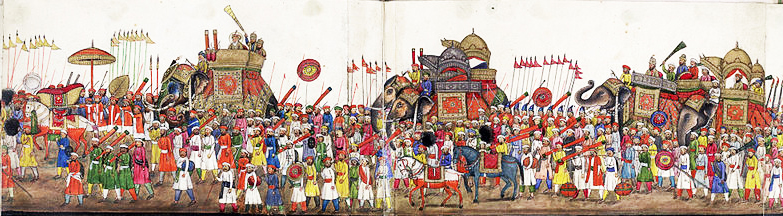
Aug 19: US President Barak Obama wished Muslims around the world “Eid Mubarak” for the festival marking the end of the holy month of Ramadan. In a statement released by the White House the President extended warm wishes to Muslim communities in the United States and around the world as they celebrate Eid al-Fitr. President Obama said: “we congratulate Muslim Americans and Muslims around the world on this joyous day. Eid Mubarak.”

This morning around 5 am I open the laptop and get the news. Yes, I’d forgotten about the Eid, it’s not something you’d really notice unless you’re living in a Muslim community. Around this time of year, at the end of Ramadan the sighting of a sliver of the new moon at sunset signals that this is Eid al-Fitr – it happens at different times for Muslims in various parts of the world. The only time I experienced this was when Jiab and I were in Dhaka Bangladesh. And by coincidence we had a visit from a Buddhist monk from Thailand at that time. We hadn’t realised that his visit would be on the day of the Eid, and when I noticed the date on the calendar I sent an email to Ajahn suggesting we postpone the visit because of the Eid, but he insisted it was ok; in fact, a good time to come.

My hesitation was that Eid is when they slaughter cows and distribute meat to all members of the community. It’s a big day of benevolence and all the poor gather around the houses of the rich waiting to receive their share. If you’re a vegetarian, it’s hard to look at this. The thing is, there are all kinds of things we’d like to turn away from, and we can, but we’re deluding ourselves if we do – this is why Ajahn insisted we go ahead with the schedule. So, it wasn’t easy for me and I didn’t know what to expect. My Muslim friends said that in Dhaka city the presence of cow carcasses on that day would be hard to avoid. In Dhaka, like all Asian cities, everything happens on the street, in the public area, and there’d not be any route coming in from the airport that would not go through these sites. I needn’t have worried, though, because Ajahn was completely okay about it.

I went to the airport, found Ajahn in the crowd, not difficult to find him, the only one there in the pale tangerine-brown robe standing in the line beaming with joy. We left there for the apartment and on the way into the town all the places at the side of the road where the killings had taken place were pretty obvious and thankfully the killing had already happened, some hours before, at dawn. Muslim friends tell me there is a special way it’s done so that the animal feels no pain, no stress. We made our way through the slow moving traffic and could see piles of red and white animal parts and people milling around and it was like a butcher’s section in the food store on every street corner.

Ajahn pointed out that, when you think about it, it’s no different from what’s happening every day, animals are slaughtered for food. This is the reality of our world. All the time, somewhere in the world, maybe at this very moment, large numbers of cows, poultry, fish, goats, pigs are being killed and prepared for human consumption, let’s not delude ourselves. Yes, it’s quite a thought; we just prefer not to think about it and I hadn’t considered it that way. Reassuring to have Ajahn here because before he came I was finding it a bit difficult to accept.

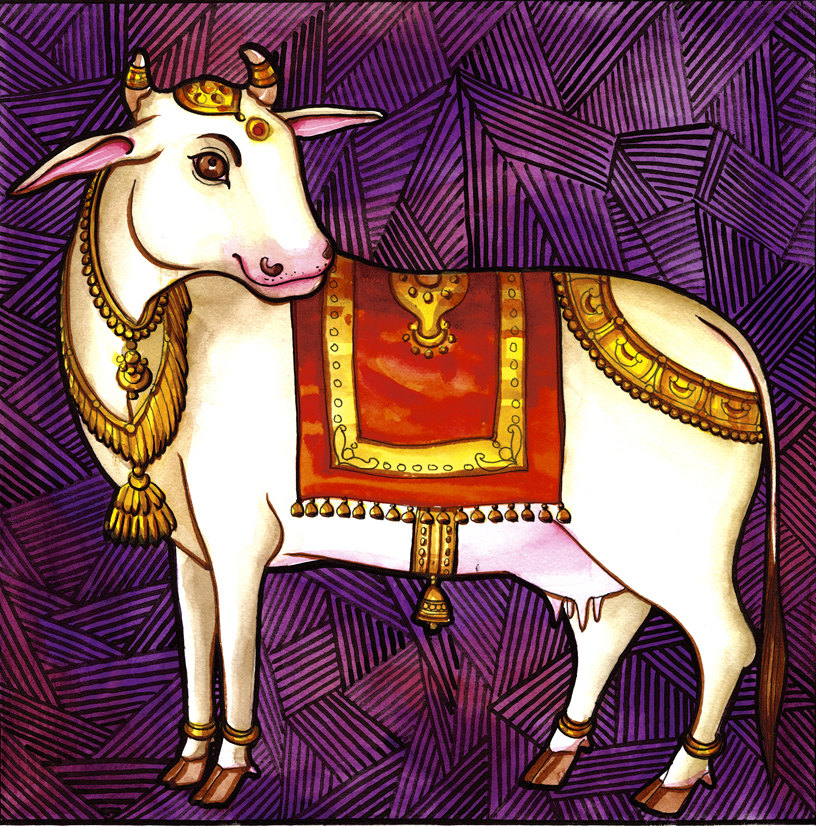
There had been cows (and goats) everywhere in the city. For about a week before Eid, these animals were being taken into the city in lorries, in the back of pick-up trucks or led by farmers walking in from the rural areas. There were cow markets I’d pass through where animals were being sold and all the cows looked the same, white, pale fawn colour with curved vertical horns and that hump on the shoulder. There were cows in every part of the urban area – a farmyard smell of dung and straw. Cows were sitting at the roadside moving the jaw in a chewing motion as the traffic went by; they were in the carpark tethered to railings and street lights; all were being very well looked after and so they were just calmly and quietly sitting and standing around in pairs, usually, in a state of placid contentment. Some had garlands round their necks, painted horns, painted faces with eyes blackened around the edges like theatrical mascara and white and red make-up. It was a bizarre and colourful sight.

But now, of course they were all gone; transformed. No evidence that they’d ever been there, all was forgotten. Instead there were stacks of neatly cut animal parts laid out as if in a supermarket meat department.

At the apartment, the Buddhist event was starting, the group arriving with food offerings, flowers. All quiet, small, neat Thais wearing black and white costumes. There were about 15 people there on the first floor in that apartment in the Gulshan district – where all the foreign residents are and wealthy Bangladesh families. The Thai community in Dhaka is quite small, some business people, employees in hairdresser’s shops, Thai food stores, the Thai embassy staff and all were here to take the five precepts. Jiab is, of course, a Thai Buddhist – not like me, a Western buddhist and still learning how it works. Jiab’s mum and dad were Buddhist and it goes all the way back through her family lineage.

The ceremony took place; chanting, meditation, repetition of each part of the Five Precepts and more chanting. Ajahn gave a short talk about sila in the context of sila samadhi punya. And throughout the whole meeting there was the sound of sawing and banging: boom, boom, bang-bang-bang. At first I thought, what’s going on? Sounds like construction or people hammering things. But, after a while, I realised what it was. When the talk was over and as everyone was leaving I had a quick look out the back window where the noise had been coming from. There were these same heaps of butchered animal parts again. A whole carcass had been cut up here. There were large butchers wooden chopping boards, saws and the sound had been cleavers and small axes chopping and sawing through bones. Just below the window where the Buddhist monk was chanting….

And I don’t see it particularly as a characteristic of the Muslim faith, the same thing happens in all of the supply networks for the food industry; meat production in America and Europe, it’s the same thing. The only difference is that in the West it’s hidden and we’re not usually aware of it.

I’m glad it happened, as it did. Having the Buddhist monk there on that day to create blessings in the midst of everything was quite wonderful for us.

Success-Failure

Switzerland: I’m on the DOWN escalator at Gare Cornavin leading to the underground shopping area, and up to where the bus stop is. Phone rings in my pocket. Hello? It’s Jiab calling from the house in Delhi. Reception is not good so when I reach the bottom, I change to the UP escalator and come back to street level. How’s things? In the background I can hear the neighbour’s dog barking: woof-woof, woof-woof, woof-woof, woof! [Link to: Mindfulness of Irritation] The familiarity of it … for a moment I’m there; the sense of ‘me’ from that time starts to  become the ‘me’ here 5,737 miles away (as the crow flies). Interaction with the feeling only serves to energise it. The ‘I’ wants to experience it again but that’s gone now. ‘Did you see the end of the Olympics?’ Jiab asks me. And I did but have to say that watching the Olympics hasn’t been a priority these last couple of weeks. So, if you asked me about who won which medal, I couldn’t tell you. ‘Hello?’ no signal… I go down the escalator to the bus stop, pulling my small case on wheels behind.

There is this sports enthusiast friend of mine who was coming round to watch the tennis on TV and I’d be sitting there reading a book in the TV room with him, not really involved in the game, then he’d suddenly BELLOW without warning. I’d jump out of my chair, and he’d apologise for giving me a fright; thrust into the euphoric awareness of the tennis court ‘moment’. It isn’t very ‘sporting’ of me but when I see the athletic events on TV, it’s more like an opportunity to practice non engagement; being ‘with’ it and not ‘in’ it than something I ‘enjoy’ watching. The fierce competiveness is a bit unnerving; winner gloats triumphantly and loser totally devastated – gladiators slaughtering their opponents in the arena, spectators wild with joy. And if we are cheering in excitement about our athlete winning the gold medal, the opposing side will be groaning in despair about their athlete losing; making a big thing out of our success encourages their failure. It works both ways, of course, we may be on the losing side as often as we’re on the winning side.

The number 3 bus arrives and I put my bag in the luggage section; no seat, hold on to the hand supports as the bus swings off. Holding on to what I like means that some things I dislike come along as well; two for the price of one. The feeling that I ‘like’ something will stay around for as long as I hold on to it. If it’s something I ‘dislike’, the aversion I feel towards it is an attachment I struggle to disengage from. It’s a form of holding and that means the ‘dislike’ tends to stay around as much as the ‘like’ does. In terms of the Buddhist experience, like-dislike are the same thing; I’m driven endlessly to seek what I like because I dread having only what I dislike – thus end up holding on tightly to both.

These are the Eight Worldly Dhammas: ’… four pairs of opposites – four things that we like and become attached to and four things that we don’t like and try to avoid [pleasure/pain, praise/criticism and blame, fame/disgrace, gain and getting what we want/losing what we have]. We might feel that somehow we should try to eradicate these feelings of pleasure and pain, loss and gain, praise and blame, fame and disgrace. A more practical approach would be to get to know them, see how they hook us, see how they color our perception of reality, see how they aren’t all that solid. Then the eight worldly dharmas become the means for growing wiser as well as kinder and more content.’ [Pema Chodron]

The dilemma of the ‘I’ experience caught in the Eight Worldly Dhammas is serious and traumatic in the context of violence, war and natural disasters. The Pakistan earthquake in 2005 where 3.3 million people became homeless and so many lives were lost is one example [Link to: Power Failure/ Comments/ Saadya]. Many people there were convinced about a sort of Sodom and Gomorrah type of retributional justice; it’s all our fault, etc. We are being blamed for ‘our’ actions in the past. An extreme reaction in an extraordinary situation. Samsara of distress, pain, fear and the sense that something is ‘wrong’. The human tendency is to contract into ‘self’ and the assumption arises that ‘I’ caused it to be ‘wrong’ – I am to ‘blame’. It troubles me to think that this may be quite a common reaction when people are faced with death. When there’s no knowledge or experience of how to be mindful and aware, the mind follows this route.

This guilt syndrome that happened during the Pakistan earthquake was/is another example of the habitual ‘self’ response, no more than that, when everything came back to normal, the intense urgency of thought simply evaporated. ‘Everything that arises passes away.’ At the time it’s happening, it’s difficult to see that. What can I do to abide in equanimity….

Bus arriving, get off at the stop, cross the road and well-behaved Swiss traffic actually stops at the pedestrian crossing to allow me to cross. I hesitate, Bangkok traffic has the right of way, then I remember it’s ok to cross. How nice! Up the hill to the apartment building, pulling my small case on wheels behind. Good to be back in the fresh air and chilly mountain winds.

————————-

‘External conditions don’t make you suffer, suffering arises from wrong understanding. Feelings of pleasure and pain, like and dislike, arise from sense-contact – you must catch them as they arise, not follow them, not giving rise to craving and attachment – which is in turn causing mental birth and becoming. If you hear people talking, it may stir you up, you think it destroys your calm, your meditation, but you hear a bird chirping and you don’t think anything of it, you just let it go as sound, not giving it any meaning or value.’ [Ajahn Chah]

Landing on Mars

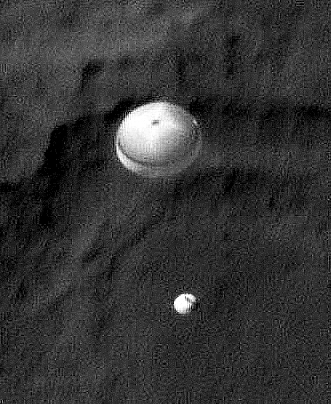
Curiosity landingThe Curiosity Rover landed on Mars. It’s an astounding thing and hard to believe but there are photos to prove that it is there. Conscious awareness goes off in search of this new location. It’s a basic human reaction: where is this place that wasn’t there before but it is now? A natural curiosity about it motivates me to find out. There’s an idea of something very distant, yet quite near; in terms of the Buddhist experience, it’s ‘here’ – the same space where we all ‘exist’. It’s somewhere in the known universe, in the sky, obviously, and the mind looks for a way to incline towards that place, move in that direction. I can see a part of the sky out there, through my window. So I go over and have a look: Mars is out there somewhere….

There’s a sense of distance, large empty space, and my focus reaches into this hugeness. It’s a bit like receiving an SMS from my sister in the Scottish Highlands, where she lives, up there in the cold mountains with a very faint network signal, and I read her SMS and think, what’s it like there, right now? Conscious awareness stretches out to that location and in a moment, I feel as if I’m there, then I’m back in physical reality, ‘here’ again: Delhi 30° Centigrade. I know she is there in Scotland and, for a moment, I was there too.

Another example is, I’m in Japan in the classroom and Jiab calls me on the phone: hello I’m in Helsinki! It takes a moment for me to figure it out. Where is that… ‘Helsinki?’ And all the Japanese students look at me, thinking: What’d he say, Helsinki? And I remember, oh yes, that’s in Finland … isn’t it? I’d no way of knowing she was going to be there – Jiab does this kind of thing. In the moment of recognition, consciousness flies away to what is known to be ‘Helsinki’ and flies back again. It may not have actually gone to Helsinki –  it is all ‘here’ anyway – but I’m left with the distinct sense of having travelled somewhere in consciousness. It feels like I’ve been away from where the mind normally resides and now the ‘world’ seems to be bigger than it was before.

In the same way, I know Mars is there – a very definite feeling that it’s there now, the proof is that the Curiosity Rover landed on that planet and is sending us photos, much like SMS messages sent by cell phone. Before I got the news about Curiosity, I’d no idea of that location; now I think I do.

It kind of supports an idea I’ve had for some time, about conscious awareness having the ability to (seem to) move in space, across some distance. A short while ago I was in Switzerland sitting on the cushion quietly in meditation and it seemed like it was possible to hold a picture in the mind; a view I was familiar with, from the apartment there on the seventh floor. So I did that, I focused on the picture I know so well: a group of trees on the horizon, maybe 5 or 10 miles away, and sometimes you can see these trees as clear as if they were miniatures on the windowsill. When a small patch of sunlight illuminates that distant place you can even see a shadow below the trees; and they become things of substance, solid; they have weight.

There it was, in the mind’s eye, a small group of trees in the distance, illuminated by the sunshine, all the tiny details of foliage and dark shadow cast on the green field below. It occurred to me then that eye-consciousness links with its object and if that object is 5 or 10 miles away, then eye-consciousness links with it in the same way it does with objects that are close. So eye-consciousness must, somehow, travel that distance to reach it’s object. It is puzzling but how could it not be like that? There’s an aspect of eye-consciousness that spans distance; eye-consciousness is transported as far as the eye can see. But, at any rate, it most certainly involves an attitude of ‘reaching out’ or ‘peering’, and trying to ‘see’ and in a similar way there’s this phenomenon of reaching out to a known location on the planet Mars.

In this meditational landscape I was viewing at that time in Switzerland, I started to contemplate this eye-consciousness transportation phenomenon simply as a possibility – a logical possibility – and suddenly the strangest thing happened. I was being rushed off, whisked away towards that horizon point I’d visualised! Just accelerating off at a tremendous speed and for it to continue happening like this, all I had to do was keep an open mind. It went on for as long as it held my attention and eventually, of course, something caused me to let go and it began to change. After that experience, I started to see how it’s possible to have extensions of consciousness in all kinds of quite ordinary ways.

So what I’m saying is, landing the Curiosity Rover on the planet Mars, is about scientific research but it’s also about how we can use consciousness to understand the scale of it. It’s the great space starting from my doorstep and out, all around and stretching into the infinite distance. All of that is simply ‘here’.

Loving-Kindness to Animals 1

flying gull

I was on a cliff path by the sea, in the North of Scotland, cold and windy, and there were all these nesting gulls making a terrific high-pitched screaming sound. Suddenly this large gull flew past my head, so close I could see its eye looking at me as it passed. I felt its body heat, was aware of the complexity of its massed intestinal organs, lungs, heartbeat and all this in just that ‘gull’ moment caught zooming through the air. Some piece of it’s time zone made an impact on me – an unexpected contact with a living creature in nature that you don’t normally have. It was protecting its nest, I was the predator, a wild animal on two legs; an egg thief coming to steal away its offspring.

I hurried on out of the nesting area, chased away by the gull, and spent some time in thought about the carnivorous relationship I have with the animal world. A friend told me about these two girls, twins in fact, who had their 15th birthday and their parents asked them what they would like to have as a birthday gift. After some discussion – twins always have to agree on birthday gifts – they decided they would like to ‘liberate’ a lobster. I saw on a webpage  that scientists believe lobsters can live to 100 years but the normal life span is about 15 years. I’d not heard of the Lobster Liberation Front before. Mum and Dad said OK to the plan and they went around all the storage areas where lobsters are kept for consumption in sea food restaurants, chose a lobster, bought it, put it in a bucket went out to sea in a boat and set it free.

I am a vegetarian, mostly, it’s a sensitive area. The fact that I sometimes eat animal products is not something I like to think about. There was one time in rural Thailand I was walking with Jiab in the fields around her home, and she takes me to see the little cow they have there. It has a bamboo bell around its neck: takata-takata. We stop and look at the cow, and it looks at us. A miniature creature, it comes towards me with cautious movements and swinging head in motion with the way it walks, raises it’s head and points a snuffling, sniffing wet snout in my direction; large snorts, extends long tongue and sticks it in it’s nostril (how do they do that?), comes a bit closer and quite a bit of sniffing of the air around me – not in Jiab’s direction. This cute little cow is curious about me due to a certain familiar milky smell coming through the pores of my skin? Thais don’t drink much milk so I was thinking, wow! here is proof that the (Western) body releases a noticeable odour of milk. I know this little cow has never been near to a Western person before in its life. The smell was familiar; a naïve recognition of an upright, standing-on-it’s-hind-legs member of the species – a cow person?

But we are carnivores. And there’s this unpleasant conceit about being at the top end of the food chain bothering me now while eating a breakfast of grains, nuts, fruit and cow’s milk. Jaws move in a slightly circular motion; down up, down, up, down, grind, grind, and swallow. I’m an animal too. I consume the environment, whether it’s other animals, fish, vegetables, eggs, milk – we are the cow’s babies (there’s a thought!). And cutting up vegetables is a bit of a sacrifice really; every time I start to cook food there is the opportunity for this kind of contemplation. Vegetables and fruit may not have the obvious characteristics of sentient beings but we may eat their reproductive organs along with everything else [link to: Buddhism and Beef].

There’s a couple of lines of text somewhere in an essay by Tan Ajahn Buddhadassa, that I cannot find at the moment; it’s about consciousness of all the things we eat, bits of animals, poultry and fish and how all their ghosts will come back to haunt us in the end. Pretty scary, nowhere to run, everything we are: mental, physiological, flesh, blood, and bones is a composite of what we have eaten, internalized. And it extends back through the generations to the beginning of time. The cellular substance of what we are is a genetic composite of all kinds of animal fats and enzymes and there’s just no getting away from it.

So, it has to be about being aware of the reality of it all. Contemplating the eating of meat helps me to see the true extent of my voracious appetite for all consumables. Things I feel drawn to consume surround me – and I mean, here, non-food items: ‘mind’ hungers for mind object. Consciousness is dominated by habitual ‘mind’. Remove habitual ‘mind’ and there may be something like a deluge of reality comes along and with it comes a deluge of understanding. Somewhere in there is an explanation for the fact that people eat animals.

When Acharn Mun was at the end of his life, weak and lying in a village in NE Thailand, a very large number of his followers began to assemble. He asked the bhikkhus to take him away from the village because the villagers would have to kill many animals to feed those people. They took him to a nearby town where there were market places and various kinds of prepared food could be easily obtained. Shortly after that Ajahn Mun passed away.

‘From the day of my ordination I have never thought of harming (animals), let alone killing them. I have always extended my loving-kindness to them, never neglecting to share with them all the fruits of my merit. It would be ironic if my death were to be the cause of their deaths (‘The Venerable Phra Acharn Mun Bhuridatta Thera, Meditation Master’, page 201 – 202).

[link to: Ajahn Mun Bhuridatta Thera, Wiki]

[link to: Image source]

rope seen as snake

OLD NOTEBOOKS: Nontaburi, Thailand: Alone in a house surrounded by trees. Leaves filter a lovely green light all around; birds, lizards, squirrels, I see something move out on the patio… is it a bird, dropped down from a branch to peck at something? There, it moves again – just a hop and it’s a few feet further on. I sit very still, don’t want to frighten it away. I see it now, in the same position, not moving. After a long time waiting for it to change position, I decide to slowly get up and see what happens when I do that. It’s still not moving – maybe it’s injured. I go out on the patio and walk up to it. Ahhh… the bird is not a bird, it’s a large brown leaf, blown by the wind across the patio surface.

Go back inside and look at it again. It looks exactly like a bird, and just then a gust of wind blows the leaf. The animation of it is absolutely convincing, but I see it now as a leaf, not a bird. How strange, believing that something is there, then having to accept that it’s not. The teaching about the rope and the snake; a piece of rope lying on the ground is thought to be a snake. It’s an analogy of ‘self’ seen in consciousness + name-and-form: I recognize that the rope is a rope, not a snake, and can see how the illusion occurs. Or I may not see it and be convinced it’s a snake… maybe for a long time – a whole lifetime preoccupied with a ‘self’ that isn’t there.

This small epiphany occurs after another curiously similar event took place in this quiet house. I’m alone here except for D who is a grad student, working part-time, and he also takes care of the place. I don’t see D much, he works night shift sometimes, sleeping in the middle of the day. The house is large and I’m never absolutely sure if he’s here or not. Usually he stays in his room so I’m used to not seeing him around. I just quietly go about the house, day after day, not making too much noise in case he’s sleeping and quite often forget about him completely.

Then, just the other day, I start to wonder what happened to him. I look in the car park and his car is not there. When did I last see his car? Two days ago, or longer than that? I go to look at his laundry – could be the same laundry that’s been there for a while… clothes without a person inside them – remembering the movie: The Time Traveller’s Wife. I have to stop for a moment and think, when did I see him last? Go up to his room, door is open, nobody there. Hard to believe, I assumed D was in the house but I’ve been alone the whole time. The leaf-seen-as-bird metaphor. Something I thought was there, wasn’t… thinking it’s one thing, then it’s not. The usual sense of ‘me’ suddenly gone… then it returns again. Everything feels light and transparent.

‘It was as if lightning coursed within my chest. The impact lasted for a while, and for the next few weeks whenever I saw people, they seemed like a magician’s illusions in that they appeared to inherently exist but I knew that they actually did not.’ [‘How to Practice: The Way to a Meaningful Life’. The Dalai Lama, in the sixties reflecting on the Rope Seen As Snake metaphor, phenomena being dependent on conceptuality and his discovery that the “I” exists conceptually, dependent on mind and body; not an entity in itself] Source: Emptiness and Existence:

————————-

This post reblogged from July 12, 2012 

Jesus and Advaita Vedanta

 I didn’t know about Advaita Vedānta when I was a child and only recently discovered there were people like Alan Watts (and others) writing about non-duality in the Christian context, [link to part of the Alan Watts’ essay: This Is It].  Now I’m convinced it is important to focus on the fact that there is something at the heart of Christianity. The uncomfortable feeling that’s followed me all these years – that somehow I missed the point of the Jesus Teaching – all this has gone when I think of the Advaitist aspect of the teaching. It’s the missing piece of the puzzle I just stumbled upon, coming from an Asian perspective, an inductive knowing and that’s how it works.

The reason I didn’t see it before is because the Western concept of God, having human attributes (similar to the Advaitist idea of Ishvara), contradicts the rational scientific view. Accepting something that’s scientifically impossible, just because it’s written down in the Bible, doesn’t make sense. It’s like a myth and that’s why Christianity never had any reality in the West. What’s needed is to take it all a bit further.

‘… when human beings think of Brahman, the Supreme Cosmic Spirit is projected upon the limited, finite human mind and appears as Ishvara. Therefore, the mind projects human attributes, such as personality, motherhood, and fatherhood on the Supreme Being. God (as in Brahman) is not thought to have such attributes in the true sense.’

In Western countries, people are wandering around without a map. There’s the shopping mall and that’s all. How to let go of the individual ‘self’ if everything in the system is aimed at getting you to hold on? Looking for the way out by browsing possibilities will take a lifetime. The distractions built-in to window shopping behaviour are designed to keep you ‘shopping’ and prevent you from finding the way out too easily. By the time you get there you’ll have forgotten what it was you were looking for.

‘The Advaita Teachings are pointers, offered at the level of the audience, so to some people Jesus would talk about “a mansion with many rooms” and to other people he would say: “(heaven) is within.” (And) without understanding Advaita and the way pointers are adjusted depending on the audience, (most) Christians haven’t a clue what Jesus was talking about ….’ [link to Advaita Vedanta page]

Those who didn’t fall into the shopping mall trap just took the belief ‘thing’ to pieces to see what it was made of. That’s how it was seen that there was/is no substantial “self” in the centre of consciousness. It’s an operating system that keeps all working parts in the state of  ‘oneness’. ‘We are, right at this moment, God itself, and we can rejoice in that – if we can break out of our individual identity….’ If someone had been able to explain it to me like this when I was a child, the challenge to find out what it could mean would have been enough motivation for a lifetime.

‘When you fully understand that which you are and cannot not be, there is nothing to do to be what you are.’ [Jac O’Keeffe]

………………..

I wrote another post about this: ‘Jesus and Churchianity‘.

Note (i): There are two references in the Upanishads: aham brahmasmi (Brhadaranyaka Upanishad 1,4,10), and tattvamasi (Chandogya Upanishad 6,8,7), the instruction of Svetakatu by his father – very much earlier than the Jesus teachings. The 8th Century development by Adi Shankara is something for a later post. [link to ‘Christian Consciousness and Advaita Experience‘] 


Acting the Part

1st Century theatrical maskI was in New York some years ago, in the car with WGM, stuck in traffic. A hot day in July, car windows open, air-con wasn’t working; exhaust fumes, hazy visibility. WGM was practising for his singing lesson and had a few song sheets with him in the car. He showed me an old one: the Julie Andrews classic, ‘The Sound of Music’. and all of a sudden, sang the first part of it, there in the car: ‘The hi-ills are alive, with the sound of music…” stage performance, vibrato, full voice, and the volume was amazing! It blew me away. Heads turned, people leaned out of their car windows and the great river of jostling pedestrians paused for a moment on the sidewalk. It was WGM’s 15 minutes of fame.

But he did that kind of thing all the time, an ability to find the paradoxical circumstance and play the part. WGM was an actor I’d met in Europe the year before and staying with him in a cramped apartment near Broadway with other actors, performers and ‘people’. Different from other shared habitations because they were all hustling for parts in videos, TV ads, movies, music, anything. Life is ‘theatre’. They were opportunists. Every step of the way was an opportunity to perform – life itself is the audition. The ‘self’ we create is the performance; we are acting a part, all the time.

In the apartment the phone was ringing constantly, theatrical agencies calling up to return a call from somebody in the apartment, “Can you get that?” and “Sorry, he’s not here, can I take a message?” The thing about this that made it different from other shared-apartment situations was that the phone link was really important to everyone there; the world of opportunity. And the phone calls from the agencies made it somehow part of the ‘public’ world out there. It felt like the whole world was calling this number all day and most of the night – the outside world coming in to the inside world. Another thing about it, the process of answering the phone was an opportunity for these multi-personality specialists to try out a different persona every time.

So when the phone rings whoever is sitting next to it answers, switching to a subtly different ‘voice’, with a different accent, quite believable and acceptable to the caller but interestingly ‘changed’ to those of us in the room. It was baffling to me at first because I couldn’t figure it out and partly because there’s a strange logic to this: the unknown caller at the other end of the line is ‘somebody else’, a person with his/her own identity – hence the created personality, character (game) seems like, well, appropriate? It made sense because, on a certain level, it’s all about ‘self’, anyway, and who you are at that moment is subject to change because who you’re talking with determines who you are. I can appear to be somebody in one situation, then ‘be’ somebody else in a different situation. The self illusion has flexibility. The whole thing is about acting the part.

The phone gets put down and immediately rings again. The same person answers it in another ‘voice’ – an identity that’s so different from the one he just used it’s hard to believe; hilarious, bordering on the schizoid. Since that time I’ve been aware of the ‘act’ of being alive. It contributed to the discovery of the Buddhist anatta (no ‘self’) and the habitual ‘self’ construct, projecting ‘my’ character, ‘my’ personality at a particular point in time and in specific circumstances changes all the time. It just happens naturally.

The skilled actor plays the part so well, the spectator thinks he is the person, not the actor. A layer of paradox: the actor being himself and simultaneously not himself reveals the ‘self’ construct. Or it could be that the ‘act’ is revealed completely to the spectator; a self-reflexive act that does not distinguish between the ‘self’ construct and acting the part, it’s just there; a total act, an actor/spectator encounter in metaphysical terms and, for the most part, it’s accepted as ‘theatre’, illusion, samsara and we’re immersed in the story of it all.

………………………….

[image link]

Too Much is Never Enough

Tanha

“If this sticky, uncouth craving overcomes you in the world, your sorrows grow like wild grass after rain.” (Dhammapada 335)

Tanha perpetuates ‘the fever of unsatisfied longing’; the opposite of bien être (sense of well-being). Tanha is not a happy bunny. It attempts to feed the hunger of ‘wanting’ but the action of feeding it only sharpens the edge of appetite; there’s never enough. Tanha is a deep craving for ‘self’. It is astonishing to think that the ‘self’ we have constructed to fill the void of ‘no self’ is the direct result of tanha. I am ‘me’, here in this world, because of tanha.

Tanha is the cause of Suffering, the 2nd Noble Truth, the 7th step in the Paticcasamuppada. Tanha is the reason for rebirth. In the story of King Assaka and Queen Upari, Queen Upari died and became a cow dung beetle in the next life. But she felt quite at home in her lowly existence as a cow dung beetle and this is due to tanhã (craving) which finds delight everywhere. Tanhã gives pleasure, delighting in whatever sense object presents itself – tanhã has the tendency to delight wherever it finds rebirth. Reborn as a dog, it takes delight in a dog’s existence; reborn as a pig, as a fowl, there is always delight in each existence.

It explains very well the reason why some people you meet are absolutely committed to ‘wrong view’ with an intensity that takes your breath away. They believe they’re right and the rest of the world is wrong. No matter what anybody says, they continue to do it the wrong way. Life is pretty difficult for somebody like that. I’m reminded of a song from the 60s: ‘The original discriminating buffalo man. He’ll do what’s wrong as long as he can.’ (Lyrics: The Minotaur’s Song’ by Incredible String Band [link])

Tanha is step 7/8 in the paticcasamuppada causality sequence. Interrupt the sequence there and bring the whole thing to an end. I first came across it in Walpole Rahula’s ‘What the Buddha Taught’, then later in Ajahn Buddhadasa [link] The way to deal with tanha is to cut off the conditions that lead to its arising. The entry point here is the step before it: 7. Vedana. At the vedana stage, there are three possibilities: the arising of pleasure, or pain or neutral feelings. If feelings of pleasure or pain arise, then craving or aversion will follow and tanha will be the result.

‘… if, by an act of will, only the neutral feeling was allowed to arise from contact with the object… the seventh link would be neutralized, de-activated. That being so, tanha could not arise, and the next link (upadana) would fail to arise and so on …” Eric Cheetham, “Fundamentals of Mainstream Buddhism”, p214-215

For me, the discovery that interrupting the sequence at Vedana changed the momentum of everything was awesome, to say the least. This is how I quit the tobacco habit (and other things). By allowing the neutral response (at Vedana) to be present for a moment, I noticed an easing in the craving, a cessation – just enough to trigger my curiosity… what is going on here? The first time this happened, the cessation took place just as my recognition of it clicked as (possibly) ‘the way out’, and I knew then I’d cracked it. Now I see it’s about staying a little distant from it, and allowing the craving to start the process of cessation by itself. Trying to confront/defeat the craving will not work because willed action only causes it to arise again.

Time went on and the craving would arise but there was always cessation. By my continuing to recognize that it’s in the nature of Tanha (as with everything else) to be transient like this, it was seen as something that comes and goes – bye-bye craving. The neutral feeling didn’t register as anything (that’s the thing about neutral feeling) and there was a space, a gap that wasn’t there before. Curiosity about this new space, just discovered, led to extra motivation. I could see that I was changed. Situations that used to completely overwhelm and demolish me seemed more distant; I’d found a way of looking at them as if they were something quite separate.

Other habitual behaviour began to fall away. I began to notice the wonderful emptiness or the wholeness or … (whatever word you use isn’t quite it), a great peace in the space of the mind that comes about when you understand that there is a way out of Suffering. I figured out that I am not dependent on the ‘dependent’ mind state tanha. I can walk away from it; everything that arises, ceases.

[link to image source]

Meditating at 600 mph

Bangkok/Zurich flight: I think there are about 350 men, women and children seated inside this lightweight metal cylinder with wings and gigantic engines, surrounded by high frequency white noise. On East to West journeys (Asia/Europe) at this time it’s just one long night. Food and drinks finished about 2 am. Now there’s the twelve-hour journey to get through; an uncomfortable, restrictive environment. The sound generated by the engines and air pressure and my hearing mechanism are all one and the same thing, inextricably linked. A shrill voice inside me wants to scream at exactly the same pitch as the engine sound, and so become silent in it. Aware that I could go down the road of wanting things to be different from what they are and, in the end, come to see that it is precisely this that causes the suffering, I give up – just no getting away from it. And it’s somewhere between that relinquishment and the sincere desire to be free from suffering that the thought arises: there must be some other way of doing this? And the Third Noble Truth comes walking down the aisle and says in a friendly voice: ‘Yes, there is some other way of doing this.’ Just the thought of it gives me encouragement and after that the flight experience becomes interesting.

Focus on breathing, there’s the presence of noise and I let go of thought. Familiarity of breathing and focus, mindfulness; sitting in this small space, aisle seat, environment of the plane and we career headlong through space at 600 mph, altitude 37,000 feet. Strangely, it feels the same as if I were sitting on the meditation cushion on the floor, terra firma. Einstein’s Theory on Special Relativity tells us everything inside this enclosed capsule is relative to itself, as it would be on the ground. I’m aware we are heading in one very specific direction at an immense speed. With eyes closed, the breathing tells me it’s possible to sense this direction we are headed in. If there were seats facing the opposite way, I could try sitting there and watching the breath to see if there’s a difference. But aircraft design doesn’t provide for that kind of investigatory requirement. They like to have everyone facing the same way.

Trying to get this and other things properly into context causes me to fall into a dreamless sleep for some hours and wake with the announcement: “Ladies and gentlemen, we are beginning our descent to Zurich… ensure your seatbelt is securely fastened and table folded away….’ Then plunging down through rain clouds and down again through many layers to a space where dimly below I see the surface of the planet, December atmosphere, everything is grey. Then down again into a layer of cloud, visibility decreases, the air seems like it’s obscured by fine cloud filters. Can’t see a thing outside the plane window. Aircraft drops, altitude is lower and the light becomes less and less. Then break through into an empty space between clouds, drop down into another layer and emerge into a sky free of clouds, high above Switzerland, snow-capped mountain peaks, and at ground level, the plain, way down there, everything looks dull and grey.

Arriving in a different time zone; here before you know it – takes longer to adjust to the new global positioning than it did to get here. My eyes are still dazzled by the brightness of Thailand, unaccustomed to the dim grey light of the Northern Hemisphere. How can people see here?

————————-

[‘11,000 metres below the sea, single-celled “bottom dwellers” exist in pressures equivalent to 50 jumbo jets piled on top of each other.’ Just getting on with their lives, pleased by encounters with small particles of food.]

Jesus and ‘Churchianity’ (1)

Bangkok airport

Christmas, Bangkok Airport, Departures: Bags packed, got passport and ticket – taxi to the airport. Checked in, immigration, security and step through into the glitzy duty-free with people and music circulating. Compelling christmas carols with full orchestral backing and we are swept away to a tinsellated heaven realm. The next music track is a syncopated, off-beat, acoustic guitar melody support for: ‘… the ho-lee bible says, mary’s boy-child, jee-sus christ, was born on christ-mas daaay…’ Enter coffee shop area as we reach the main chorus at full volume: ‘Hark Now, Hear The Angels Sing…’ waiters have that look: the thrill has gone, dulled minds, christmas carol track loop playing in their dreams.

When I was a kid, I’d ask people about Jesus and didn’t ever get a satisfactory answer: ‘Jesus was the Son of God’. I accepted it, but didn’t understand. That’s how it was and maybe it’s why, in later life, I started to search for a real spiritual path. And eventually I became a Buddhist; all’s well that ends well. And it’s only recently I’ve been able to see links between the Jesus Teachings and Eastern religious experience (Advaita Vedanta) so that brings the Jesus story very much closer to me.

I open the laptop in the middle of: ‘… the cattle are lowing, the baby awakes…’, internet connection, Google, Wikipedia, I find Brahman/Atman and substitute the word ‘God’ for Brahman and Jesus for Atman then edit out all Advaita Vedānta references, now try that and see. “… away in a manger, no crib for a bed…” Flip through all kinds of pages then discover this very interesting paper about Neo-Vedantic Christology given by an Indian clergyman: Rev. Dr. K.P. Aleaz in 1994.

It’s a series of short contributions from members of the Ramakrishna Mission Order; including S. Radhakrishnan (President of India 1962-1967), and I find something here that is pretty critical but reflects the feeling about the Church I had in school days. And it’s reassuring to read about it now and know I was probably not alone in having the thoughts I did, back in those days:

 ‘Christianity considered the human person (Man), to be a sinner, a worm and that is why it could not understand the message of potential divinity implied in his (Jesus’) saying, ‘I and my father are one’. (Swami Vivekananda)

I’m reading about how Jesus’ pure religion of heart (was converted into) ‘Churchianity’. It goes on to talk about ‘renunciation’, interesting, I find I don’t feel comfortable with the word: ‘renunciation’ in this context, associations with guilt, Christian conditioning. I only recently rediscovered the meaning of it in the Buddhist sense: ‘renunciation’ means joyfully giving things up, letting-go. That helped me leave these old associations behind. It goes on to say:

 ‘The West has distorted the religion of renunciation and realization of Jesus into a ‘shop-keeping religion’ of luxury and intolerant superstitious doctrines.’ [Swami Vivekananda]

That was in 1994, we’d say rampant consumerism today. And I see it all around me here in the shopping area, Jesus as purchasing initiative. Where did it all go wrong? When I was a child, nobody really studied Jesus’ Teachings, it was the domain of the clergy. The general public, believing it on a superficial level just muddled along and no questions were asked. And it occurs to me that the Christian clergy today, vicars and priests, those who are thinking about this realistically, must have difficulty sleeping at night?

‘… the universal message of Jesus which comprises the ideas of the indwelling divinity, of divine grace, universal ethics and spiritual realization was distorted by the Christian Church through fettering it in cast-iron dogmas of innate vileness of human nature, ‘the scape-goat’ and ‘the atonement’, physical resurrection and the second advent, earthly kingdom and the imminence of the Day of Judgment which are purely tribal in their scope.’ [Swami Ranganathananda]

Well, that kind of remark would cause the cups and saucers to rattle a bit at the vicar’s tea party. Rev. Dr. K.P. Aleaz reassures us, towards the end of the paper:

 ‘Today, the lost universal message of Jesus can be regained with the help of Advaita Vedanta; the Christian dogmatic assertions no more need distort the meaning of the gospel.’

Interesting how the word ‘salvation’ has an odd heaviness about it – my Christian conditioning again. The dictionary says: preservation or deliverance from harm, ruin, or loss. I think it’s about having Wisdom. If you have Wisdom you won’t fall into the deep hole. If you do fall in, Wisdom will get you out. Trust in that. Swami Abhedananda points out that, from the Church point of view:

‘Salvation is the redemption from sin through faith in the atoning sacrifice of Christ, the Son of God. But Jesus did not teach the idea of vicarious atonement; what he taught was ‘the kingdom of Heaven is within you’.

As I see it, Jesus is saying: Heaven is within you. Simple, and that’s all there is, we aspire towards that Truth. On the other hand, the Church is adding something extra, something manipulative about atonement. It’s easy to see it now and, I guess, it must have been something they just went along with in those days. Another thing is, you will have noticed I put a strikethrough in: ‘the kingdom’ so instead of: ‘the kingdom of Heaven” and we can just say “Heaven” instead. Here’s a very nice Advaita quote that I like a lot:

 ‘God is pure knowing itself. God is beyond everything that can be conceived or thought about. Words cannot describe it. God is beyond space and time. God is infinite Being, infinite Consciousness, and infinite Bliss.’

The Rev. Dr. K.P. Aleaz is saying the non-dual relation that Jesus had with God the Father is something all of us can have, ‘through the renunciation of the lower self.’ (giving up the illusion of ‘self’ emerging from the Five Khandas.) It means humans can become ‘God’-conscious. Each soul has this latent potential and ‘… the resources of God which were available to Jesus are open to everyone. Christ’s statement, “behold the kingdom of God is within you” refers to the divinity within the human person.’ (my strikethrough) The important word here is ‘divinity’, Jesus was teaching the subjective realization of human divinity and therefore subject/object unity: ‘… “I and my Father are one’, ‘God is within you’ and in declaring himself as the son of God (Jesus is) inviting others to be sons of God too….” (Bhawani Sankar Chowdhury)

The Advaitist view is that the self of the human person (Atman) is ever united with the Supreme Self (Brahman); God always shines as our Inmost self and we can realize it here and now. Christians can understand this, Buddhists can too but Theravadins have a problem with the ‘anatta’ and ‘atman’ issue – if it were in the context of formless realms, maybe ….

The Christmas carol tracks have moved on to ‘Sti-ill, the night, Holee the night, Shepherds watched their flocks by night…’ I get up to leave, laptop in carry-on bag and head for the Gate. It’s a 12 hour flight to Zurich, hopefully I’ll get some sleep; economy class, not much legroom. Let’s see, conditioned experience, same old thing. Cold and snow at the other end. Goodbye everyone in this restaurant and this place, blessings and, ‘jingle bells, jingle bells …’ follows me all the way until I don’t notice it, it’s gone, and I’m on the way to the Departure lounge.

Original source: Rev. K. P. Aleaz Neo-Vedantic Christologies

[Link to related Post: Jesus and Advaita Vedanta]