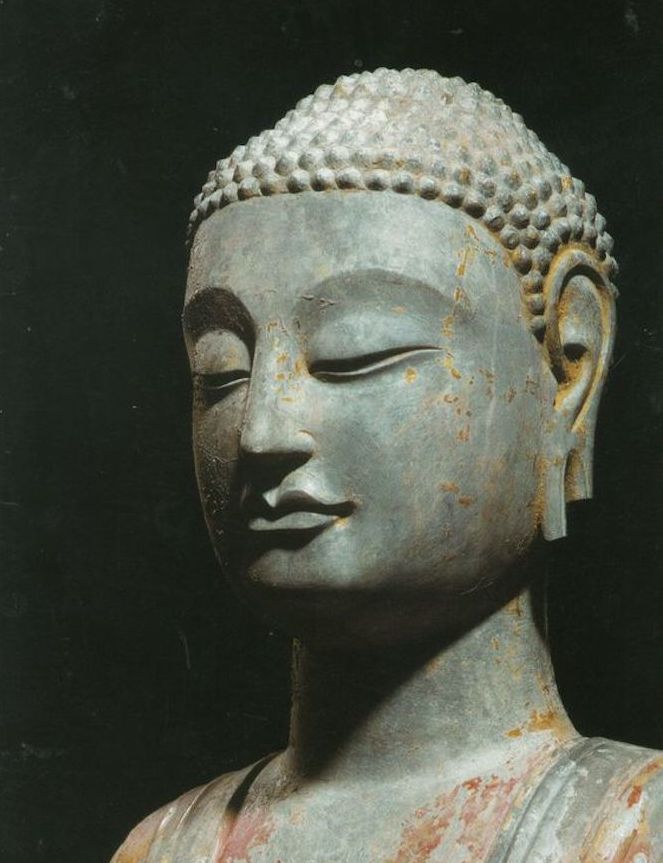
consciousness is our real home

Ajahn Sumedho
[The second part of last week’s post titled ‘Consciousness’ taken from a chapter in ‘Intuitive Awareness’ by Ajahn Sumedho]

Buddha-Dhamma, when you look at it, is not a cultural teaching. It’s not about Indian culture or civilization. It’s about the natural laws we live with, the arising and ceasing of phenomena. Dhamma teachings are pointing to the way things are – things that aren’t bound by cultural limitations. We talk about anicca, dukkha, anattā. That’s not Indian philosophy or culture; these are things to be realized. You are not operating from some basic belief system that’s cultural. The Buddha’s emphasis is on waking up, on paying attention rather than on grasping some doctrinal position. This is why many of us can relate to it, because we’re not trying to become Indians or convert to some religious doctrine that came out of India.

The Buddha awakened to the way it is, to the natural law. So, when we are exploring consciousness, these teachings like the five khandhas are skilful or expedient means in order to explore and examine our experience. They are not, ‘You have got to believe in the five khandhas and believe that there is no self. You cannot believe in God any more. To be a Buddhist you have to believe that there is no God.’ There are Buddhists who do have this mentality. They want to make doctrinal positions about being Buddhist. To me that teaching is not based on a doctrine, but on this encouragement to awaken. You are starting from here and now, from awakened attention rather than from trying to prove that the Buddha actually lived. Somebody might say, ‘Maybe there was never any Buddha; maybe it was just a myth,’ but it doesn’t matter because we don’t need to prove that Gotama Buddha actually lived; that’s not the issue. We are not trying to prove historical facts, but to recognize that what we are actually experiencing now is like this.

When we allow ourselves just to rest in conscious awareness, this is a natural state; it’s not created. It’s not a refined conditioning that we are after, where we are moving from coarser conditions to increasingly more refined ones, where we experience a bliss and tranquillity that comes from refining conscious experience. That is very dependent. This world, this conscious realm that we are a part of, includes the coarse and the refined.

This is not a refined realm that we are experiencing. In terms of human or planetary life, this is not a devaloka or a brahmaloka, those divine or highest celestial realms which are more refined. This is a coarse realm where we run the gamut from that which is coarse to that which is refined. We have got to deal with the realities of a physical body, which is quite a coarse condition. In deva realms they do not have physical bodies, they have ethereal ones. We would all like to have ethereal bodies, made out of ether rather than all these slimy things that go on inside our bodies – bones, pus and blood, all of these yucky conditions that we have to live with. To defecate every day – devatās don’t have to do things like that. Sometimes we like to create the illusion that we are devatās. We don’t like these functions; we like privacy. We don’t want people to notice, because the physical conditions that we are living with are actually pretty coarse. But consciousness includes all that, all the gradations from the coarse to the most refined.

Another thing to notice is compulsive feelings of having to do something, having to get something that you don’t have, having to attain something or get rid of your defilements. When you’re trusting in ‘your real home’, then you can have perspective on this conditioning of the emotions. For example, we come from competitive goal-oriented societies, so we’re very much programmed to always feel that there is something that we have got to do. That we’re always lacking something and we have got to find out what it is, and we’ve got to get it. Or that we have got to get rid of our weaknesses, faults and bad habits. Notice that this attitude is just something that arises and ceases. It’s the competitive world, the world of a self.

We can always see ourselves in terms of what’s wrong with us as a person. As a person there are always so many flaws and inadequacies. There is no perfect personality that I have ever noticed. Personality is all over the place; some of it is all right and some of it is really wacky. There is no personality you can take refuge in. You are never going to make yourself into a perfect personality. So, when you are judging yourself on a personal level, there seem to be so many problems, inadequacies, flaws and weaknesses. Maybe you are comparing yourself to some ideal person, some unselfish and superlative personality. That which is aware of personality is not personal. You can be aware of the personality as a mental object. The conditions for personality arise and cease. Suddenly you can find yourself feeling very insecure or acting very childish because the conditions for that personality have arisen.
When my parents were alive, I went to stay with them for about three weeks, because they were really sick. I was abbot of Amaravati, a fifty-five-year-old Ajahn Sumedho going home and living in the same little house with my mother and father. It brought up all kinds of childish emotions, because the conditions were there for that. We were all born through our parents, and our memories and connections are from infancy onwards. A lot of the conditions that arise in families are conditions for feeling like a child again – even when you’re a fifty-five-year-old Buddhist monk and abbot of a monastery! [Note, at the time of publication Ajahn Sumedho is 89.] My mother and father would easily go back to seeing me as a child. Rationally they could see, ‘He’s a middle-aged man,’ but they would still sometimes act like I was their child. Then I would feel this rebelliousness and adolescent kind of resentment about being treated like a child. So don’t be surprised at some of the emotional states that arise. Throughout your life, as you get old, kamma ripens and then these conditions appear in consciousness. Don’t despair if you find yourself feeling very childish at fifty years old. Just be aware of that for what it is. It is what it is. The conditions for that particular emotion are present, so then it becomes conscious. Your refuge is in this awareness rather than in trying to make yourself into an ideal man or woman – mature, responsible, capable, successful, ‘normal’ and all the rest – these are the ideals.

Here at Amaravati, I am not looked at as a child. I’m the oldest person here! You may see me in terms of a father figure, because an old man like me brings out the sense of authority. I’m an authority figure, a patriarch, a father figure, a male figure – a grandfatherly figure to some of you. It’s interesting to see this state when the conditions are there. Rationally you can say, ‘He’s not my father,’ but emotionally you may feel like that, acting towards me like I’m a father. It’s an emotional habit. When the conditions for that kind of male authority figure are present, then this is what you are feeling, it’s like this. There is nothing wrong with it, just notice it’s the way it is. Trust your refuge in this awareness, not in some idea that you shouldn’t project fatherly images onto me, or that you shouldn’t feel disempowered by a male authority figure and things like this. If you feel disempowered by me, then simply recognize it as a condition that has arisen, rather than blaming me or blaming yourself, because then you are back into the world you are creating – your personal world – and believing in that as your reality.

I used to get really angry when women would get bossy. When any woman would show any kind of bossiness, I would feel rage. I wondered why even a tone of voice would make me so upset, why I could get so enraged over a bossy attitude. I could see it was like when I was a boy, trying to get my way against my mother. If that has not yet been fully resolved, if the conditions for that rage are present, then this is what will arise. It’s through “awareness of it that you resolve it. As you understand it and see it in terms of what it is, then you can resolve it or let it go, so that you are not just stuck with the same old reactions all the time.

Our refuge is in this awareness, rather than in trying to sustain refined experiences in consciousness as our refuge, because you can’t do that. Maybe you can learn to increase your experience of refinement through developing skilful means, but inevitably you have to allow the coarse to manifest, to be a part of your conscious experience. Resting in this conscious awareness is referred to as ‘coming home’ or ‘our real home.’ It’s a place to rest, a home. The idea of a home is a place where you belong. You are no longer a foreigner or an alien. You begin to recognize this through a sense of relief, of just being home at last, of not being a stranger, a wanderer out in the wilderness. Then the world of Ajahn Sumedho arises and it’s like I’m not at home anymore, because Ajahn Sumedho is an alien, a stranger. He never feels quite at home anywhere. Am I American now? Am I British or am I Thai? Where do I feel at home as Ajahn Sumedho? I don’t even know what nationality I am anymore, or where I feel most at home. I feel more at home here than in America because I’ve lived here for so long. In Thailand I feel at home because it’s a paradise for Buddhist monks and they treat you so well, but still you have to get visas and you’re always a phra farang (foreign monk). Here in England, no matter how many years I have lived here, to most people I am still an American. But when I go back to America, I don’t know what I am; people say: ‘You don’t look like an American anymore. You’ve got a funny accent; we don’t know where you are from!’ That’s the world that is created. When all that drops away, what’s left is our real home.
Source:

https://www.abhayagiri.org/media/books/Intuitive_Awareness_web-edition_1.2_2017.pdf

consciousness

Ajahn Sumedho

In terms of this moment, right now, this is consciousness. We are reading words on a page – pure consciousness before you start thinking. Just make a note of this: consciousness is like this. I am reading, I am with this present moment, being present, being here now. I’m taking the word consciousness and making a mental note: ‘consciousness is like this.’ It’s where thought, feeling and emotion arise. When we are unconscious, we don’t feel, we don’t think. Consciousness, then, is like the field that allows thought, memory, emotion and feeling to appear and disappear.

Consciousness is not personal. For something to become personal you have to make a claim to it: ‘I am a conscious person.’ But there’s just awareness, this entrance into noting the present, and at this moment consciousness is like this. Then one can notice the sound of silence, the sense of sustaining, being able to rest in a natural state of consciousness that is non-personal and non-attached. Noting this is like informing or educating oneself to the way it is. When we are born, consciousness within this separate form starts operating. A new-born baby is conscious, yet it doesn’t have a concept of itself being male or female or anything like that. Those are conditions we acquire after birth.

This is a conscious realm. We might think of a universal consciousness, and consciousness as it is used in the five khandhas: rūpa (form), vedanā (feeling), saññā (perception), saṅkhārā (mental formations), and viññāṇa (sense-consciousness). But there is also this consciousness which is unattached, unlimited, Deathless. In two places in the Tipiṭaka, there is reference to viññāṇaṁ anidassanaṁ anantaṁ sabbato pabhaṁ – a mouthful of words that point to this state of natural consciousness, this reality. For myself, I find it very useful to clearly note: ‘Consciousness is like this.’ If I start thinking about it, then I want to define it: ‘Is there an immortal consciousness?’ Or we want to make it into a metaphysical doctrine or just deny it, saying, ‘Consciousness is anicca, dukkha, anattā.’ We want to pin it down or define it either as impermanent, unsatisfactory and not-self, or raise it up as something we hold to as a metaphysical position. But we are not interested in proclaiming metaphysical doctrines, or in limiting ourselves to an interpretation that we may have acquired through this tradition. Instead, we are trying to explore consciousness in terms of experience. This is Ajahn Chah’s pen paccattaṁ – that is, ‘something that you realize for yourself.’ What I am saying now is an exploration. I’m not trying to convince you or convert you to ‘my viewpoint.’

Consciousness is like this. Right now, there is definitely consciousness. There is alertness and awareness. Then conditions arise and cease. If you sustain and rest in consciousness, unattached, not trying to do anything, find anything or become anything, but just relax and trust, then things arise. Suddenly you may be aware of a physical feeling, a memory or an emotion. That memory or sensation becomes conscious, then it ceases. Consciousness is like a vehicle; it’s the way things are.

Is consciousness something to do with the brain? We tend to think of it as some kind of mental state that depends on the brain. The attitude of Western scientists is that consciousness is in the brain. But the more you explore it with sati-sampajañña, you see that the brain, the nervous system, the whole psychophysical formation arises in this consciousness; it is imbued with this consciousness. That is why we can be aware of the body and reflect on the four postures – sitting, standing, walking and lying down. Being aware of sitting as it is being experienced now, you are not limited to something that is in the brain, but the body is in consciousness. You are aware of the whole body in the experience of sitting.

This consciousness is not personal. It’s not consciousness in my head and then consciousness in your head. Each of us has our own conscious experience going on. But is this consciousness the thing that unites us? Is it our ‘oneness’? I’m just questioning; there are different ways of looking at it. When we let go of the differences – ‘I am Ajahn Sumedho and you are this person’ – when we let go of these identities and attachments, then consciousness is still functioning. It’s pure. It has no quality of being personal, and no condition of being male or female. You can’t put a quality into it. It’s like this.

When we begin to recognize that which binds us together, that our common ground is consciousness, then we see this is universal. When we spread mettā to a billion Chinese over in China, maybe it’s not just sentimentality and nice thoughts, maybe there is power there. I don’t know myself; I am questioning. I am not going to limit myself to a particular viewpoint that has been conditioned by my cultural background, because most of that is pretty flawed anyway. I do not find my cultural conditioning very dependable.

Sometimes Theravada Buddhism can come across as annihilationism. You get into this ‘no soul, no God, no self’ fixation, this attachment to a view. Or are the Buddha’s teachings there to be investigated and explored? We are not trying to confirm somebody’s view about the Pali Canon, but rather we use the Pali Canon to explore our own experience. It’s a different way of looking at it. If we investigate this a lot, we begin to see the difference between pure consciousness and when self arises. It’s not hazy or fuzzy, ‘Is there Self now?’ It’s a clear knowing.

So, then the self arises. I start thinking about myself, my feelings, my memories, my past, my fears and desires, and the whole world arises around ‘Ajahn Sumedho.’ It takes off into orbit – my views, my feelings and my opinions. I can get caught into that world, that view of ‘me’ that arises in consciousness. But if I know that, then my refuge is no longer in being a person, I’m not taking refuge in being a personality or my views and opinions. Then I can let go; the world of Ajahn Sumedho ends. When the world ends, what remains is the anidassana viññāṇa – this primal, non-discriminative consciousness. It’s still operating. It doesn’t mean Ajahn Sumedho dies and the world ends, or that I’m unconscious.

Talking about the end of the world, I remember somebody getting very frightened by this, saying, ‘Buddhists are just practising meditation to see the end of the world. They really want to destroy the world. They hate the world and they want to see it end’ – this kind of panic reaction. To us the world is seen in physical terms – this planet, the world of continents and oceans, North Pole and South Pole. But in Buddha-Dhamma, the ‘world’ is the world we create in consciousness. That’s why we can be living in different worlds. The world of Ajahn Sumedho is not going to be the same as the world you create, but that world arises and ceases. That which is aware of the world arising and ceasing transcends the world. It’s lokuttara, transcendent, rather than lokiya, worldly.

When we are born into physical birth, we have consciousness within a separate form. This point of consciousness starts operating, and then we acquire the sense of ourselves through our mothers and fathers and cultural background. We acquire different values or sense of ourself as a person that’s based on avijjā, not on Dhamma – based on views, opinions and preferences that cultures have. That’s why there can be endless problems around different cultural attitudes. As with living in a multicultural community like this, it’s easy to misunderstand each other because we’re conditioned in different ways of looking at ourselves and the world around us. But remember that cultural conditioning comes out of avijjā, ignorance of Dhamma. So, what we are doing now is informing consciousness with paññā – which is a universal wisdom rather than a cultural philosophy.

[Continued next week 14 March 2024]
Excerpts from “Intuitive Awareness,” by Ajahn Sumedho, the Chapter titled Consciousness. This is a free Dhamma publication available as PDF EPUB MOBI. Link below:

https://archive.org/details/intuitiveaware00sumearch


awesome selfie stick

IMG_2296POSTCARD 150: Delhi: To start with, it felt like a small insect bite. The painful part was just out of my vision on the back of my shoulder – impossible to see it in the mirror, so I ask Jiab to come and take a look. She studies the mark on my shoulder and says, “it’s a…” (pause), silence for a moment – looking at it thoughtfully, “It’s a…” (can’t think of the English word). I find a small hand mirror and try to see my reflection in the large bathroom mirror. Twisted around, contorted and awkward, but still can’t see it so I ask Jiab to tell me what she thinks it looks like. She says, “peempo” (pimple) her voice is so close to my ear it’s like she’s shouting. Then, silence, focused on trying to squeeze it with fingertips… doesn’t answer my questions because one can’t squeeze pimples and speak English at the same time. I can hear her holding her breath, small sounds of effort: mmmnh… but I find it’s too painful; get the phone out of my pocket, go to the camera app and ask her to take a photo of it. She takes a close-up: click! Shows it to me… oh, I see! It’s not “peempo” (pimple), singular; it’s pimples, plural. Many of them… and then I’m aware they reach up under my hair too.

We go to see the doc, show him the unpleasant skin rash and tell him about the headache and neck pain all the time. He takes one look and says: herpes zoster virus, it’s Shingles – Jiab says chingo… in Thai they call it ngoo sawatdi (snake says hello again). The doc tells me it’s the chicken pox virus we get when we’re children that remains dormant in the body for decades, then “wakes up,” or reactivates. Why? Maybe because I just came back from four weeks in Scotland, fresh hilltop air, and must have lost the immunity to infection I’d acquired as a long-term resident foreigner in South Asia. Who knows… it just comes back.

This is how it is for me now, headache, pulsating on and off, all over the right side of the head and neck. Doc gave me ant-viral tabs, ointment and pain med, saying it’s a neural reaction to the skin lesions, and (interestingly) the nerves below the surface of the skin tell the brain there’s pain inside the body. This sets off major alarm systems and you feel it deep inside. I have to get around the fact it’s telling me all the wrong things about the location of the pain – stated also with a kind of urgency, like, Pay attention! This is serious… so I’m starting to worry it’s a brain tumor. And it’s not that, it’s actually in the upper skin layers.

Sometimes I sit on the meditation cushion and wait for quietness to come; thinking and thought has its own momentum, takes time to settle down, then the openness to the pain experience is just totally there for a moment. There’s the default sense of self: hey, this must be happening to ‘me!’ then an initial frantic search for an alternative that runs on automatic takes it out of the normal context. Mind does a bypass, and for an instant the pain is not happening to anyone – there’s no ‘me’ engaging with these thoughts. The awareness that a thought was just there, but now nothing remains except the awareness that I can’t remember what it was… and the sensation of pain, like the hummmm of an old fluorescent tube light that needs to be replaced.

‘The mind is the canvas on which our thoughts are projected and is part of consciousness. Our body is a holographic projection of our consciousness.’ [B. M. Hegde, cardiologist]

————————-

Photo source: PnnB on Thai social network