one in five hundred

dreamstimefree_198297

Suvarnabhumi airport: 05.30 hours, enter the check-in hall, and I’m one in a great sea of people, all pushing trolleys with luggage… amazing; takes my breath away. It seems to be divided equally over two check-in areas: H on the left, and J on the right. Quick decision, go right – I’m at the end of the line, I’m the last… I’ll miss the plane! Everybody is stumbling along, dismayed: how could it be like this? The slow-shuffle, steadily moving down a very long, snake-like line, doubling back on itself, for five rows – looks like about 100 persons in each line, 500 people in front? The paranoia of individuals acting-out in wild queue-jumping behaviour arises (protecting my place in the line…) then that ceases. Relax, watch the breath, and observe reactions: a narrative of events in the mind. Seeing it happening as I’m going along; emotions rising and falling like sailing over these large waves on the sea. Stormy thoughts rise up and activate the red light: stop thinking! There’s the experience of intense contraction in the mind and immediately there’s the insight into letting go of it, drop that one now. Back to watching the breath again.

Lose track of time and later I check my watch and realize it has taken about an hour to reach the check-in desk where I have to show my passport and get the space on the plane I paid for. Then it’s done, I’m processed, got boarding pass, making my way through the multitudes, contemplating thoughts on an archetype of Asian migrations and, always, there are 500 people in front. At the toilets 500 people ahead of me, into immigration and the continuing capacity flow of 500 people is passing through. In the larger departure areas there’s an ocean of people as far as the eye can see, and at my gate, again 500. Flight is boarding and the capacity of the plane is around 500. Take off and all 500 of us mind/body units are airborne…

Airline staff serves the meal, feeding the five hundred – sounds biblical. Through the window, sky, clouds, and the surface of the planet. It makes me feel like a tiny speck of life, a microscopic cell. The body is allotted a space in a chair moulded to fit, takes up volume and weight. The body composed of the four elements: earth, water, fire and air, is something like a car battery, positive and negative poles, chemical reactions, and the mind is the energy that comes from that, the nama-rupa compound. Who ‘I’ am is not important, and the idea that it is ‘something’ (it is ‘me’) is a concept, a digital display that comes with the software. The whole thing is more like ‘process’, a connectedness on every level. Origin unknown, just believing in an external creator doesn’t seem to be it – the only reason that comes to mind is my own Christian conditioning as a child. I need to investigate this. The metaphor helps me to transcend my existing situation, figures of speech; other than that it’s all speculative conjecture. How can I see it in any other way? Anything else beyond this present conscious state must be so remote from what I presently know that none of the rules I’m familiar with apply. I’m in awe – I simply don’t know….

————————-

‘… radiant emptiness should not be mistaken for the pure emptiness of Nibbana. The two are as different as night and day. The radiant mind is the original mind of the cycle of constant becoming; but it is not the essence of mind which is fully pure and free from birth and death. Radiance is a very subtle, natural condition whose uniform brightness and clarity make it appear empty. This is your original nature beyond name and form. But it is not yet Nibbana. It is the very substance of mind that has been well-cleansed to the point where a mesmerizing and majestic quality of knowing is its outstanding feature. When the mind finally relinquishes all attachment to forms and concepts, the knowing essence assumes exceedingly refined qualities. It has let go of everything – except itself. It remains permeated by a fundamental delusion about its own true nature. Because of that, the radiant essence has turned into a subtle form of self without you realizing it. You end up believing that the subtle feelings of happiness and the shining radiance are the unconditioned essence of mind. Oblivious to your delusion, you accept this majestic mind as the finished product. You believe it to be Nibbana, the transcendent emptiness of pure mind.’ [Luangta Maha Boowa]
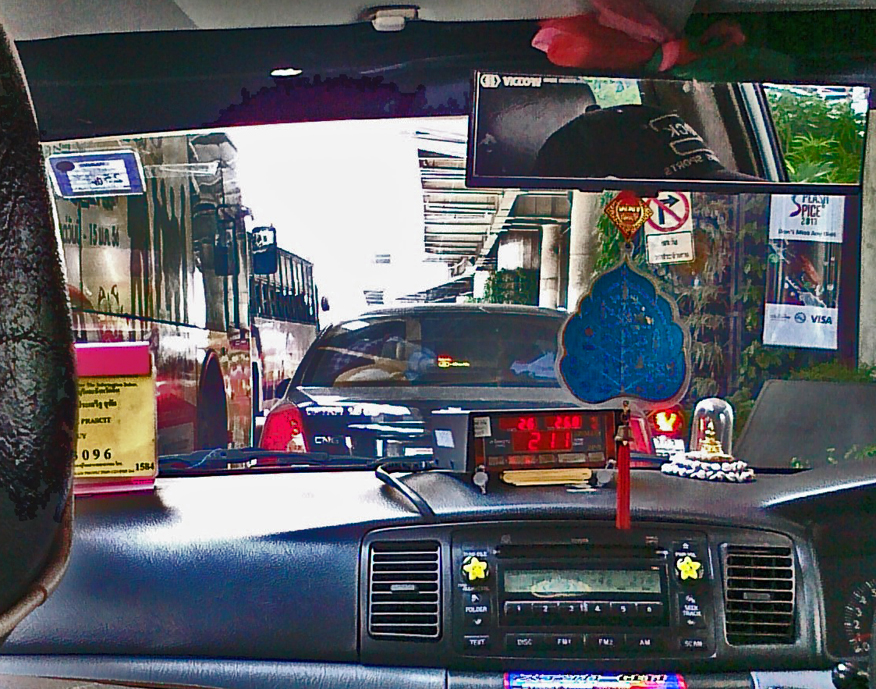
photo image, dreamstime: http://www.dreamstime.com/pier-free-stock-photography-imagefree198297

relaxed resistance

TaxiBKK2Bangkok: In a taxi on the expressway and it looks like the whole route is blocked with traffic but we are moving along slowly. A small voice is saying, we’d’ve been better off taking the ordinary route through streets with traffic lights and the congestion of that would’ve been quicker than this… yes, possibly, but hypothetical. And I’m not getting pulled into that scenario, thanks, no. Strangely, I feel no frustration sitting here. The taxi driver’s radio is playing; it’s a call-in chat dialogue with music.The mind isn’t absorbed into it, the sound is just there. It’s not loud, it’s not demanding; sometimes I notice it consciously then the mind moves on somewhere else. And, there’s that small voice again saying, wow! this could get really boring. But it’s not like that, it’s a neutrality maybe, there’s just this experience right now; the reality of being here. Nothing else to do, so obviously it’s okay to stay with what’s ‘here’ and see where that gets me.

One thing that helps is that there was this really nice post I read the other day [‘The Path of Waiting’] and I’m thinking of that now in this place where traffic is at a standstill, nearly. It’s the idea that we’re always waiting on something, somewhere, most of the time and it helps if you can be ‘willing to stand hand in hand with your waiting for a few moments.’ It was that, I think, that started me off in this mind direction of, let’s see what this waiting thing feels like. So now I’m hand in hand with my waiting and it feels nice.

The mind is clear, free and empty. There’s a careful observation and contemplation of everything that’s happening, it’s like being focussed on balance and openness – poised between things, in a sort of high altitude mind-place of emptiness. That’s all, and everything just seems to be slowly moving along here, the moment transforms itself and there’s this attitude of gentle curiosity, like what’s this now? I hear the small voice again; a shadowy question hovering on the periphery: how come I’m not frustrated by this endless traffic situation? Nope, it’s not necessary to go there; no desire to get pulled into that. It’s the wisdom of just mindfully placing one foot after the other on to stepping-stones that lead over the river to get to the other side. There’s something about the easy lightness of this that makes it obviously the right thing to do, and what else is there to do anyway? Not a lot, I look out the window and see the gridlock of slow-moving metal parts in this tremendous heat.

Amazing really because I’m not feeling the frustration of it. There have been times in the past when it would’ve resulted in a semi-suppressed raging inferno and getting engaged with it, or trying to get rid of it, would seem like the way to go. Getting rid of stuff always seems like the right thing to do; a kind of righteous feeling; got to clear up this mess, okay, let’s get on with it! But that hasn’t worked for me, experience has shown…. Long ago and far away, I remember the Ajahns telling me about this – well, I didn’t know what I was doing at that time – and the teaching was about how I was unintentionally holding on to some unpleasant mind state, even though I was sure that trying to get rid of it was the thing to do. The desire to get rid of, vibhava-tanha, is a desire, same as the desire to have something is a desire; they are the same. So the teaching is that trying to get-rid-of-it is like trying to get rid of the desire to get rid of it, and it doesn’t work like that – all I’d be doing is creating more suffering.

It’s fortunate for me that I’m seeing it like this today, I need to remember how it works. The problem is really with the resistance to frustration – so, relax the resistance, allow the frustration to come in. Know what it’s like when it’s present, know what it feels like (the holding on to it) when it’s there. Knowledge replaces ignorance, we are not deluded by it any more. So, I’m just moving along now; looks like the traffic flow is easing up a bit – getting there…

6388612-machomikemd

————————-

‘… in the context of the four noble truths, the origin of suffering (dukkha) is commonly explained as craving (tanha) conditioned by ignorance (avijja). This craving runs on three channels:

(1) Craving for sense-pleasures (kama-tanha): this is craving for sense objects which provide pleasant feeling, or craving for sensory pleasures.

(2) Craving to be (bhava-tanha): this is craving to be something, to unite with an experience. This includes craving to be solid and ongoing, to be a being that has a past and a future, and craving to prevail and dominate over others.

(3) Craving not to be (vibhava-tanha): this is craving to not experience the world, and to be nothing; a wish to be separated from painful feelings.’ [dukkha samudaya (wiki)]

Upper photo: collection of the author
Lower photo: Virtual Tourist/machomikemd

deductive inductive

P1040044Chiang Mai: Small figure of M sitting at the breakfast table on a chair too low for her. The plate with her toast too high and elbows sticking out, takes a large scoop of grape jelly from the jar, carefully carries it, at eye-level, on the flat of her knife, wobbling-wobbling over to her toast, decends and lands on toast without spilling a drop. I’m kinda transfixed by this manoeuvre. We were playing a game where you have to say as many words as you can, beginning with a given initial letter. So it’s my turn; I watch her spreading the jelly over the toast and ask her to give me a word beginning with ‘S’ and immediately she says, ‘SpongeBob’, then continues spreading jelly on the toast. SpongeBob? I ask… and she says, yes (like, is there something wrong with that?) Pretty good, considering she’s only 8 and English is a second language.

Also that M is Thai and coming from a cognitive place that’s different from the rigid Western, logical, clearly-stated position, that-which-is-known. You could say the Thai way is remote from this. But M is a child, like any child, learning as she goes along. There’s the impact of SpongeBob to be included, same as it is with Western children but she’s got the advantage of having an inherited understanding that’s more intuitive, Eastern (inductive); feeling the way through and let’s not bother with objectives, goals and all that stuff, okay?

Westerners find it difficult coping without a given structure. It’s not LOGICAL. In the Western (deductive) behaviour, we almost always express things having a plan in mind; the idea of what we’re saying is right there at the beginning, clearly seen, and all the backup related to that follows after. Then there’s a conclusion at the end.

The Thais are sometimes shocked by the bluntness of this kind of thinking. Their way of expressing things is like the inverse of that, no real indication where it begins, plenty of general examples and there’s a conclusion in there somewhere but it’s difficult for us Westerners to find it because we didn’t understand how it started … it seems vague.

Hotel staff, tour guides, any situation where you’re asking for information at random: Excuse me, do you happen to know where I can …? This kind of question is an invitation for the Thai to lay out a tapestry of possibilities, together with additional info you might like to know.

Western visitors are baffled. The idea is that the solution to the problem is already there, an understanding of this is induced; the conclusion is inferred, arrived at: Yes! I see what you mean… the aha moment. There’s a skill in asking the question, of course, mindfulness, and that’s on-going for me, no expectations (that helps) and there’s a skill in the ability to be patient, appear interested while looking around for someone else who might know.

The West, separates God and the world. We are not Him, we are created by Him; a subject/object duality. The Eastern inductive reasoning understands the function of things through recurring patterns, a ‘puzzle made of its parts’. If there’s a God it must be ‘inside’ this, cannot be separate, it’s integrated. Not easy for me, letting go of the seeking for logical patterns of cause and effect that aren’t there. And I’m suddenly interrupted by M, who asks me if she can use the computer; she opens google, and finds a YouTube video of the Chipmunks singing Gangnam Style in cute squeaky voices: Op op op op, oppan Gangnam Style, Gangnam Style. Op op op op, oppan Gangnam Style…

————————-

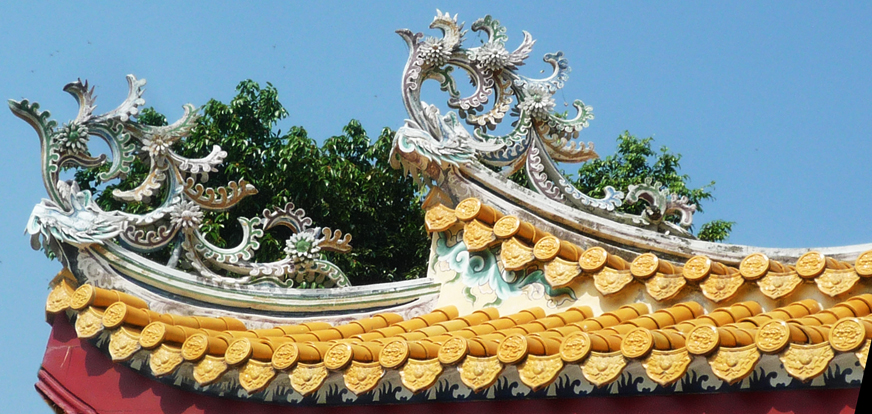
Photo: Carved doorway Wat Phra Kaew, Elaine H collection

space and thoughts

white buddha dreamstime

New Delhi: It’s that Sunday morning feeling again; so silent, the neighbour’s dog feels uneasy about barking too loudly – maybe there’s nothing to bark at. Sadly, it walks to its place on the balcony and looks out… nope, still nothing happening out there. No intruders on the property, no people anywhere to be seen. The world is asleep… the zzz, zzz ZZZZZs, slow breathing of sleep; the no-work-today comfort zone. No need to get up until early afternoon. Sleeping off the excesses of the night before; dinner started at 10pm and the party went on until sometime after two o’clock in the morning.

I didn’t get to sleep until late but it wasn’t because of partying, it was the neighbour (not the ‘dog’ neighbour, the other one). These people decided to have a medium/large social event last night – verging on the mildly-obstreperous. The noise and kerfuffle became kinda abstract to me, drifting in a coma of half-sleep, sounding not like people having a party, more like a party among the animals at the zoo; two or three hippopotamuses (hippopotami?) trying to get comfortable in a room too small for them – getting up and sitting down again and disturbing each other in the process, smashing small breakable things, reversing into corners and making squelchy sounds along the side of the wall with their great weight squidging around awkwardly. Slightly frenzied but not ‘losing it.’ A bit farmyardish too, with yelps and howls, crowing chickens and meowing cats and geese and ducks; somebody with hiccups. On the other side, the dog barking on the balcony – dogs of the mind bark – and the whole thing reached a kind of pandemonium of people talking over each other in a flowing jibberish of words, scraps of music mindlessly playing in two different places, punctuated with the odd crash, squeak and shout. Other percussive noises, the smell of beer floating out into the air and a cloud of cigarette smoke from men standing outside the house, speaking on the phone, lengthy shouted monologues in a language I don’t understand.

It’s really noticeable that the mind grabs at something immediately; velcro fastening, unpleasant rip as it comes apart, so you leave it attached: Yep, I could get really angry about this… There is nothing pleasant about this feeling at all, no reason for it to be there other than simply the desire it has to adhere-to, and ‘be’ something. It’s ‘birth’ in the Buddhist sense. No matter how mindful I am, there’s that driven brooding thing, the scenarios of outrage. I concentrate on letting the mind untangle itself from the problem; just letting it get on with it; it goes away for a while. Then it comes back again and eventually I move through to the front room, wrap myself in a blanket, sit on the cushion, and get ready to remain there until it’s over – watch the breath…

See where the mind leads, where it goes how it reacts to ‘me’ trying to hold it, how it is able to concentrate and how it does that. A bit like getting to know it as if it were a stranger, rather than thinking it’s ‘me’ and I can control it. It really is undeniably noisy next door, it needs attention and I give it what it needs and what’s left over gets focussed on the struggle to be in a state of peace – not a placid thing, mostly it’s like swimming in dangerous waters, but knowing that as long as mindfulness is maintained, there’s no threat at all from the carnivorous species of the deep. Just letting them be there. Anger/distress is a passing mental state, same as everything else, nothing special.

There is the body, the heat, the cold, the hard, the soft, and the thinking mind starts to drift. Let it go where it wants; a sense of travelling behind it, follow it, be curious about where it goes. Disengage from the attachment, just enough to feel safe from the slings and arrows of outrageous fortune, flying around dangerously and ricocheting off the walls and ceiling.

There is Rupert Spira’s example [Link below] about a room filled with people. ‘I’  am the space in the room, the people are my thoughts and images, bodily sensations and world perceptions. All kinds of people in the room, large, small, kind, unkind, intelligent, unintelligent, loud, quiet, friendly, unfriendly, etc…, each doing their own thing. But what they do or say has no effect on ‘I’, the space of the room. The space is there now and it will be there when the people go home. The space, is/was there before the building was constructed and will be present after it is demolished, it’s always present.

Now it’s later, the morning after. Am I the only one awake? So quiet, the electric hiss of the computer seems loud. It may have been on a morning like this, in those historical times, that Siddhartha Gotama, the prince who became the Buddha, woke up in the rooms in the palace, where the  endless parties had taken place, surveyed the devastation of spilt drinks and furniture tumbled over, and seen the true reality of the event… he just knew, this is not where it’s at. Left the palace, gave away everything he possessed and set off across the landscape…

————————-

‘Our objective experience consists of thoughts and images, which we call the mind; sensations, which we call the body; and sense perceptions, which we call the world. In fact we do not experience a mind, a body or a world as such. We experience thinking, sensing and perceiving. In fact all that we perceive are our perceptions. We have no evidence that a world exists outside our perception of it. We do not perceive a world ‘out there.’ We perceive our perception of the world and all perception takes places in Consciousness.’ [‘The Transparency of Things’, Rupert Spira]

uncreated

22012013326Chiang Mai: Sitting at my desk and there’s somebody drilling in the floor of the apartment upstairs, just above my head. Renovations are going on up there. There’s been a lot of banging and drilling these last few days but this sound is incredible. It’s a hammer drill drilling through hard concrete; the sound is vibrating through the structure of the building and if I lean my elbow on my desk heavily, the vibration is conducted through the elbow and bone structure of my arm, to cupped hand holding my jaw, clenched teeth and the skull is vibrating in resonant frequency. I’d really like that sound not to be there and it takes a moment for the thinking mind to create a background to this event. Maybe I should go out for a walk somewhere. Is there somewhere I can hide away?

Then a child starts crying, it’s small voice going on in a seemingly inconsolable way. I can hear mother’s voice there as well. Yes, I’d be upset too if I was woken up by this kind of noise… and there’s a resentment about the noise building up inside me; a very large complaint-mode beginning to take shape. In an instant it’s formed. Who is responsible for this? I’m looking for somebody to be at fault here, who’s to blame for this? I come from a society conditioned by blaming; searching for the scapegoat. Blame it on somebody – or blame myself, that’s just as effective: I should never have taken the lease for this place…. Then that whole emotional thing just disappears as quickly as it arose.

I hear a plane approaching; it’ll fly over in a few seconds. We’re in the flight path here – departing flights, from Chiang Mai airport, flying quite low and heavy with fuel. Some are very large passenger jets that go to Singapore and this must be one of them. In a moment, the immense sound is present;  everything in the apartment, and outside too, submerged in a collosal din. This is like an epic disaster movie! I can hear the hammer drill and the child crying but it’s as if I’ve gone deaf, the sounds are so faint. The thinking mind is quiet, only the presence of this noise; a great chasm opening up in the fabric of reality, getting wider and wider and the receiving of this whole experience.

I’m drawn to these strange moments when there seems to be no thought at all. The mind just stops, allowing the immense sound to exist. There’s mindfulness of ‘self’ continuing as it always does but there’s no connection with it. I can be aware of this automatic self, just go along with what it’s doing as if it were something separate. The applied thinking mind; just seeing it and everything that arises, ceases.

The totality of aircraft noise recedes and hammer drill sensory impingement returns. Crying child remains unconsoled and for a little while I give way to the raging fire of emotion again. The thinking mind is engaged: a kind of intensly gridlocked traffic of thoughts driven into near collision with other thoughts and backing up and trying to find a way out of this cramped condition.

Then I step out from it. There’s a pause and in the small space that exists I remember the Ajahn talking about sati-sampajañña, saying consciousness is a natural function, it is ‘uncreated’, there is no sense of self associated with consciousness. Outside the thinking mind there is only the uncreated. I look around for the pause… it’s still there, a curious extended, stretched-out moment when there’s just no thought at all….

It’s getting easier now, the child is not crying anymore. When the drilling stops, the silence is overwhelming. Mango trees outside my window; sunlight on leaves, branches move slightly as tiny squirrels leap around in playfulness.

————————-

the non-personal self

2013-01-09crop

Chiang Mai: Death is a failed internet connection. Three o’clock in the morning, unable to sleep so I get up, stumble through in the darkness and start up the computer. The brightness of the screen is blinding. But no internet, and no matter how much I think there should be a connection, it’s just not there. Consciousness operates in terms of subject and object; to be conscious I have to be a separate entity, a subjective being situated here. And the object, the internet – my friend, is part of this assumed ‘self-ness’ I’ve been accustomed to see in everything, still held by the conditioning of my childhood. But my friend is not there, and it is a death in that sense.

Stubborn and resentful, I go back to bed, and for quite a long time, mind continues rummaging through the disarray of its files and references; I see, with mindfulness, there’s a sense of it being a bit put-out; can’t sleep, the dream-state is set in the context of my being awake. It’s been like this, for as long as I can remember – there’s a created ‘self’ everywhere, it has it’s own momentum blindly searching for situations that offer pleasurable gratification (or gratification in displeasure), and not much more than that. I can see what this is about, but lose sight of what’s beyond ‘self’ in the attempt to grasp an understanding of it.

Same old thing. There’s something about this that’s so clear and obvious yet, again and again, when I look for it, it’s not there – the direction to take is unknown; the means by which I get there, as yet, uninvented; I study it as an object, and it’s the created self again. Up till quite recently I’ve been thinking in terms of anatta (no-self), an undefined nothingness, and now starting to think there’s also a desire to ‘not-exist’ involved here – the way I’m doing it. So if the ‘I’ construct isn’t what this is about, what is it, then? I can change the pronoun from ‘me’ to ‘it’ and that gives me distance, somehow there’s an ‘it’ there that recognizes ‘itself’ everywhere….

Head leans back and enter into a huge yawn, yaaaaawn… so deep and large, …aaaawn… and reaching optimum yawn capacity, coming to an end, and there’s a distinct ‘click’ noise in the ear. The hinge of the lower jaw – is it supposed to do that? This holds my attention for a moment, wetness around the eyes, nasal passages blocked up and fuzziness. There’s the beginning of a thought related to something I was puzzling over and a little picture of it is somehow revealed, a solution to the problem… I have to get up and find a reference in my notebook, mark it with a bookmark, come back, collapse on the pillow and drop off into deep sleep completely.

Some hours later I wake up for the second time. Senses switched on, eyes open, sounds enter, taste in the mouth, feet on floor, arms push upper body into sitting position. And there’s the notebook with the bookmark lying where I left it: ‘What had been realised in that moment was that self isn’t personal, it’s non-personal. And not only that, the realisation wasn’t personal. The realisation was simply something else appearing in what had been assumed to be my consciousness, and was realised to be the Self: absolute, timeless, radiant being.’ [Roger Linden, ‘The Elusive Obvious’, Conscious TV, July 17th 2008]

————————-

wisdom in unknowing

ChmaiNshopChiang Mai:  Street-side, noodle shop, low headroom under wide umbrellas placed at an angle to create shade. I duck my head and squeeze through into this place, aware of obstructions and watching for uneven surfaces at ground level I could trip on; feet in rubber slippers appear below me, first left then right, then left… ask the noodle shop man if he has what I want, find an empty place, sit down and look around. Thai language like birdsong and traffic sounds, a bell rings, cooking pots collide, somebody’s ring tone… ‘hello?’ All kinds of noises, smells and the fragrance of jasmine with faint odour of a sewer nearby – not unpleasant. The mind has to discern which is which according to likes and dislikes. And the high-activity level of it all more or less insists on mindfulness. Head spinning around to register environmental activity; this curious reality of receiving sensory input by means of sense organs situated mostly around the head and face, has that effect of the whole head seeming to enter into an ‘outside’ world.

Attention moves from one thing to the next. Loud sounds take priority over quieter sounds, the whole sequence adjusts to allow for it, then continues as it was before. In the same way, a chain of thought waits to be completed as soon as there is a gap in the flow of other thoughts. It’s the traffic of thinking about things; the mechanism engaged in its functionality, never any peace. I find some stability in the constructed self and hold on to that – that’s what it’s there for.

Focus on a particular sound, or sensory object and logic says if that’s out ‘there’, then I must be in ‘here’ – subject-object link activated by default. The world enters through eye, ear, nose, mouth, body feeling, mind, and creates consciousness: ‘I’ am born and the ‘world’ is out there. Being a ‘self’ is a little trick I learned when I was a child, it’s not real. It only appears to be a personal experience, because if there’s a sound that’s not demanding my attention, there’s only a neutral awareness, no reaction, nobody at home; the sound is there but there’s just the receiving of it and our shared world. Sensory input enters and there’s no ‘self’ to really notice it’s there, so I imagine it just buffets around for a while like the wind from the fan above my head disturbs the papers on my table and then it’s quiet again.

Conscious awareness is the sixth sense. It knows the other five senses, and knows itself as a ‘self’ then attachment to that dissolves away; the ‘self’ aspect is gone – seeing the events without the story. Deconstruct everything, carefully disassemble it to see how it all fits together, like a mechanic breaks down a car engine into its parts. And this is such a phenomenal thing to do, putting it  back together again doesn’t seem worthwhile.

‘Self-realisation can know itself within complete ignorance, so self-realisation is possible for someone who’s had no education and it can also be possible for a king. There are no preconditions to self-realisation. Self-realisation isn’t just for those who’ve undergone years of spiritual practice….’ [David Bingham, Conscious TV]

Can’t be ‘complete ignorance’, let’s call it ‘unknowing’. Just another mind state. I can look into my own ‘unknowing’ and it’s as if there’s a small seed of wisdom in there, buried deep in the layers of unknowing, that’s saying, come on, wake up! I could call it the Noble Truth of Waking Up (numbered 2a and it comes between Tanha and Nirodha). This is how it looks to me now; there’s the focus on Anatta and freedom from suffering and the Non-Duality ‘no-thing-ness’ takes on a whole different meaning.

————————-

a movement in time

P1030990Chiang Mai: Walking back from the market carrying bags of vegetables through groups of slow-moving people in brightly coloured clothing; noise, heat, bright sunshine, large, coloured umbrellas and dense dark shadow. All kinds of obstacles on the pavement, sidewalk – more like walking on the edge of the road, sharing the space with the traffic, things being as they are, in this densely populated place where the sidewalk is often needed for other civic requirements. Maybe a phone box takes up the whole area. Or there’s a tree in the way, uneven paving stones due to ongoing repairs, or a raised concrete lid over a drain, fallen in, and one corner sticks up at an angle so you step down to street level because it’s easier. Then there’s a parked car in the way and you have to get around that; mindfulness of moving traffic coming in all directions. There’s an alertness that just automatically locks in place, obstructions and dangers above and below and on all sides like this, the infrastructure intrudes, but always there’s just enough room, squeezing through a sort of tunnel of directional force that extends in front, takes me along out from the space I’m in here now, along the way through this urban clutter and busy-ness of objects.

Then something happens that’s completely unexpected. There’s a green cloth sheet that obscures a construction site on my left side; three or four floors up, scaffolding, ropes and there’s a tied-up bundle of concrete blocks being lowered down above my head – it’s coming too quickly, I can see it in the corner of my vision. This lowering bundle strikes a sticking-out platform on the way down and a large board catapaults out, spins in the air and lands just behind me CRASH! There it is, a long heavy scaffolding board held by the green cloth sheet, now ripped, and the board caught there in a small cloud of dusty air. If it had been one second earlier…. People stop and look up, call to the workers in the building. They lean over, wide-brimmed straw hats, observe the scene. There’s some shouting and I don’t want to get involved in this; continue down the path to the apartment, nearly there. Open the door and the air conditioning hits me, up in the elevator, unlock door and into my quiet rooms.

I’m trembling, – there’s an elation too, can’t decide if I’m happy or scared out of my wits. Can’t get over how near I was to being injured by that falling board. The important thing is that it missed me and maybe that’s the way to go with this – no matter how near it was, it didn’t happen. Something is telling me I need to let go of the holding-on thing here; just calm down and watch the breath for a bit. Open the laptop, start-up, find the page I was looking at yesterday, Sangeeta’s ‘Serene Reflection’ and her Inner Landscapes page:

http://serenereflection.wordpress.com/2011/09/30/inner-landscapes/

‘I meander along the babbling brook – all the while realizing that its song comes from the obstructions it surmounts.’ It all fits together. There may be obstructions in the babbling brook but the water passes through them all anyway. We hear the sound of it: a river of small collisions. The near accident is telling me the World is all of this and more; the obstacles and that which encounters the obstacles. Sometimes I can look for an understanding of it everywhere and not find anything because I am part of what I’m looking for; that which is looking for itself, not finding it and seeing that this is what is taking place. This is what it is really but I can’t see it. Or you can say there’s nothing to find anyway because, always, it’s the World revealing itself, and ‘my’ seeking it isn’t actually doing anything. It’s simply a movement in time. This thought is enough to see the event as part of a very much larger all-inclusive whole…. And I can abide in that restful awareness.

P1040085

————————-

Photos: Bang Pah In (upper) & Khaosan Road (lower) by Peter and Elaine Henderson

a handle to hold on to

201020121489Chiang Mai: Going to the airport in a tuktuk through a network of small streets. It’s probably a shortcut, but all these speed bumps? I’m feeling a bit queezy, seasickness must be like this. Or is it just that I’m surprised to be rolling up and over joyful little mountains. First the front wheel then the back wheels (three-wheeled vehicle), again and again; overkill on speed bumps. Sure enough it makes you feel giddy, all the ups and downs and I don’t ‘like’ it much but my wanting it to not be like this is making it into an issue. It’s a control thing, it’s about the so-called ‘me’. ‘I’ am the problem because, in fact, there’s nothing here; a body-mind mechanism that can process and transform data, the Five Khandas, that’s all. Nobody at home, no ‘self’ anatta, no-thingness. Only namarupa responses, natural processes and the feeling of ‘I’, ‘me’ and ‘mine’ arises due to the curious nature of sensory experience – this game of hide-and-seek, and the flip-side of concealment is revelation?

Maybe so but first things first, at this point in time I’m having an acute bout of speed-bump nausea and the small discomfort of it is in the centre of consciousness. Some basic sense informs me it’s a mistake to try to reject it or think it shouldn’t be there, I’d be better to get around to accepting it; the 1st Noble Truth, a deep acceptance that causes the ‘holding’ to ease off and there’s definitely something about this teaching; if you can understand it, the suffering disappears. The first time I came to see it, all kinds of habitual ‘holding’ that had bothered me for years just fell away. Gratitude to the Ajahns in Thailand for their guidance. It seems to me now though, there’s still something I’m not getting here? I’d been thinking that all the Theravadin masters are teaching, in their tremendous intensity and detail, is mindfulness about what you’re doing and the skill of letting-go. Beyond that there’s nothing said except the reference to it as the ‘deathless’.

‘When meditators practise correctly and have the discernment to see that quality (of deathlessness) as it really is, the result is that they can withdraw their attachments from all things — including their attachment to the discernment which enters in to see the quality as it really is. The practice of all things good and noble is to reach this very point.’ (Ajahn Thet)

Non-duality teachers talk about pure consciousness in the sense of something tangible; they’re saying there’s something ‘there’. The ‘I’ that is arising is the ‘I’ of everything. Theravadin Buddhists, on the other hand, are saying it can’t be like that; it’s emptiness – if you think there’s something there, it’s a handle to hold on to and the whole thing is about letting go, not holding on. So, today I’m thinking it’s helpful to have the stability of that ‘thing’ and I’m holding on; I want there to be something in that space, a sense of familiarity, it’s a known place and the sick feeling can be happening in an awareness that’s much larger than the confines of the cramped ‘self’. No little ‘me’ having to cope with it, the speed-bump nausea is not ‘mine’, no ownership, it’s not personal.’ It’s about learning how to be a totally open presence, aware of the way the ‘self’ perpetuates itself – on all levels and not buying into that.

A short while after that, thankfully, we get out of the narrow streets, small intersections, and onto the open space of a smooth, flat, easy highway in one long straight route across to the airport….

————————-

the conditioned realm

CambodiaAnkorApril00(6)detailChiang Mai Airport: Waiting in departures to board the delayed flight to Bangkok. Three flights leaving around the same time, very crowded and all seats near the gate are taken. It’s the peak tourist season, young Caucasians sprawled around on the floor, everywhere. Long legs, pointed elbows sticking out – This Is Our Way – a sea of brightly coloured T-shirts, shorts, rubber slippers. And no room in the small coffee shop either; a forest of exposed limbs, tattooed legs, bosoms, identity obscured behind dark glasses, headphones, peaked caps and hunched over iPhones and digital devices, sucking up drinks through a plastic straw and I’m thinking of the tubular proboscis of a large alien insectoid. This is how the Gap Year looks. Like they’re sensory-experience junkies, got to have that input by way of the sense gates ayatana – closed to the world and the thought of emptiness is a seriously bad dream.

They do have that intense look, though, that says they know the ego of the West is a self-sustaining concept running out of battery and most likely to fizzle out quite soon; you could say impermanence, annican there’s no substance to it, same with all things. There’s the Christian God of the West everyone is trying to distance themselves from; the one-and-only-God, elite club that disincludes two thirds of the world’s population because they’re not Christian. It’s like a right wing supremacist movement, same as the so-called Muslim extremist groups – spot the difference – pretty ugly; there’s a war and both sides pray to God to win. God gets confused and there’s another war, and another…. So they can’t be talking about God, the Ultimate Reality, what they’re talking about is one of the gods of the conditioned realm. The logic of this is inescapable – how could God be something that one religion has and another doesn’t have? But there’s a kind of nobody-at-home look on the faces of my Christian friends when it seems like I’m going to want to try to discuss this point further.

These young people are all ordinary, well-intentioned folk and, just on this level, doing what they believe is the right thing, believe in the naiivity; subject to their conditioning in the West, their peers, parents, school, government. Maybe they’ve come here as part of a response to the human wake-up call – the built-in awakening opportunity that exists in mystical religions, Muslim, Hindu, Buddhist and others. It’s there too in the postmodern world; deconstructing, breaking it all down until there’s absolutely nothing left and the wake-up call is activated. Some people wake up, but some just don’t wake up at all.

It gets complicated and that’s why the Buddha was saying life is difficult enough as it is so let’s not get engaged with the God concept, okay? Attachment to the idea of it becomes a desire in itself and that’s what’s causing the problem. Ultimate reality is so fragile and subtle you can never be absolutely sure you’re not still setting it up so you’re seeing it the way you want it to be, still in the conditioned realm and far from the Truth. The best thing to do is not call it anything, cultivate mindfulness, clear comprehension, discerning awareness and take care; see how that goes.…

————————-

‘… the illusory world is through attachment. We think we all live in the same world as personalities, but every one of us lives in a world of our own creation. We have certain things in common but so much of our life is personal and unique to ourselves. That world we create is not the objective world we believe we’re living in, we’re living in a world of our own creation. That’s why it’s so difficult relating to each other, isn’t it? We’re coming from different worlds – you feel, sometimes, you’re living with a bunch of aliens!’ [Ajahn Sumedho, ‘In Awareness There is No Dukkha’]

Photo: Louk Vreeswijk