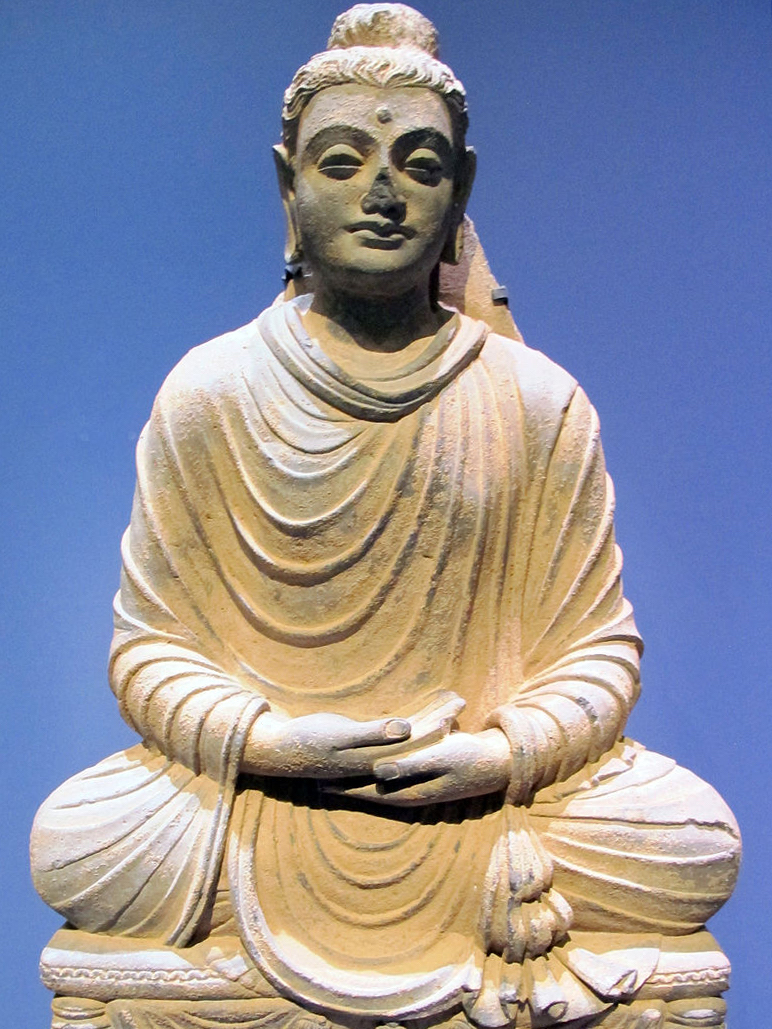
The First Jhāna

The Wobble (Vitakka and Vicāra)

POSTCARD#469: All jhānas are states of unmoving bliss, almost. However in the first jhāna, there is some discernable movement. I call this movement the “wobble” of first jhāna. One is aware of great bliss, so powerful it has subdued completely the part of the ego that wills and does. In jhāna one is on automatic pilot, as it were, with no sense of being in control. However, the bliss is so delicious  that it can generate a small residue of attachment. The mind instinctively grasps at the bliss. Because the bliss of the first jhāna is fuelled by letting-go, such involuntary grasping weakens the bliss. Seeing the bliss weaken, the mind automatically lets go of its grasping, and the bliss increases its power again. The mind then grasps again, then lets go again, Such subtle involuntary movement gives rise to the wobble of the first jhāna.

This process can be perceived in another way. As the bliss weakens because of the involuntary grasping, it seems as if mindfulness moves a small distance away from the bliss. Then the mindfulness gets pulled back into the bliss as the mind automatically lets go. This back-and-forth movement is a second way of describing the wobble.

The wobble is, in fact, the pair of first jhāna factors called vitakka and vicāra. Vitakka is the automatic movement back into the bliss; vicārra is the involuntary grasping of the bliss. Some commentators explain vitakka and vicāra as “initial thought” and ”sustained thought” While in other contexts this pair can refer to thought, in jhāna they certainly mean something else. It is impossible that such a gross activity as thinking can exist in such a refined state as jhāna. In fact thinking ceases a long time prior to jhāna. In jhāna vitakka and vicāra are both subverbal and so do not qualify as thought. Vitakka is the subverbal movement of mind back into bliss. Vicāra is the subverbal movement of mind that holds on to the bliss. Outside of jhāna such movements of mind will often generate thought and sometimes speech. But in jhāna vitakka and vicāra are too subtle to create any thought. All they are capable of doing is moving mindfulness back into bliss and holding mindfulness there.

One-Pointedness (Ekaggatā)

The third factor of the first jhāna is one-pointedness, ekaggatā. One-pointedness is mindfulness that is sharply focused on a minute area of existence. It is one-pointed in space because it sees only the point-source of bliss, together with a small area surrounding the bliss caused by the first jhāna wobble. It is one-pointed in time because it perceives only the present moment, so exclusively and precisely that all notion of time completely disappears. And it is one-pointed in phenomena because it knows only one object – the mental object of pīti-sukha – and is totally oblivious to the world of the five senses and one’s physical body.

Such one-pointedness in space produces the peculiar experience, only found in jhāna, of non-dual consciousness, where one is fully aware but only of one thing, and from one angle, for timeless periods. Consciousness is so focused on the one thing that the faculty of comprehension is suspended a while. Only after the one-pointedness is dissipated, and one has emerged from the jhāna, will one be able to recognize these features of the first jhāna and comprehend them all.

The one-pointedness in time produces the extraordinary stability of the first jhāna, allowing it to last effortlessly for such a long period of time. The concept of time relies on measuring intervals from past to present or present to future of from past to future. When all that is perceived within the first jhāna is the precise moment of now, then there is no room for measuring time. All intervals have closed. It is replaced with timelessness unmoving.

One-pointedness of phenomena produces the exceptional occurrence of bliss upon bliss, unchanging throughout the duration of the jhāna. This makes the first jhāna such restful abode.

In academic terms, ekaggatā is a Pali compound meaning “one-peakness.” The middle term agga (Sanskrit agra ) refers to the peak of a mountain, the summit of an experience, or even the capital of a country (as in Agra the old Moghul capital of India). Thus ekaggatā is not just any old one-pointedness, it is a singleness of something soaring and sublime. The single exalted summit  that is the focus of ekaggatā in the first jhāna is the supreme bliss of pīti-sukha.

Joy Happiness (Pīti-sukha)

Indeed the last two factors of the first jhāna are pīti and sukkah, which I will discuss together since they are such a close-knit pair. In fact they only separate out in the third jhāna, where pīti cease and leaves sukha “widowed.” Therefore only after the third jhāna, can one know from experience what sukha is and what pīti was, Here it is sufficient to explain the pair as one thing.

These two factors of the first jhāna refer to the bliss that is the focus of mindfulness, and which forms the central experience of the first jhāna. Bliss is the dominant feature of the first jhāna, so much so that it is the first thing that one recognizes when reviewing after emerging from the jhāna. Indeed, mystic traditions more recent than Buddhism have been so overwhelmed by the sheer immensity, egolessness, stillness, ecstasy, ultimateness, and pure otherworldliness of the first jhāna thsy they have understood the experience as ‘union with God.’ However, the Buddha explained that this is but one form of supramundane bliss. The first jhāna is the first  level. Even though after emerging from the first jhāna, one cannot conceive of an experience more blissful. There is much more!  

Each level of bliss has a different “taste,” a quality that sets it apart. These different qualities can be explained by the diverse causes of the bliss. Just as heat generated by sunlight has a different quality than heat caused by a wood fire, which in turn is different from heat generated by a furnace, so bliss fueled by different causes exhibits distinguishing features.

The distinguishing feature of the bliss of first jhāna is that it is fueled by the complete absence of all five senses activities. When the five senses have shut down, including all echoes of the five senses manifesting as thoughts, then one has left the world of the body and material things (kāmaloka) and has entered the world of pure mind (rūpaloka). It is as if a huge burden has dropped away. Or, as Ajahn Chah used to describe it, it is as if you have had a rope tied tightly around your neck for as long as you can remember. So long, in fact, that you have become used to it and no longer recognize the pain. Then somehow the tension is suddenly released and the rope is removed. The bliss you then feel is the result of that noose disappearing. In much the same way, the bliss of the first jhāna is caused by the complete fading away of a heavy burden, of all that you took to be the world. Such  insight into the cause of the bliss of the first jhāna is fundamental to understanding the Buddha’s four noble truths about suffering.

Summary of the First Jhāna

In summary then, the first jhāna is distinguished by the five factors, here compressed into three.

1 + 2. vitakka-vicāra: experienced the “wobble,” being the fine subtle movement in and out of the bliss.

3. ekaggatā: experienced as nonduality, timelessness, and stillness.

4 + 5. pīti-sukha: experienced as a bliss surpassing anything in the material world, and fuelled by the complete transcendence of the world of the five senses.

Continued next week: 6th May 2022

The Jhānas III: Bliss upon Bliss upon Bliss

The Landmark of all Jhānas

POSTCARD#468: From the moment of entering a jhāna, one will have no control. One will be unable to give orders as one normally does. When the will that is controlling vanishes, then the “I will” that fashions one’s concept of future also disappears. Since the concept of time ceases in jhāna, the very question “What should I do next?” cannot arise. One cannot even decide when to come out. It is this absolute absence of will, and of its offspring, time, that gives the jhānas their timeless stability and allows them to last sometimes for many blissful hours.

Because of the perfect one-pointedness and fixed attention, one loses the faculty of perspective within jhāna. Comprehension relies on comparison –relating this to that, here to there, now with then. In jhāna, all that is perceived is an unmoving, enveloping, nondual bliss that allows no space for the arising of perspective. It is like that puzzle where one is shown a photograph of a well-known object from an unusual angle, and one has to guess what it is. It is very difficult to identify some objects  without  looking  at  them  from  different  angles.  When  perspective  is  removed,  so  is comprehension. Thus in jhāna not only is there no sense of time but also there is no comprehension of what is going on. At the time, one will not even know which jhāna one is in. All one knows is great bliss, unmoving, unchanging, for unknown lengths of time.

Afterward,  when one has emerged from the jhāna, such consummate one-pointedness of consciousness  falls  apart.  With  the  weakening  of  one-pointedness,  perspective  reemerges,  and  the mind  has  the  ability  to  move  again.  The  mind  has  regained  the  space  needed  to  compare  and comprehend. Ordinary consciousness has returned. Having just emerged from a jhāna, it is the usual practice to look back at what has happened and review the jhāna experience. The jhānas are such powerful events that they leave an indelible record in one’s memory store. In fact, one will never forget them as long as one lives. They are easy to recall with perfect retention. One comprehends the details of what happened in the jhāna, and one knows which of the jhānas it was. Moreover, data obtained from reviewing a jhāna form the basis of the insight that leads to enlightenment.

Another strange quality that distinguishes jhāna from all other experience is that within jhāna, all the five senses are totally shut down. One cannot see, hear, smell, taste or feel touch. One cannot hear a crow cawing or a person coughing. Even if there were a thunderclap nearby, it wouldn’t be heard in a jhāna. If someone tapped you on the shoulder or picked you up and let you down, in jhāna you cannot know this. The mind in jhāna is so completely shut off from these five senses that they cannot break in.

A lay disciple once told me how, completely by chance, he had fallen into a deep jhāna while meditating at home. His wife thought he had died and sent for an ambulance. He was rushed to hospital in a loud wail of sirens. In the emergency room, no heartbeat registered on the ECG and no brain activity was seen by the ECG . So the doctor on duty put defibrillators on his chest to reactivate his heart. Even though he was being bounced up an down on the hospital bed throughout the force of the electrical shocks, he didn’t feel a thing. When he emerged from the jhāna in the emergency room, perfectly all right, he had no knowledge of how he had got there, nothing of ambulances, and sirens, nothing of body-jerking defibrillators. All that long time he was in jhāna, he was filly aware, but only of bliss. This is an example of what is meant by the five senses shutting down within the experience of jhāna.

Summary of the Landmarks of All Jhānas

It is helpful to know, then, that within a jhāna:

1. There is no possibility of thought;

2. No decision- making process is available;

3. There is no perception of time;

4. Consciousness is nondual, making comprehension inaccessible;

5. Yet one is very, very aware but only of bliss that doesn’t move;

6. The five senses are fully shut off, and only the sixth sense, mind, is in operation.

These are the features of jhāna. So during a deep meditation, if one wonders if it is jhāna or not, one can be certain it is not. No such thinking can exist within the stillness of jhāna. These features will only be recognized upon emergence from a jhāna, using reviewing mindfulness once the mind can move again.

Continued next week 29 April 2022

Entering the Jhāna

POSTCARD#467: When the nimitta is stable and radiant, then one is at the entrance to jhāna. One must train oneself to wait patiently here, maintaining the stillness and non-doing until the causes or conditions are ready for the transition into jhāna. At this stage, however, some meditators make the mistake of disturbing the process by peeking at the edge of the nimitta.

Once the nimitta is stable and bright, one might become interested in its shape or size. Is it circular or oblong? Are the edges precise or ill-defined?

Is it small or is it big? When one looks at the edge, mindfulness loses its one-pointedness. The edge is the place of duality, of inside and outside. And duality is the opposite of one-pointedness. If one looks at the edge, the nimitta will become unsettled and may even disappear. One should keep mindfulness on the very center of the nimitta, away from the edge, until any perception of edge vanishes into the nonduality of one-pointedness.

Similarly, if one attempts to expand or contract the nimitta, then one will also be sacrificing the essential one-pointedness. Expansion and contraction involve the perception of size, and that involves awareness of the edge of the nimitta and the space that lies beyond. Again one is falling back into the trap of duality and loss of one-pointedness through this unprofitable expanding and contracting.

So when the nimitta is stable and bright, you must be patient. Don’t move. One is building up the jhāna factors of pīti-sukha and one-pointedness. When they are built to sufficient power, they will unfold into jhāna by themselves. An oft-quoted passage from the suttas, often erroneously translated to imply the existence of an original mind, is relevant here. The passage is from the Aṅguttara Nikāya 8.

This mind, O monks, is luminous, but it is defiled by adventitious defilements. The uninstructed worldling does not understand this as it really is; therefore for him there is no mental development.

This mind, O monks, is luminous, and it is freed from adventitious defilements. The instructed noble disciple understands this as it really is; therefore for him there is mental development. (AN I,6,1-2)

At the stage of the beautiful and stable nimitta, it is the nimitta that is radiant and incredibly luminous. And the nimitta, as already explained, is an image of the mind. When one experiences such a nimitta, one recognizes it as the luminous (or radiant) mind of the Aṅguttara passage above. This nimitta is radiant because the mind has been freed from the “adventitious defilements,” which mean the five hindrances. Then one understands that this nimitta—this luminous mind freed of the five hindrances—is the doorway into jhāna, then one truly understands what is meant by “mental development.”

When the nimitta is radiant and stable, then its energy builds up moment by moment. It is like adding peace upon peace upon peace, until the peace becomes huge! As the peace becomes huge, the pītisukha becomes huge, and the nimitta grows in luminosity. If one can maintain the one- pointedness here by keeping one’s focus on the very center of the nimitta, the power will reach a critical level. One will feel as if the knower is being drawn into the nimitta, that one is falling into the most glorious bliss. Alternatively, one may feel that the nimitta approaches until it envelops the knower, swallowing one up in cosmic ecstasy. One is entering jhāna.

Yo-Yo Jhāna

It sometimes happens that when inexperienced meditators fall into a nimitta, they immediately bounce back to where they began. I call this a “yo-yo jhāna,” after the children’s toy. It isn’t a real jhāna because it doesn’t last long enough, but it is so close. It is the enemy I identified above, excitement, that causes mindfulness to bounce back from jhāna. Such a reaction is quite understandable since the bliss that one experiences when falling into the nimitta is greater joy than one can ever imagine. One may have thought that the best sexual orgasm was something nice, but now one discovers that it is trivial compared to the bliss of these jhānas. Even after a yo-yo jhāna, one often bursts into tears of happiness, crying at the most wonderful experience by far of one’s whole life. So it is understandable that novice meditators first experience yo-yo jhānas. After all, it takes a lot of training to be able to handle such immensely strong bliss. And it takes a lot of wisdom to let go of excitement when one of the great prizes of spiritual life is theirs for the taking.

For those who are old enough to remember the game of snakes and ladders, the simple children’s board game played with dice, they will remember the most dangerous square to land on is the square just before the goal. The ninety-ninth square holds the head of the longest of snakes. If you land on the hundredth square you win. But if you land on the ninety-ninth square, you fall down the snake to its tail, right back at the beginning. A yo-yo jhāna is like landing on the ninety-ninth square. You are very close to winning the game and entering a jhāna, but you fall just a little short, land on the snake head of excitement, and slide, or rather bounce, right back to the start.

Even so, yo-yo jhānas are so close to the real thing that they are not to be sneered at. In the yo-yo jhāna one experiences incredible bliss and transports of joy. It makes one feel as high as a weather balloon for hours, without a care in the world and with so much energy that one can hardly sleep. The experience is the greatest in one’s life. It will change you. Through a little more training and wise reflection on one’s experiences, you will be able to fall into the nimitta, or be enveloped by it, without bouncing out. Then you have entered the amazing world of jhāna.

Continued next week: April 22, 2022

Image details:

810px-Gandhara,_periodo_kushan,_buddha_in_meditazione,_I-IV_sec.JPG

Refers to the Buddhist culture of ancient Gandhāra which was a major center of Buddhism in the Indian subcontinent from the 3rd century BCE to approximately 1200 CE. Ancient Gandhāra corresponds to modern day north Pakistan, mainly the Peshawar valley and Potohar plateau as well as Afghanistan’s Jalalabad.

Stabilizing the Nimitta

POSTCARD#466: When the nimitta is very bright, it is also very beautiful. It usually appears unearthly in the depth of its beauty and more wonderful than anything one has ever experienced before. Whatever the color of the nimitta, it is a thousand times richer than anything that can be seen with one’s own eyes. Such awesome beauty will captivate one’s attention, making the nimitta remain. The more beautiful the nimitta, the more likely it is that the nimitta will become stable and not jump about. Thus one of the best methods to stabilize the nimitta, so that it persists a long time, is to shine the nimitta into brilliance, as explained above.

However, some brilliant nimittas still don’t last long. They burst into the mental field of awareness with strong pīti-sukha, but they persist not much longer than a glorious shooting star in a clear night sky. These nimittas have power but lack sufficient stability. In order to stabilize such a nimitta, it is important to know that the two enemies that disperse the nimitta are fear and excitement.

Of the two enemies, fear is more common. These nimittas appear so immense in their sheer power and beauty that one often becomes very afraid. Fear is a natural response to the recognition of something much more powerful than oneself. Moreover, the experience is so unfamiliar that one’s personal security looks seriously threatened. It seems as if one might lose all control. And one will—blissfully so—if one could only let go of the “self” and trust in the nimitta! Then one would experience desire and control overwhelmed by supramundane bliss, and, in consequence, much of what one took to be one’s self would vanish, leaving a real sense of freedom. It is the fear of losing part of one’s ego that is the root cause of alarm when a powerful nimitta appears.

Those who have understood something of the Buddha’s teaching of anattā, that there is no self, will have an easier time transcending this fear and accepting the nimitta. They realize that they have nothing to protect and so can let go of control, trust in the emptiness, and selflessly enjoy the beauty and power. Thus the nimitta settles. Even an intellectual understanding that there is no one in here will help overcome the terror of letting go of the innermost controller. However, those who have no appreciation of the truth of no-self may overcome this fear by substituting the more powerful perception of bliss.

The simile of a child in a swimming pool illustrates this last point. When children who have just learned to walk see a swimming pool for the first time, they are likely to be scared. The unfamiliar environment threatens their security, and they are deeply concerned whether their little bodies can manage in such an un-solid material. They are afraid of losing control. So they put one toe into the water and quickly pull it out. That felt all right. So they place three toes into the water for just a little bit longer. That was okay too. Next they dip a whole foot in, then a whole leg. As the confidence increases and the swimming pool promises to be fun, the anticipation of joy overpowers the fear. The child jumps into the water and immerses itself fully. Then they have such a great time that their parents can hardly get them to leave!

Similarly, when fear arises with the powerful nimitta, it is all one can do to stay there just for an instant. One then reflects how that felt. To say it felt wonderful is an understatement. So the next time one stays longer, and it feels even better. By this gradual method, confidence soon becomes strong and the expectation of joy so dominant that when the awesome nimitta arises, one jumps right in and immerses oneself fully. Moreover, one has such a great time that it is only with great difficulty that anyone can make you come out.

>>>>>> part 2

Another skillful means for overcoming fear at this stage, especially when fear is not too strong, is to perform a little mental ceremony of handing over trust. It is as if one has been the driver of one’s meditation until now, but this is the moment to hand over control to the nimitta. As I suggested in chapter 7, one may imagine handing over a set of keys to the powerful nimitta, the way one allows a trusted friend to take over driving one’s car. With an imaginary gesture of handing over the keys, one transfers control and places full trust in the nimitta. Such a transfer of faith usually leads to a greater stability of the nimitta and its subsequent deepening.

Here again one is placing faith in the knower and withdrawing it from the doer. This is the theme underlying the whole of the meditation path. One trains from the very beginning in passive awareness, that is, the ability to be clearly aware without interfering at all with the object of awareness.

Energy, coupled with faith, flows into the mindfulness and away from activity. When one learns to watch an ordinary object like the breath without meddling, then one’s passive awareness will be challenged by a more seductive object like the beautiful breath. If one passes this test, then the most challenging object of all, the nimitta, will be presented to you as the ultimate test of passive awareness. For if one gets involved with the nimitta and tries to control it however slightly, then one fails the final examination and gets sent back to the beautiful breath for remedial training. The more one meditates, the more one learns to be powerfully mindful while letting go of all doing. When this skill is fully perfected, it is easy to pass the final test and stabilize the nimitta with flawless passive awareness. Again, the simile of the mirror is applicable here. When you look at your reflection in a mirror and the image is moving around, it is because you are not still. It is futile to try to stabilize the image by holding the mirror still. In fact, if you try this, the reflection is apt to move even more. The image in the mirror is moving because the watcher is moving, not the mirror. Only when the watcher is still will the image be still.

The nimitta is in reality a reflection of the mind, an image of that which knows. When this reflection, this nimitta, moves back and forth, it is futile trying to stabilize the nimitta by holding the nimitta still. The nimitta is moving because that which is watching the nimitta is moving. When this is understood, one focuses on that which knows, letting it come to stillness. When that which knows doesn’t move, then neither does the nimitta.

The other enemy of the nimitta’s stability is excitement or exhilaration, what I have called the “wow!” response. When there is success in the meditation and amazing things happen, then the meditator can get very excited, especially when a wonderful nimitta first appears, more radiant than the sun and more beautiful than exquisite flowers! On such occasions

it is common for the mind to say “wow!” Unfortunately, the nimitta immediately withdraws and may be reluctant to return for a very long time, even months. In order to avoid such a calamity, one should bear in mind Ajahn Chah’s famous simile of the still forest pool, which I described in detail in chapter 7.

In this simile the forest pool represents the mind, and the forest monk sitting near its edge stands for mindfulness. When mindfulness is still, then animals like the beautiful breath and pīti-sukha come out from their jungle to play by the mind’s edge. Mindfulness must remain still. If it does, then, after the beautiful breath and pīti-sukha have finished their business in the mind, the beautiful, shy nimitta will cautiously emerge to play in the mind. If the nimitta senses the knower thinking “wow!” it will bashfully run back into the jungle, not to re-emerge for a very long time.

So when the powerful and beautiful nimittas appear, watch with the stillness of an Ajahn Chah, sitting absolutely motionless by the remote forest lake. Then one will watch this strange and wonderful nimitta make merry in the mind for a very long time, until it is ready to take one into jhāna.

Continues next week on 15th April 2022

Shining Up the Nimitta

POSTCARD#465: In chapter 7, I first introduced the simile of the mirror. It is a far-reaching insight to realize that this nimitta is actually an image of one’s mind. Just as one sees an image of one’s face when one looks in a mirror, one sees an image of one’s mind in the profound stillness of this meditation stage.

So when the nimitta appears dull, or even dirty, it means that one’s mind is dull, even dirty! Usually, this is because one has been lacking in virtue recently; possibly one was angry, or maybe self-centered. At this stage of meditation, one is looking directly at one’s mind and there is no opportunity for deceit. One always sees the mind as it truly is. So, if one’s nimitta appears dull and stained, then one should clean up one’s act in daily life. One should take moral precepts, speak only kindly, practice more  generosity, and be selfless in service. This stage of meditation when

nimittas appear makes it abundantly clear that virtue is an essential ingredient for success in meditation.

Having taught many meditation retreats over the years, I have noticed that the meditators who have the easiest progress and most sensational results are those who we would call pure-hearted. They are the people who are joyously generous, whose nature would never allow them to harm another being, who are soft-spoken, gentle, and very happy. Their beautiful lifestyle gives them a beautiful mind. And their beautiful mind supports their virtuous lifestyle. Then, when they reach this stage of the meditation and their mind is revealed in the image of a nimitta, it is so brilliant and pure that it leads them easily to jhāna. It demonstrates that one cannot lead a heedless and self-indulgent lifestyle and have easy success in one’s meditation. On the other hand, purifying one’s conduct and developing compassion prepare the mind for meditation. The best remedy, then, for shining up a dull or dirty nimitta is to purify one’s conduct outside the meditation.

That being said, if one’s conduct in daily life isn’t too outrageous, one can shine up the dirty nimitta in the meditation itself. This is achieved by focusing the attention on the center of the nimitta. Most areas of the nimitta may appear dull, but the very center of the nimitta is always the brightest and purest part. It is the soft center of an otherwise stiff and unworkable nimitta. As one focuses on the center, it expands like a balloon to produce a second nimitta, purer and brighter. One looks into the very center of this second nimitta, the spot where it is the brightest of all, and that balloons into a third nimitta, even purer and brighter. Gazing into the center effectively shines up the nimitta. One continues in this way until the nimitta is beautifully brilliant.

When, in life, one has developed a strong fault-finding mind, obsessively picking out what’s wrong in this and that, then one will find it almost impossible to pick out the beautiful center of a dull nimitta and focus attention thereon. One has become so conditioned to pick out the blemishes in things that it goes against the grain to ignore all the dull and dirty areas of a nimitta to focus exclusively on the beautiful center. This demonstrates once again how unskillful attitudes in life can prevent success in deep meditation. When one develops a more forgiving attitude to life, when one becomes more embracing of the duality of good and bad—not being a negative obsessive nor a positive excessive but a balanced acceptive—then not only can one see the beauty in mistakes, but one can also see the beautiful center in a dull and dirty nimitta.

It is essential to have a bright and luminous nimitta to take one through to jhāna. A dull and dirty one is like an old, beat-up car that will break down on the journey. The dull nimitta, when not made to shine, usually vanishes after some time. So if one is unable to shine up the nimitta, then go back to the beautiful breath and build up more energy there. Generate greater pīti- sukha, huge happiness and joy, along with the breath. Then, next time the breath disappears and a nimitta arises, it will be not dull but beautiful and luminous. In effect, one has shined up the nimitta in the stage of the beautiful breath.

Continued next week: Friday 8th April 2022