mourning the loss of spring

yellow blossom2POSTCARD#61: Chiang Mai: Looking at all these posts written by my blogger friends about springtime in the Northern hemisphere and something stirs in me… that urge for seasonal change, I want to be there. No seasons in Thailand, every day is pretty much like the day before. Time disappears, days become weeks, weeks become months, months become years. The whole thing is one very, very long day – night interrupts the flow, hardly noticed, and goes unremembered like the blink of an eye.

New leaves bud, grow, turn brown, fall and get swept away all through the year. There’s no autumn, no winter, no snow, no hibernation, no spring returning. The same bright light day after day, everything is awake all the time, and there’s an exhaustion about it. Necessary to take a rest in the afternoons, find my place bookmarked in the dream… I remember the silence of no ceiling fans. Natural AC, always a chill in the air and the sky a curious indistinct grey, sometimes, neither one thing nor another. It suits the transitory way of things, anicca.

I am a hoarder of old notes and among these there are references to spring in Switzerland, enthusiastic words written by a younger ‘me’ about buds beginning to appear on that yellow shrub that’s always the first to have colour around lac de Genève. Birdsong and smells of growth or greenness, leafy fragrances, moss and pebbles and the presence of the lake, lying there on its side like some vast mysterious being.

Date: 26 March 2001. Spring has sprung and just yesterday morning around 6am I suddenly noticed there wasn’t any birdsong and how could that be, what happened and why so dark? But it was because it’s all one hour earlier than the clock says (daylight saving time) and birds don’t change their watches.’

And another note about going to teach an English class in zone industrielle, Date: 10 April 2001. Yesterday was a bright sunny day and about 11 am, in the garden outside the building, I noticed the cherry trees with buds and tiny bits of bright pink. At 12.30pm, class was over and when I came past the same cherry trees, the buds were totally open and blossoms everywhere. It’s like Spring suddenly happened in just over an hour…

In the same way, it can disappear in an hour and I’m mourning the loss of spring… then that changes too. Everything is impermanent, including the idea that everything is impermanent – steel embedded in concrete, seemingly permanent, demolished by a man with a jackhammer in a single afternoon. But we don’t want to believe it, reluctant to accept that the world is so fragile, touch it and it falls to pieces – almost as if it’s not there.

Seen from the apartment here on the third floor, level with the tree tops, these exotic yellow and black squirrels jump around as if they had wings. Tremendous long leaps and landing: crish-crash! Branches spring back, rise up with the weight like uncontrollable laughter, high in the tops of slender trees, boughs bending to take the mass of one small body chased by another. Always having to catch up, never getting there, I follow them dashing through the foliage, my eye leaps in the field of vision – where are they now? The “now” moment slips from my grasp, I focus on it and it escapes. A new moment arrives, or is it the same one continuing from before? World without end….

‘…linear time melts in the now, self-dissolving, fading into space; 
days and dates fade away; months, years and eons dissolve; 
the one and the many vanished, sacred and profane both clarified;
 the delusive ground of samsara and nirvana clarified in its innate spaciousness. Even “spaciousness”, as an intellectually contrived entity, dissolves.
 Whatever we have practiced, however we strive, is useless now,
 and intellectual gall exhausted, what a great marvel is the sky.’ [Longchenpa] source

————————-
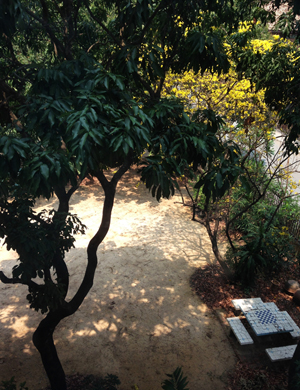
Photo: View from 3rd floor window and the trees where the squirrels play, yellow blossom appearing now it’s the hot season

 

strange familiarity

tuktuk05April14POSTCARD#60: Chiang Mai: 05.00 hours and there’s a problem with the internet. I have the about:blank page, a blinding white screen illuminating everything in this dark room. Things unexpectedly quit, don’t reload and I’m stuck because I can’t connect, the flip-side of that happily engaged state. The created ‘self’ has it’s own momentum… help!-help! – how to undo this bewilderment? Step back, get the bigger picture, zoom in, zoom out. How’s it working? Not good. But there’s a small obstruction-free space in this scenario, thank goodness, I remember a sense of pleasant abiding that supports it all. A long time ago I was keeping house for a Buddhist monk who had health problems. It was a cottage in a field in the middle of the English countryside. Theravadin monks are not allowed to touch food unless it is offered, so I’d go into town, do the shopping, prepare and offer the food before noon. The monk would chant the Anumodana blessing, birds singing in the trees outside, and we’d eat. It was a nice time, we’d talk about the Dhamma, go for walks sometimes and a lot of time was spent reading… yes, reading happened often – partly because his computer was really old and the internet connection extremely slow.

Once a day he’d start up this big, heavy, old Dell laptop and check his emails. It could take an hour… slow is not the word – death-like in its slowness. He told me with some eagerness that it was possible to read a page and a half of his book in the time it took the computer to load an image. For me it was about letting go of ‘self’ and what’s left after that? Only the strange familiarity of objects, sequences of events, karma of reoccurrences, and expecting things to happen when they’re nowhere near ready. Maybe it was easier to go along with that in those days. We had no idea about speed, bandwidth or anything.

In the really early days of the World Wide Web, I remember staring into the blank screen, waiting for the page to load and this wasn’t a frustrating thing at all. It was understood that things took a long time, the duration was really part of the experience – it was miraculous when the page finally opened. It was like, wow! I am now in a library in Wisconsin or New Zealand or South Africa or wherever, I see I’m in some room on the top floor maybe with the sun coming in the window and a view of a landscape outside. I’d feel like I was actually there… and isn’t that amazing! So it seemed to me at that time, then in Bangkok, Thailand nearly 30 years ago.

And the familiarity of the old dial-up connection; that strange piercing sound like the noise of an old iron gate swinging open and closed. Somewhere in mid-swing the tone would change, there’d be this alternating two-tone sound – and this is how it was for us, in the cottage in the field, when the monk’s computer would stir into life, he’d place the book he was reading gently aside, look into the screen, like the whole thing unfolding in slow motion. Select an icon, click that and wait for another 2 minutes for the next page to load. No problem, he’d reach for his book, find the place… continue reading.

‘When we come to practice we don’t know what we don’t know. After a while, the ego mask starts to crack and we begin to know what we don’t know. With some diligent practice, we might have a break through and for a moment or so know what we know. And if we continue with this wondrous work, we might stumble back to not knowing what we don’t know.’ [Wild Fox Zen]

————————-

unsung song

HuayKeaowTreePOSTCARD#59: Chiang Mai: I’m awake before it’s light, start the computer and there’s a link to a music file of Gregorian Chant [Zen Flash/Gregorian Chant]. Click on that? Do I really need to have this kind of thing at 5 o’clock in the morning? Is it too early for the mystical voices and rustle of ecclesiastical robes of 10th Century Churchianity? Naw… go for it. The darkness of the rooms here and glow of the screen suit the dramatic nature of the performance – a world ‘created’ by God (the power of the church), manipulated, some would say, and thinking about it gives me the willies… but the breathlessness of the chant, itself, wow! The phenomenon of exhaled air pushing through partly closed vocal cords, opening for the next breath then closing, and it does it again and again. The absolute physiological miracle of it. Forget the applied ‘meaning’ of Christianity or Islam or Hindu – it’s just the ‘voice’ that’s in it. Tone quality created in volume of throat, in void of mouth, intricate  cranial cavities generate high frequencies, and the whole head is resonating like a fantastical musical horn, or a trumpet-like whistling wind-instrument, or acoustic device fixed at the top of the vocalist’s body. The performing ‘harmonic’ of human voice (and gasp of inbreath that follows it), echoing in stone walls of old Europe and holy places a thousand years old – listening to it blows me away…

After a while, there’s some light in the sky and the birds have started their dawn chorus all around me here in tropical South East Asia, third floor, level with the treetops – open all the windows and let the sound in. Allow the intermingling Gregorian Chant to overlay on the flow of random exotic birdsong. An extraordinary mix. Birdsong is unstructured, uncreated, unmade – a song ‘unsung’ like the sound that water makes rushing over and through the pebbles in a stream, a myriad of small collisions, the incidental harmony of it. I have to go and hear this birdsong performance in natural surroundings. Get dressed, out the door, along to the elevator and down three floors to street level. There’s an old tree with large root formation not far away. Streets are quiet, I get there quickly, take a photo as the sun peeps through the buildings [see image above]. Then stand under the tree and listen.

Birdsong is on-going. It is as it is, and stops when we forget about it. Same every day, a story told in a multitude of voices about something that’s always there; an event presented for its own sake. The sky is full of it, an abundance floods everything, devastates the scarcity of small mindedness. There is one bird nearby, it pauses to take a bird-size breath of air… a small interval of silence, then it continues. The regular pace of all these incidental pauses sprinkled through the pattern of groupings of sound, forms an almost discernible construct but not really a melody. There’s no beginning or middle, and no end. It’s more like a huge chord played on an instrument with a great number of strings. An event that’s there all the time, as the planet spins towards the sun, daylight invading national boundaries, mountains and lakes, the narrow line between night and day moves out of darkness into light, the constant herald of birdsong always and forever on the edge of global night.

Chuang Tzu and Hui Tzu were crossing the Hao river by the dam. Chuang said: “See how free the fishes leap and dart: that is their happiness.” Hui replied: “Since you are not a fish, how do you know what makes fishes happy?” Chuang said: “Since you are not I, how can you possibly know that I do not know what makes fishes happy?” Hui argued: “If I, not being you, cannot know what you know, it follows that you, not being a fish, cannot know what they know.” Chuang said: “Wait a minute! Let us get back to the original question. What you asked me was ‘How do you know what makes fishes happy?’ from the terms of your question you evidently know I know what makes fishes happy. “I know the joy of fishes in the river through my own joy as I go walking along the same river.” [xvii. 13] [The Way of Chuang Tzu, page 97, ‘The Joy of Fishes’, Thomas Merton]

————————-

Many thanks to zenflash.wordpress.com for providing these wonderful posts I read every day
Includes excerpts from an older post: Listening 1


assumed identity

IMG_0788POSTCARD#58: Chiang Mai: Arrived in the early evening and out through the exit tunnel into the airport corridors. Turn the first corner and we’re looking back through a large window at our plane with passenger bridge attached. M says, in her 9-year old voice: take a photo of it… put in your blog Toong-Ting (she calls me that). There’ll be a time when M takes a direct editorial role in this blog… so I take the photo and here it is now. A large reptilian mouth sucking out the contents of a passenger aircraft that has a painted face, intensely happy smile, and it seems okay about what’s happening. M is silent for a moment as she considers the elasticity of this strange stretched metaphor. Then we continue along the corridors to get our bags from the luggage belt. I put everything on the trolley with M sitting on top, push the wheels through the glass doors, opening as we approach and we’re in Arrivals. Her mum is waiting for us, pleased to have M back.

Bags in the car and we’re off. Heavy traffic on the way into town and M, still silent, looking out at it all considering, maybe, how one thing can become another, tells me that cars have gender: boy-car and girl-car. It’s the look of the ‘face’ of the car – that kind of ‘grin’ created by the front bumper and radiator grille. She sees it as the face of a boy or a girl or, if she can’t decide which it is, it must be a katoey, effeminate gay male, third gender, or whatever – she giggles a bit, it’s okay in Thailand. I ask her to identify a boy-car for me, just to see if I can recognise its ‘maleness’ – although I’ve boy caralways thought of cars being male. She points at one: that’s a boy-car Toong-Ting (see left pic). I want to say… how d’you know that? But this kind of challenge to her  reasoning might be too much, so I’m just going along with it. She asks if I can identify the gender: you tell me, Toong-Ting, it’s a boy-car or girl-car, okay? I have a feeling I’m going to get this wrong… let’s see, there’s one that’s got really male characteristics, I point to it and say that one is a boy-car. No, Toong-Ting it’s a girl-car… looking at me like, how come you can’t see something as obvious as that, hmm?

M spends a lot of time on the road, going to and from her school, a long way from her house. I think she probably knows the brands of all kinds of cars now, maybe not the names, just a familiarity with their appearance and long ago decided some were boy-cars, some were girl-cars, and those in-between were katoeys. As we’re going along I take a photo of the back of a car and show it to her so she can study it in detail: boy or girl? (see pic below) She says she can’t really tell looking at the back of it, can’t see its face, but thinks maybe it’s a girl-car, because she remembers that she decided at some earlier time, that particular make of car was a girl. It’s a case of remembering which is what (or what is which?) or what she had already decided it was when she first saw that make of car.

girl carThere’s intelligence in her playfulness, a reality in her personifications that challenges my usual insisting there is no ‘self’, the Buddha’s Teaching on anatta: ‘self’ is an illusion arising from the 5 Khandas. I feel I’m holding on to something I should let go of, with M going around happily applying the attributes of ‘self’ and gender to all kinds of things. She can create an identity and let it go, because it’s one among many. She can escape the entanglements of ‘self’ because she plays with a multitude of ‘selves’, like waves in the ocean and an ocean in all the oceans of the world. Everything in the universe is Self. The ‘self’ I believe to be ‘me’ is an assumed identity – there is no ‘self’, everything I see is ‘me’.

‘Brahman is full of all perfections. And to say that Brahman has some purpose in creating the world will mean that it wants to attain through the process of creation something which it has not. And that is impossible. Hence, there can be no purpose of Brahman in creating the world. The world is a mere spontaneous creation of Brahman. It is a Lila, or sport, of Brahman. It is created out of Bliss, by Bliss and for Bliss. Lila indicates a spontaneous sportive activity of Brahman as distinguished from a self-conscious volitional effort. The concept of Lila signifies freedom as distinguished from necessity.’ [Ram Shanker Misra, The Integral Advaitism of Sri Aurobindo]

————————-

kateuay car


Above pic shows M’s katoey-car
Note: “Everything I See Is Me” was inspired by a post in the Hip Monkey site

the forever window

http://www.dreamstime.com/-image12334007POSTCARD#57: Bangkok: Early evening, M asks what kind of walls I’d like to have in the house she’s building for me. It’s the Minecraft game, everything created from virtual terrain, mountains, sea, sky and a square sun. She looks up from the iPad window and turns to me with enquiring lift of the eyebrow (a nine-year-old veteran). I say well, how about stone – walls are made of stone, aren’t they? It’s an unimaginative answer lacking in conviction – not paying attention properly. I ask what the choices are. She taps the screen to show me: gold, lapis, and you could have diamonds. Generosity. But I’ll just have the stone, please – keep it simple (thinking to myself is she going to come out soon from this digital dream she’s fallen into? Come out, it’s late and you have to do your homework. Be mindful and attend to things in the real world?) But there’s no ‘real’ world here. M says, what kind of roof you want in your house, Toong-Ting? (It’s her name for me) and I’m drawn into the discussion again. You like floor tiles Toong-Ting? I say what I’d like, and that looks nice (trying to reach her by telepathy, please, please emerge from the iPad window soon and think about the homework always in arrears!) For a moment it seems like she’s going to close the iPad but no, it goes on: why do you want that one? This other one looks nicer, does it look nice to you Toong-Ting?

I find answers that fit each question, but there’s no end to it; I know now the point of the exercise is to indulge expansively in this great wealth of choices. We have to try them all. No such thing as a final choice. The iPad is a forever window, a deep lake of astoundingly rich colours that’s difficult to surface from after you’ve fallen in – everything else in ‘real’ life is sadly dull. M dives into the forever window simply because it’s there. The containment of it is the context. The question answers itself, no need even to ask, cause becomes effect, timelessness without end.

Then for a moment she emerges from the dream, a flicker of alertness in her eye. Quickly, grab the opportunity! Act out a continuation of playfulness and joy, extend the interest to our surroundings and she decides to follow. Good, yes! It’s like guiding someone dismayed by sensory overload. Now let’s close the forever window for a while, shall we? Life is the same as it was but it’s quite nice out here. Fetch the school bag, heavy with stuff, reach inside and pull out a scrumfled homework book from the tangle of scraps of food wrappers in there, bits of tissue, and an overall blueness from a pen that flooded its ink inside the bag, a long time ago. My fingers are always slightly blue after visiting M’s bag; I go wash my hands while she considers her homework.

They have to make a simplified pop-up book page; the double page you open and a whole scene pops up. Wow, we never had homework like this when I was a kid! The teacher has given her a model of the folded-out paper mechanism she has to copy. A small spark of interest. Can do by myself now, Toong-Ting, she says, goes over to the sofa and pulls a large cushion over her head: but I have to think it first… stays under the cushion for quite a long time and I’m beginning to think I should ask if she’s okay under there. But next time I look M has cut and formed the folded-out bit with a scissors, glued on the picture that’s supposed to ‘pop up’ and it works – yaay! Well, not brilliant, but homework is not supposed to be a fun thing, it just gets ‘finished’. It’s done, put it away, now where were we? A voice says: may I borrow your iPhone, Toong-Ting?

‘We have a duty to befriend those aspects of obedience that stand outside of our house and shout to our reason, “O please, O please, come out and play.” For we have not come here to take prisoners or to confine our wondrous spirits. But to explore ever and ever more deeply our divine courage, freedom, and light.’ [Hafiz: ‘We Have Not Come To Take Prisoners’]

————————-

a kind of subjectivity

IMG_0671POSTCARD#56: Bangkok: I’m the one that got away, the escapee, the spiritual refugee. I followed the road that led away from the place I was born and never went back. The link with ‘home’ is broken and even if I could get it reset there’s no connection now. Somehow it fits with the history of where I came from; of war and battles lost and won, victory, defeat, the pibroch, the dirge lament, death like a flood sweeps away a sleeping village; the kamma of immense grieving, Celtic calamity, the catastrophe, the ruins, the mourning, s’affliger, generations of the dispossessed, and all the elders are gone.

Is integration the opposite of disintegration? If so, I came from a world in disintegration, I stowed away on a ship, sailed over many horizons and by happenstance got shipwrecked on a strip of land in the South China Sea. I am the Western urban migrant, assimilated, integrated here, got the password, userID and blessed to find the Buddhists in Thailand. A sense of connectedness, although it hasn’t been easy these 30 years, carrying the weight of Western thinking, causes and conditions from early times, likes and dislikes. And, being the only foreigner in the family, I’ve learned to go along with the preferences of others when it comes to food. As it was this morning, for example, faced with Korean kimchi at 10.30 AM because somebody thought it was a good idea to go to the Korean food buffet downtown, and if it were up to me I’d have chosen something less exotic so early in the day, but Jiab thinks our niece, we call M, needs to eat something substantial so maybe she’ll like this. Okay go for it.

M tries the kimchi and tells me: not spicy, Toong-Ting, her name for me (see the M posts). She’s waiting for a response… I taste it, blood red and trailing strands of human skin and tissue –  a vampire thing? But there’s nothing wrong with kimchi really, I’ve had things far more out-of-this-world than that. I nod with approval and give her a smile I think is convincing. But M can see kimchi doesn’t quite hit the spot. She comes over and tells me quietly they have ice-cream here too. Yeh… well, ice-cream at 10.30 AM? If I said I didn’t like that either I’d lose all credibility. So I say, Nice! Do they have caramel/toffee? Thirty years further on in the journey and I’m eating ice-cream with a nine-year-old. I’m amazed that she likes me… maybe she responds to this quality of improvised simplicity I’ve developed, anyway it’s a privilige and quite wonderful how things have gotten very much easier since M came into the world. She corrects my Thai pronunciation (the tones), has a continuous chattering bird-like dialogue with me and discovers useful-to-know things about my phone I never knew were there. M is an empath – no words for it, it’s a kind subjectivity. Maybe because she’s a child in a bilingual situation and has to find the easiest route to understanding others, or maybe all children are like this and because I never had any children of my own, it seems special to me.

Being part of her world means there’s less of the holding on to ‘self’. Anyway, there’s less of an emphasis on individuality here in Thailand, things are shared, a largely Buddhist population. And my ‘self’ is so totally different from everyone else’s self, it’s not appropriate to be imposing my ‘standards’ here, creating supporting statements to prove what I’ve already decided is the correct way of going about things, and convinced about this simply because my continuing engagement with it somehow seems to confirm it has objective reality. In the East, the ‘object’ is not the goal. The starting point and the answer are revealed in the interaction with the context of the question – inductive reasoning, it takes longer, it’s more revelatory, exploratory, open-ended.

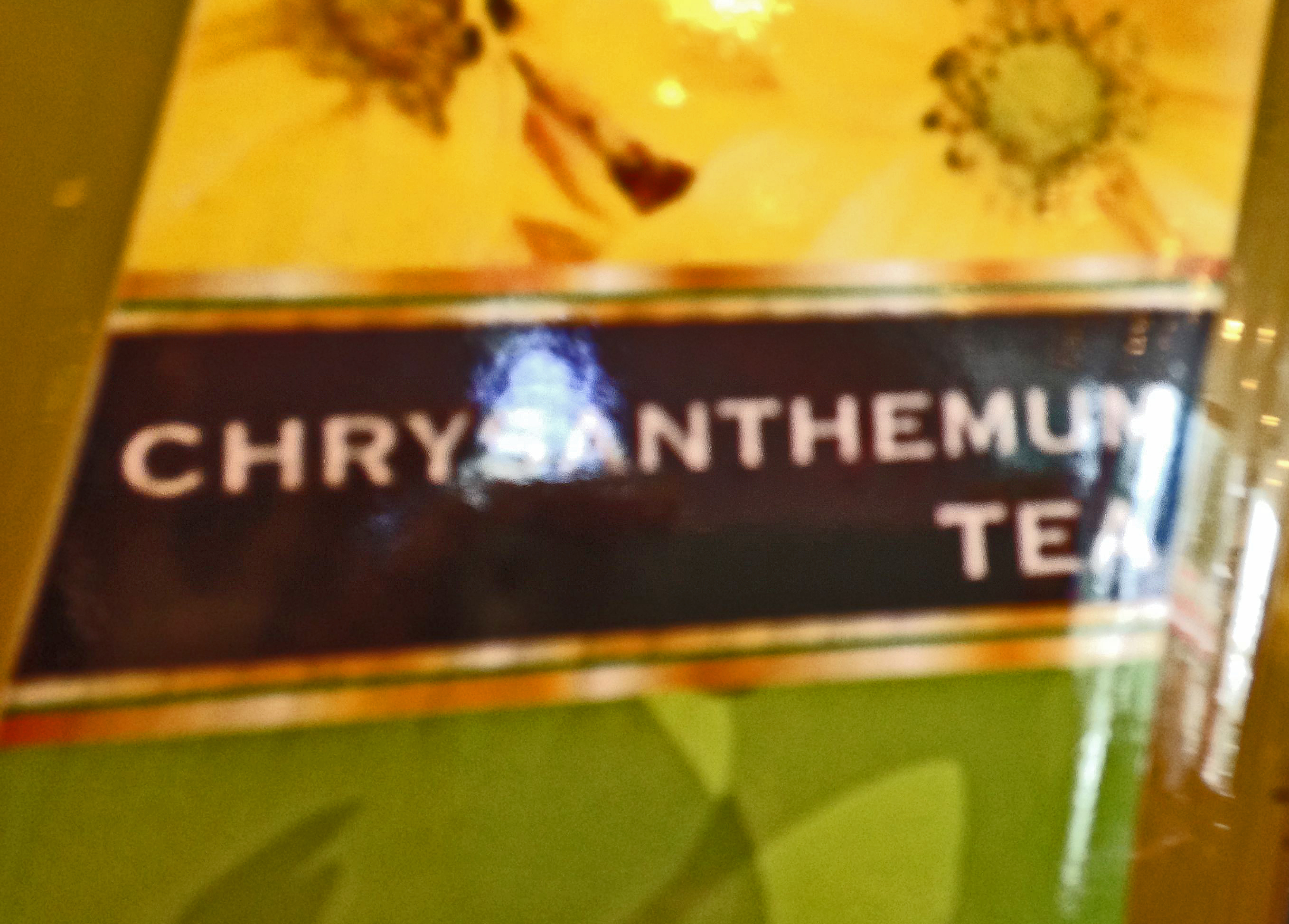
M runs off to look at what kind of drinks they have. Comes back and tells me about one she thinks I like but can’t pronounce the name, I ask her how do you spell it? Never mind she says, can she borrow my phone? I give her the phone, she’s always ‘borrowing’ my phone. M runs off to the drinks section again and comes back immediately; she’s taken a photo of the drink, shows me: Chrysanthemum tea, wow! A difficult one to pronounce. Nice, I’ll have that. M is gone for a moment then returns with a glass of iced tea held in both hands, places it on my table without spilling a drop; loving-kindness, she steals my heart away…

‘There is ultimately no individual self or soul (jiva), only the atman (universal soul), in which individuals may be temporarily delineated just as the space in a jar delineates a part of main space: when the jar is broken, the individual space becomes once more part of the main space.’ [Gaudapada] source: Non-Duality America (Link to original)

————————-

IMG_0668

Lower photo: M‘s Pic of the Chrysanthemum Tea dispenser

windows

BKKtaxi2POSTCARD#55: Bangkok: Coming in from the airport in a taxi with my Thai niece. I call her M, nine years old (soon be 10) and playing Minecraft on my iPhone all day. Glass window opens into another reality, digital trees, cubed terrain, oceans and snowscapes in a gravity reduced space. ‘Look, Look, Toong-Ting’, she says. Since she was an infant, M has called me Toong-Ting; holding on to her baby talk of the past and now it’s somehow cool to call me that. I lean over to see what’s going on in her window: building an ice palace with Lapis and Gold entranceway while playing the ‘Let it Go’ soundtrack from the movie, ‘Frozen’. I listen, ask questions, sing along and we exchange views – limited because English is a second language. When there’s nothing left to talk about, she returns to the Minecraft world and I hover in space waiting for the next question to arrive.

I am the support system, resource person, back-up plan. We came by plane from Chiang Mai this morning and the day has passed us by like this; M absorbed in her Minecraft software and the outside world seen from a sequence of moving vehicles we’re in, time and space transforms around the moment. Clouds in high altitude sky of 30,000 feet, mountains of buildings in the urban landscape and M emerges from the dream from time to time to pull me into the depths of the inner world she’s in – let’s see what she’s doing there… we dialogue about it, laugh, and she disappears further into subterranean caves, while I swim up to the surface again. There’s only a short time for me to look at the page I’m reading… sometimes only a few seconds before the next request arrives: “Look Toong-Ting, look, look…” I take a deep breath and dive into the water again. In the intervals between these visits to M’s world, I’m having to be mindful and speed-read my text like pieces clipped from a larger flow of words; one piece jumps out more than anything else:

A man is searching for God but gets frustrated in his effort, throws a stone into the water and a fish sticks its head out, says: ‘You think you’ve got problems? I’ve been swimming in this river my whole life looking for water, dying of thirst and cannot find any water to drink.’ The man says, ‘But the river is filled with water, there’s not a spot in the river where there is no water. Just open your eyes and you’ll see.’ And the fish says, ‘same with you; you’re surrounded by God. God is all around you and within you. Yet you say you can’t find God…’ [Sant Rajinder Singh: “The Love of God Is All Around Us”] (Click here for the original source: Holy Notion/ God and the Self)

Our taxi arrives at the house, get inside and M runs around discovering the familiarity of the last time we were here. Later in the day we’re in a corner of the room where she has her playthings scattered around. Everything lying in disarray after a particularly large creative frenzy of cutting out and the sticking of things with glue, scotch tape, adhesive coloured paper and bits of old Christmas decorations, recycled. And when every additional use these items might be put to is thoroughly exhausted, M moves to Minecraft videos on my laptop: “Look Toong-Ting, look…” she says.

I position myself so I can see the screen, participate when I’m needed, and otherwise pleasantly distracted by the surroundings; the world suddenly thrust into a clear, enhanced three-dimensional presence. Objects become somehow… known? All our bags and things just lying where they got dropped, extensions and extrapolations of the environment of rooms, the furniture, the plants and trees outside. A momentary happiness, bien-être, no words for it…

‘… the Truth and the way leading to it are often indicated by what they are not rather than what they are… in the Upanishads, ‘neti… neti’, meaning ‘not this… not this’, the reality of appearances is rejected. In Christian theological language, referring to what things are not is called the ‘apophatic method’, also known as the via negativa.’[Ajahn Pasanno & Ajahn Amaro: The Island – An Anthology of the Buddha’s Teaching on Nibbana]

————————-

passing through 1

tuktukChmai4POSTCARD#54: Chiang Mai: Situated at the top of a column of words (at the time of writing), light and easy, a feeling of no-thingness, the world is here but no serious attachment to anything. Emptiness of space in the place where “I” have not yet arrived and the sensory mechanisms that give the world meaning for me are still offline. Look at the altitude app, it says 1043 ft. above sea level, add 180 feet for the height of a 7 floor building and my location is identified. I am standing with my bag here on the top floor of said building, waiting for the elevator down… everything goes down from here. Doors open, step in with my bag on its little wheels, doors close, and down we go. It’s a small elevator space with large mirror. Is this good or bad; the witchcraft of mirrors. Study my reflection, hmmm… look into my eyes and see my eyes looking back out at me – slightly scary, stop doing that. Elevator stops at the 3rd floor, doors open, nobody there… a volume of 3rd floor air enters, doors close. We go down again, floor numbers on the indicator decrease as we descend further. Look at my reflection like a friend standing next to me. Examine the teeth in a large wide grin; watch myself holding this grimace, weird guy. Try to be normal; this is how I’m seen in public. Elevator reaches the ground level.

The people in the lobby are engaged in a conversational event that started before I got here and there’s a pause in the dialogue as I step into their space. Eyes look… do we know you? Smile, show teeth, no cause for alarm folks, just passing through. Walk out the main door and lift my bag down the steps. Street restaurants, the smell of exotic cooking, noise and clatter, a child cries, bicycles creak, rubber wheels on hot tarmac, a motorbike fills the place with sound. I have the feeling that I’m now situated at the top of a column of bones, ligaments, tissue, fluidity, and looking out of two holes in the skull that bond together into a single screen monitor – just the edges seen and the side of the nose. If I focus on something in the environment, through sight, sound, smell, taste, touch, there’s a curious ‘entering’ takes place… the outside world invades totally, no boundaries, and my whole head disappears* (funny how it does that) and there’s only the world, with me in it, headless. Everything switches back to normal view, when I want it to, and back to watching my feet appear and disappear on the ground below, one at a time: left, right, left, right. My bag following behind, rumbling along on its little wheels, slippers flip-flop on soles of feet…

Looking for a passing tuk-tuk or some means of public transportation that’ll take me to the airport. Reality check: am I at peace with myself? Is there an easefulness or am I busy thinking about things? How am I feeling? Allow the software to do its job; the facility of reflecting on how all this is going so far. Outer noise and heat find a way through the senses and have an effect on the mind/body organism in its ambling walk down the road – that stumbling gait, typical of lanky Western folk. Pleased to know how it feels and I can be aware of the sensation without making it into something I love or hate. Letting the events of the mind go unheld; give it all away, the great generosity of relinquishment. Be kind to myself, the ongoing practice of learning how to live my life. Tuk-tuk arrives, get in, wind in my face….

‘Human beings have a reflective quality that steps back from experience and says: “I don’t like this. It shouldn’t be this way. Stop it!” The aim of the spiritual path is to fully understand that the main problem of life is not that the government is unfair, that one isn’t getting enough money, that there is hunger, violence, pain or sickness, not even that one isn’t loved – but the feeling in the reflective mind of being bound down by these circumstances. Once we have clearly understood the mind, we can experience patience, equanimity, and release – even in predicaments that can be difficult or unpleasant.’ [Ajahn Sucitto, ‘Making Peace With Despair’, from the volume: ‘Peace and Kindness’]

————————-

*Reference to: ‘On Having No Head’ by Douglas Harding
–  G  R  A  T  I  T  U  D  E  –

corridors

IMG_0533POSTCARD#53: Delhi – Chiang Mai journey: A day of travelling, 9½ hours door to door – say two miles of walking through corridors in three airports and a total distance of about 2000 miles. It’s like a long tunnel of facing mirrors, continuously extending out in front of me as I’m moving through; the illusion that I’m entering something but never really getting there because another environment contained inside it opens up, and within that environment there’s another. No end to it and dizzy with the glitz of endless duty-free, life-size enhanced photos of celebrities wearing impossibly expensive watches, diamonds, gold; perfect dental work and a great wealth of cosmetics and perfumery. Pause for a moment to consider the mental state of marketeers who create this outrageous fiction. All the suffering, sadness and disappointment in life is caused by attempting to gratify the desire to make things different from what they are.

It doesn’t have to be like that – there is the Noble Eightfold Path. Keep walking, the corridor extends on through areas of wall-to-wall alcohol and tobacco products – follow the signs, stay on the route. Look at my watch frequently, look at boarding pass, look at time of boarding… calculate the amount of time remaining as I’m walking along. Bag on shoulder, laptop inside and a book: ‘Unborn’ by 17th century Zen Master Bankei. “The farther you enter the truth, the deeper it is.” Speed up the pace slightly, legs appear below; left foot, right foot… and a slight arm-swing – eyes looking out, reality is a projection of sensory functioning and the experience of containment in a body with four limbs, a head. The skull is worn like a crash helmet; brain occupies all the space inside… feeling like it’s cramped in there? Strange how this metaphor is everywhere, things inside other things, corridors inside other corridors.

Down the last corridor and into the aircraft. Stewardess with palms held together as if in prayer, bows head and says, “sawadi ka.” It’s the Thai flight and today I’m sitting in seat number 48G. Have I been in this seat before? Did I sit here last time, here in exactly the same seat, in exactly the same aircraft? I feel like I should carve my initials somewhere, or do something to say I was here, like the handprint found in the prehistoric Lascaux caves in France. Waves of human beings pass through these corridors, no individuality, only data, anonymous builders of the pyramids, information about itineraries, arrivals point A – departures point B. Clearance from control tower, taxiing to runway, a huge acceleration, velocity and takeoff…

259982750

“The mind that’s not conditioned is originally unborn; what is conditioned doesn’t exist—that is why there’s no delusion. Though the years may creep ahead, mind itself can never age… always just the same. Wonderful! Marvelous! When you’ve searched and found at last the one who will never grow old—‘I alone!’ The Pure Land where one communes at peace is here and now, it’s not remote, millions and millions of leagues away.” [Zen Master Bankei, 1622-1693.]

————————-

getting attention

traff.1POSTCARD#52: Delhi: There was a time when I wasn’t here – not born yet. The world just going on as it does without having anything to do with that person called ‘me’. I didn’t exist then. There’s an anonymity about this that’s quite liberating. Thinking about it here in the car, looking at the world going by, same world that was out there before I was born. I’m on the way to pick up my Thai visa for the Bangkok trip this weekend – heavy traffic and stuck behind a truck. I take a photo of it simply because of the way all the words and colours insist I look at it, shouting out at me, trying to get my attention. Is it this kind of attachment to ‘self’ that causes ego-rebirth? A whole truck is suddenly reborn in front of me, identity smeared over every part of it, saying: ‘I’ am here; this is ‘my’ place! It has to be allowed for; make space for it in all the honking, hooting/tooting and scenarios of outrage where everybody really wants to be somebody. Press your horn to announce your presence. Do it loudly, you think a lot of yourself.

Mindfulness of conflict, resentment and holding a grudge; loving-kindness, compassion, metta-karuna. I’m a long-term outsider, now more than 30 years of living in other people’s countries. It means there’s a distance between ‘me’ and how things are done. As far as possible, the ‘I’ is understated, indirect, a release of the tenacity of ‘grip’ on how I (personally) think things should be. Thus I discover these days, local people look at me and I become invisible. They can’t get me to fit into their social scale, eyes glaze over. I unexist for them. I understand it to be that easing off from holding on to identity, almost to the point of letting go completely – the Buddha’s teaching on anatta, no-self. Extraordinary in my case because the I-am-not-here thing happens twice, two cultural settings: India and Thailand. I’m invisible in both countries, just my name on the lists of foreign residents, photo attached; ‘me’ in dress shirt, formal expression, hair combed, ‘smile please!’ I take out the ID I carry with me here and look at the photo, stamped, authorized, signed, registered, watermarked. It’s my identity, but is it ‘me’?

I’m not convinced. Is it proof that I exist? …em, it’s a picture of a man who looks like me, having his picture taken. All I have by way of proof that I exist is the subjective experience of it and the present moment that is undeniably everywhere, in the unlikeliest of places. The ubiquitous presence of now, I keep bumping into it, oh… what’s this? The present moment seen in a cloud of unknowing. Or I’m thinking it’s something it isn’t. Or I accept the present moment is as it is, whether I am aware of it in its as-it-is-ness’ or not.

Other times it’s seen as if standing at the bow of a small ship plunging through the waves, rising and falling, just on the point of leaving the past and surging into the future, but not there yet – never reaching that point. All the surrounding clutter and stuff of the mind is pushed away by the waves and the movement of the ship passing through. Long intervals between things… why this pause? How come there’s nothing to think about? What happens when the thinking thing stops – what happens after that? But the question just leads to more thinking. No answer, no question, stillness – a state of mind that’s free of all the tugs and pulls. Slow down, stop. Contemplate the body and mind; breathe in/breathe out, there is heartbeat, consciousness of the mystery: out there/in here…

‘…looking for the first time at homemade movies taken a few weeks before his birth. He saw a world that was practically unchanged—the same house, the same people—and then realized that he did not exist there at all and that nobody mourned his absence… But what particularly frightened him was the sight of a brand-new baby carriage standing there on the porch, with the smug, encroaching air of a coffin; even that was empty, as if, in the reverse course of events, his very bones had disintegrated.’ [The autobiography of Vladimir Nabokov: “Speak, Memory”, page 1]

————————-