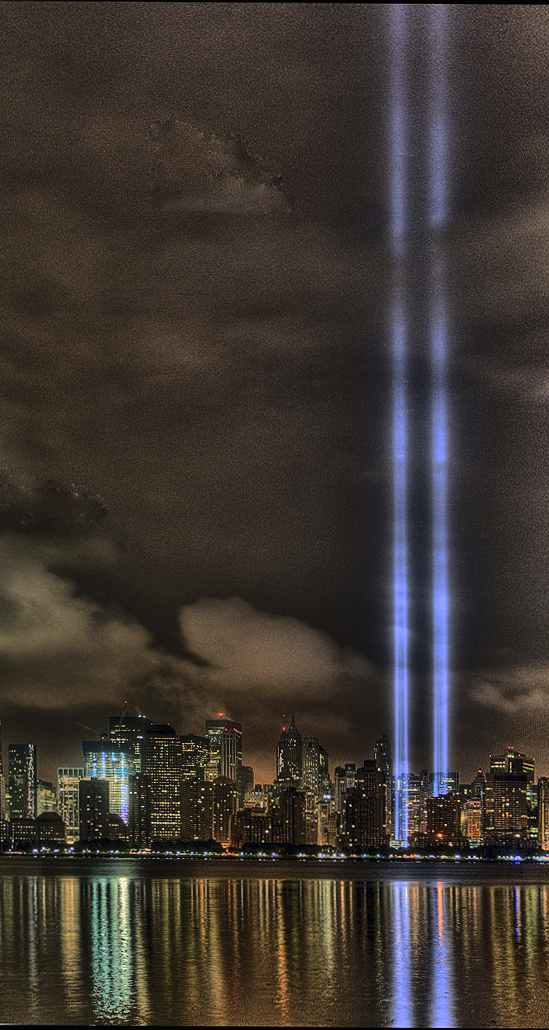
9/11: a buddhist reflection

680px-911_Tribute_(wiki)The root cause for such an inhuman act is a fundamental lack of wisdom and understanding of the human condition. All human beings are companions in birth, in old age, in sickness and in death. Buddhists may train themselves to cope with that type of situation through stillness, wisdom and reflection.

[Excerpt from A Buddhist Reflection on the Tragedy of September 11’  by Ajahn Jayasaro, 2001]

Buddhism considers the quest for a direct experiential understanding of the human condition as the heart of spiritual life. It employs a vast array of skillful means and ways of reflecting on life, which people of other religious traditions or indeed people of no religious tradition, might benefit. The more profound our understanding of our existence as human beings is, the more we are protected from blind identification with narrow categories, whether they be social, ethnic or religious. We all as human beings have the capacity to reflect on experience, to learn from it. Whatever religion we profess, we can for instance, look at the effect on our mind of the strong attachment to ideas of us and them. Theists, atheists, polytheists are equally capable of observing how the idea of us and them affects how and what information we absorb from our surroundings, how we interpret that information, and how we express ourselves in our actions and words. We can begin to notice our tendency to believe in the labels we attach to things, and what strong negative emotions are conditioned by those beliefs.

As Buddhists, we devote ourselves to learning how to maintain clarity of mind, fundamental compassion and intelligence, as a constant inner refuge. It is not so difficult to be clear about issues which don’t personally affect us, or those which provoke no strong feelings. The real challenge is to be awake even in the midst of a hurricane of emotions — when we are hurt and betrayed, angry and afraid. Clarity of mind means that when things get rough we can still receive the blessings of the principles we uphold. Inner clarity is thus the ground in which the dignity and meaning of life can grow.

An inner refuge does not come easily. It can only be brought about by a thoroughgoing commitment to this life education, a training of the way we live internally and externally. Buddhist teachings are seen then, in summary, not as dogmas to be believed in (or rejected), but tools to be made use of. We use the teachings to understand ourselves and our experiences in life, to understand other people and the world we live in. Then basing ourselves on that understanding, we seek to create as much authentic happiness and benefit for ourselves and others as we can.

It is very easy to brand people who do terrible things as being evil, and perhaps almost as easy to assume that because we find evil acts repugnant, that therefore we are good. But when we look more closely, we see that our bogeymen, the so-called “evil people” sometimes act well and “good people” may, on occasion, act cruelly.

There is no fixed entity, “the evil person”, who is evil 24 hours a day, 365 days of the year. Similarly, (apart from fully enlightened beings), there is no unchangeably good person. That being the case, the most constructive response to the suffering that human beings inflict on each other is surely to seek to understand and affect the factors conditioning the arising and cessation of good and evil in the human mind.

Armed with this knowledge we may then look at ways of reducing the power of evil wherever it arises, no matter whether it be in the group of people that we consider as them, or within the group of people that we consider as us. At the same time, we must be constantly looking to develop and support those qualities – both within that group we consider them and that group we consider us – which are good, wise and compassionate. Our most pressing task though, because nobody else can do this for us, is to look within our own hearts. [For another excerpt from Ajahn Jayasaro’s talk, click on this link: 9/11 (2012)]

————————-
the look of eyes (2)

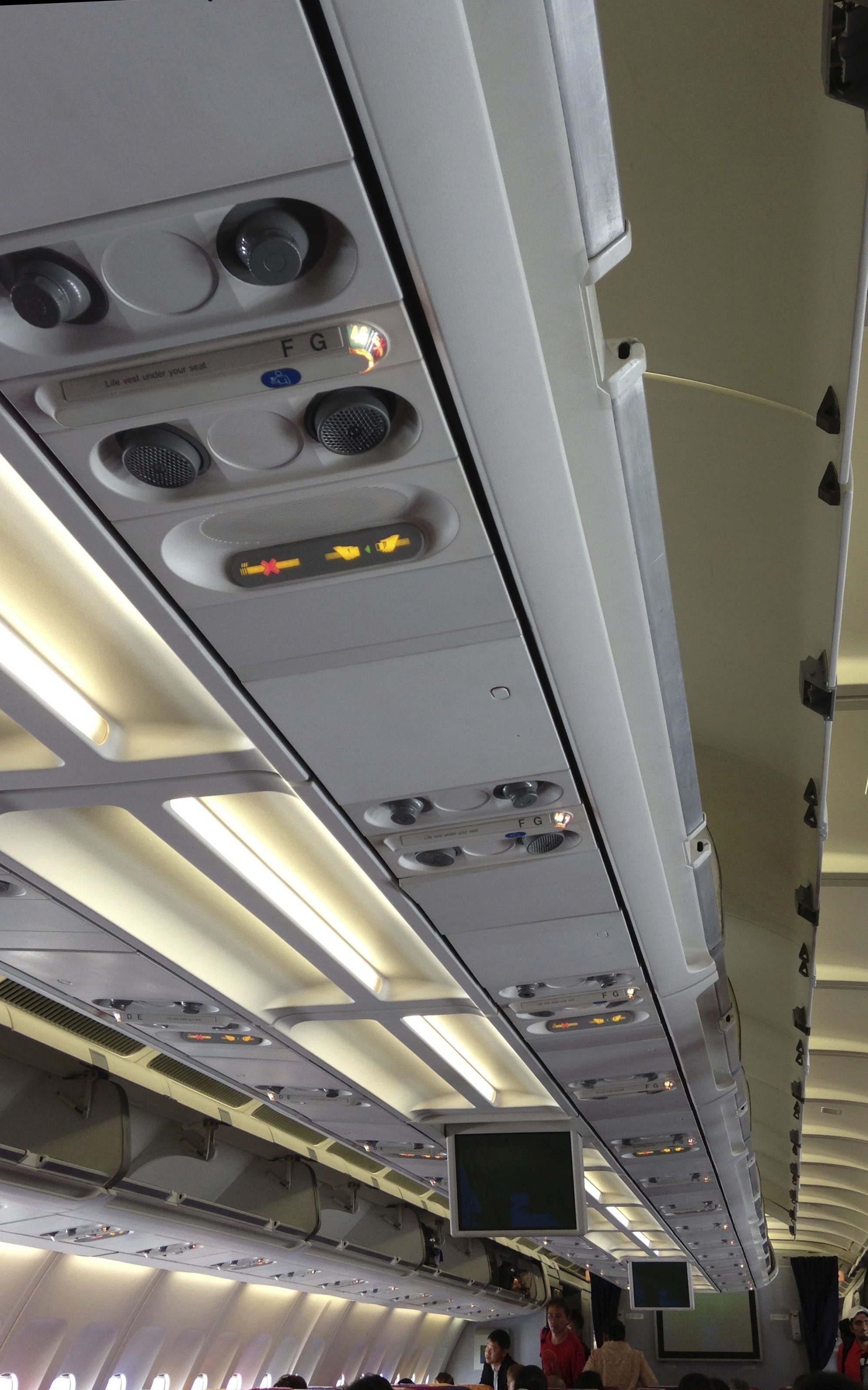
flightPOSTCARD08: Bangkok/Delhi flight: Large men standing in the aisles of the passenger area look along the length of the plane in one direction, turn the head around and look in the other direction. Hold that for a moment, then look to the left, to the right, and back to the central position: ok, so here we are on this plane… Sensory receptors positioned around the face and the cranium spins around, up/down on its axis, moving in response to received vision, sound, smell. The mind coordinates, thinks about things… ‘60,000 thoughts per day by each and every human being on the planet.’ [Deepak Chopra]. No wonder it’s such a novelty to discover a space where there’s no thought, no stories unfolding in the mind.

Maybe it’s something cultural; the male authority figure standing there like a tall pillar and everyone else is seated. I’m reminded of Meerkats, these cute creatures who stand up on their hind legs and look at everything in a kind of philosophical way. See and be seen. I catch the look, and glance away… a brief encounter, not held; no dialogue: hi how are you today? No, no need for that; no language required to interpret events and engage the mind. Just the look of eyes, and our shared space up here in thin air; a passenger jet travelling at 600 miles per hour, 10 kilometres above the curvature of the Earth.

Bundles of conditioned reflexes squeezed into the volume of a body, the experience of being a human ‘being’ – only this. Seeing the events without the story, like screenshots in a sequence; a few gestures, the meaning is not quite there. It creates a pause, taking a moment to receive that data before mind gains control and ‘self’ gets a hold; before ‘I’ perceive what it is, or what it could be; pleasant, unpleasant, neutral – how should I feel about that? Maybe no feeling at all… It’s as if there’s a small seed of wisdom buried deep in the layers of unknowing; lying there, dormant, waiting for things to evolve and the right conditions to be there, in order to wake up. But it hasn’t happened yet… contemplating the noble truth of waking up in some future lifetime.

I can’t read text, cross-eyed vision after an operation on the left eye. It’ll be okay after the operation on the right eye. Mildly deafened by the white noise of air pressure systems and the velocity of the plane displacing the air. And there’s a stewardess announcement: the plane is now making its descent, this concludes our inflight service, thank you…. [Link to: the look of eyes (1)]

————————-

“And what is the origination of the world? Dependent on the eye & forms there arises eye-consciousness. The meeting of the three is contact. From contact as a requisite condition comes feeling. From feeling as a requisite condition comes craving. From craving as a requisite condition comes clinging/sustenance. From clinging/sustenance as a requisite condition comes becoming. From becoming as a requisite condition comes birth. From birth as a requisite condition, then aging & death, sorrow, lamentation, pain, distress, & despair come into play. This is the origination of the world. [Loka Sutta: The World” (SN 12.44), translated from the Pali by Thanissaro Bhikkhu. Access to Insight, 17 June 2010]

lonesome highway

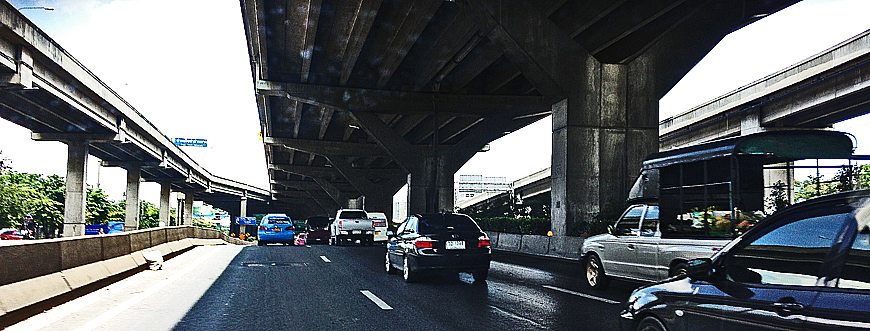
IMG_0063POSTCARD07: Bangkok: Travelling along the highway to the airport in a taxi that has past its best – seen better days. It’s veering off to the left, trembles for a moment then corrects itself. There’s another problem, the driver has it revved-up because the engine stalls when we slow down, so the sound is a bit alarming. We stop at the tollway to pay the fee, engine stalls, driver gets out to push. Fortunately there’s a little slope at the tollbooth and the car moves forward easily. Driver jumps in, ignition on, and the engine comes to life. Big sigh of relief, driver apologizes to me: koh tod khrap, polite. A nice guy, just trying to earn a living with a rented vehicle that’s barely roadworthy. The Thai compassion for this kind of predicament means it’s tolerated more than it would be in other Asian countries.

In a moment we’re accelerating down the road again with this huge noise and there’s still about 20 km to go. I’m thinking that if the engine fails, we’ll have to stop at the edge of this long and lonesome elevated highway with nothing around except sky up above… this really is the middle of nowhere. I drop into a state of alertness; being mindful is exhilarating, the inclination to be awake, watchful. All senses switched on, an awareness that sees also, at the edge of this, some anxiety – the Buddhist term: samvega/pasada describes it – a sense of urgency. There’s clarity too, even though things are not looking good at all.

It’s like a death, just stopping at some place on the road, anywhere’ll do and that’s it, engine conks out. Nothing extraordinary about death; we die and come to life again from one moment to the next. Physical death comes along and instead of coming to life in another moment, we find ourselves in another lifetime. This is how it is, according to what I’ve read, and it could be time’s up for our taxi, it’ll die anytime now. Worst case scenario is waiting in the heat of the tarmac with no air-con running because there’s no engine and hoping another taxi will come along – unlikely… empty taxis don’t normally go out to the airport. What to do? Ah well, miss the flight, I suppose, go tomorrow – yes, but I’m getting ahead of myself here, it hasn’t happened yet.

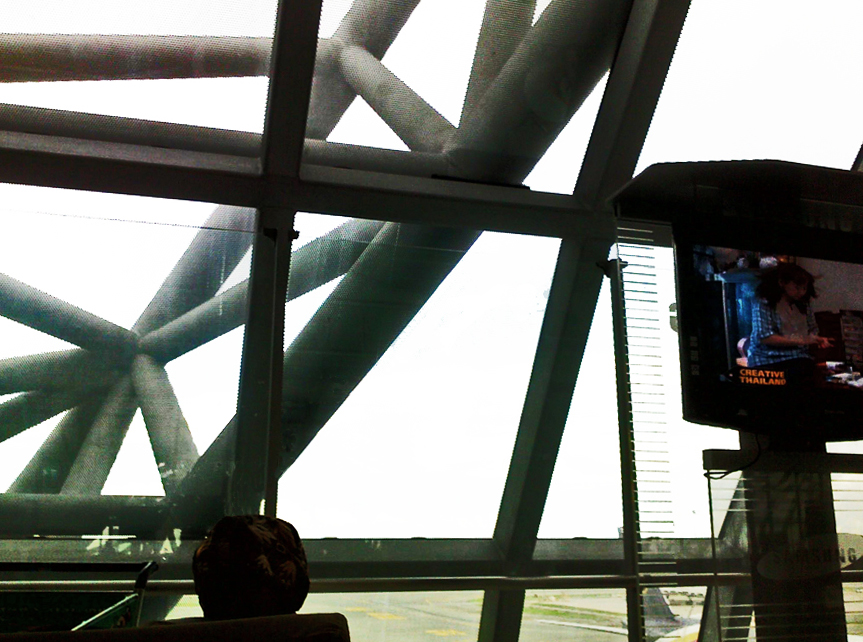
In the end, the taxi holds on to life and we arrive at the airport okay. Get the bags out of the car with engine still racing and the last I see is the driver heading off in the direction of Arrivals; hoping he’ll pick up another passenger and make it back to the city again. I wheel my luggage into the cool airport and go look for the check-in row. Doorstep to the world. Goodbye Thailand, next stop Delhi…

BKKairport‘The universe I’s (using the word ‘I’ as a verb) in the same way that a tree ‘apples’ or a star shines, and the center of the ‘appling’ is the tree and the center of the shining is the star, and so the basic center of self of the I’ing is the eternal universe or eternal thing that has existed for ten thousand million years and will probably go on for at least that much more.’ [The Essence of Alan Watts, Vol. 4: “Death”]

————————-

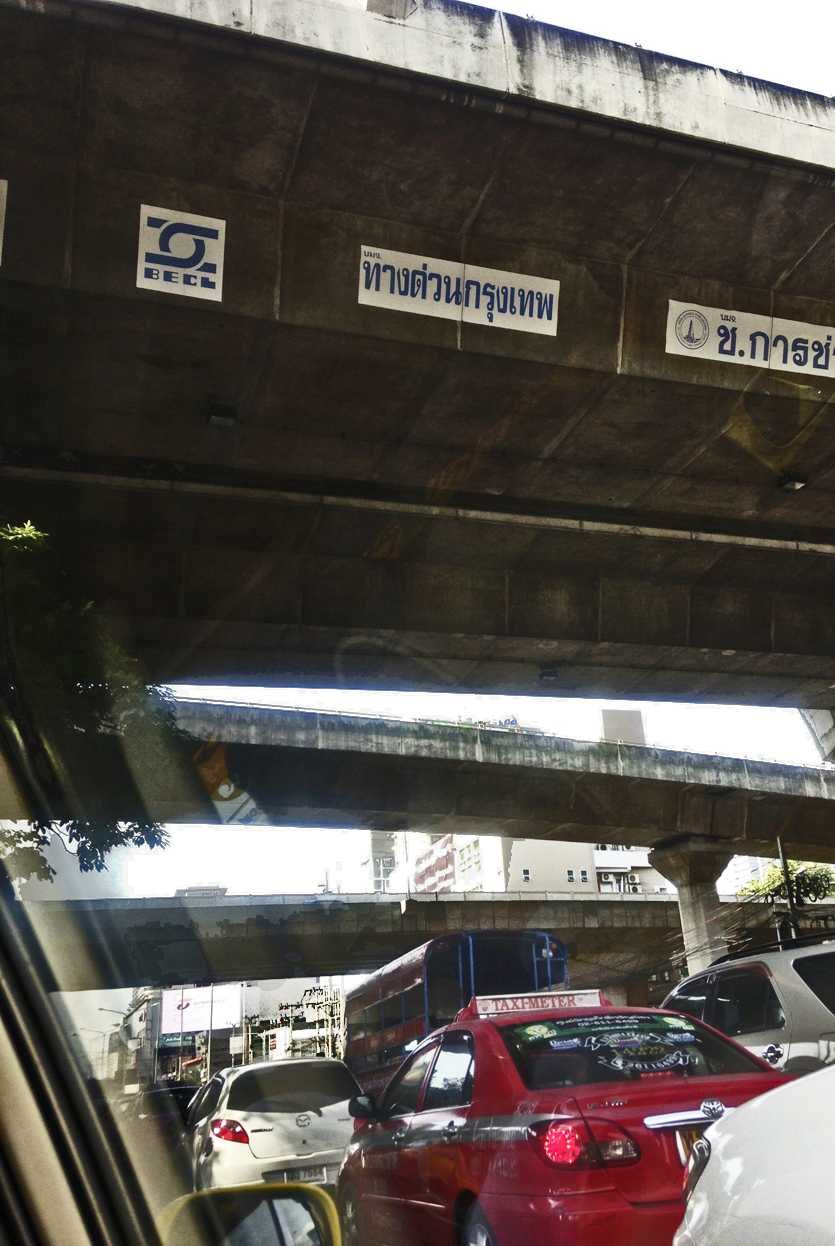
Upper photo: approaching BKK tollway. Lower photo: BKK airport departure gate area

constructed reality

sun image2POSTCARD06: Bangkok: Standing outside the house in the shade of a large tree, waiting for the taxi to the airport. The brightness of the sun is tremendous, colours are vivid, the world is a high resolution Photoshop enhancement. After the eye surgery I feel like a nocturnal creature, squinting in the daylight, a quiet presence behind sunglasses. I have an attachment to darkness, I’d like it to be dark, dull and rainy today but instead it feels like I’m in a television studio. The light penetrates everything. There are no real seasons in Thailand, no markers in the calendar to say where we are in the annual cycle. The weather is the same every day. Night comes at 6pm, instant darkness, then at 6am, instant daylight and each day is pretty much like the one before. The days become weeks, weeks become months, months become years. The whole thing is just one very long, continuous day, and night is the blink of an eye.

Time disappears, people are startled to discover they have aged… wake up one day to discover they’re old – life has gone. Rip Van Winkle fell asleep and woke up with a very long beard. The story is based on an Orkney folktale about an inebriated fiddler, late one night on his way home, hears some wonderful music and discovers a group of magical beings dancing in a circle. He plays his fiddle with them for a while and continues on his way home. When he arrives he discovers fifty years have passed; people have died, his daughter is middle-aged, her children are grown up. We don’t see the true nature of the world. Reality is thought to be what is out ‘there’, perceptions based on received sensory data input: what we see, hear, touch, taste, smell – and what we ‘think’ it is. What we recognize as a particular colour, is seen by an insect as ultra-violet, by a snake as infra-red. Who are we to say our view of the world is exactly what it is? The ground appears to be solid, terra firma even though the planet is spinning around, hurtling through outer space at thousands of miles an hour. Things are not what they seem to be.

A bright pink and white taxi approaches the house, enters the driveway and fills my vision. Bags inside, door slam, reverse out and we’re gone.

————————-

‘… there are no colors in the real world… there are no textures in the real world. There are no fragrances in the real world. There is no beauty; there is no ugliness… Out there is a chaos of energy soup and energy fields. Literally. We take that and somewhere inside ourselves we create a world. Somewhere inside ourselves it all happens.’ [Sir John Eckles, Nobel Prize winner in physiology and medicine 1963]

context & content

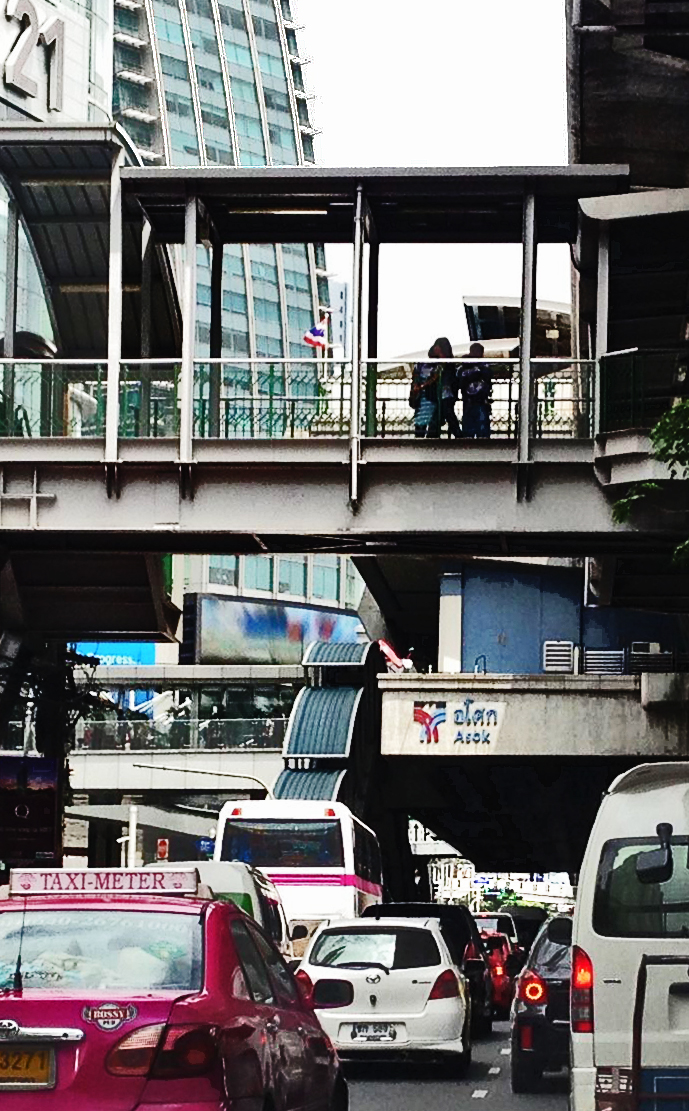
AsokBTSBangkok: Near Asoke, downtown, on my way to the eye hospital for an appointment at 3.20pm. I have a lens implant in the left eye and the surgeon is going to take out the stitch that’s been in the eye for 2 weeks. Today’s the day… dum-dee-dum, sing a song and forget about that (resistance to the thought of needles and eyes). A space in the mind opens up for a moment, and I take refuge in there, calm abiding; if a feeling is not present, I am not aware of it. Thoughts return, the fragility of things; eyeballs and eardrums, taste buds and nerve endings, vulnerability, perishability, finely tuned, limited lifespan. Get involved with my surroundings; crowds of browsers in the Asoke shopping area, a wealth of attractive objects. There was something I was supposed to get but I’ve forgotten what it was; new input replaces existing memory. How much time before the eye appointment? The memory comes back again… somewhere else, the needle-and-eye situation is happening to some other person, not me. Abide in the space of no-thought, remembering about the thing I’m looking for that I’d forgotten (I’ll remember what it was later), and just contemplating the empty space where it used to be.

It’s not just forgotten, it’s not there at all; replaced with a kind of consciousness I can’t identify, an awareness of the seeking? Seeking leads to the sense that something is missing, the suffering caused by wandering in a created world of being lost. The mind that seeks is restless, searching for things endlessly but never finds what it’s looking for. Always, always reaching out for something beyond the here-and-now: the sense there’s got to be something that’s better than this. There’s a place somewhere else where I’ll find the thing I’m looking for… but how will I recognize it if I don’t know what it is… ho hum, depending on the belief there’ll just be some kind of extraordinary familiarity and recognition? Somebody wise said: ‘What we are looking for is that which is looking…’ The mind that sees this relentless searching sees that other mind that seeks this; two minds. What am I seeing? Mindfulness and the curious situation of just seeing the seeking – and there’s no object. Seeking non-objects means seeking the seeking itself; seeing ‘the seeing’, the situation before the question arose, the motionless space in which everything exists; context and content.

Walking through the doors of the eye hospital as if in a dream, wait in the waiting area for my number to be called, then into a cubicle. Lie down on the bed, stare at the ceiling and the nurse bathes the eye with antiseptic eye-drops every 5 mins for 30 mins, then into the surgeon’s room. Lean back and more eye drops, anesthetic this time. I sit facing the opthamologist, a lady, place your chin here, she says and there’s a kind of binocular device for seeing into my eyes in an adjustable stainless steel structure with chin-rest and my head is held in the steel frame. I tell her I’m nervous, Painless, she says, it’s painless… and smiles at me reassuringly. I hear a sound like plucking violin strings, pizzicato, in the upper registers, ‘ting, ting’. Am I really hearing this small musical sound? I catch a glimpse of the surgeon’s tiny cutting tool as it releases the cords of the held stitch. She says it’s over… can’t believe it.

Sometime later that day, I remember what it was I’d forgotten in the Asoke shopping area*. I’ll have to leave that until I come back for the next operation on September 20th.

‘… eternity is realized at the cessation of striving for any event, looking for nothing’ – not looking for anything? …. Not looking for anything reduces the constant searching for it, so you can discover it was there all the time…’ [David Loy]

————————-

*I wanted to buy a jar of Chyawanprash at the Indian market near Asoke
This post contains references to the Betty Edwards text: ‘The New Drawing on the Right Side of the Brain‘ and the text ‘The Path of No-path: Śaṅkara and Dogen on the Paradox of Practice’ by David Loy.

passive voice

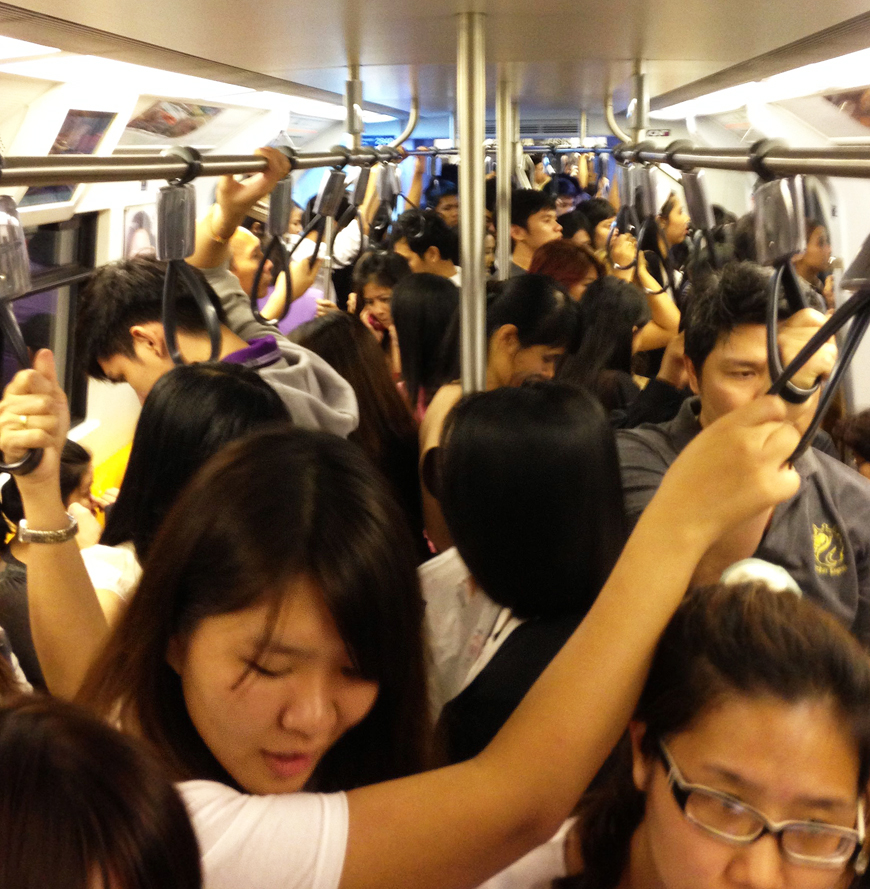
IMG_0083aBangkok: No taxis available at the airport, and all trains into town are seriously crowded. I am one of a very large number of individuals caught in the rush on a Friday evening. Somebody said later it’s because all the international schools start again on Monday. No other way, it’s decided for me, okay, I accept, I am subject to the system, the public transport system and I have no control over it. I am being ‘taken’, it’s about the process, rather than any particular person controlling the process. I could create a Controller in my imagination like the bosses, the management and blame it all on them/him/her/it, but it’s better to not do that…. There’s not a ‘self’ in the equation – the deed is done but there is no doer, using the Passive Voice language function to express the Buddhist Truth of no-self (anatta), and I came across an interesting post about this the other day [Link to: Just A Little Dust].

The ‘self’ is absent. Sounds are heard, food is tasted, the chill wind of September is felt upon the skin. And there’s nobody there that feels it, unless I consciously put together an identity composite, in which case I feel the chill (Active Voice). Language tells a story, creates a fiction that I can get lost in; only partially aware that it’s a constructed thing and most of the time I’m clinging to a concept of selfhood, an assumed identity. Thankfully, in the Passive Voice, there is no doer, things are done; the cognitive process is about ‘how it works’ rather than ‘what it is’.

The world is seen – I had an eye operation recently and what I didn’t expect was that it turned out to be an opportunity to contemplate this phenomenon of the experiencer. There’s the experience of visual stimuli entering the eye through a lens created by means of an industrial process and somehow the ‘me’ part of it is not there like it used to be. The lens inside my left eye is made of plastic, there’s a particular clarity in the colours, the quality of light and a fascination with the way plastic surfaces refract the light; plastic food wrapping, mineral water bottles, car windscreens. It’s all very new and quite interesting – maybe because I still have the ‘old vision’ in the untreated eye, something to compare it with.

I can see the world through the old eye as well as the new eye. It’s like the linguistic ‘voice’ can be both passive and active and I’ve understood it mostly in the active form; the process of selfing is grasped at as an entity and identified with – a controlling thing. In the West it’s a ‘belief’. My difficulty with anatta has been extricating myself from the Judeo-Christian conditioning that assumes the existence of an eternal soul. I notice Thais don’t have this problem. Even after 30 years in the East, I still struggle with my Western conditioning; an everlasting identity, the idea of it still lingers; a shadow of reality. A couple of hours and I’m at Morchit BTS near Chatuchak standing in the rain and D comes to get me in the car. The thought arises, the car is driven but there is no driver….

————————-

 ‘Where water, earth, fire, & wind have no footing; there the stars don’t shine, the sun isn’t visible. There the moon doesn’t appear. There darkness is not found. And when a sage, a brahman through sagacity, has realized [this] for himself, then from form & formless, from bliss & pain, he is freed.’ [Bāhiya Sutta]


plasticity

190320131769Chiang Mai: Holding the inverted eye-dropper bottle close to the eye, head back and squeeze a drop… it goes in, blink, and overflows, trickles out of the corner of the eye down the cheek like a tear drop and falls into the ear. I wipe it away with a tissue – the action triggers a memory, something emotional. I have new vision now, eye surgery for cataracts. The left eye is done, the right eye will be operated on next month. I’m seeing everything with such clarity; hard to believe the natural process of seeing that I’ve taken for granted all these years now involves a plastic lens. I see the world refracted through a man-made device and it doesn’t make any difference – well it does make a difference, of course, it’s very much better. My glasses don’t do anything any more; in the good eye the lens distorts vision, in the bad eye it enhances some things but it’s dull, blurred and yellowish in colour. I’ve had an overhaul – like taking the car to the garage to have new parts fitted. Or it’s how the system gets updated, the latest version is now installed. I feel renewed.

There’s this plasticity about the human body (and mind) that allows all kinds of changes to take place. I’m a Buddhist and I’m inspired by the thought that things can adapt, evolve, move on. It feels like there’s no such thing as getting stuck with anything or any state of mind, because we can learn to ‘unstick’ from it. In the same way, we can study a new subject; we put our minds to it, get interested in it and learn how it works. If I’m stuck with something, I’m attached to that thing in a strange kind of way; a locked-in response to adversity – more of a driven, unaware action than something done knowingly, mindfully. It’s a deluded attachment to habituality and I’m inspired by the very real possibility of working towards being free of this; acting always in awareness, seeing clearly.

Metaphors like ‘clouded vision’ describe tanha, habitual craving for something thought to be deservedly earned because of the endured hardship seemingly required to get there, unaware that one gets lost in the getting-there and there’s no end to it. Because I don’t normally understand things as they truly are, usually it’s how they’re seen habitually, I choose to see everything according to what’s already known; apperception, understanding newly observed data in terms of past experience. Before I get stuck in the delusion that it’s unavoidably like this, an opportunity arises to escape the cycle at Step 7 vedana in the paticcasamuppada (Cycle of Dependent Origination). Interrupt the causality sequence, go to the door leading to the emergency exit, aware that in the Buddhist sense of ‘no-self’, the habituality of mind’s perception of itself as the central actor in its own world, personality-view (sakkaya-ditthi), is the root of the problem. Step out of the cycle and I’m free…

Then later that night, walking to 7-eleven to get a few grocery items and I leave my glasses at home because they don’t help – I’ve worn glasses for most of my adult life and this is the first time I’m going out without them and at night time too. It’s been raining, there’s the glare of car headlights, and street lights reflected in large puddles. Only a short walk and arriving there, I notice some of the tiles on the floor of the lobby forecourt at the supermarket are shiny, glossy, and these must be new ones, replacements for the ones that were damaged? Why am I seeing this? I cover the good eye and look at the tiles with the old eye, no it can’t be seen, but I can see them with the good eye. It’s a repair I’d not have noticed before. People must think I’m acting strangely, better move along. So many discoveries about the world, and I’m stumbling around like this, seeing everything for the first time…

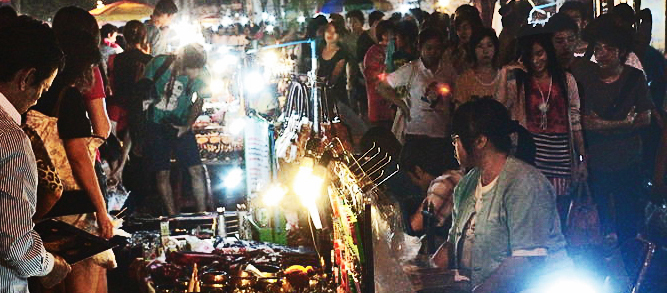
800px-ChiangMaiNightMarket————————-

‘Instead of starting with a perception or a conception of anything, the Buddha established a way based on awareness, or awakened attention. This is an immanent act in the present. It is sati-sampajañña, an intuitive awareness that allows the consciousness to be with the present moment. With this attention, you begin to explore personality-view (sakkaya-ditthi) in terms of the perceptions you attach to as yourself.’ [Ajahn Sumedho, The Problem of Personality]

Upper photo: Interior of Chiang Mai songteaw (public transport vehicle). Lower photo: Night Market, Chiang Mai


the beholder

ploenchitBKK3

Bangkok: The world seems different, everything suddenly seen in clear three-dimensionality. Reflected light, rich, deep colours and a strange familiarity, objects in the environment become somehow known. I’ve seen these things so often before but now seeing them with an expanded awareness. It sounds visionary, you could say revelatory but it’s the result of eye surgery, rather than insight… nonetheless quite astonishing. I have this clarity in one eye only, vision in the other eye is like an old yellowed photo, dull and indistinct. The operation on that eye will be in October, back to the Rutnin Eye Hospital in Bangkok. The surgeon makes a hole in the eye and puts in a tool that uses ultrasound to emulsify the lens. The lens becomes liquid and is sucked away, then a plastic foldable lens is inserted in the place where the natural lens used to be. That’s it, done. Local anaesthetic is enough, or general if you feel claustrophobic about the covers over the face. After the op there are different kinds of eye-drops that go on for about three weeks and it feels a bit itchy but that’s all.

I’m amazed that it’s possible to do this; the plasticity of the human body, parts can be taken out, replaced; systems are deconstructed, reconstructed, subject to change. It all supports the idea of anatta: no abiding self. There’s an underlying flexibility about the mind/body organism namarupa. One example of this is that I have a very refined piece of plastic in my eye instead of a natural lens. And, looking at the world, I find an affinity with clear-wrap, cling-film, transparent plastic food packaging – the way the plastic surface refracts the light. In this strong sunlight in Thailand, I notice the reflections on chrome and glass – the clarity is sparkling and beautiful. Also these enhanced colours, reds mostly, and an overall bright clear blueness in the white areas. It has the quality of an iPad screen, retina display, high density pixels merge into one – an extraordinary brightness.

Faces of friends and family are seen as if for the first time. I notice small expressions now I didn’t know were there, maybe because everybody is looking at my new eye, intense Thai faces examine my new eye, and I’m looking back at them looking at me, seeing subtleties in their features that I’ve never seen before. It’s all quite new, a curious reality.

So, I’ll be going around for the next few weeks, looking at my surroundings and considering the phenomenon that I am experiencing this. Can it really be so? ‘Beauty is in the eye of the beholder’ (Margaret Wolfe Hungerford). The expression always seemed a bit mean and divisive to me, ‘I’ think it’s beautiful but ‘you’ might think it’s not; beauty becomes a matter of opinion… In Buddhism, the ‘beholder’ sees the world and identifies the self, ‘me’. If ‘I’ am inside the body, in ‘here’, I must be separate from everything else out ‘there’, isolated, alone, anxious – wrong view a fundamental error. The attachment to a perceived self and craving for it to become real, creates suffering. Language has a naming function, creating an apparent identity. Anything that is stated is always missing the point because of these characteristics of language. Better to think of it in terms of what it is not, rather than what it is: ‘… the remainderless fading & cessation, renunciation, relinquishment, release, & letting go of that very craving. (the noble truth of the cessation of dukkha)’ [SN 56.11 (dukkha nirodho ariya sacca)]

————————-

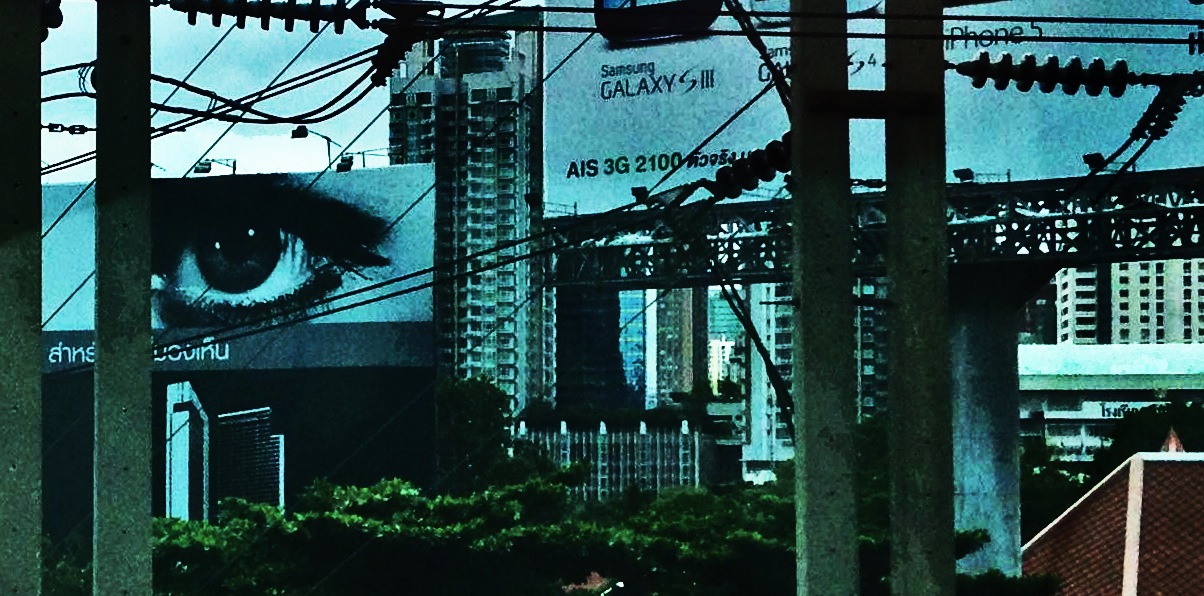
Photo image: Skyline at Ploenchit Bangkok.

layers

IMG_0041Bangkok: Falling out of the sky, jet-lagged and inert. A 12-hour flight from London; they gave me an upgrade to business class, nice. More space, better everything and a larger seat. Able to stretch out in the prone position, yes but also a huge selection of videos so I watched movies for 12 hours and no sleep. Now in a state of hypnosis here at the house, lying on the sofa in another time zone. Early morning in Bangkok and I’m watching the FOX channel. There’s only one English language channel on TV in this place so it simplifies things: NCIS, Bones, The Bridge and others. The stories merge into one all-inclusive narrative, a complex and improbable plot. Good-looking actors in expensive cosmetics play characters that migrate from other crime series into this one, the central story, all roads lead to one end, catching the bad guy, variations on a crime scene theme. The pace of it is intense, camera shots hold for about 3 seconds then change. Background audio has a percussive, mechanical sound then it’ll switch to something calm; a picture of domestic reality, beautiful interior, elegant lighting, lovely fabrics – I wish I had a room like that. Slow piano notes played meaningfully, like steps taken through the memory of something that happened once. I’m lulled into acceptance; the way it unfolds is the way it is. I become the story.

I could switch off the TV but there’s a reluctance; a pleasing attachment, something that appears more difficult to let go of than it is. Resisting the emptiness, the deep knowing there’s nothing there that triggers the reaction to fill the empty space with a self-construct, or an image, a movie celebrity, a child’s doll, the sphinx, the totem pole, dependency on a perceived creator. I mute the sound, allow the engagement with it, following the story as it transforms, watching the present moment until it changes – how did that happen? I didn’t notice it take place, only after it occurred. There’s the sense of something applied. Consciousness seems like an unconnected series of screenshots, a random sequence of events; things without substance appear and fade away. Rest in this fictional state… it’s just the way things are. Mindfulness is at the base of it all, in every way. Sleep shuts off the system; down through the layers, comfort, familiar surroundings. Crash out on the sofa in flickering TV light…

————————-

‘Like fish that cannot see the water they swim in, we do not notice the medium we dwell within. Unaware that our stories are stories, we experience them as the world.’ [David Loy, The World is Made of Stories]

recognition

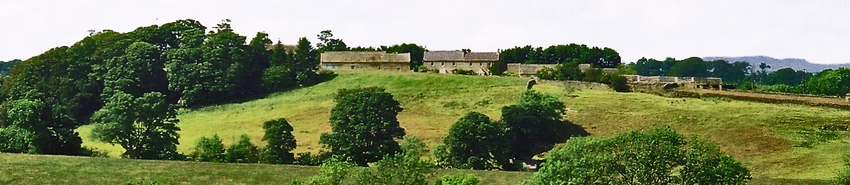
HarnhamLakePOSTCARD ♯05: Harnham Monastery, Northumberland: The monastery is situated on top of a small hill; guest accommodation is down the road a bit. I walk up to the main building for the one meal of the day; sunshine, a cloudless sky, and I meet one of the monks at the door. How long has it been, more than two years? He looks different. Faded brown/tangerine robe, shaved head, exposed face, features looking at me. The whole presence of a person, eyes in the centre of a field of vision – it seems like an immense identity just living here quietly… my perception of how things are, looking back at me. Recognition is a selective thing, matching moments of experience with what’s in the files inside the folder marked: THE MEMORY OF OTHER THINGS SIMILAR TO THIS – select/match, the mind-body organism default. It’s not what it is, it’s only what it appears to be.

Chanting, food, wash dishes and walk back down to the guest accommodation again. Huge daisies on the edge of path, everything is swelling up in blossom on top of this solitary hill and the panorama of Northumberland landscape all around. Unknowingly, I’m manipulating my perception of things to see the world as I want to see it without any real understanding of why I’m attracted – a huge habit of indulgence that I think is simply normal. I don’t understand desire, I just respond to the experience of it. Now on top of this hill, looking at a lifetime of seeking after what I want and rejecting what I don’t want without really knowing why. There’s this experience of dissatisfaction at the base of it all… normally I’m pretending it’s not there. It’s a hunger – a hunger for what? Caused by what? Is there a way of ending this hunger? There’s a name for it. It can be identified. Dukkha, (suffering), the First Noble Truth. Knowledge enters and ignorance is pushed out. I couldn’t see it before; too much thinking about how much I dislike the idea of suffering, an obstacle is created by my aversion to it; the desire for it to not be there. Strategies of avoidance, and lost in experience, agreeable/disagreeable. Caught in the momentum of seeking gratification or holding on to unhappy states of mind believing that this is my reality. The deluded self, ‘me’ and ‘mine’. This is the obstacle – the only reason it’s there is that I linger with the idea of it….

KHouse daisiesReturning again and again to the same starting point means these unhappy states of mind are reinforced more and more. Recognition is not informed by ‘clear knowing’, it’s seen through the clouded prism of unawareness, avidyā not-knowing (ignorance). What’s required is mindfulness, applied recognition, Right View, and the undoing of all the little knots tied in memory, habitual reactions over many lifetimes. Bit by bit, letting it all go…

View_harnham_hill————————-

‘If we have faith in the Buddha’s teaching and are inspired by the great teachers, we can direct our interest into not just avoiding suffering, something we have spent a long time doing, but finding a skilful way of directing our attention towards recognising it, here and now. What is this ‘self’? How is this ‘me’ and ‘mine’ manifesting itself here and now?’ [Ajahn Munindo, Entering the Monastery, 22 July 2013]

– G  R  A  T  I  T  U  D  E –