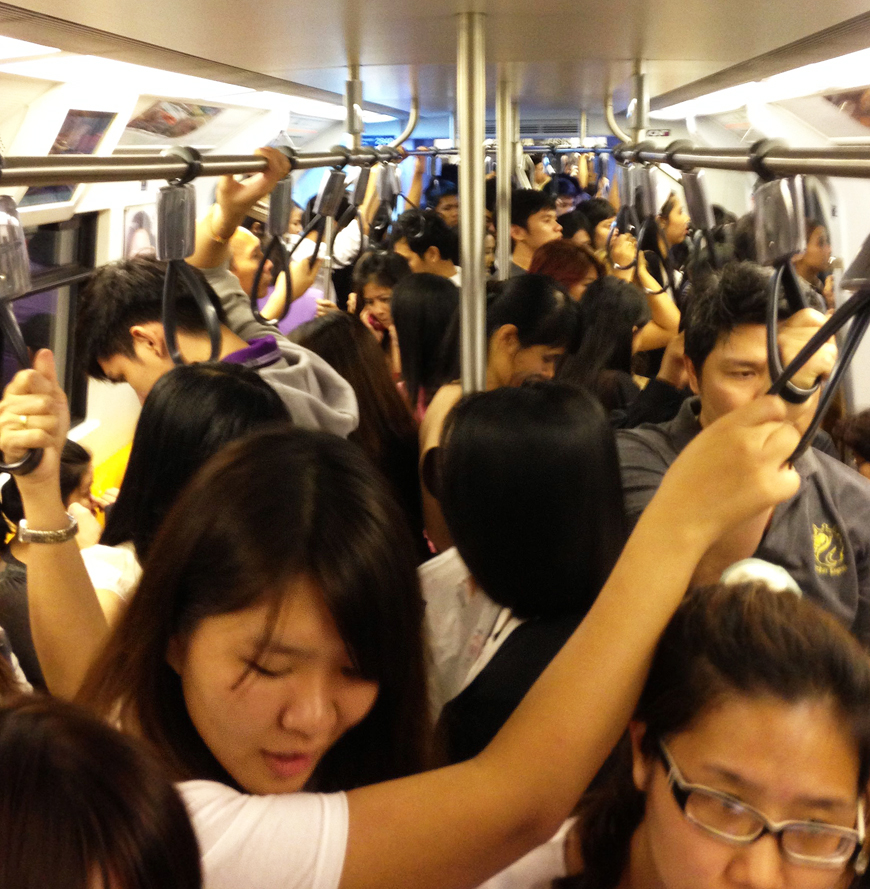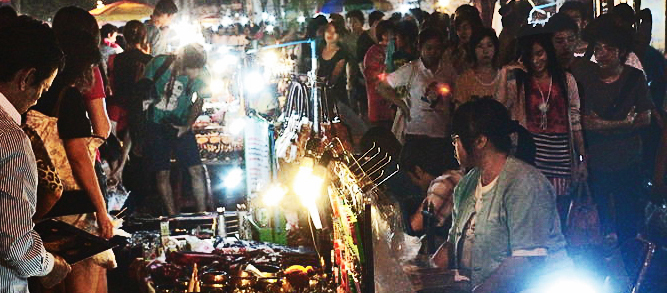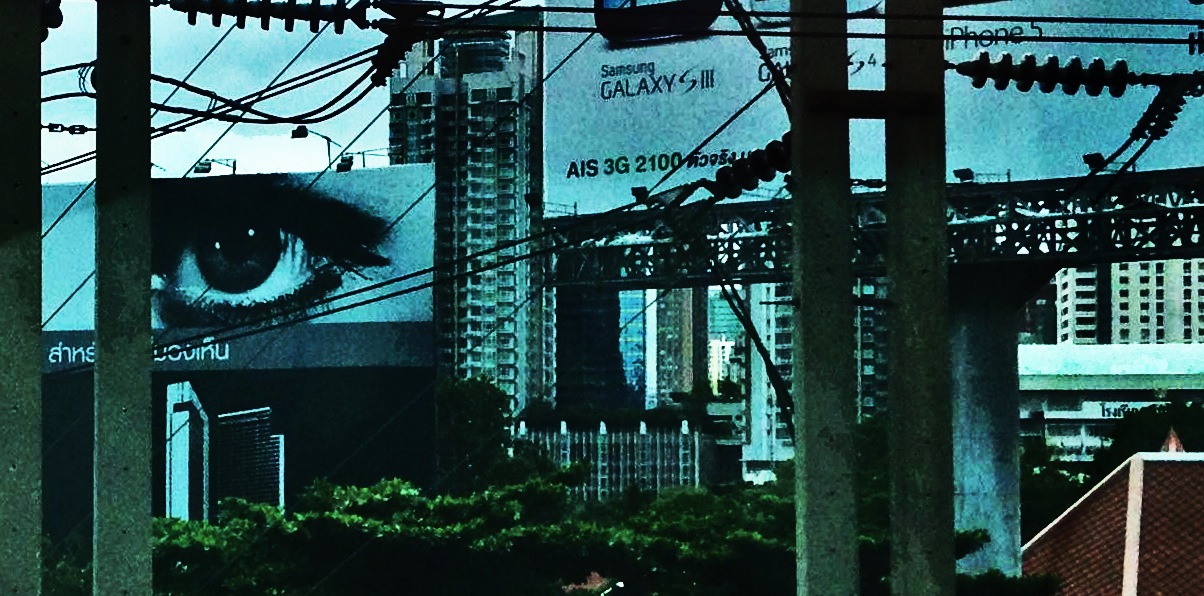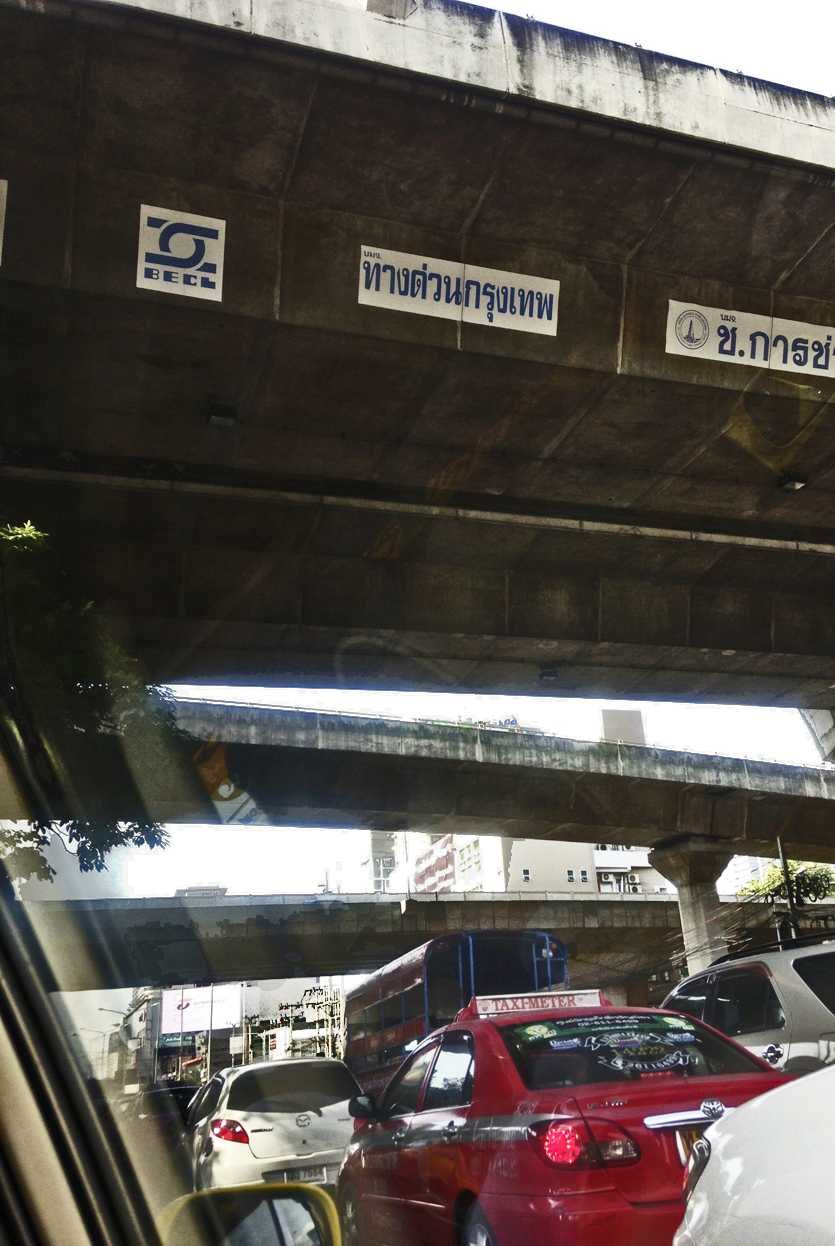
inevitability of circumstances

the-fool-300A LONG TIME AGO I had the idea to write a book. It was 1983, I’d just started travelling around Asia and all this colourful, exotic stuff around me, I’d never seen before. So I started making notes. That was okay but I got stuck with it; no story-line, no plot and, for a while, I thought the story could be a kind of unfolding of events as they went along… but this was too wide, I needed to narrow things down a bit. Too complex, it’d give me a headache. I kept on making notes, anyway, believing that a story would reveal itself in the course of time, but it never did and I never figured it out. Years went by and I just carried on with more and more notes. Now I’ve got five A4-sized ring folders of typed notes I managed to print out from an old hard drive just before it finally crashed about 10 years ago, and I’m scanning these back into text files bit by bit. Also there are all these little old notebooks full of scribbles I have difficulty deciphering today – it’s like they were written by somebody else. I’m telling you this because this is how the blog came into being. The posts are developed from these old notes; you could say, altogether, this is the book I never wrote.

The difference is there’s a distance now that wasn’t there then. There’s no obvious author, thoughts without a thinker, it’s very much more indirect than it was. There are these faded old notes written by the younger me, on yellowing paper, etched into the surface with a dried-out ball-point pen and I don’t remember half of it. Now they seem to be a bit reckless, stepping into that magical world of heightened feelings that generates a kind of gripping intensity: the experience itself… what’s this? what’s that? Things had to be written down quickly before they’d disappear and I’d not be able to remember, suddenly –  wow! gone, they’d vanish and all I’d have were the fragments of their being there.

Of course, it was stress all the way; trying to hold on when holding-on wasn’t needed. The urgency of it going past too fast, whole scenarios flashing by like buildings seen through the windows of a moving vehicle and you see this shadowy reflection of yourself in glazed shop windows, looking out from a taxi or bus or car and always in the same position: the point of reference… Then I started to slow down, one thought-moment, then another thought-moment – we can’t have two thoughts at the same time – thinking is the linking thing. And eventually I arrived at an understanding that this is what the process is; a mindful effort to experience consciousness of the real live situation as it’s going along. Haphazard things that before just seemed to fit in as happy coincidences, came to be more like a recognition that all things are related anyway; similarities that link parts of the story together in a kind of inevitability of circumstances.

Jean_Dodal_Tarot_trump_Fool

So there’s now this quiet familiarity, and it’s more relaxed. Being free of the great rush that lasted all these years, I reckon I’ve arrived… yes, that’s it, the purpose in life has been achieved. I can see, though, there’s also something here that tells me it could be that I’m just experiencing normality. Isn’t this just ordinary reality? Isn’t this, in fact, the place where ‘normal’ people abide all their days, and what’s been happening is I’ve been practising brinkmanship, acting slightly mad all these years and have only returned to ordinariness? Ah well, whatever… I’m pleased because how could you not be? How much better and more mindful it is now compared to how it was then. And, okay, the transformation from that to this maybe makes it seem like something more than it is. Well, ho hum, it could be that the release from that samsara is all that can be achieved in one lifetime and just being happy with small miracles is all there is – nothing else needs to be done. So I go on here in this quiet place with the pleasantness of simple things and every day seems quite wonderful.

————————-

Upper Tarot image of the Fool: http://tarot-lovers.com/the-fool-detail.shtml
Lower Tarot image of the Fool: http://en.wikipedia.org/wiki/File:Jean_Dodal_Tarot_trump_Fool.jpg

redefining the question

800px-Asoka_KaartNew Delhi: 04.00 hours. Awake at some time of darkness that’s neither night nor morning, getting some coffee and toast ready for Jiab going to the airport for the Gujarat flight at 06.00. Car comes, she gets in, bye… door-slam and she’s gone. Stars shining in the dark sky, then I come inside and look at a Google map of India with Gujarat there on the coast of the Arabian Sea – so that’s where it is… really not that far from Europe. Then take a look at the wiki map (shown above) of the Buddhist routes going out in all directions from North India in the time of Emperor Aśoka the Great, 273 BCE to 232 BCE. It looks like an explosion of consciousness that took place in North India, and spreading out from there; North, South, East, West, along the Old Silk Road directions. It goes West as far as the South-East Mediterranean countries; arriving there in pre-Christian times. Not impossible that the Buddha’s Dhamma had an influence on the Jesus Teachings. Maybe that’s why I had this strange recognition of it, déjà vu, when I first went to Wat Pah Nanchat. Studying Buddhism revealed fragments of an innate knowledge.

Text comes in, Jiab: ‘boarding soon’. It’s a two-hour flight, Delhi to Gujarat. Looking at the map again, I notice wiki uses the word, ‘proselytism’, but it can’t have been like that. There’s no doctrine of God-worship in Buddhism, ‘I believe (I believe) in God (there’s no real Teaching other than belief for me to study). In Buddhism (and Advaita Vedanta and the Tao), the separate ‘self’ is an illusion, ‘a cluster of memories, thoughts, habits and conditioning’, maintained due to this basic human tendency to hold on to stuff. It’s not about that, it’s not about our origin, our Creator or what we are made of, it’s about how the whole thing works. It’s a 2600 year-old teaching about learning how to see what our hang-ups are, and easing the burden. It’s not about living for our(selves): seeking, acquiring and hoarding, it’s about generosity, relinquishment and giving it all away*. It’s about mindfulness and the way things exist, rather than what exists. It’s about realities that fit into our world today, exactly as it was in ancient times. The Buddha anticipated modern physics: all matter is energy; beings exist as “bundles of energies” (five khandhas). It’s not about ‘self’, it’s no-self, anatta, it’s about consciousness, viññāna, and the big question: what is consciousness?

Central_Asian_Buddhist_MonksI go through to the bedroom to lie down for an hour or so; still not yet dawn. Watch the breath, conscious of the sound of the ceiling fan above me in the shadows, constant spinning cycle that somehow says something about the weight of the rotary blades. It looks like how it sounds: a spinning propeller of an old fashioned aircraft – consciousness of the visual image. Always there’s consciousness of something: consciousness of the smell of coffee and a crust of toast in the kitchen, the taste of it; consciousness of the soft bedding I’m lying in. There’s consciousness of thought and then there’s consciousness of no-thought – including my perception of it. Consciousness without an object, the still mind, unsupported consciousness – unconditioned? The non-dual perspective is that it’s like this anyway…. So it’s without an object in the sense that it is different from the basic functions of interacting with the world through sensory organs: eye, ear, nose, skin, mouth and mind; different from the state of being conscious of what’s going on in the body/mind organism, phassa, as a result of responses to the world outside. Not consciousness of… just consciousness itself – what is that? No answer… is this the kind of consciousness that’s needed to find the answer to the question or to redefine the question, maybe, or whatever… is it the true self?

If so, it’s not what I thought it was: ‘…this true self is also the fundamental source of all attachment to being and becoming… attachment to the allure of this primordial radiance of mind that causes living beings to wander indefinitely through the world of becoming and ceasing.’ [Luangta Maha Boowa]

If it’s not that, then it goes beyond words: ‘When all phenomena are done away with, all means of speaking are done away with as well.’ [Upasiva’s Questions (Sn 5.6)]

It all needs a larger context. Some time later, another text comes in, Jiab: ‘having breakfast in the hotel’. It’s 08.30 and she’s nearly 600 miles away….

‘Consciousness cannot be known by mind. The mind is an object. It doesn’t know anything. It is itself known by Consciousness.’ [Rupert Spira – Link to: Spiritual Artwork]

————————-

“If a monk abandons passion for the property of consciousness, then owing to the abandonment of passion, the support is cut off, and there is no base for consciousness. Consciousness, thus unestablished, not proliferating, not performing any function, is released. Owing to its release, it stands still. Owing to its stillness, it is contented. Owing to its contentment, it is not agitated. Not agitated, he (the monk) is totally unbound right within. He discerns that ‘Birth is ended, the holy life fulfilled, the task done. There is nothing further for this world.’ [Bija Sutta: Means of Propagation” (SN 22.54)]

*This post contains excerpts from: ‘Beyond The Dream, Tao Te Ching7: Selfless
Lower photo image: Central Asian monk teaching East Asian monk, 9th century fresco

Thai New Year, Songkran

800px-Tuktuk_chiangmai_songkran_05bSONGKRAN, the Thai New Year, takes place on Saturday 13 April 2013. The traditional greeting is สวัสดีปีใหม่ (sawatdi pi mai), “Happy New Year”. Most people say สุขสันต์วันสงกรานต์ (suk san wan songkran), “Happy Songkran Day!” The most obvious celebration of Songkran is the throwing of containers of water, mixed with talcom powder, and everybody gets drenched, including (and especially) innocent bystanders. It’s a fun time, the peak of the hot season.

People make New Year resolutions, pay respects to elders, family members, friends, neighbours. They go to the wat (Buddhist monastery) and offer food to monks. They cleanse the Buddha images from household shrines as well as Buddha images at monasteries by gently pouring water over them, mixed with a Thai fragrance (Thai: น้ำอบไทย). In Chiang Mai, the Buddha images from all of the city’s important monasteries are paraded through the streets so that people can toss water at them, ritually ‘bathing’ the images, as they pass by on ornately decorated floats.

800px-Songkran_in_Wat_Kungthapao_03

Songkran is a time for cleaning and renewal and many Thais also take this opportunity to give their home a thorough cleaning. The throwing of water originated as a way to pay respect to people, by capturing the water after it had been poured over the Buddhas for cleansing and then using this “blessed” water to give good fortune to elders and family by gently pouring it on the shoulder. The water is meant as a symbol of washing all of the bad away and is sometimes mixed with fragrant herbs when celebrated in the traditional manner. The holiday has evolved to include dousing strangers with water to relieve the heat – temperatures in April can rise to over 40°C. Nowadays, the emphasis is on throwing water at everyone, rather than the spiritual and religious aspects, which sometimes prompts complaints from traditionalists.

717px-Songkran_in_Wat_Kungthapao_05

Songkran is similar to the Indian festival of Rangapanchami, Holi, with the same splashing of water, colored powders, and fragrances. The festival coincides with the Tamil New Year, Puthandu, either on 13 or 14 April and coincides with the New Year of many calendars of South and Southeast Asia. Songkran falls on the same date observed by most traditional calendars in India as in Assam Rongali Bihu, West Bengal Pohela Boishakh, and in Kerala, Manipur, Odisha, Punjab, Tripura; also in Nepal, Bangladesh, Burma, Cambodia, Laos pee mai lao and Sri Lanka, Auruddhu. Songkran is also celebrated in Cambodia chaul chnam thmey, Myanmar thingyan, and by the Dai people in Yunnan, China (called Water-Splashing Festival).

————————-

Reference and photos, wikipedia page: Songkran (Thailand)

hold on and let go

2013-04-01 15.24.34New Delhi: Arrived late morning on a flight from Thailand and Shym picks me up at the airport. It’s that feeling of bewilderment; having been scanned by X-ray machines, identified, processed, held in aircraft cabin pressure for 4 hours and transported. Now I’m here, nearly two thousand miles away from where I was, placed on the ground and having to reassemble the parts of who I am in this new context.

Where are we now? Eyes looking out, bright sunlight but not fiercely hot like Bangkok; more like a Mediterranean climate, feels okay. Heavy traffic, drivers with attention-seeking behaviour; the ‘BLOW HORN’ message on the back of trucks says everything. It’s a kind of open invitation to press your horn to say you’re here. Get out of the way! I am coming; it’s me! ‘Self’ is something real, something eternal, according to the Vedas and Upanishads – something that is. Completely different from the Thai Buddhist culture that I’m used to, which says that what we cling to as ‘self’ is really only impermanent phenomena subject to arising, changing, and passing away – nothing of substance.

India is not a Buddhist country, it used to be but the Teaching is more or less unknown today, and the only reason I make the comparison is that I’m often going between these two places, Thailand and India. It’s culture shock, really, happens every time. And now, stuck in this traffic jam, some drivers try to get relief by blowing their horn while we’re all at a standstill. I hear the sound and find I’m vibrating like a bell that has been struck… it’s the argumentative, provoking nature of it: I feel his anger. I forget about this when I’m away – an unavoidable reaction.

Mindfulness, focus on the breath, let it just be there – everything that arises ceases aniccan. In a moment the impact has gone, nothing special. I just need to be careful I’m not indirectly fanning the flames and causing it to blaze up again. I don’t want it to be like this but saying this doesn’t help because ‘not wanting’ (vibhavana) is as much a desire, as ‘wanting it’ is. If I continue to ‘hate’ it like this, I become even more attached to the anger of not-wanting it and cannot easily disengage from that. So, looking for the place that’s somewhere in the middle ground where I can find a temporary abiding.

It’s inevitable that North India looks confrontational when the Thai way is to keep your temper, whatever the situation; the chai yen concept (keep a cool heart). Thais very rarely show their anger. If there’s a problem, Thai people keep it inside… that particular intensity of unexpressed anger, like a pressure cooker that explodes suddenly – it can be dangerous. In 2001 a German motorcyclist, frustrated by the traffic situation, made an obscene gesture to a van driver and was shot dead. The van driver lost his cool. It’s what happens when you don’t manage to hold it anymore, the release is really explosive. In this kind of emotional holding, it can be pretty scary because everybody knows the consequence of a lifetime of intense holding; clinging with tenacity to the refusal to let go, and no safety valve. But not necessarily, Thai children learn about this Buddhist teaching at an early age, and in the right circumstances, most people see it for what it is and allow it to come to an end.

Then some hours later, I’m at the house, and somebody I don’t know is shouting in anger outside my front gate. I go to the window and a man is standing out there under the tree in the shade, talking on his phone in Hindi and waving his free arm. Shym told me the man was expecting to receive some money, seemingly, but didn’t get it and this was his reaction. The fury in his voice was like something Biblical, the wrath of God, I’m immediately intimidated, and the vibration of anger starts up again, it’s like a contagious disease. You just can’t pretend it’s not there – that compelling sense of ‘me.’ After a short while it’s gone, and I’m thankful there’s no ‘eternity’ in my mind: no heaven, no hell. There’s liberation from suffering: the way out, the Third Noble Truth, nirodha, and cessation, no holding. In the emptiness of the moment there is no self, only the stillness of the mind and everything comes to an end…

120420131785

one in five hundred

dreamstimefree_198297

Suvarnabhumi airport: 05.30 hours, enter the check-in hall, and I’m one in a great sea of people, all pushing trolleys with luggage… amazing; takes my breath away. It seems to be divided equally over two check-in areas: H on the left, and J on the right. Quick decision, go right – I’m at the end of the line, I’m the last… I’ll miss the plane! Everybody is stumbling along, dismayed: how could it be like this? The slow-shuffle, steadily moving down a very long, snake-like line, doubling back on itself, for five rows – looks like about 100 persons in each line, 500 people in front? The paranoia of individuals acting-out in wild queue-jumping behaviour arises (protecting my place in the line…) then that ceases. Relax, watch the breath, and observe reactions: a narrative of events in the mind. Seeing it happening as I’m going along; emotions rising and falling like sailing over these large waves on the sea. Stormy thoughts rise up and activate the red light: stop thinking! There’s the experience of intense contraction in the mind and immediately there’s the insight into letting go of it, drop that one now. Back to watching the breath again.

Lose track of time and later I check my watch and realize it has taken about an hour to reach the check-in desk where I have to show my passport and get the space on the plane I paid for. Then it’s done, I’m processed, got boarding pass, making my way through the multitudes, contemplating thoughts on an archetype of Asian migrations and, always, there are 500 people in front. At the toilets 500 people ahead of me, into immigration and the continuing capacity flow of 500 people is passing through. In the larger departure areas there’s an ocean of people as far as the eye can see, and at my gate, again 500. Flight is boarding and the capacity of the plane is around 500. Take off and all 500 of us mind/body units are airborne…

Airline staff serves the meal, feeding the five hundred – sounds biblical. Through the window, sky, clouds, and the surface of the planet. It makes me feel like a tiny speck of life, a microscopic cell. The body is allotted a space in a chair moulded to fit, takes up volume and weight. The body composed of the four elements: earth, water, fire and air, is something like a car battery, positive and negative poles, chemical reactions, and the mind is the energy that comes from that, the nama-rupa compound. Who ‘I’ am is not important, and the idea that it is ‘something’ (it is ‘me’) is a concept, a digital display that comes with the software. The whole thing is more like ‘process’, a connectedness on every level. Origin unknown, just believing in an external creator doesn’t seem to be it – the only reason that comes to mind is my own Christian conditioning as a child. I need to investigate this. The metaphor helps me to transcend my existing situation, figures of speech; other than that it’s all speculative conjecture. How can I see it in any other way? Anything else beyond this present conscious state must be so remote from what I presently know that none of the rules I’m familiar with apply. I’m in awe – I simply don’t know….

————————-

‘… radiant emptiness should not be mistaken for the pure emptiness of Nibbana. The two are as different as night and day. The radiant mind is the original mind of the cycle of constant becoming; but it is not the essence of mind which is fully pure and free from birth and death. Radiance is a very subtle, natural condition whose uniform brightness and clarity make it appear empty. This is your original nature beyond name and form. But it is not yet Nibbana. It is the very substance of mind that has been well-cleansed to the point where a mesmerizing and majestic quality of knowing is its outstanding feature. When the mind finally relinquishes all attachment to forms and concepts, the knowing essence assumes exceedingly refined qualities. It has let go of everything – except itself. It remains permeated by a fundamental delusion about its own true nature. Because of that, the radiant essence has turned into a subtle form of self without you realizing it. You end up believing that the subtle feelings of happiness and the shining radiance are the unconditioned essence of mind. Oblivious to your delusion, you accept this majestic mind as the finished product. You believe it to be Nibbana, the transcendent emptiness of pure mind.’ [Luangta Maha Boowa]

photo image, dreamstime: http://www.dreamstime.com/pier-free-stock-photography-imagefree198297

relaxed resistance

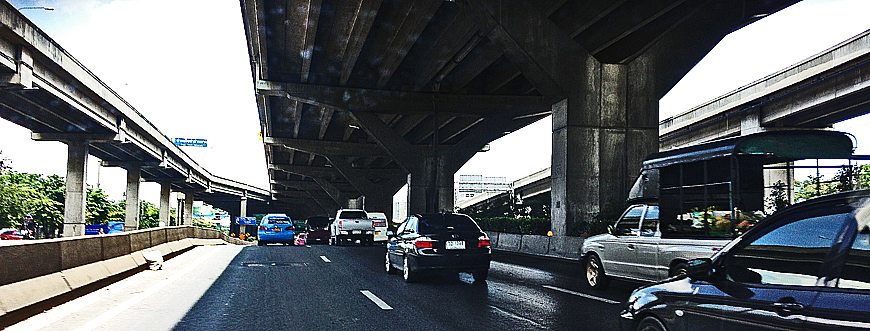
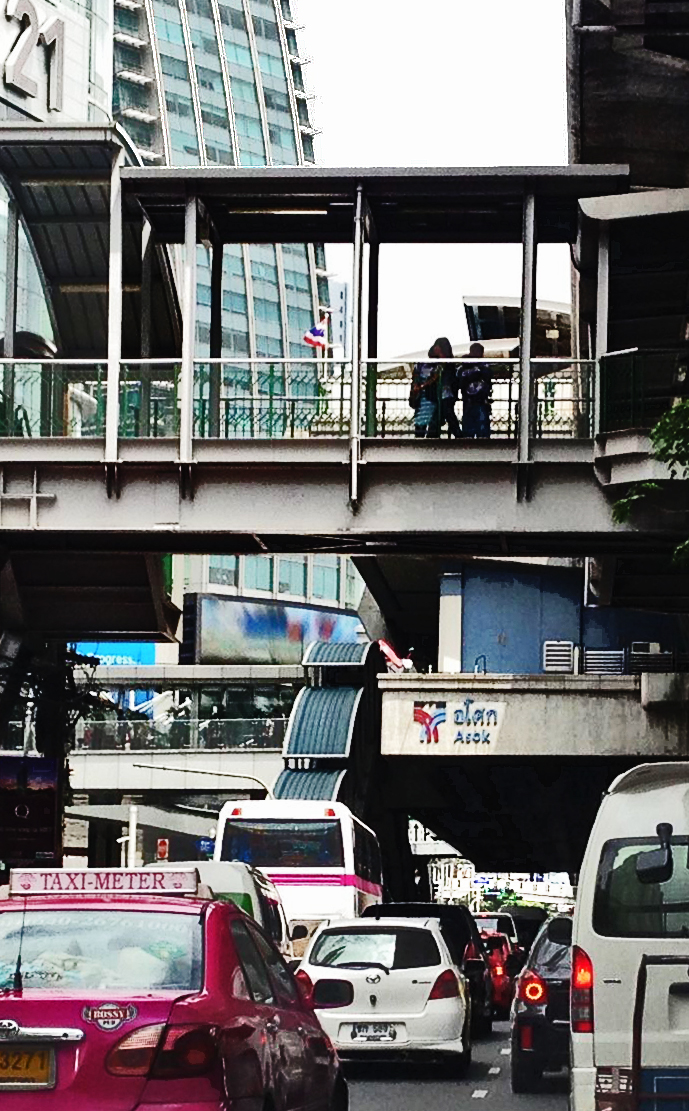
TaxiBKK2Bangkok: In a taxi on the expressway and it looks like the whole route is blocked with traffic but we are moving along slowly. A small voice is saying, we’d’ve been better off taking the ordinary route through streets with traffic lights and the congestion of that would’ve been quicker than this… yes, possibly, but hypothetical. And I’m not getting pulled into that scenario, thanks, no. Strangely, I feel no frustration sitting here. The taxi driver’s radio is playing; it’s a call-in chat dialogue with music.The mind isn’t absorbed into it, the sound is just there. It’s not loud, it’s not demanding; sometimes I notice it consciously then the mind moves on somewhere else. And, there’s that small voice again saying, wow! this could get really boring. But it’s not like that, it’s a neutrality maybe, there’s just this experience right now; the reality of being here. Nothing else to do, so obviously it’s okay to stay with what’s ‘here’ and see where that gets me.

One thing that helps is that there was this really nice post I read the other day [‘The Path of Waiting’] and I’m thinking of that now in this place where traffic is at a standstill, nearly. It’s the idea that we’re always waiting on something, somewhere, most of the time and it helps if you can be ‘willing to stand hand in hand with your waiting for a few moments.’ It was that, I think, that started me off in this mind direction of, let’s see what this waiting thing feels like. So now I’m hand in hand with my waiting and it feels nice.

The mind is clear, free and empty. There’s a careful observation and contemplation of everything that’s happening, it’s like being focussed on balance and openness – poised between things, in a sort of high altitude mind-place of emptiness. That’s all, and everything just seems to be slowly moving along here, the moment transforms itself and there’s this attitude of gentle curiosity, like what’s this now? I hear the small voice again; a shadowy question hovering on the periphery: how come I’m not frustrated by this endless traffic situation? Nope, it’s not necessary to go there; no desire to get pulled into that. It’s the wisdom of just mindfully placing one foot after the other on to stepping-stones that lead over the river to get to the other side. There’s something about the easy lightness of this that makes it obviously the right thing to do, and what else is there to do anyway? Not a lot, I look out the window and see the gridlock of slow-moving metal parts in this tremendous heat.

Amazing really because I’m not feeling the frustration of it. There have been times in the past when it would’ve resulted in a semi-suppressed raging inferno and getting engaged with it, or trying to get rid of it, would seem like the way to go. Getting rid of stuff always seems like the right thing to do; a kind of righteous feeling; got to clear up this mess, okay, let’s get on with it! But that hasn’t worked for me, experience has shown…. Long ago and far away, I remember the Ajahns telling me about this – well, I didn’t know what I was doing at that time – and the teaching was about how I was unintentionally holding on to some unpleasant mind state, even though I was sure that trying to get rid of it was the thing to do. The desire to get rid of, vibhava-tanha, is a desire, same as the desire to have something is a desire; they are the same. So the teaching is that trying to get-rid-of-it is like trying to get rid of the desire to get rid of it, and it doesn’t work like that – all I’d be doing is creating more suffering.

It’s fortunate for me that I’m seeing it like this today, I need to remember how it works. The problem is really with the resistance to frustration – so, relax the resistance, allow the frustration to come in. Know what it’s like when it’s present, know what it feels like (the holding on to it) when it’s there. Knowledge replaces ignorance, we are not deluded by it any more. So, I’m just moving along now; looks like the traffic flow is easing up a bit – getting there…

6388612-machomikemd

————————-

‘… in the context of the four noble truths, the origin of suffering (dukkha) is commonly explained as craving (tanha) conditioned by ignorance (avijja). This craving runs on three channels:

(1) Craving for sense-pleasures (kama-tanha): this is craving for sense objects which provide pleasant feeling, or craving for sensory pleasures.

(2) Craving to be (bhava-tanha): this is craving to be something, to unite with an experience. This includes craving to be solid and ongoing, to be a being that has a past and a future, and craving to prevail and dominate over others.

(3) Craving not to be (vibhava-tanha): this is craving to not experience the world, and to be nothing; a wish to be separated from painful feelings.’ [dukkha samudaya (wiki)]

Upper photo: collection of the author
Lower photo: Virtual Tourist/machomikemd

the who-I-am thing

BTS_Skytrain_over_Sala_Daeng_Intersection

Bangkok: Flying above street level and over the rooftops in the BTS Skytrain on elevated track, bright yellow seats, red holding straps and blue wall sections. Primary colours; diminutive, childlike and cute; it’s a toytown train. Brushed steel, shiny chrome and a smooth metallic click of wheel on rails, rushing through a landscape of blue sky over the city as far as the eye can see; billboards and upper storeys of town houses, moving past in the foreground, tall buildings of steel and glass standing like pillars in the background urban concrete environment. Here and there on the train, are TV monitors fixed at eye level with adverts running continuously so that we can enter into a world of consumer preferences: the Western model, East Asian style, adapted to fit Thai cultural attitudes to spending. Stories acted out by adults who look like children; cute ‘faces’, attractive personalities, ‘charm’. Products presented as if it were a game, makes it all seem acceptable; we don’t see the high-voltage sales strategy, cloaked in naïvity – a new society, a whole new generation of consumers – the corporate entity engaged in long term planning.

coke ad.ploenchitBKKI can get caught by it, drawn towards the TV screen, something I see in the advert triggers it, and the who-I-am thing arises: I LIKE THIS and it all gets to be really important, relevant, vivid and intense. I feel suddenly energised, compelled and, I WANT TO HAVE IT, ready to start discussing with sales staff at the retail point and proceed with the purchase; the plastic in my wallet, the samsara of advertising. For me, no worries, it will cease of its own accord if I can allow it to become nothing, and fortunately it’s all in a language I can switch off from so it fizzles out…

To become a person, I have to ‘believe’ in it – I have to consciously engage with it. To become me, I have to think ‘me’. The ‘me’ that I believe in depends on me thinking it. I am conditioned to be attached to my opinions, my emotionality, and the sense of self in all kinds of ways. I can manipulate the conditioned world so that, from this perspective of thinking, I see (my)self situated favourably – or it could be unfavourably if I’m caught in being the victim (but there is a way out). Everything arises due to causes and conditions, then thinking about it, excessively and often enough to have it embedded in the fabric of this self construct I recognise as ‘me,’ subject to its perceived whims and waywardness, as some kind of fictional character.

But there is a way out; an intelligent reflection on the human predicament; a proximity-to but distance-from situation: the Middle Way. The practice is about this simple truth: don’t mess with it, it won’t arise if I don’t think it into being. And I am my own boss, the nearest thing to God, as we know it, is viññāṇa, conscious awareness, self-sustaining; I don’t create it. There’s the body, sitting here in this yellow plastic seat, minding its own business, other than that, anatta, no personal essence or substance or core or soul given to me by the grace of (some external force); nothing added, nothing extra. The simplicity of this seems to immediately throw everything to do with ‘self’ into disarray; enough to cause it all to come tumbling down; a house of cards. And an artificial voice announcement gets my attention: Siam-interchange-station-doors-will-open-on-the-right-hand-side-of-the-train. I join the throng of passengers squeezing through the door and pouring out like liquid into the centre of the shopping mall heaven realm experience. There’s nothing wrong with personality, it’s the attachment to it that’s the problem…

————————-
Upper photo image: http://commons.wikimedia.org/wiki/File%3ABTS_Skytrain_over_Sala_Daeng_Intersection.jpg
Lower photo image: Coke ad Ploenchit, collection author

seemingly continuous

BtnBuddha2Chiang Mai: 05.00 hours. Darkness of early morning. I can hear a motorbike some way off, coming nearer, and voices talking loudly. They’re shouting to be heard over the sound of the engine. The motorbike passes below my balcony on the third floor, sound fills the room, and I realize it’s the driver with a friend on the back having a converstation as they are going along. Curious acoustics here in this narrow street; concrete and glass buildings face each other. The sound of the two voices disappears quickly past my windows and moves on further down the street, contained in the little capsule of their moving world. I hear it again, faintly now, and fading into the distance.

Strange dream-like event; receiving pieces of an animated conversation moving past me at 30 mph. Then it’s gone from my auditory awareness and (I assume) is being heard by other people further along the street. There’s something here about consciousness creating a sense of continuity; like how you string beads on a necklace and it appears to be one whole piece. A continuous stream of individual events taking place and, in the context of the body, it appears to be one, on-going connected reality – an illusion. When I wake up in the morning, it takes a moment, and everything is a development of the night before.

It must have been the motorbike that woke me up; windows wide open all night in the hot air, with just the mosquito mesh separating me from the world outside. Only 20 miles to go, straight up in the sky, before you reach outer space; no gravity, the universe (where did I read that?). Wow! outer space is so near, half an hour’s drive to get there, if there’s no traffic problem. So, what does that feel like? I suppose it feels pretty… precarious, balanced on the end of a flagpole fixed on top of a monument – the absolute verticality of it… quite scary. The only thing that gives me any sense of stability is the ‘self’ I’m inclined to depend on sometimes? No wonder there’s this tremendous attachment to it; can’t let it go, irretrievably lost in thought; I am contained in this body, stumbling around in this small area I inhabit, on the surface of the planet. I am a bit uncomfortable with the reality of what exists only 20 miles above my head. And go through life assuming that all there ever is, or all there ever can be, is ‘me’; the experience of a created self.

I hear a sound, and think: if that sound is out ‘there’ then I must be hearing it in ‘here’: the subject/object duality: ‘I’ am my body, I am my feelings, I am my consciousness and everything else (that’s not ‘me’) is out ‘there.’ In here, I’m me, I have a personality, it’s myself. And Bert0001 refers to it as: the ‘my’ in ‘myself.’ A distinct feeling of focus that disincludes other evidence – it’s all about me. Fortunately, I can understand and know that the idea of a self just seems to be there, seemingly continuous – a kind of mirage. Delete the ‘my’ from ‘myself’ and I’m free of all the tugs and pulls of likes and dislikes, emotions are not ‘my’ emotions, they’re just emotions; things that happen – liberated from the papañca, proliferating concepts, and concocted thought trying to make something real that’s just not real at all.

I’m glad to be awake early, leaving this place tomorrow and I’ll have to pack bags and get ready. Why can’t I just walk on to the plane not check in any bags at all, only passport, ticket and the contents of my pockets? Why bother with luggage? Ah… if only life were so simple.

Some time after this I hear the Tuk-kae lizard chuckling in a corner somewhere: tuk-kae-tuk-kae tuk-kae. And the Coucal, (whoop-whoop bird) (centropus sinensis) clambering around in the branches; whoop-whoop-whoop-whoop-whoop…

————————-

‘Just as a monkey moving through the forest or the woods holds on to a branch, lets it go and holds on to another; in the same way what we call viññāṇa (consciousness) arises as one thing and ceases as another, by day and by night.’ [SN.II.95]

References in this post: Sue Hamilton: ‘Identity and Experience’
Photo: Buddhist shrine in Bhutan, collection Khun Pornchai

applied knowing

tukt18Mar5‘Either you look at the universe as a very poor creation out of which no one can make anything, or you look at your own life and your own part in the universe as infinitely rich, full of inexhaustible interest, opening out into the infinite further possibilities for study and contemplation and interest and praise. Beyond all and in all is God.’ [Thomas Merton, from: ‘The Intimate Merton’]

Chiang Mai: Standing by the main road facing traffic going into town, looking for the small red bus songthaew /song-tae-oo/. I see one coming in the distance. This time of day there’s always one nearby. It’ll go anywhere you want, the driver will fit you in, depending on the itinerary of the passengers already on board – so the journey may take a different route every time. That’s how it works; 20 baht (US: 69 cents) for a ride to nearly anywhere. There’s no designated route, no schedule, the songthaew just comes along and it’s a bit like jumping into a flowing river, holding on to a lifebelt and somehow it gets you there. I see the indicator light flashing, the songthaew stops, I tell the (lady) driver where I’m going, she says ok. I climb up two steps and get into the vehicle. Low headroom, sit down on the bench, smile at the other passengers, and fall into the mind-state of being taken away.

The outside world rushes by, seen through the open rear door of the vehicle and side windows with no glass; warm air rushes through. The way it unfolds is the way it is and everything is integrated, including my perception of it. The ‘world’ is the metal structure of this small vehicle enclosing the space I’m in; contained in the greater space all around and permeating through. Moving with the traffic next to the canal, water fountains, huge ancient trees and the remains of a 700 year-old wall that encloses the old city in a square. Same ‘now’ as it was then; being in the present moment at that time is as it is now, seven hundred years further on; or just a few seconds later, more-or-less the same. Conscious experience appears like a series of screen shots, holding the movement for a moment and it stays like that, then it changes slightly and becomes something else. Difficult to say how or when it alters but I notice it has changed only afterwards – like, that’s different from what it was a moment ago, isn’t it? It must have happened and I didn’t see it. Present time transforms itself. Seven hundred years in the past, it wasn’t any different for the people who lived then, returning, as I do, to this same reference point every time and seeing the situation from the perspective of ‘self.’

songthaew2It’s not anything, the only reason it’s there is that I linger with the idea of it. I can enter knowingly; I can consciously apply ‘knowing’ to the ‘self’ construct, applied knowing (not the theoretical kind), and the knowingness clears away the habituality. Thoughts that just wander for no reason are brought to an end by knowing that this is what it comes down to. ‘Every time I close the door on Reality, it comes in through the window.’ [Ashleigh Brilliant] All that remains is the emptiness of the moment; the sound of the engine, the vibration and the pressure of the bench I’m sitting on. There’s skin, hair; there are arms, legs, a head and eyes, ears, nose and tongue. I am a sensory-receptive organism. Just the warm air in my face and things rushing by. There’s identity but it’s nothing other than what it is; the personality flutters like a piece of cloth in the wind; coloured plumage of a bird and a sense of immensity occupies the entire background.

————————-

 ‘Perception… can easily be seized on as having a self-reality or as one’s self. The average villager likes to say that when we fall asleep, something that he calls the soul departs from the body. The body is, then, like a log of wood, receiving no sensation by way of eye, ear, nose, tongue, or body. As soon as that something has returned to the body, awareness and wakefulness are restored. A great many people have this naive belief that consciousness is the self. But, as the Buddha taught, consciousness is not a self in this sense. Consciousness is simply sensation and memory, that is, knowing, and is bound to be present as long as the body continues to function normally. As soon as the bodily functions become disrupted, the thing we call consciousness changes or ceases to function. For this reason true Buddhists refuse to accept consciousness as a self, even though the average person does accept it as such, clinging to it as “myself.” Close examination along Buddhist lines reveals that quite the opposite is the case. Consciousness is nobody’s self at all. It is simply a result of natural processes and nothing more.’ [Ajahn Buddhadasa, ‘The Things We Cling To’]

Upper photo: Chiang Mai tuktuk, lower photo: Songthaew

a sense of release

Pindabat 07Chiang Mai: 06.30 hours, sitting on the cushion watching the breath and listening to the monks chanting, some distance away. Soon they will stop just below my window, it’s takbat, people offer food, and there’s a special chanting of thanks anumodana. Suddenly the sound fills the room, that particular pitch of human voice frequencies that brings with it a kind of physical sense, an awareness of the body, heat, air, fluids, and bone, the experiential aspect of simply being alive, here and now. It has a familiarity to it, a resonance in the air triggers consciousness of the chest, drum-like lung cavity, the heart organ and the lower abdomen, limbs extend out from the centre. The soft hot brain organ at the top of the body, cranial cavities behind the face, ear membranes. It’s a discovery to revisit this known experience of the living body. There’s life for a short time. Then there’s death, something every living being is deeply familiar with; a feeling that’s comforting and stable here that says, Yep, this is OK… it’s allright, it’s exactly as it should be. There is no death; there’s only the end of life.

Somebody I know died recently and I’m a bit caught up in it. The memory of that person is all there is; faded like an old sepia tint photo. Where ‘is’ he right now? Do I believe in the idea of a heaven? I don’t know. It’s not an idea; it’s real. I choose to think in terms of reality – not abstraction. The enigma… the empty space where that person used to be. Nothing there now, but that’s just how it seems to be; if it is just ‘nothing’, I’d need to have something else there to confirm it is nothing. So it’s ‘nothing’ in the sense that it’s not ‘something’, not anything? Language tends to identify things, I have to try to see past the concepts the mind creates: ‘nothing’ is more like a feeling of no-thingness. It’s accepting change, aniccan, an easing-away from the tendency to hold on, to adhere, to stick like glue. Releasing that heaviness that doesn’t have a name; welded metal, concrete, brick and iron embedded in stone, it all just fades away. ‘melted into thin air … the baseless fabric of this vision… we are such stuff as dreams are made on…’

Thinking about death is really thinking about life. It’s always an overwhelming wonderful moment; story with a happy ending, details accumulate and appear to have form and direction. But only when the end comes near does it have a context. There’s something about it that’s seen in hindsight. The route by which I arrived at this point becomes somehow … satisfactory, just right – it was the correct way to come here and everything seems to unfold from this place. A curious reversal happens and I’m on the route to getting here and at the same moment I’m looking back on how it happened and how everything happens like this. And time is ordered, in the sequence it is, simply because it would be too confusing if everything was happening at the same moment.

In the end what’s left is the conscious experience of just sitting here in this quiet room with morning coming in through the windows. The monks have gone; nothingness means ‘I’ no longer have the burden of ‘my’ thoughts about ‘me’. There’s something  very normal about it; I let it all in and let it go; a great sense of release, of peace, of rest, of ease and gentleness…

————————

Photo: Monks go to collect food in the morning, from the WPN collection