In-Between-Thing

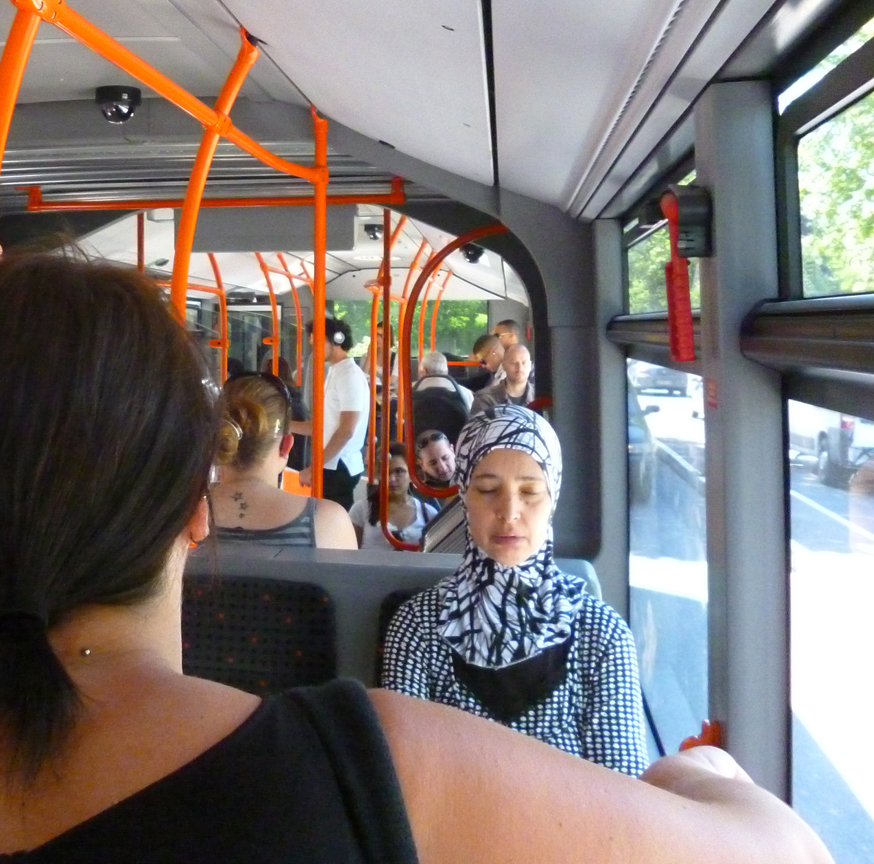
THE BUS IS ON IT’S WAY to a place on the edge of town. There’s an English class I agreed to do for a teacher who’s on holiday, so I’ve not been down this way before; just highway and the lake all along the left side, mile after mile of flat water. It’ll take 20 minutes; not many stops on this route, no interruptions so I can try to slow down everything in ‘mind’ and see how that goes. Focus on the breath, getting comfortable, sounds and movements all around and some memory suddenly presents itself, related to something I was thinking about earlier. It must have been one of those ‘in-between’ things – how did that happen? The mind finds the space between moments?

Then back to the rumble and noise of the bus and busy with the confused flow of thoughts, moving from one scenario to another, trying to get everything to quieten down. No good saying: I don’t want to have these thoughts, because the mind state of ‘not wanting’ causes me to become even more attached to the confusion and I cannot easily disengage from the activity. So, leave that be and look for that space between thoughts – find refuge in that quiet space – it’s the only way. And there it is, the space that’s absent of thought: the space-in-between.

So, the way out is to be found by looking for the space in between. It’s prepositional? Reminded of a line from Ajahn Munindo’s commentary on Dhammapada Verse 380: ‘… carefully feeling our way into, around, over and under, the many moments of obstruction, life teaches us how to let go….’ [NEW MOON – Wednesday 18th July 2012] On either side and all around is the ‘busy-ness’ of thought and outside is the bus speeding along. Depending on what’s going on, the focus can move through these items of thought like a bird flutters through a tree – and still I’m in the space-in-between.

The bus engine is in top gear and accelerating. There’s an irregular swaying and I can focus on that and see the inner landscape at the same time. Focus on one item of thought and at the same time there is sufficient focus on another item of thought to be able to see it’s possible to be focused on both at the same time. It moves and changes and there’s a bit more focus on one than the other but I am able to see awareness can be in two or more places at the same time or it’s an awareness of one item of thought that includes awareness of another.

There’s a curiosity about this because it helps in getting relief from pain. I can momentarily ease back from the thought of a painful, aching back muscle for example, thinking, if there’s awareness of the painful back muscle, there’s another awareness that knows this – what is this ‘other’ awareness? There’s that small in-between space again that allows me to consider this; I’m seeing it from somewhere else. The reaction to the pain may have caused me to stumble upon this secret; this space-in-between. I just didn’t know how to get to it before.

It means I can be engaged in some kind of attachment and at the same time be aware that it is happening. I have another location from which I can be focused and the thinking process surrounding that clinging scenario can be observed from that ‘other’ location. If it’s seen, the attachment is less demanding (or not demanding at all) and without anything to which it can adhere, it ceases to be – gradually it’s just not there anymore. This awareness can be applied to everything. It is possible to contemplate the state of the body and it is possible to contemplate the mind contemplating this. Given time and the right circumstances, the various characteristics of the constructed ‘self’ can be seen. And, beyond that, everything that led to this….

In the meantime, if it all gets swept away in the confused traffic of thought again, it’s reasonable to say, OK, time to be absent now and the space-in-between is always there. Bus is approaching my stop, I gather my things and get ready to get off.

————————-

[Image: detail from a photo by Louk Vreeswijk]

Success-Failure

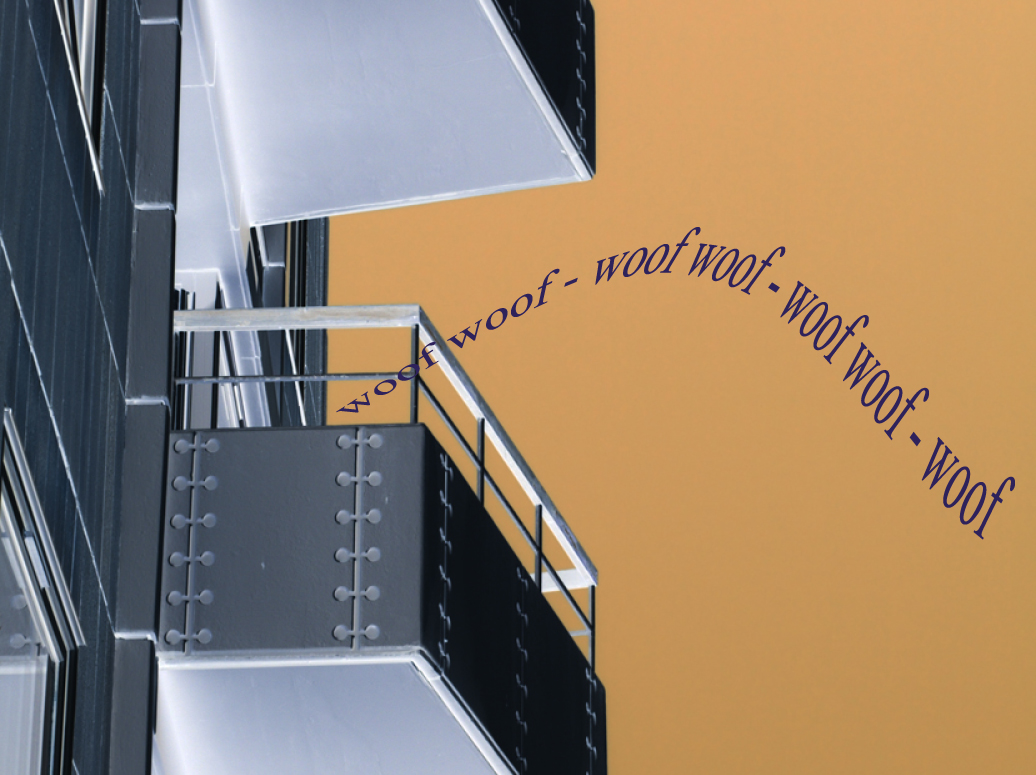
Switzerland: I’m on the DOWN escalator at Gare Cornavin leading to the underground shopping area, and up to where the bus stop is. Phone rings in my pocket. Hello? It’s Jiab calling from the house in Delhi. Reception is not good so when I reach the bottom, I change to the UP escalator and come back to street level. How’s things? In the background I can hear the neighbour’s dog barking: woof-woof, woof-woof, woof-woof, woof! [Link to: Mindfulness of Irritation] The familiarity of it … for a moment I’m there; the sense of ‘me’ from that time starts to  become the ‘me’ here 5,737 miles away (as the crow flies). Interaction with the feeling only serves to energise it. The ‘I’ wants to experience it again but that’s gone now. ‘Did you see the end of the Olympics?’ Jiab asks me. And I did but have to say that watching the Olympics hasn’t been a priority these last couple of weeks. So, if you asked me about who won which medal, I couldn’t tell you. ‘Hello?’ no signal… I go down the escalator to the bus stop, pulling my small case on wheels behind.

There is this sports enthusiast friend of mine who was coming round to watch the tennis on TV and I’d be sitting there reading a book in the TV room with him, not really involved in the game, then he’d suddenly BELLOW without warning. I’d jump out of my chair, and he’d apologise for giving me a fright; thrust into the euphoric awareness of the tennis court ‘moment’. It isn’t very ‘sporting’ of me but when I see the athletic events on TV, it’s more like an opportunity to practice non engagement; being ‘with’ it and not ‘in’ it than something I ‘enjoy’ watching. The fierce competiveness is a bit unnerving; winner gloats triumphantly and loser totally devastated – gladiators slaughtering their opponents in the arena, spectators wild with joy. And if we are cheering in excitement about our athlete winning the gold medal, the opposing side will be groaning in despair about their athlete losing; making a big thing out of our success encourages their failure. It works both ways, of course, we may be on the losing side as often as we’re on the winning side.

The number 3 bus arrives and I put my bag in the luggage section; no seat, hold on to the hand supports as the bus swings off. Holding on to what I like means that some things I dislike come along as well; two for the price of one. The feeling that I ‘like’ something will stay around for as long as I hold on to it. If it’s something I ‘dislike’, the aversion I feel towards it is an attachment I struggle to disengage from. It’s a form of holding and that means the ‘dislike’ tends to stay around as much as the ‘like’ does. In terms of the Buddhist experience, like-dislike are the same thing; I’m driven endlessly to seek what I like because I dread having only what I dislike – thus end up holding on tightly to both.

These are the Eight Worldly Dhammas: ’… four pairs of opposites – four things that we like and become attached to and four things that we don’t like and try to avoid [pleasure/pain, praise/criticism and blame, fame/disgrace, gain and getting what we want/losing what we have]. We might feel that somehow we should try to eradicate these feelings of pleasure and pain, loss and gain, praise and blame, fame and disgrace. A more practical approach would be to get to know them, see how they hook us, see how they color our perception of reality, see how they aren’t all that solid. Then the eight worldly dharmas become the means for growing wiser as well as kinder and more content.’ [Pema Chodron]

The dilemma of the ‘I’ experience caught in the Eight Worldly Dhammas is serious and traumatic in the context of violence, war and natural disasters. The Pakistan earthquake in 2005 where 3.3 million people became homeless and so many lives were lost is one example [Link to: Power Failure/ Comments/ Saadya]. Many people there were convinced about a sort of Sodom and Gomorrah type of retributional justice; it’s all our fault, etc. We are being blamed for ‘our’ actions in the past. An extreme reaction in an extraordinary situation. Samsara of distress, pain, fear and the sense that something is ‘wrong’. The human tendency is to contract into ‘self’ and the assumption arises that ‘I’ caused it to be ‘wrong’ – I am to ‘blame’. It troubles me to think that this may be quite a common reaction when people are faced with death. When there’s no knowledge or experience of how to be mindful and aware, the mind follows this route.

This guilt syndrome that happened during the Pakistan earthquake was/is another example of the habitual ‘self’ response, no more than that, when everything came back to normal, the intense urgency of thought simply evaporated. ‘Everything that arises passes away.’ At the time it’s happening, it’s difficult to see that. What can I do to abide in equanimity….

Bus arriving, get off at the stop, cross the road and well-behaved Swiss traffic actually stops at the pedestrian crossing to allow me to cross. I hesitate, Bangkok traffic has the right of way, then I remember it’s ok to cross. How nice! Up the hill to the apartment building, pulling my small case on wheels behind. Good to be back in the fresh air and chilly mountain winds.

————————-

‘External conditions don’t make you suffer, suffering arises from wrong understanding. Feelings of pleasure and pain, like and dislike, arise from sense-contact – you must catch them as they arise, not follow them, not giving rise to craving and attachment – which is in turn causing mental birth and becoming. If you hear people talking, it may stir you up, you think it destroys your calm, your meditation, but you hear a bird chirping and you don’t think anything of it, you just let it go as sound, not giving it any meaning or value.’ [Ajahn Chah]

‘more like this’

exit

Bruxelles Arrivals: Out of the aircraft and into the airport hallways, pulling the wheels behind, following signs pointing to immigration /douane. Overnight flight from Delhi, weary and dull. Dukkha is basically the sense that everything feels like it’s not as good as it could be and choosing, thus, to search for and be engaged in activities that will take the mind away from the discomfort (into the ‘happy’ zone) only perpetuates suffering. Endless searching is all there is: the human condition. Click the ‘search’ button, for no good reason, and receive millions of possible answers, filling up all the available space, replacing possible answers that were already there. And when it comes down to it, there is really only one possible answer: craving and attachment is what you’re searching for; samsara … ‘more like this’.

It’s difficult to see it in any other way right now, faced with great rivers of people pouring down long corridors on moving walkways. The whole world is in transit. I can see all the people, but they’re somehow not there. There’s only the information about them: itineraries, Arrivals point A – Departures point B, Gate numbers, passport numbers, visa details, security cameras, facial recognition software, vast amounts of figures and the support services that keep it all going – data on its own

Walking along the moving walkway at high speed; a foot keeps appearing out in front, down there on the floor: one at a time, left foot then right foot… pulling the wheels behind, heading for immigration /douane. Just moving along, mindful of body movements and associated events, let everything else go and there’s only the walking – other than that, try to focus on empty space.

Then mindfulness goes off, unnoticed; I’m distracted, wide-eyed and sleepless like a small nocturnal creature placed in TV studio lighting. Something occurs, and I enter into that seen event, a short scenario about something that happened before I got here. The mind considers that; why and what could that be? But there’s no reason for it; just one part of a great network of beginnings, middles and ends one has access to at any point in time, in any direction and it’s always leading back to the same thing; ‘me,’ just being me like this; ‘me,’ just being me like that ….

Then mindfulness cuts in, where’ve I been? and I’m back again, watching feet step out below me, walking down the moving walkway, pulling the wheels behind, pleased with the sense of movement and surprised to discover that without the wandering thoughts, there is just silence. There’s just a kind of physical awareness of body movements. And reminded of Ajahn Munindo’s talk  (Selling Samsara); about when he was here in Brussels airport some years ago, between flights and walking through the shopping area; mobile phones, handbags, perfume; just walking up and down to pass the time:

‘I’d done a few laps of the area when a lady, dressed in a blood red costume, comes out of a perfume shop and over to where I am, asks me what I’m doing. I tell her I’m a Buddhist monk just walking up and down and, ‘What are you doing?’ And she said, ‘Well, I’m selling Samsara, it’s a perfume.’ I say, ‘well, that’s interesting, do you know what Samsara means?’ She says, ‘No, tell me.’ I say ‘Samsara means: the endless cycle of deluded existence.’ ‘Oh, that’s wonderful!’ she says, and rushes inside the perfume shop. After a moment, she comes out with all the other ladies dressed in blood red costumes. ‘Tell them, tell them’, she says to me.’

Immigration, luggage belt and out of the airport into a taxi. I give the address, it’s a downtown area where Jiab’s younger brother, Nong T, has a shared aparment in a student area. Taxi glides out of the airport network, on to elevated highways and along wide roads, glass buildings, large yellow trams. Into the old town, narrow streets, North African eating places, bright colours, people everywhere, parked cars and look for the house number. Get out, ring the bell at the top of a small column of doorbells covered in paint and with names written in ballpoint pen held on with ancient scotchtape.

After a long time I can hear footsteps coming down. An image appears in the frosted glass panel of the door, it opens and Nong T is there. Hi, how was the flight and come on in. We start up the staircase which is so steep it’s like a stepladder where it spirals around at the corners and all the way up to the top. Lifting the luggage in front, step by step up and into a large studio type attic room with sloped roof ceiling and stove chimney pipe winding up to the top. Roof windows; quiet here, above the traffic noise.

Collapse on the sofa. The London Olympics on TV, last day. What else is on? I find a movie I think I’ve seen before, not sure, Dutch and French subtitles. I remember seeing the end of this. So I watch that for a while and when the adverts come on I switch to another channel to see if there’s something interesting there. Then switch back to where I was before, but find I’m somewhere else instead – how did that happen? So I return to where I was a moment ago and try to get orientated from there. But that seems different too, everything has moved on on time? Maybe I clicked the wrong thing. Go back, then forget completely how this started.

Then I’m wandering through animal programs, other movies, curious discussions in strange languages, news headlines with the same footage of Olympic events unfolding and, after that, the same thing backwards. Open the laptop, internet connection, go to google, key in ‘homelessness’, find an interesting post on the the homeless nature of thought [Link to: Thought is Homeless]. ‘… we, and our thoughts, are homeless because we are searching for a home that doesn’t exist…. when we let go of the mind that is constantly seeking to form attachments, when thought is comfortable in its homelessness, we can abide in the home of no-home.’ It expresses something very well that I’d not been able to focus on properly before. There’s all this constant restlessness that’s just going on. Let it go. No need to try to get it to stop, it’s just there, flowing like the river. There’s something comforting about this. Soon after that I take a shower and fall into deep sleep.

Long Journey Into Night

Delhi-Brussels flight: It’s been a long day’s journey into night, arriving in Brussels at dawn, get out of the plane and I’ll be on top of the world; the Northern Hemisphere. But before that, there’s the journey to get there. Yes, and that’s where I am right now, getting used to this seat that is contoured to fit the human body snugly, enough space for legs and knees with an inch of space from the seat in front – can see through the curtain into the business class, always the grass is greener…. I am one seated among many, perhaps 200 passengers, receiving services from the staff; a baby bird, beak wide open, feed me, please? Mind hungers to be stimulated by images, sound and pretty colours. It’s the movie – or the boredom of sitting in the dark. I choose the movie, kind of observing it, but not wearing the headset; just the silent visuals on the screens. It pulls me in; I feel I need to put the headset on to enter into the illusion more fully. And my hand reaches involuntarily towards the headset ear buds….

But it’s interesting enough without the sound. The structure of the movie is revealed. It’s a put-together thing, screen shots held for 5-10 seconds, a different camera angle presents a mini portrait of a talking head for a moment of drama; mouth moves in silence; face is there to be looked at, the hair style, the costume, fine dentistry, subtle cosmetics, the ‘mask’ – there’s a sense of how it is all so completely hollow.

Then another camera angle on another talking head, same thing again. Portraits of a created ‘self’. Pictures at an exhibition. Each portrait is an icon of the popular image: handsome, glamorous; the enigma of actor’s mask. There’s something about this that has no substance; ‘self’ masks the emptiness of no ‘self’. It hides nothing; nothing to hide, take the mask away and there’s nothing there, the void. Put the mask on again and it hides the gaping hole at the core of my being; nobody at home.

‘… each of us individually experiences this sense of unreality as the feeling that “something is wrong with me.” (We) pretend along with everyone else that “I’m okay; you’re okay.” A lot of social interaction is about reassuring each other and ourselves that we’re all really okay even though inside we feel somehow that we’re not.’ [David R. Loy]

A passenger howls like a dog, huge uninhibited yawns – deafened by the headset – immersed in his story; It’s like everything is layered in illusion, let’s pretend we are not here, somewhere in the air, well above the highest mountain peak, no oxygen to speak of…. Just this winged capsule, containing its own created environment and with sharp pointed nose, hurtling through space at 500 mph – as evidenced by the sound of displaced atmosphere shooshing and splooshing all around. And the subtle penetrating vibration beneath the feet. Gone is the reassuring sense of terra firma that was there back in Delhi about 3,000 miles in a sort of back-that-way direction.

There is also the mind-boggling thought that the plane drives itself, there’s no ‘self’ doing the driving. It’s the autopilot. The actual pilot is probably watching the movie, quite unconcerned about the fact that the plane is travelling at this immense speed and there’s nobody driving it? I am concerned, you could say: whelmed – not overwhelmed – there’s sufficient composure; I can see the scale of it and how that fits in with the way things are in our usual world down there on the surface of the planet. We generally avoid the emptiness in the centre of our being by holding on to something else we think will give us stability and security. Up here it’s more of a confrontation, we can’t avoid facing this emptiness all around, inside and out… there’s always the movie, of course and that holds the attention for a while. Then some other desire comes along and there’s always the response to that, and postponing the emptiness can go on indefinitely. In fact, accepting the emptiness is not the problem we make it out to be:

‘… the curious thing about (facing this) emptiness is that it’s not really a problem. The problem is that we think it’s a problem. Our ways of trying to escape it make it into a problem.’ …. Instead of experiencing a sense of lack, the emptiness becomes a place where there is now awareness of something other than, more than, my usual sense of self. I can never grasp that “more than,” I can never understand what it is – and I do not need to, because “I” am an expression of it.’

So, what is ‘it’, exactly? Buddhists call it Nibbana. Beyond that, there’s nothing here that my present state of consciousness can comprehend. To say it could be this or it could be that is speculative conjecture, and I’m caught again in grasping. Rather than contemplate what it could be, better to understand what it is not. Some time after that, I fall asleep, the passenger aircraft disappears in the dark night and the next day we are in Brussels.

————————-

‘Buddhism is a collection of paradoxes. Perhaps the greatest of these is all Buddhists are striving for a goal – Nibbana – that for the longest time they know virtually nothing about. Most people, Buddhists included, cannot bear living with uncertainty and so over the centuries attempts have been made to fill in the gaps left (deliberately) by the Buddha. Elaborate explanations and descriptions of Nibbana have been fashioned either to inspire or to placate this sense of dis-ease. The presentation by Venerable Payutto in Buddhadhamma keeps to the ‘bare bones’ approach delivered by the Buddha. The encouragement is not to try and reach Nibbana by intellectual acrobatics but rather by humble, sustained spiritual practice.’ [Link to: Buddhist Teachings]

Landing on Mars

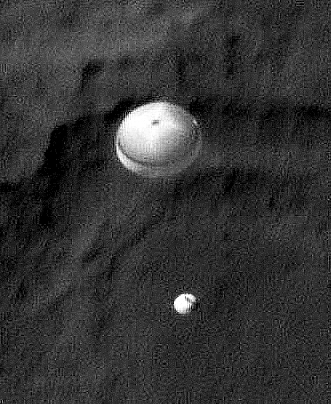
Curiosity landingThe Curiosity Rover landed on Mars. It’s an astounding thing and hard to believe but there are photos to prove that it is there. Conscious awareness goes off in search of this new location. It’s a basic human reaction: where is this place that wasn’t there before but it is now? A natural curiosity about it motivates me to find out. There’s an idea of something very distant, yet quite near; in terms of the Buddhist experience, it’s ‘here’ – the same space where we all ‘exist’. It’s somewhere in the known universe, in the sky, obviously, and the mind looks for a way to incline towards that place, move in that direction. I can see a part of the sky out there, through my window. So I go over and have a look: Mars is out there somewhere….

There’s a sense of distance, large empty space, and my focus reaches into this hugeness. It’s a bit like receiving an SMS from my sister in the Scottish Highlands, where she lives, up there in the cold mountains with a very faint network signal, and I read her SMS and think, what’s it like there, right now? Conscious awareness stretches out to that location and in a moment, I feel as if I’m there, then I’m back in physical reality, ‘here’ again: Delhi 30° Centigrade. I know she is there in Scotland and, for a moment, I was there too.

Another example is, I’m in Japan in the classroom and Jiab calls me on the phone: hello I’m in Helsinki! It takes a moment for me to figure it out. Where is that… ‘Helsinki?’ And all the Japanese students look at me, thinking: What’d he say, Helsinki? And I remember, oh yes, that’s in Finland … isn’t it? I’d no way of knowing she was going to be there – Jiab does this kind of thing. In the moment of recognition, consciousness flies away to what is known to be ‘Helsinki’ and flies back again. It may not have actually gone to Helsinki –  it is all ‘here’ anyway – but I’m left with the distinct sense of having travelled somewhere in consciousness. It feels like I’ve been away from where the mind normally resides and now the ‘world’ seems to be bigger than it was before.

In the same way, I know Mars is there – a very definite feeling that it’s there now, the proof is that the Curiosity Rover landed on that planet and is sending us photos, much like SMS messages sent by cell phone. Before I got the news about Curiosity, I’d no idea of that location; now I think I do.

It kind of supports an idea I’ve had for some time, about conscious awareness having the ability to (seem to) move in space, across some distance. A short while ago I was in Switzerland sitting on the cushion quietly in meditation and it seemed like it was possible to hold a picture in the mind; a view I was familiar with, from the apartment there on the seventh floor. So I did that, I focused on the picture I know so well: a group of trees on the horizon, maybe 5 or 10 miles away, and sometimes you can see these trees as clear as if they were miniatures on the windowsill. When a small patch of sunlight illuminates that distant place you can even see a shadow below the trees; and they become things of substance, solid; they have weight.

There it was, in the mind’s eye, a small group of trees in the distance, illuminated by the sunshine, all the tiny details of foliage and dark shadow cast on the green field below. It occurred to me then that eye-consciousness links with its object and if that object is 5 or 10 miles away, then eye-consciousness links with it in the same way it does with objects that are close. So eye-consciousness must, somehow, travel that distance to reach it’s object. It is puzzling but how could it not be like that? There’s an aspect of eye-consciousness that spans distance; eye-consciousness is transported as far as the eye can see. But, at any rate, it most certainly involves an attitude of ‘reaching out’ or ‘peering’, and trying to ‘see’ and in a similar way there’s this phenomenon of reaching out to a known location on the planet Mars.

In this meditational landscape I was viewing at that time in Switzerland, I started to contemplate this eye-consciousness transportation phenomenon simply as a possibility – a logical possibility – and suddenly the strangest thing happened. I was being rushed off, whisked away towards that horizon point I’d visualised! Just accelerating off at a tremendous speed and for it to continue happening like this, all I had to do was keep an open mind. It went on for as long as it held my attention and eventually, of course, something caused me to let go and it began to change. After that experience, I started to see how it’s possible to have extensions of consciousness in all kinds of quite ordinary ways.

So what I’m saying is, landing the Curiosity Rover on the planet Mars, is about scientific research but it’s also about how we can use consciousness to understand the scale of it. It’s the great space starting from my doorstep and out, all around and stretching into the infinite distance. All of that is simply ‘here’.

Skilful Avoidance

CORELcurvesA small town in South India: I was walking through a quiet part of town. Not much going on, turn a corner and there’s this mother hen fussing around agitatedly with her brood of little chicks all going ‘chee-eep, cheep, cheep.’ And the hen is making loud cluck-cluck, cluck-cluck noises and strutting around, strangely fast, unusual body movements, like a dance. It didn’t look right somehow, the mother hen was dashing about and jumping backwards and forewards and the little chicks were falling over themselves trying to keep up with her. I stopped to watch and thought, wow, what is going on here?

But mother hen had seen something ominous up there in the sky… and I was about to find out what it was. Suddenly there was what I can only describe as a huge SWOOP down from above. A large bird of prey with outstretched talons ‘dropped’ from sky to earth – must have been going at a tremendous speed – and in a great wide arc curved back upwards in the direction it had come. It needed space to do this and I saw it from further down the road sailing on upwards in the momentum of its fall, and up in this large curve, then winging it’s way back to the higher altitudes. Amazing. There was just this almost silent whoosh of feathers and outstretched talons – but it missed the chicks! It didn’t get what it was after, the mother hen had saved the chicks with her strange dance. She and her happy brood went on with their day. ‘Cheep, cheep’, story with happy ending.

I was so glad to have been there and experienced it because afterwards it really, really cheered me up. The Great Bird of Prey missed it’s dinner, but the whole thing was a fortunate turn of events; cute little chicks with their lives all laid out in front of them, And, the thing is, it helped me a lot with a problem I was having with a little part time job I’d started. Something backfired, no proper contract; a breach in the proper way of going about things. Next thing I was unemployed. Then, to make matters worse, there was this irate person in the office who’d gotten the idea it was all my fault and no hope of convincing her otherwise. So it was just a case of skilful avoidance, dodging angry remarks fired at me like heat-seeking missiles.

But the missiles were not hitting the intended target. I was untouched – not a hair on my head harmed, just like the little chicks that avoided the steel talons of the Great Bird of Prey. The mind would become transparent, a large empty space; nothing can hit it because there’s nothing there. I was able to see what was going on and yet be unaffected by it. The fierce eyes, the anger, the voice: the missile misses the target and all that’s felt is the wind of it as it goes by.

What I learned from Ajahn is related to the teaching: sati sampajanna, clear comprehension and from that, the power of ‘wholesome’ thought – wholesome reasoning, or quiet focus. It’s the ability to look at any situation and “see” what it means (really) with alertness – no illusions, no assumptions – and monitor that ‘seeing’ with just the right balance of effort. Having ‘seen’, it’s possible to know that it is ‘mind’ that is the threat and the threat can be diverted from its course by kamma of Right Intention. It’s understood in a moment and after that the system does it all by itself. The simple power of all that is wholesome and correct in the world is sufficient to shield against the attacks from mind (it’s not a mine field, it’s a mind field). When I think of it now, I can see the fixed hovering of the bird of prey, suspended in the air. When I’m not thinking about it, it’s not there. Some things are just like that.

‘Footfalls echo in the memory.

Down the passage which we did not take.

Towards the door we never opened.

Into the rose-garden…..’

(Burnt Norton, T.S. Eliot)

mindfulness of irritation

New Delhi: Around midnight, the neighbour’s dog starts barking. It’s done this before. I know where it is; standing out there on the second floor balcony, facing the tall trees in the park, where birds, squirrels, and small creatures are trying to sleep. Other dogs must be thinking: really! what’s all the fuss about? The dog barks (sounds more like a shouted ‘woof’) in multiples of 7 woofs: woof, woof – woof, woof – woof, woof – woof! Then it stops for a breath and starts on the next round of woofs: woof, woof – woof, etc. The only voice in the silence of the night. It’s a guard dog; it barks for a living, just doing its job. The problem is, it’s left alone most of the time in a house owned by people who don’t live there. They go away and the dog shouts out: I am here, I am here….

An irritating situation, ‘mind’ racing around in a panic, bordering on anger and outrage and I’m very conscious there’s nothing I can do about Dog; mindfulness is all there is. I need to try to be mindful, then doubt comes along: I’m trying to be mindful, but still feeling the irritation, so maybe I’m not doing it correctly? Why isn’t the mindfulness easing the suffering? Fortunately I find a short video of Ajahn Viradhammo talking on this subject. Ajahn V is saying that mindfulness is the capacity to know what irritation is. That’s different from being irritated. Being irritated means, ah, now you’ve got this barking dog, okay, so that’s bad, very bad; it shouldn’t be like this, no, etc. That’s not being mindful, that’s being irritated.

So, gratitude to Ajahn V, I managed to see the difference between ‘irritation’ and ‘mindfulness of irritation’. With mindfulness, I can make a choice: get irritated about Dog? or watch my breathing. I can choose to mindfully listen to the voice of the dog and use aspects of the experience to calm my mind

Dog usually goes on barking for about 20 minutes and then has a rest. Well, I suppose all that energetic barking must be quite tiring… yeh, well after it’s had its rest, it comes back to the balcony and gets into its next round of multiples of 7 woofs for another 20 minutes or until it chooses to stop and the night can drag on like this…. So, eventually I realise I have to get to know this dog voice; make friends with it. The ‘woofs’ are dog-shouts – I am over here now – large, breath-sized, full-lung-capacity, plosive, gusts of dog breath forced at velocity through vibrating vocal cords – a kind of dog song.

The woof  sound has a deep, rich bass quality, an acoustic resonance that suggests to the listener a spacious hollow chest cavity; definitely indicates size, a large creature. I’ve seen it up there on the balcony, a black Alsatian, but when it sees me, it goes into accelerated barking mode. Unfortunately, it seems to take a long time for Dog to wind down from this excited state of dog-shouts to the ordinary pace so I don’t allow that to occur. I don’t have eye contact with it.

As the night goes on, it becomes heavy and laboured; barking requires energy,  and there’s a noticeable tiredness or monotony about it – the dog is not spirited and happy, rather, it’s like it’s bored; why am I doing this? What’s the point? Motivation for barking at its best is beginning to slip. That’s when I’m inclined to start thinking it’s going to stop any minute but I’ve been caught in that wishful thinking state before and discover Dog has sufficient energy to go on for very much longer: woof, woof – woof, woof – woof, woof – woof!

So, necessity determines the right action, and that is mindfulness. Ajahn says there is the irritation, I feel it, but I don’t become the irritation. I now have some space around this thing called irritation; I see there is a choice. I’m not that irritation; I’m bigger than it. Mindfulness is bigger than that, I’ve met it, I know it, and I can make a choice because I’m not caught up into it. I’m not caught so I’m able to let go at last and fall into profound sleep, where I’m happily unaware if Dog is barking or not. Wake up next day and I’ve forgotten all about it.

……………………………….

‘The choices I make with thought, with intention with action with speech, they have a consequence. So if I just (tolerate the situation) in a state of frustration then that means a certain amount of stress is going to carry on into the next five minutes. And if I’m not mindful of that sort of stress and not able to say, well this is the way it is now, I will feel rotten or negative or unhappy and I never really awaken to the moment then each next moment is just driven by habit and I’m like a leaf in the wind…. The craft of the heart. Pottery, carpentry, knitting. A craft requires skill. We, as human beings can do skillful things, do our craft, get better at it. It’s the same with our minds. Our minds are not just hard-wired to be a certain way, they are flexible’ Ajahn Viradhammo [Link to video]


Power Failure

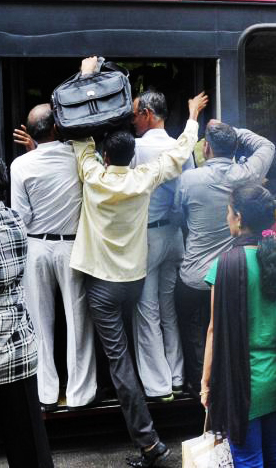
New Delhi: Power failure across 21 States of the North, East and North-East regions of India on Tuesday for about 10 hours. Trains came to a standstill, commuters squeezing onto overloaded buses (see photo). Newspapers say 300 million people were affected, half the country of India; it means something like the whole of Central Europe without electricity.

I didn’t know the full scale of this power failure until the next day. As far as I was concerned, I was the only one; it was just ‘me’ that was suffering; padding around in the house, barefoot, like a wet frog in T shirt and shorts, dripping little puddles of sweat on the floor. The AC went out straight away, that was at 2.30 am and there’s a back-up system in the house but it lasted only a few hours then the fans stopped, one by one. The last fan stopped spinning mid-morning and that was it, no alternative. Hot like this for an indefinite period.

So I open up to it and take stock of the situation: 30°C, not too bad, skin feels like the sticky side of scotch tape, could be worse. Struggling with the need to be mindful. When something like this happens, there’s a tendency to feel that it’s ‘wrong’, so wrong you can get caught up in a kind of imagined, collective guilt – that’s how seriously ‘wrong’ it feels. There’s a Pema Chodron quote about this: ‘People get into a heavy-duty sin and guilt trip, feeling that if things are going wrong, that means that they did something bad and they are being punished. That’s not the idea at all.’  The heat is bad enough but ‘mind’ makes it worse with all this, it’s ‘my’ fault, stuff.

‘Fault’ is a loaded word: it leads to ‘blame’ and this tenacity of the mind-lock around ‘my fault’ is so fierce it takes continuing mindfulness to keep mad thoughts from spiralling way out of control, problems proliferate and body discomfort equals ‘mind’ discomfort. Thinking, it shouldn’t be like this; ruminating over why the power outage occurred in the first place, and who’s to ‘blame’ and why and what’s really going on?

It’s not getting me anywhere, so there’s only one thing to do, open all doors and windows to maximum, get on to the cushion and try to settle the body/mind. Shirt sticking to back, takes some wriggling around to get it to unstick, then it’s better. There is the immediate advantage in that sitting absolutely still, even though you’re hot, doesn’t involve energy and doesn’t create body heat. The body just takes up the position; it’s getting the mind to settle that’s the problem.

Sweat dribbles down the face and at first it seems like there’s no air; the outside temperature feels like it’s the same as the temperature inside the body? Then there’s an awareness of tiny movements of air across the forehead and everything inclines towards this source of relief. The effect of deep breathing comes with the first conscious long inhalation, and it’s like there’s a great space opened up inside: all the distress is gone. For a moment, there’s awareness that the heat has dispersed. So, if it can just disappear like that, then I need to look at the conditions that caused it to happen. I’m naturally inclined to investigate this.

Ajahn Buddhadasa talks about learning from the experience of suffering: ‘If I see things in terms of suffering, I come to know the truth. It’s a natural process. The whole purpose of life is to find out what’s going on, to gain knowledge attained through clear insight….The simple fact that we exist means we are working with mind/body every day; what we learn about ‘self’ comes from the direct experience of being alive. To do this, there needs to be sufficient mindfulness to carry out a detailed investigation every time suffering arises in nama-rupa.’

There’s a distinct sense of ‘body’, just sitting there, patiently waiting for instructions, quite still and at ease. It’s an awareness of the mass of the physical body; the totality and volume/weight of all the internal systems – it feels kind of heavy or something like inert, comfortable just to be in that one position. Body acts as a measure, against which the hectic thought flow can be stabilized; the nama-rupa relationship.

After some time sitting, I realise it’s not a problem anymore. As soon as it becomes possible to ‘know’ ignorance, well-being follows and the knowledge that such a thing is possible motivates me to identify the cause of suffering. ‘Craving is completely destroyed because ignorance cannot be in that same moment when knowledge arises.’ [Link to: Ajahn Buddhadasa text]

The power came back on after about 10 hours and the house seemed like a different place, bathed in all the comfort of cool airflow from ACs.

————————-

[image link]

High Altitude Sunset

Bangkok-Delhi flight: A glance around the departure area at the gate for the Delhi flight, children running around. It’s a weekend flight; plane is going to be full of kids. Okay, ready for boarding, I have a gold card (frequent flyer) and can board early. It gives me time to get things stowed away and squeeze into my seat. Not a lot of room in economy class. I’m in an aisle seat. Keep shoulders in to avoid getting hit by people with large bags. The line moves along slowly and children are on the same eye level as me, seated in my aisle seat. They look at me – first close encounter with a blue-eyed foreigner, all part of the experience, the plane has their attention

“Crew at your stations,” we’re all set to go, one boy crying – boys cry more than girls, the voice is very loud; nothing is the way I want it to be right now so leave me alone and don’t bother me, okay? But we’re soon on the runway then takeoff, engine sound increases and as plane lifts off from the ground, all the children’s voices are combined in one small exclamation: WOOOOOO-OOH!… are we flying yet? Yes! And there’s a straining of necks to look out the window to see if it’s true, ground disappearing below. Jumping out of the seat belts, a stewardess raises her voice. After that everything quietens down.

And the various services start, the food and the drinks come and go; children running up and down the aisles chased by a parent, brought back to their seats and they run off again – it’s the game, playfulness. We’re in the Hindu world here, mostly, on this plane flying to India – thinking of the Hindu concept of a world created by Gods in play. This high altitude sunset glow going on and on, and I’m sitting there looking out the window at this eternal sunset, when the stewardess leans over and pulls down the shade: Plap!  Goodbye sunset. The opportunity to fully experience flying through time and the eternal sunset is not available right now; we have to watch the movie instead, okay? Yes, so that’s all right with me, no mustn’t have a tantrum about it, I’m not a kid anymore.

Some time later we land at Delhi airport, get out of the plane and set off on the long walk to immigration, children laughing, playing and running wildly along the miles of beautiful autumn-coloured carpeting.

……………………………….

‘Everything is impermanent. Nothing has a “self-being” of its own apart from its time. All of us are actually part of the same current. My sense of self is composed of habitual ways of thinking, feeling, acting, and reacting—all of them being temporal processes, different forms that time takes. If the flowing current includes everyone and everything, our normal understanding of time as something external to us is misleading. Often it’s convenient to distinguish things from their time, but that is the relative truth. According to the ultimate truth, things can’t really be distinguished from their temporality, and when they are nondual then time is really not different from eternity. The eternal present always stays the same—it’s always now!—even as it always changes.’ [David  R. Loy ‘Money Sex War Karma‘]

The Dhamma Moment

Listening to the Ajahn giving a Dhamma talk, listeners seated on the floor, the chanting; this is an event that goes all the way back to the time of the Buddha and it fills me with awe to consider that moment then is actually this moment now.  These days, I don’t have the chance to be present in the Dhamma hall very often and I listen to the Dhamma on audio files, CDs [link to: Forest Sangha download/ listen]. There are some talks on youtube and I was watching one recently about ‘non-self and reincarnation’. Something clicked for me there. It was an instant of insight but the video got stuck in buffering, unfortunately, and I had to wait. The long pause somehow intensified this quickening, but when the video resumed I found the immediacy had passed. I downloaded it later and studied it again but it was like holding on too tightly to something that’s gone.

If I’d had a transcript of the Dhamma talk to read while watching the video, I wouldn’t have lost the place. And anyway, listening to a talk is sometimes too fleeting for me, I usually try to make notes that I can refer to later. I’m interested in how to make an accurate simultaneous transcript of a Dhamma talk from an audio file using voice recognition software – can it be so finely tuned? I remember seeing musicians sitting in the audience at an orchestral performance listening to the music and reading the score (the musical notation sheet) at the same time. Listening, backed up with reading, is essential in any learning situation. There’s also writing and discussion. All of these are required in order to study the subject. Listening on its own is not enough.

I came across something in a webpage about how we listen to a speech given by a public speaker and in the first 20 minutes people can only remember about half of what was said. After that, recall drops off further. It may be that listening to a Dhamma talk is different from listening to ordinary talks because the words of the Dhamma are likely to have an impact greater than the normal functioning of the short-term memory. It goes directly into long-term memory – deeper in a state of knowing? I’m not sure about this but the problem is it’s not immediately ‘remembered’ unless you make notes and discuss with others about what they can recall.

For this reason, reading the Dhamma talk is possibly better than listening to it although doing both is best. When I read it, the pace of involvement is controlled; I can read,  make notes, then go off and do something else and come back later. I have the option of re-reading and even if it ends up that I don’t, just the possibility that I can do that has an effect upon my ongoing understanding of the text. It appeals more to a contemplative understanding that takes place over a longer period. This is partly because I’m used to the idea that a written text is a considered piece, it has been constructed in a different time; it may be written and rewritten in early drafts before reaching its finished state. Our reading attitude to a written text is conditioned by this kind of experience. It’s what we’re used to.

The transcript of a Dhamma talk is quite different. It has the appearance of a planned, structured piece of writing but it started off as a long utterance; a flow of words, without preparation, recorded and edited from an audio file. And it’s this quality that’s really quite special and uncommon in the world of publications today: the spontaneity of understanding, as it happens, written in words on the page. The reader experiences that heightened sense of meaning while reading parts of it, and it’s not due to a contrived technique in the use of words by the author or an editorial team of experts, it comes from the Ajahn, in the here-and-now. It is the Dhamma moment.

……………………………………..

[image: Luang Por Piak in Vimutti Monastery]