
 POSTCARD #229: New Delhi: The photo on the left is from our Thai social network, continuing sad imagery mourning the death of the King. The allegory of light in the darkness is significant in many countries in the world. Here in India at this time of year there’s the festival of Diwali – the date is calculated according to the position of the moon and the Hindu lunar calendar. This year (2016) Diwali occurs on 30 October, one day before Halloween on 31 October which would have had the same lunar date in ancient times.
The Diwali festival is observed by Hindus, Sikhs and Jains, celebrating the triumph of light over darkness, good over evil, knowledge over ignorance and hope over despair. In the days prior to the festival, it is traditional for business contracts to be completed, homes to be cleaned and anything unfinished must be brought to a satisfactory close.
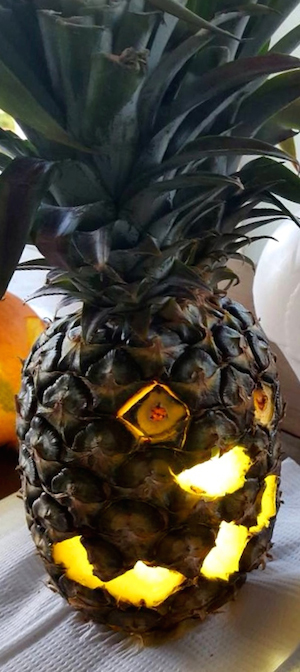
The Halloween festival in 21st century Western society marks this lunar event with a playful portrayal of the spirits of darkness and evil coming back to life. At a glance, it would seem to be the opposite of the Diwali festival. Halloween is about dressing up like the dead who wander the streets, knocking on doors and seeking hospitality from the living. Whereas, Diwali is about lighting up your home with candles, color and brightness, exchanging gifts, wearing new clothes and receiving guests.
In both cases, however there is this imagery of a light in the darkness. For the Halloween festival (Celtic Samhain), the dead emerge from darkness into the light and remain here for 24 hours then disappear, a time of great significance in pagan religions of the West. Similar mythology for Diwali surrounding Amāvāsyā, and the dark moon lunar phase, the period when the moon is invisible against the backdrop of the Sun in the sky.
Diwali and Halloween both take place on a ‘cross-quarter day’, the halfway point between a solstice and equinox – a time of seasonal change marked by the end of the harvest season and the beginning of the darker half of the year. For the ancients in both East and West, the invisible moon became part of a spiritual teaching; the unity of opposites, life and death, and why things are the way they are. Spirits were (are?) a tangible presence, benign or hostile, and gather at this time of year when food and drink are shared among the living and offered as a gesture of appeasement for the dead.
Here in New Delhi on Diwali night, people light up diyas (lamps and candles) inside and outside their home, and participate in family puja (prayers). There are also huge firework displays, which recall the celebrations believed to have taken place in the legend of Lord Rama and his wife Sita returning to their kingdom in northern India after defeating the demon king Ravanna in 15th century BC.
Significant also for all Thais, although Diwali is not celebrated there, this lunar event marks the passing away of the much loved monarch Bhumibol Adulyadej at the age of 88, the world’s longest-serving head of state and the longest-reigning monarch in Thai history, serving for 70 years, 126 days.
———————–

 dhamma footsteps
You must be logged in to post a comment.