
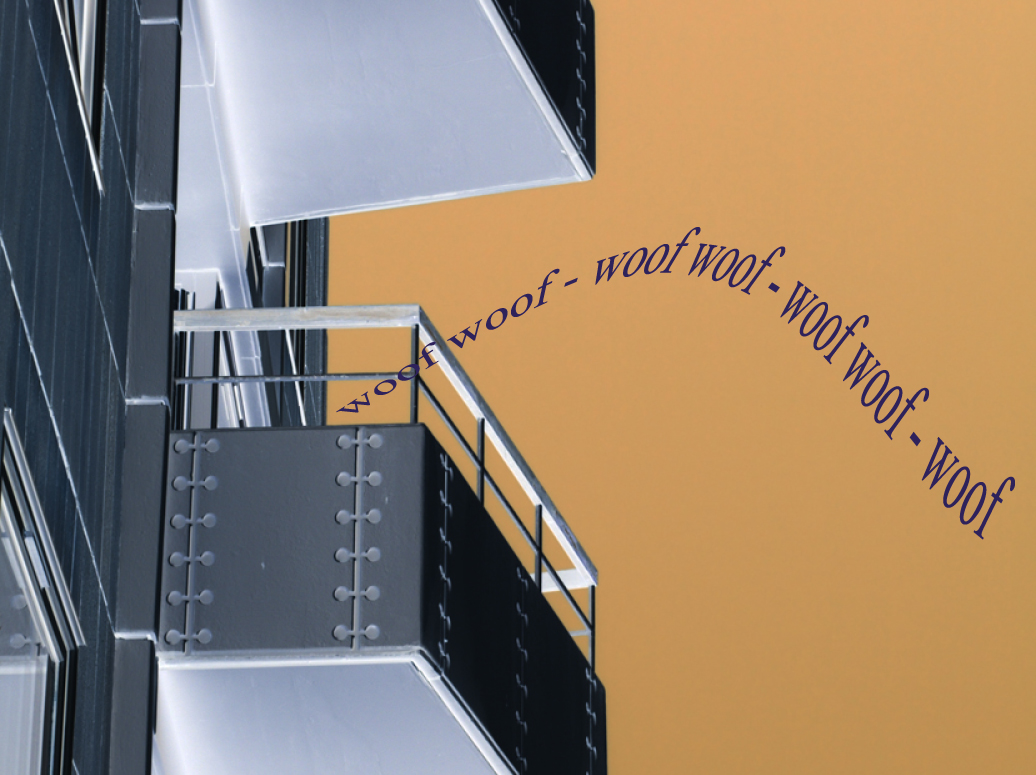
New Delhi: Around midnight, the neighbour’s dog starts barking. It’s done this before. I know where it is; standing out there on the second floor balcony, facing the tall trees in the park, where birds, squirrels, and small creatures are trying to sleep. Other dogs must be thinking: really! what’s all the fuss about? The dog barks (sounds more like a shouted ‘woof’) in multiples of 7 woofs: woof, woof – woof, woof – woof, woof – woof! Then it stops for a breath and starts on the next round of woofs: woof, woof – woof, etc. The only voice in the silence of the night. It’s a guard dog; it barks for a living, just doing its job. The problem is, it’s left alone most of the time in a house owned by people who don’t live there. They go away and the dog shouts out: I am here, I am here….
An irritating situation, ‘mind’ racing around in a panic, bordering on anger and outrage and I’m very conscious there’s nothing I can do about Dog; mindfulness is all there is. I need to try to be mindful, then doubt comes along: I’m trying to be mindful, but still feeling the irritation, so maybe I’m not doing it correctly? Why isn’t the mindfulness easing the suffering? Fortunately I find a short video of Ajahn Viradhammo talking on this subject. Ajahn V is saying that mindfulness is the capacity to know what irritation is. That’s different from being irritated. Being irritated means, ah, now you’ve got this barking dog, okay, so that’s bad, very bad; it shouldn’t be like this, no, etc. That’s not being mindful, that’s being irritated.
So, gratitude to Ajahn V, I managed to see the difference between ‘irritation’ and ‘mindfulness of irritation’. With mindfulness, I can make a choice: get irritated about Dog? or watch my breathing. I can choose to mindfully listen to the voice of the dog and use aspects of the experience to calm my mind
Dog usually goes on barking for about 20 minutes and then has a rest. Well, I suppose all that energetic barking must be quite tiring… yeh, well after it’s had its rest, it comes back to the balcony and gets into its next round of multiples of 7 woofs for another 20 minutes or until it chooses to stop and the night can drag on like this…. So, eventually I realise I have to get to know this dog voice; make friends with it. The ‘woofs’ are dog-shouts – I am over here now – large, breath-sized, full-lung-capacity, plosive, gusts of dog breath forced at velocity through vibrating vocal cords – a kind of dog song.
The woof sound has a deep, rich bass quality, an acoustic resonance that suggests to the listener a spacious hollow chest cavity; definitely indicates size, a large creature. I’ve seen it up there on the balcony, a black Alsatian, but when it sees me, it goes into accelerated barking mode. Unfortunately, it seems to take a long time for Dog to wind down from this excited state of dog-shouts to the ordinary pace so I don’t allow that to occur. I don’t have eye contact with it.
As the night goes on, it becomes heavy and laboured; barking requires energy, and there’s a noticeable tiredness or monotony about it – the dog is not spirited and happy, rather, it’s like it’s bored; why am I doing this? What’s the point? Motivation for barking at its best is beginning to slip. That’s when I’m inclined to start thinking it’s going to stop any minute but I’ve been caught in that wishful thinking state before and discover Dog has sufficient energy to go on for very much longer: woof, woof – woof, woof – woof, woof – woof!
So, necessity determines the right action, and that is mindfulness. Ajahn says there is the irritation, I feel it, but I don’t become the irritation. I now have some space around this thing called irritation; I see there is a choice. I’m not that irritation; I’m bigger than it. Mindfulness is bigger than that, I’ve met it, I know it, and I can make a choice because I’m not caught up into it. I’m not caught so I’m able to let go at last and fall into profound sleep, where I’m happily unaware if Dog is barking or not. Wake up next day and I’ve forgotten all about it.
……………………………….
‘The choices I make with thought, with intention with action with speech, they have a consequence. So if I just (tolerate the situation) in a state of frustration then that means a certain amount of stress is going to carry on into the next five minutes. And if I’m not mindful of that sort of stress and not able to say, well this is the way it is now, I will feel rotten or negative or unhappy and I never really awaken to the moment then each next moment is just driven by habit and I’m like a leaf in the wind…. The craft of the heart. Pottery, carpentry, knitting. A craft requires skill. We, as human beings can do skillful things, do our craft, get better at it. It’s the same with our minds. Our minds are not just hard-wired to be a certain way, they are flexible’ Ajahn Viradhammo [Link to video]



You must be logged in to post a comment.