
 POSTCARD#389: Bangkok: Somebody asked me if the headache was physical or mental, and it is difficult sometimes to say which is which, because the physical pain takes place in the same general area where mental or cognitive functions take place. Let’s say, it’s physical pain with associated mental events that are the origin of it sometimes; alarm signals that may bring my attention to some physical problem. Also, mental/cognitive activities in the form of discernment, investigate the best means of easing the discomfort. At the outset, I find it helps me travel through the pain if I can attribute it to the pain itself or to what extent it’s the pain I feel about having pain.
There are other situations, where I identify specific pain locations and relax the tightness. But these are all things I used to do at the beginning, finding my way around in a state of urgency. After five years of it, the actions have become automatic, I suppose. Or I don’t feel the pain as much as I did at the beginning when it was full catastrophe living, not the title of a book by Jon Kabat-Zinn, I was the escapee trying to disengage from the pain, but it would catch me again and again.
Remembering my lost non-pain state of mind, with a yearning for a world of impossible things, leads to nowhere (now here). There were some pain-free intervals created by nerve block treatment and pulsed radiofrequency procedures, lasting a few weeks only. Now there’s no motivation to continue with these neurological techniques because that non-pain state is long since dead and gone. Thinking about pain is pushed out of the way most of the time, there’s a particular focus of mind that just doesn’t go there. The meds sometimes give me a pain-free space – serotonin receptors and dopamine signaling, techno-speak, mumbo-jumbo… applause, and the curtains open on a short performance where the pain is almost not there at all.
Recently I bought a set of DIY tools and during these pain-free times I fixed a flat-screen TV on the wall and mounted a set of shelves in the kitchen. But it took me a very long time, due to actions carried out in slow motion and short term memory loss; forgetting what I was doing and having to go back and do things again (and again), and sitting down to think about it for long periods.
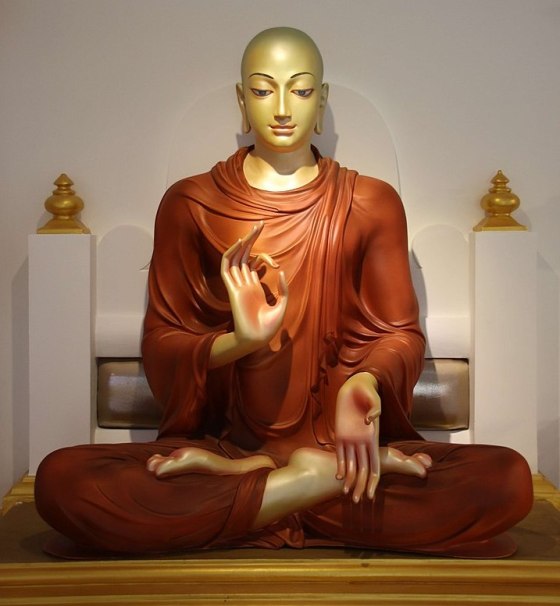
Despite these blank states and on-going projects I ponder over, what I’m aiming at is simply a heart-felt state of well-being and regular visitors here will know that many years ago, I learned the Buddhist steps that lead to the end of suffering. There was a deep familiarity about this, as if it were a genetic code built into consciousness just waiting to be discovered). [Gratitude to the monks in Thailand, Switzerland and the UK]
The First Noble Truth: Pain is caused by wanting it to not be there (in a manner of speaking). The Second Noble Truth is finding the way out of suffering means I let go of the craving that feeds it – seeing it is really caused by holding on to the longing for impossible things. Then looking more carefully into the Third Noble Truth; the realization I don’t have to remain stuck in an unsatisfactory state. There is a way out: the Fourth Noble Truth; the Path and getting to know what all this actually means.
I understood the headache as an entity with detachment, it goes without a self to whom it would otherwise cause suffering. Long before it comes to be a headache, when it’s just neural sparks and a kind of ‘jitterieness’, there’s a transparency about it – a ‘becoming’ but no one who ‘becomes’. There’s no become-ee; a headache but no ‘headache-ee’ – it doesn’t belong to ‘me’. There’s an awareness of the headache, but no awareness of to whom it is happening. This is how it is at the best of times, less satisfactory states are forgotten and lost to memory.
“..when you listen to a thought, you are aware not only of the thought but also of yourself as the witness of the thought. A new dimension of consciousness has come in. As you listen to the thought, you feel a conscious presence your deeper self behind or underneath the thought, as it were. The thought then loses its power over you and quickly subsides, because you are no longer energizing the mind through identification with it. This is the beginning of the end of involuntary and compulsive thinking.” [Eckhart Tolle]







 dhamma footsteps
You must be logged in to post a comment.