cold denial of winter in the north

200620131897POSTCARD #30 Delhi: Gone are the barefoot days of summer, the short-pants and silly Tshirt. It’s cold now. Ah, that warm memory; sunny weather and things that don’t matter. If I’m going around dressed like a clown, how can I take life seriously? It’s okay here except it gets hot like an oven for three months of the year, peak temperatures at 46°C and higher. Now, though, our world is sliding down slowly into the chilled foods section of the supermarket, colder and colder – still warm during the day, but cold at night. Temperature dropping and I’m struggling slightly with this shut-in feeling, like maybe I’m ill or something? There’s got to be some reason for this heaviness, burdened by the weight of clothing.

Dark grey skies in the morning seen from this old house, through these large single-glazed windows, loose fitting and drafty, high ceilings, marble tiled flooring and small electric heaters on wheels that run across the smooth surface. It’s good enough for rented accommodation, single storied; a large roof window in the middle of it where I set up my drawing board. Nice overhead light but when it’s raining the sound is deafening and in this cold weather it’s as cold inside as it is outside. I wear a scarf indoors, a wooly jumper, and pause to consider the novelty of socks… wiggle the toes.

IMG_0271Jiab is ok about it, she’s from Thailand where it’s blue sky every day and this dullness is quite interesting for her; comes over to me with her sleeve rolled up and holds out her arm for me to look at: ‘see?… it’s that thing again, what you call it?’ I say ‘goose bumps’ (supplier of English vocabulary), look closely and sure enough, the skin is reacting to the cold. Different though from my experience of childhood in 4° below zero in Scotland most of the winter; memories of a snow drift against the side of the outhouse, frozen until the springtime. I am the escapee. It’s so dark there, they use special lighting to treat Seasonal Affective Disorder (SAD), ‘winter depression’ and set up mirrors to reflect the sun: heliostat skylights. People are skilled in staying cheerful, shut inside small rooms for a third of the year, blazing coal fires in the hearth.

The gloomy ponderings of winter; the closed concept around things, setting boundaries around what is really open space. And it doesn’t have much meaning to the folk who live there if you say that nothing is permanent, all things arise in dependence upon multiple causes and conditions…. ah well, ho hum: one thing leads to another, is that it? Yes, well so what? There comes a time when it’s all been kind of said before and words run out.

I try to be alert, sensitive to what’s happening now… switch off the video in the head; be mindfully aware of the present. I want to deny the presence of winter, stay unattached and free, switch on all the lights in the house. It feels warmer and there’s a 300 watt halogen bulb in the standing lamp I can sit under to read a book and it feels like summertime, still…

‘… something like a level, a dimension, realm or sphere of truth, or a reality, things as they are. `The all-encompassing space’ (Trungpa Rinpoche), the element of space contains everything, contains all existence. This is the wisdom of the dharmadhatu. This word `wisdom’ means, perhaps, `gnosis’; it is knowledge which is nondualistic, knowledge which is completely one with the thing it knows, complete understanding, complete absorption into that knowledge…’ [Francesca Freemantle]

————————-

seeing with alertness

black-kite2

POSTCARD #29 Delhi: Large birds of prey slowly circling above; they make a sound like the mewing of cats. I’m on the roof terrace, watching them. They’ve seen something and I’m curious to see if I’ll witness the dramatic plunge to Earth to catch the prey. Reminds me of a time I was in Pondicherry, South India, walking through a quiet district in the French-speaking Tamil part of town. Not much going on, turn a corner and on the other side of the path there’s this mother hen fussing around agitatedly with her brood of little chicks: chee-eep, cheep, cheep, cheep, cheep. And the hen is making loud cluck-cluck, cluck-cluck noises, strutting around, strangely fast, unusual body movements; it was like a dance – didn’t look right somehow. The mother hen was dashing about and jumping backwards and forewards and the little chicks were falling over themselves trying to keep up with her. Wow, what is going on here? I stopped to watch.

Then suddenly there was this huge SWOOP down from above. A movement of the air and a large bird of prey with outstretched talons ‘falling’ from sky to earth in a great wide arc; at its widest point, so near to the ground, going at a tremendous speed. I saw it further down the road sailing back upwards in the momentum of its fall, and up in this large curve then winging it’s way back into the higher altitudes. Amazing… an almost silent whoosh of feathers and outstretched talons just in front of me. But it missed the target! It didn’t get what it was after, the mother hen had saved the chicks with her strange dance. And it’s possible that my being there, having just turned around the corner at exactly the right instant, had caused the bird of prey to misjudge the distance to its target; the kamma of the moment – a fortunate turn of events for these cute little chicks. Mother hen and her happy brood went on with their day: cheep, cheep, cheep, cheep, cheep… story with happy ending.

It really cheered me up – the feeling that everything is right in the world! It helped me a lot too with a problem I was having with an irate person in the office who’d gotten the idea that I was at fault concerning something I’ll not go into right now. Not easy but it only lasted a short time. She was wrong, and I was completely sure about that but there was no hope of convincing her; so it was just a case of dodging the angry remarks fired at me like heat-seeking missiles. The strange thing about this was, the missiles were not hitting the intended target. It was intense but I was not emotionally harmed. I was able to see what was going on and be one step removed – not unaffected by it of course – but the fierce eyes, the anger, the voice did not cause injury: the missile misses its aim and all that’s felt is the wind of it as it goes by.

So I was feeling a bit like the little chicks who escaped the sharp talons of the Great Bird of Prey. My mind was transparent, a large empty space; nothing there – no target. Just this freshness, clear comprehension, and seeing with alertness, yet detached from it, knowing it’s Mind that’s the real threat. It’s understood in a moment and after that the system does it by itself; it’s not a ‘mine field’, it’s a mind field. When I think of it now and see these birds of prey suspended in the air, they’re harmless. When I’m not thinking about the threat, it’s not there. The birds hold my attention, their patient observing …

‘Mindfulness is what keeps the perspective of appropriate attention in mind. Modern psychological research has shown that attention comes in discrete moments. You can be attentive to something for only a very short period of time and then you have to remind yourself, moment after moment, to return to it if you want to keep on being attentive. In other words, continuous attention—the type that can observe things over time—has to be stitched together from short intervals. This is what mindfulness is for. It keeps the object of your attention and the purpose of your attention in mind.’ [Thanissaro Bhikkhu, ‘Mindfulness Defined‘]

————————-

Note: The above was developed from an earlier post: Skilful Avoidance

a terrestrial ocean

D-NDcropPOSTCARD #24 Delhi: It’s colder here at this time of year. No fans, no ACs, people have their windows open and you can hear TVs, the clatter of dishes, cooking pots, ding, and bits of other people’s conversations. A child crying, a dog barks, somebody calling a person’s name in a language I can’t understand. It dwindles down as everyone settles in for the night, silent breathing in all the labyrinths of rooms and apartments that surround us here; people asleep on the floor, in beds, in cots, in hammocks. That’s how it was last night, then just after midnight, there was an earthquake.

Jiab wakes up, gives me a shake, ‘earthquake’ she says (Jiab is a linguistic minimalist). It takes me a moment to realize the house is trembling, bed is shaking, floor is like a sheet of tin stretching out from here to everywhere, connected with all other houses in the community… and the uneasy sensation of it undulating slightly; a flexibility, like the surface of the sea – a terrestrial ocean. Voices of neighbours outside, shouts and kerfuffle.

After a moment it settles down and the urgency passes. Trying to be mindful but I feel like I could go back to sleep maybe, just lying there, waiting to see what’ll happen. Then there’s another tremor, and we’re back into the unstable feeling again; louder shouts of voices, and more commotion outside… hmmm, the idea of death just going to arrive one day, anyday, could be a Tuesday, for example, or a Thursday, yes, nice if it were a Thursday.

Falling into a half sleep; there’s that Donovan song ‘Jersey Thursday’… did he mean the pullover or the island? Another tremor rocks the bed slightly and the gentleness of it helps me to drift off a little bit more. The day I die will be an ordinary day, nothing different about it. The moment after I’m gone the next moment will come along; that’ll take place, and there’ll be the next day, the next week, the next month, the next year.

No more holding on to ‘me’, the identity; who’s who or which is ‘what’ and ‘where’, ‘how’ and ‘when’ and ‘why’… particularly WHY? How to answer that? It’s M’s favourite question, she’s only 9 years old and has this curiosity about everything. Well, it’s just the way it is, you know? It’s all happening for it’s own sake, the inevitability of circumstances – things moving along of their own volition and whether they continue or discontinue doesn’t seem to be a question. (M looks at me: ‘… yes, but WHY?’) It’s like a story that I may think will, one day, come to an end… the final curtain: THE END, but it starts again and the period of ‘ending’ becomes a defining characteristic of it all: it ends sometimes and then it begins again. More like an epic anthology of short stories: ‘as old as we are able to imagine’ and going on forever, the panchatantra, the great cycle of it is always there. All the way out of this tiny space and knowing I’m an integral part of the whole universe.

It’s 4am, can’t sleep, get up and go through to the front room. Start up the laptop and google ‘earthquake’… amazing, the news is there already: ‘Four earthquakes (in Delhi) within a period of 4 hours, measuring 3.1 (12.41am), 3.3 (1.41 am), 2.5 (1.55am) and 2.8 (3.40am) on the Richter scale respectively. No reports of any casualty or destruction of property received so far.’ [reports: NDTV]

————————-

Upper image by Manish Jain spiritualartwork.wordpress.com

synonyms for startled

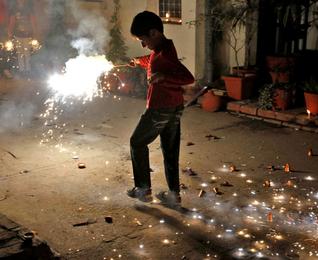
DE05_PAGE_1_DIW_DE_1642126ePOSTCARD #22: Delhi: “amazed, astonished, astounded, surprised…” looking for a word in the Thesaurus that describes the experience – but language doesn’t stretch that far. Diwali fireworks’ festivities are going on even though it’s after 22.00 hours and we’re just wondering how much longer before the fascination for fireworks fizzles out. I go for a look to see what’s going on outside. People in front of their houses, crouched over and busy with fireworks set up on the pavement; random explosions, fire crackers like machine-gun fire. It’s a war zone with no bullets, children laughing and running around in the smoke and glare. Fireworks displays are quite beautiful seen from some distance away, but here at ground-zero, the high volume, bang-whoosh-crackle is alarming; a struggle to be calm.

Back inside the house with all the windows closed because of the smoke and Jiab is talking about the Buddhist upekkha teaching: balance, equanimity, the state of being calm in the midst of difficulty; equilibrium, or eequeeleeblee-um, as she says – a Thai articulation. This kind of balance leads to freedom from passions, desires, likes or dislikes. Sounds nice and I go through to sit on the meditation cushion for a while to see if I can discover this balance, be with my reactions to the sudden noises and focus on the nature of what’s actually happening.

Watching the breath in this way, things seem to be getting quiet, and I’m just getting settled into this sitting meditation when suddenly there’s a colossal explosion, BOOM… so loud it sets off a car alarm down the street. The glass, brick and concrete of the room resonate like a huge drum. Startled, is not the word – it’s the nearest thing to jumping out of your skin I’ve ever experienced – automatic response. Confusion in time… what happened first? Was it before it happened that it seemed like I saw, in the darkness of mind-space, this amazing bright sky-blue colour appearing behind something like panels of intense black, falling away – parts of the structure that had been holding it contained – falling away in pieces, collapsing, and more and more of this lovely sky-blue colour is revealed.

Sivakasi_fireworks1The word: bardo comes to mind; the blue light of the skandha of consciousness in its purity, the wisdom of the dharmadhtu, luminous, clear, sharp and brilliant. I’m not saying this is what happened to me, it was more like a totally unfamiliar state, the mind doesn’t know what to do – what does it resemble, what’s it like, how can it be categorized? I’m amazed, astonished, astounded, surprised; looking for a word to describe it, but there’s not anything. Fireworks chase away the demons; papañca, proliferating thought, conceptualizing and the constructed ‘self’. The impact of it happening propels it all right out of here – bang!

 ‘… the Brahma-viharas are the great removers of tension, the great peace-makers in social conflict, and the great healers of wounds suffered in the struggle of existence. They level social barriers, build harmonious communities, awaken slumbering magnanimity long forgotten, revive joy and hope long abandoned, and promote human brotherhood against the forces of egotism. The Brahma-viharas are incompatible with a hating state of mind…” [Access to Insight]

————————-

Upper image link to newspaper reports: www.thehindu.com/more-fire-incidents-in-delhi-this-diwali
Lower image link to: Diwali wikipedia page

diwali: an inner light

DharmaPOSTCARD #21: Delhi: This year’s 5 day Diwali festival begins on Sunday 03 November. Diwali is about celebrating the awareness of the inner light; that which is beyond the physical body and mind – pure, infinite and eternal. The light of higher knowledge that dispels the ignorance masking one’s true nature, not as the body, but as the unchanging, infinite, immanent and transcendent reality. With this awakening comes compassion and the awareness of the oneness of all things. This ‘higher knowledge’ brings bliss, ananda. In the same way we celebrate the birth of a child – the birth of our physical being – Diwali is the celebration of this Inner Light. The story may vary from region to region, but the essence is the same – to rejoice in the Inner Light (Atman) or the underlying Reality of all things (Brahman).

The name Diwali, a contraction of deepavali (row of lamps), involves the lighting of small clay lamps which are placed outside the house and kept lit all through the night. It’s about the triumph of good over evil; there are fireworks to drive away evil spirits going off all through the night – not possible to get much sleep – any lingering old thoughts of attachment are blasted out of their dusty little corners. You can’t really pretend it’s not happening… it’s a social event, parties going on until late at night

KevalajnanaFor Jains, Diwali marks the attainment of moksha (nirvana) by Mahavira (a reformer of Jainism) in 527 BC. Interesting to note that the Buddha and Mahavira were contemporaries, and there’s an odd similarity between Mahavira and Buddha; google their names and you’ll get all kinds of info. Both were princes and renounced their kingdoms at the age of 30. Mahavira’s father’s name was Siddhartha (Buddha’s name), and both attained enlightenment. They both practiced extreme asceticism, but the Buddha went on from there to develop the Middle Way. Jains believe in a soul, but for Buddhists there is no self, no creator of the Universe, it has no beginning and no end. There are many other similarities and I’ll write a separate post about that one day.

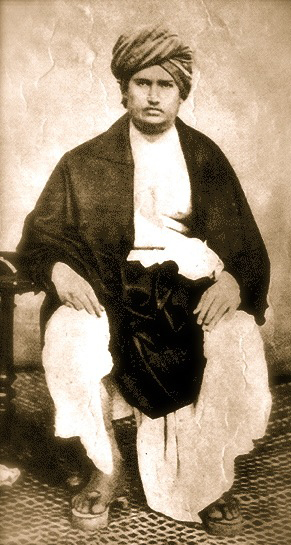
Dayananda_SaraswatiDiwali is also celebrated by the Arya Samajists as the death anniversary of Swami Dayanand Saraswati. They also celebrate this day as Shardiya Nav-Shasyeshti. Diwali begins on the thirteenth lunar day of Krishna paksha (dark fortnight) of the Hindu calendar month Ashwin and ends on Bhaubeej. The Indian business community begins the financial year on the first day of Diwali (Dhanteras). Diwali is an official holiday in India, Nepal, Sri Lanka, Myanmar, Mauritius, Guyana, Trinidad & Tobago, Suriname, Malaysia, Singapore and Fiji. Diwali was given official status by the United States Congress in 2007 by former president George W. Bush. Barack Obama became the first president to personally attend Diwali at the White House in 2009.

————————-

Note: this post was created with excerpts from the wikipedia page. Upper image by Manish Jain  spiritualartwork.wordpress.com. Middle image: illustration of Mahvira, a reformer of Jainism. Lower image: Swami Dayanand Saraswati

gone is gone

Nepalese Buddhists monks pray outside thPOSTCARD #20: Delhi: Suddenly awake at midnight, the mind is busy with something… seeking gratification in the realization that I don’t have to search for anything anymore – thus lost in the seeking for it. Trying to remember the dream from the parts of the jigsaw that are remaining. Maybe, as I’m looking for the lost pieces, I’ll see what the story was about – the logic of the dream… In every new circumstance, reassembling the parts of who I am, and nothing seems to fit; searching for a ‘self’ to be satisfied with what’s going on – or dissatisfied with how things are; or upset, or angry, confused, depressed, gloomy or sad

How did I get to be here? Arrived yesterday morning – flight from Chiang Mai to Bangkok, then another flight to Delhi; a cabin-pressured, air-conditioned day at 37,000 feet, cruising speed 600 mph; up and down again – twice. I’d been awake since 4am Thai time, fell asleep at 7.30pm in Delhi then woke again at midnight – the predicament of the dream, staring wide-eyed in the half-gloom of city night, deep purplish-black night-vision. Halloween season, all doors and windows shut to keep the ghosts out, enclosed in the concrete and steel of the present moment. Quiet, except for the refrigerator noise; hmmmmmmm… masking out frequencies. When it stops, I become deaf in the silence. Small random sounds… the bark of a dog:

Death is drawn to sound
like a slipper without a foot, a suit without its wearer,
comes to knock with a ring, stoneless and fingerless,
comes to shout without a mouth, a tongue, without a throat.
Nevertheless its footsteps sound and its clothes echo, hushed like a tree. [Death Alone by Pablo Neruda]

Listening to the whisperings of stealth; a small lizard is investigating the kitchen, the tiny clink of something against a plate, rustling in the small trash bin on the counter… I switch on a few lights and it’s gone. Start up the laptop, feel more comfortable with nocturnality, more at peace with the electric light of night, shadows and darkness. Draw all the curtains closed just before dawn, hermetically sealed. The day is an exhausting awakeness. I shall stay with the night, be a vampire; halloween and ghoulishness..

Deathlessness and the buddhist undead; mind hovering in a memory; the context of an event, somewhere between remembering what happened and wondering what could have happened after that – how it might have been and how the story unfolded from there. The thought exists in the mind, then it’s gone. Curiosity, where did it go? Carefully take everything apart to find out where that thought went… everything irredeemably dismantled. It’s gone. Gone is gone; when I’m gone, I’m gone and everything else will be going on. Just the same. Comforting, somehow, to shift the focus away from the confines of ‘me’ and out into the surroundings.

‘… we are only dust. Our days on earth are like grass; like wildflowers, we bloom and die. The wind blows, and we are gone – as though we had never been here.’ [Psalm 103, 14-16]

————————-

Reference to Psalm 103, 14-16: TheWannabeSaint.com  – G  R  A  T  I  T  U  D  E –
Upper image: remembering this time last year when we went on the tour of Buddhist holy sites [Photo Link]
This post inspired by a website I recently discovered: Buddhism for Vampires

a kind of analogy

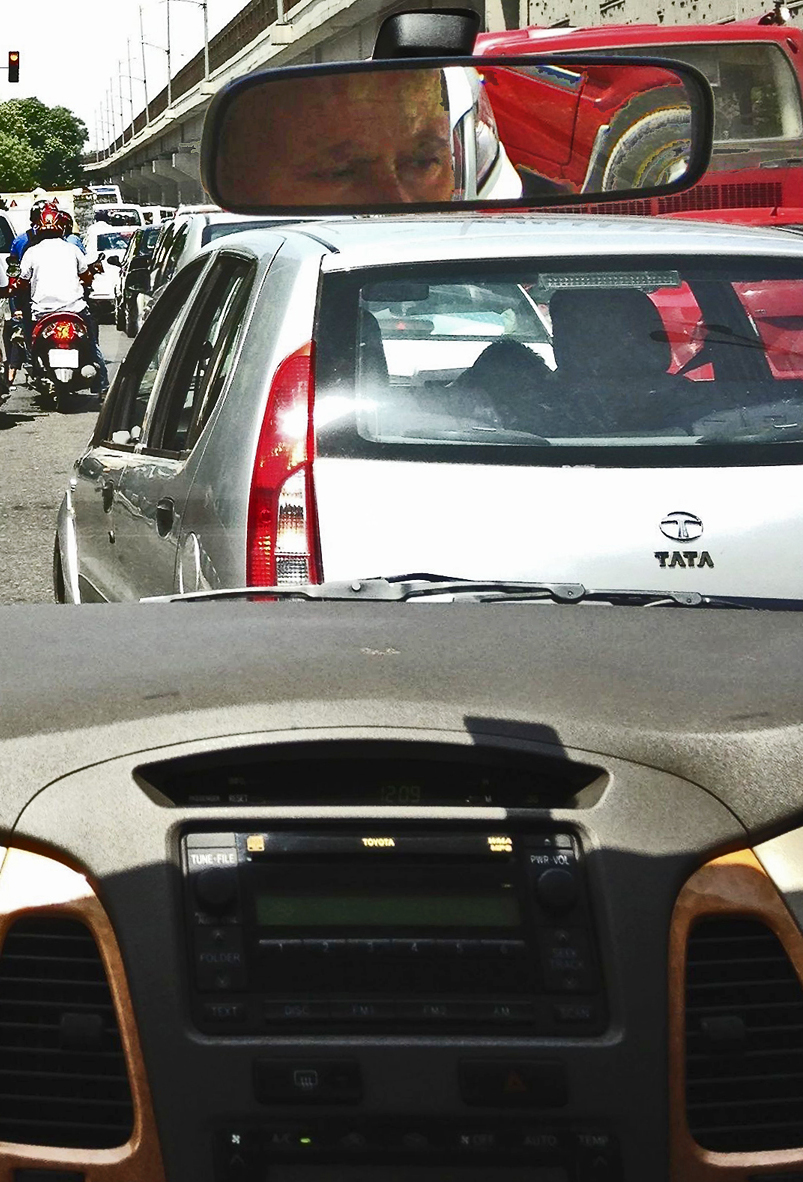
IMG_0114POSTCARD09: Delhi: The flight from Bangkok arrives at Delhi mid-morning. I’m identified, processed and out in the crowd. Shym is waiting with the car, bags inside and we’re in the huddle of traffic. Not so much give-and-take, more like push-and-shove. They’re opportunists; mindfulness is a necessity. Same old thing. Looking around, what’s different? An unusual brightness, it’s the lens implant, the operation on the left eye in Bangkok. I have to put up with this one-eyed vision only for a little longer. Next week I go back for the second op. All these flights are possible, fortunately, due to some free airmiles we have to use before the end of the year. And coming back to Delhi means I’m noticing the difference in vision here. So nice, much clearer now through the left eye, it looks… clean? What I thought was urban pollution, may have been obscured vision – or what I’m seeing now is an enhancement, a brightened-up version of everything. Close the left eye and look through the right; that’s how Delhi used to be, a dull, indistinct, old, yellowed photograph. Close the right eye and look through the left again and it’s like the Nat Geo channel, as clear as the iPhone5 retina display, 326 pixels per inch; using the techno-device metaphor to describe reality.

The world is a kind of analogy, a figure of speech, the conceptual metaphor. In my case the lens in one eye is plastic, not God-given – the same as having an artifical leg or a dental crown. Nothing special about it except that you walk around with an artificial leg, you chew with a dental crown but I’m seeing the world through this artificial lens. There’s a difference. The world is coming in, ‘seen’ through the plastic. The lens is a functioning part of the cognitive process.

Light passes through the lens, images appear, mind figures it out based on received experience of similar images, and says, there you go, what you see is like this. It resembles something I know, so I accept it, and that’s what it becomes. The metaphor pushes the whole thing over the edge; one thing becomes another. There’s that thing out there and ‘me’ in here, looking at it; so ‘I’ must be on the receiving end, somehow…. the link creates the metaphorical self; conscious experience ‘is’ individual identity: ‘I think, therefore I am.’

The assumption is that everything coming through the senses is real; sight, sound, smell, taste, touch, cognition – and it’s all coming to (((me))). That’s reality, that’s the point of the exercise. I like it, I want it, I want more of it, and so closing the door on other ways of seeing things. Saying this is how it is, means I get all the joy and pain, the good with the bad, love and hate, heaven and hell – thus I have to spend a major part of my life (maybe many lifetimes) trying to control this craving and desire [tanha] that I accidentally created, thinking I was doing the right thing.

“… craving the ensnarer that has flowed along, spread out, and caught hold, with which this world is smothered & enveloped like a tangled skein, a knotted ball of string, like matted rushes and reeds, and does not go beyond transmigration, beyond the planes of deprivation, woe, & bad destinations.” [Tanha Sutta]

What to do? How to not be a slave to it? Just the intention to be mindful is enough, the tipping point, sufficient to disengage from the automatic reaction. Not caught up in the experience of it, far enough back, one step removed, just knowing it’s there; that’s all. Knowing it takes the place of not knowing it. Step by step, learning how to do it….

————————–

‘… look upon the events occurring in your mind-and-body with the very same impartiality that you would look upon clouds floating through the sky, water rushing in a stream, rain cascading on a roof, or any other objects in your field of awareness.’ [Ken Wilbur, No Boundaries’]

Gratitude to Roger at One Garden for The Ken Wilbur quote above

forbearance

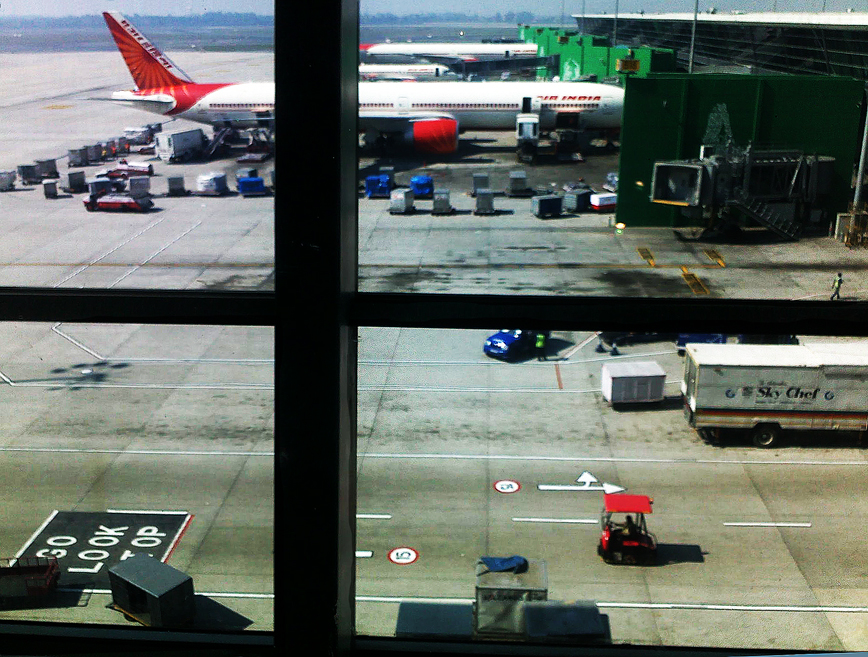
260620131912New Delhi: Moving through the streets to get on the highway to the airport; rough and bumpy, chunks of road surface missing. Demolition and construction, the urban environment is getting knocked down and rebuilt. We stop at an obstruction in the road caused by a large lorry unloading bricks, sand, cement and all I can see is the rear end of all these small vehicles standing together, jostling to get through… transportation of goods and services; bits of pipes and fittings, cables and plumbing items. Packages wrapped in plastic, held with bungee cords on the back of motorbikes; components, textiles, items boxed in packaging. A cycle rickshaw with a refrigerator on the back, and another one blocking the space with a large plywood panel tied on with rope at an awkward angle.

Drivers getting upset, the sound of horns, people walking around this blockage and through the traffic, carrying things on their heads, dragging children. Pavements are not for pedestrians, there are obstacles, tree roots, missing paving stones, sometimes no pavement at all; heaps of rubble, deep holes below where the drainage system is seen. The earth is beneath the streets, beneath the tarmac and the concrete and the clay, a substance created by erosion, geological conditions. The ‘developing world’ – no such thing as the ‘developed’ world. All of it is subject to change.

Up above, there’s a mass of overhead cables slung between high concrete posts, and a barefoot technician is up there on a bamboo ladder resting on the cables themselves, pushed out in a big stretch to accommodate the weight of him on the ladder. He’s threading another set of cables through, his partner below holding the ladder and traffic gets past them like the river flows around the stones in its path.

The infrastructure of the city is in the centre of my vision, not hidden. Everything that the environment is made of; all this is seen, the inside of it as well as the outside. Systems, processes, how things are done – evidence that the world itself is a constructed thing, put together, assembled, built. It has an unfinished look, bits of it are missing, removed, or not installed yet, or just left exposed; somebody took away the screws that hold the cover plate in place.

Things are unexpected, uncertain, everything is so much not what we think it is, there are no assumptions. The Western point of view that it ‘shouldn’t be’ like that – it ‘should be’ like this, is a concept imposed on a living organism, alive and moving. If I allow the organism to be as it is, I can disengage from the mind state where I think it’s something it’s not, and everything that’s currently bothering me about that disappears. I choose to be with the uncertainty of it, more and more; look at the dilemma of suffering without attaching to it; and challenge my tendency to see it in terms of a constructed self: anicca, dukkha, anatta – impermanence, suffering and no ‘self’.

Dl_departuresArrive at the airport, check in, and through to Departures, happy to be in these ‘normal’ surroundings …the flight for Bangkok is now ready for boarding… I’m just a visitor, on my way to somewhere else. It’s difficult for me to have the infrastructure poking through into the way I choose to see things, because usually I have negativity and unpleasantness hidden away. Since childhood, my belief has been based on affirmative statements: the act of creation and the idea of a heaven… only pretty words. The truth is that ‘heaven’ is a reality beyond description – language doesn’t go that far. This kind of childlike ‘heaven’ is a fiction, not real in the sense that I am in the real world; the nuts-and-bolts of conscious experience, the present state of affairs. This here-and-now reality is fundamentally the same as it was 2,600 years ago, in the time of the Buddha, here in India.

What I’m trying to do now is to resolve the issue of fearful uncertainty by accepting the fact that there is an underlying sense of suffering (1. dukkha) in life and I need to contemplate this feeling with forbearance, rather than run away from it all the time. The direction this contemplation takes is simply to find out what it is I’m doing that’s causing the suffering (2. tanha), and stop doing that. It’s about letting go of whatever it is that’s causing it and I notice when that happens, the suffering stops (3. nirodha). This insight suggests there is a possibility I can stop the suffering completely and I follow the guidelines (4. magga) that show me how to do this consciously, in daily life. [The Four Noble Truths]

Time to go now, hand over the boarding pass to the Thai staff, she separates it along the perforation and hands me back the tab with my seat number. Goodbye India! I’ll be back in two months. Laptop bag on shoulder, and off down the passageway to the aircraft…

————————-

–  G  R  A  T  I  T  U  D  E  –
The subject matter and title of this post indirectly inspired by: Forbearance by Norman Fischer http://standinginanopenfield.wordpress.com/2013/05/19/forbearance-by-norman-fischer/ Also mentioned in that site, a comment by Dominic724: ‘Without forbearance it’s just a pile of pretty words’. The ‘pretty words’ comment triggered a memory of the Joni Mitchell song titled: ‘The Last Time I Saw Richard’ (1970) and ‘pretty lies’ (When you gonna realize they’re only pretty lies …). Lower picture image: Delhi Airport Departures

the opportunity

200620131896_2New Delhi: I leave the door open that leads to the roof terrace and come downstairs. Ksum is in the kitchen, cleaning up. She says: You no close door up? Pointing, so that I can understand her English; large black eyes look at me; blue sari, olive skin, Assamese Buddhist, originally, converted by Christian missionaries. Then she’s smiling in a kind of patient way when I start to explain I’d like to have the door open, to get fresh air? Looking at me like, does she have the energy to tell me this? Ked come in. You know Ked? …raises her voice because maybe I’m deaf or something, Ked come in, you open door. And I’m thinking… what’s Ked? And there’s that incredulous look. You no unerstan’ Ked?  Ked come in door, come down stair, into house steal food from all th’ trash‘n make a mess everywhere! And then I understand Ked is ‘Cat’… pronunciation is different. She sees the dawning of recognition on my face. Ahh… she says on my behalf, and nods her head with a sideways slant, goes back to her work; like I need to be told everything. I go upstairs to close the door then decide to step out on the roof terrace where the air is cool and nice.

Wow, Ksum having a bad day. But she’s right about Ked, cat; instinct and the window of opportunity – or door, in this case. There’s also monkey, of course, and rat, and all the other freeloaders and opportunists out there in the world of Wild Life, claws, wings, beak and teeth, quick and clever; skills evolved from when they were all dinosaurs. The ability to grasp, snatch, hold and eat. Human beings similarly motivated, driven by desire. Reacting to the sensory world – sights, sounds, smells, tastes, touch, mental objects, and grabbing at these with extraordinary speed. The habituality of it inherited from former lives… the reason I was reborn in this world is that I’m attached to everything I love and hate. We keep coming back. It’s the relentless search to feel good about everything, and avoid feeling bad about everything when the good feeling falls apart.

Carrot-and-stick; the good feeling is nice when it’s there and the bad feeling is nice when it’s not there. The good feeling makes it seem like everything in the world is allright, joyful, a sense of success; it’s rewarding. And the bad feeling is the opposite; a strange sense of failure, guilt, and fear – I’m bounced off the wall and wanting the good feeling again with renewed hunger. Chasing my tail. Stuck in the duality of exchanging the bad feeling for the good feeling – something thought to be deservedly earned, a reward for time spent in bad feeling. Stuck in a rut on the consumer treadmill without any belief in anything beyond that. Seemingly there’s no choice, earning just enough money to pay for what it takes to make me feel good for a short time, then I’m feeling bad again. All I really want is some peace and calm but it seems to be so hard to find.

210620131902Loving kindness and compassion for those in Suffering. The system creates the predicament. Most people think there’s no way out, even though the opportunity is there. It’s like the example of being locked up in a prison cell for years. Then, one day somebody comes into the cell and gives you the key to the door, so you can open it and you’re free. But instead of doing that, if you’re a ‘believer’, you put the key in a special place and pray to it every day, believing you’ll be able to endure all the hardships of your prison cell by worshipping the key. You don’t know what to do, doubt, uncertainty, fear, confusion. Other people, ‘non-believers’, disagree with your worshipping; they say, we don’t believe in religion or anything, so they decide the best thing to do is just get rid of the key and throw it out the window.

The key is not an end in itself. Just a key; meditation practice, mindfulness, just the intention to be mindful is enough. Back off from the automatic pull; the sense of something out there that I’m drawn towards… and the internal sense of ‘me’. There’s nothing there, only the Five Khandas (Five Aggregates): form, feeling, perception, mental formations and consciousness. ‘… stopping the mind, stopping the flow of thoughts that are proliferating, stopping the flow of moods that get drawn into either attraction or aversion. We return to a clear center, to awareness’ [Ajahn Pasanno, ‘On Becoming and Stopping’]. No holding on to anything, no holding on to the teachings even. Learning how to use the key. Maybe it’ll take a lifetime, but what else is there to do that’s as valuable as this? Allowing everything to arise and fall away. Cessation. No remainder. Nothing whatsover is to be clung to: sabbe dhamma nalam abhinivesaya.

200620131891‘We use the pleasant and unpleasant feelings to measure our success or failure. If we experience something pleasant, we think we’ve succeeded. If we experience an unpleasant feeling, we think we’ve failed. This comes from a place of becoming, what we have become through bhava tanha or vibhava tanha. We judge it in terms of the desire to maximize the pleasant and minimize the unpleasant.’ [Ajahn Pasanno, ‘On Becoming and Stopping’]

————————-

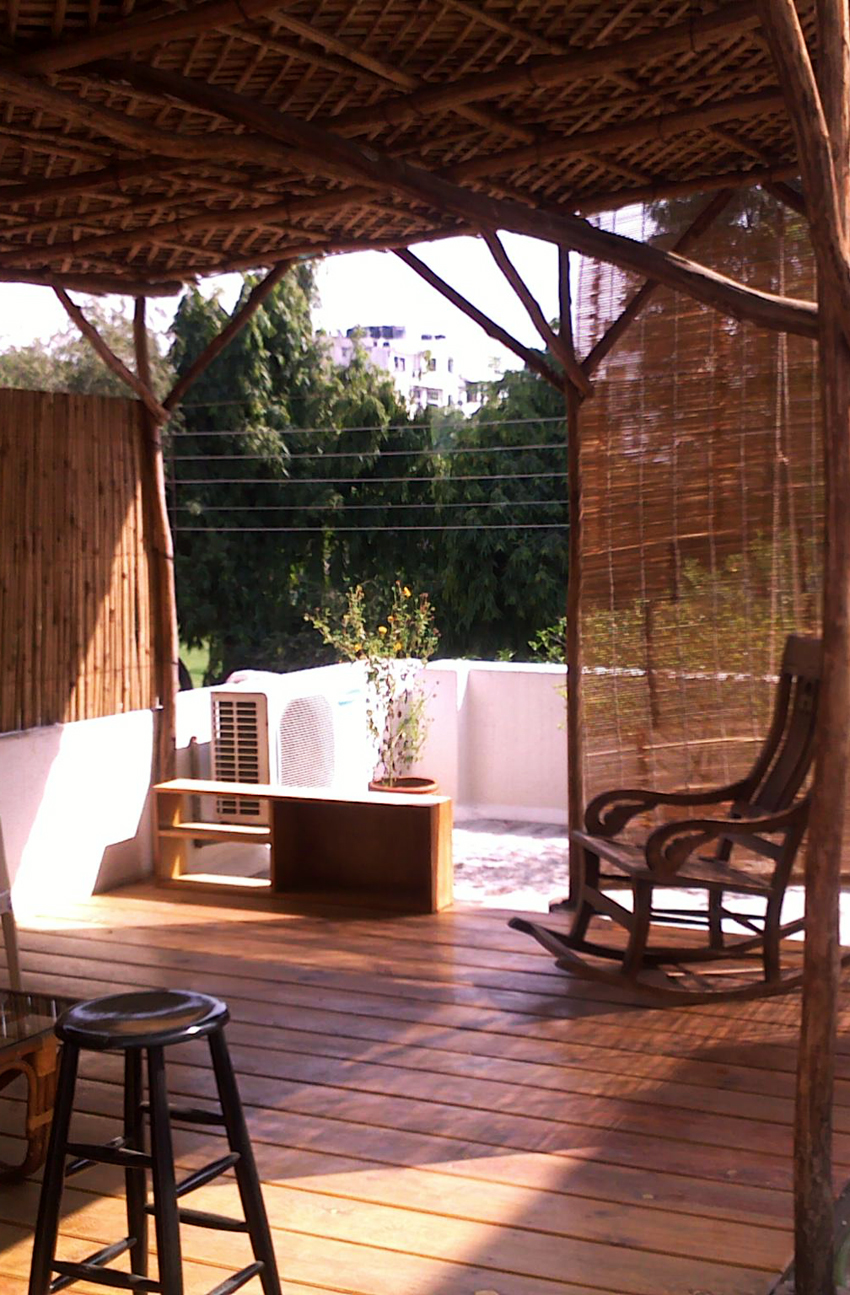
The story about the key comes from ‘Religious Conventions and Sila Practice’, Ajahn Sumedho, Cittaviveka 1992. Upper photo: the door to the roof terrace. Middle photo: sitting area on roof terrace. Lower photo: a plant called ‘Ladies Who Wake Up Late’ (flowers every day but late in the morning)

conflict & release

121120121567“Metta is non-discriminatory. It doesn’t mean liking one thing rather than another, it isn’t a question of singling out: “I love this person, I don’t love that one.” [Ajahn Sumedho, “Universal Loving Kindness” From Forest Sangha Newsletter, October 1997]

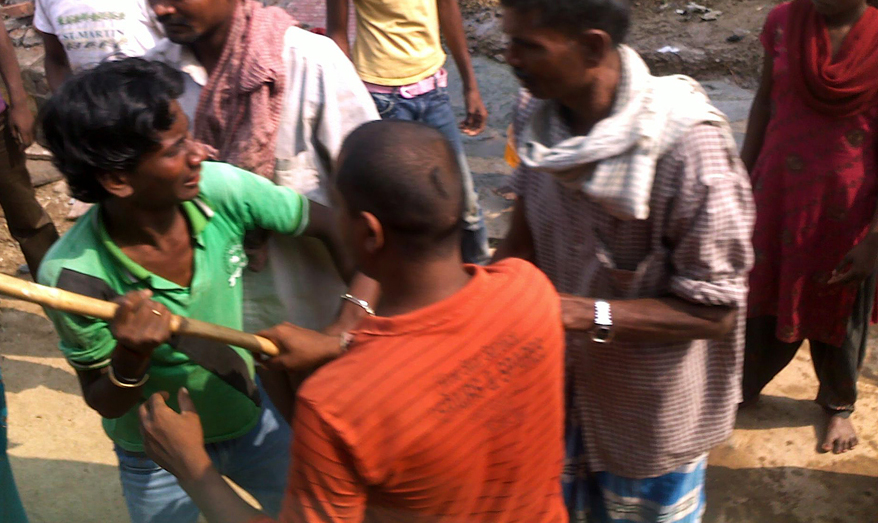
North India: The image here shows some kind of serious argument happening among a group of men, viewed from the window of a moving bus. I couldn’t actually see what was happening because other passengers were in the way, but I got the camera into a space near the window of the bus and took the picture, guesswork, thinking it’ll not come out clearly but it did – perfectly positioned in the centre of the frame. The man in the green shirt is trying to do something with that pole and the other guys are struggling with him violently. The bus pushed itself on through the crowd and the people made space for it. When we got up close, all I could see was the top of their heads and I took the photo without seeing where to point the camera…

The bus moved on and we were gone in a moment, accelerating along empty streets. I was amazed to see the photo after we’d moved away from the area. What to do with it? The tremendous intensity coming from the green-shirted man is scary – murderous feelings in the air. There’s another emotion too, he looks tearful, as if he might start to cry. It was an event I didn’t see, all I have is this picture of it. I could hear the explosions of angry voices, and the memory of it is still a bit scary, but it didn’t happen to me. If it hadn’t been for the camera lens, I’d not have seen it. As long as no effort is there to keep it going, conflict falls away. But we fuel the fires to keep the conflict going; our wars and war-mongering, allowing everyone the means to build up the tension, justified outrage, creating stories in the mind. We could just as easily allow it to fall away, but we’re drawn in, and it gets to a point when conflict is inevitable; this is always how it is.

Then Ajahn Vajiro was in town the other day and somebody asked him about what to do when you have to put up with some unreasonable, insensitive person giving you a hard time and you have to see this person on a daily basis. Ajahn spoke about the Brahma Viharas and later Suffering, the First Noble Truth and how the Buddha didn’t say he could eliminate suffering – he gave us the tools to escape the suffering. It led me to see that conflict is resolved if we can focus on the subjective nature of it, see our own anger, and see the anger the ‘bad guy’ has to cope with, and recognise it as exactly the same thing – what’s the difference?

The practice of meditation is the solution. Ajahn talked about getting to know the inner world; start from there, explore the universe from the inside. It’s not just about feelings of bliss and peace, that’s there too but it’s about the real world. Long term goals. Following this path, you get to know about suffering; you notice your own suffering, you have compassion and act towards others with compassion when you notice the suffering in your opponent. Apply wisdom – especially if your opponent is swinging a long pole, aimed at your head. See the angry person as someone who doesn’t understand his/her own suffering and recognise their difficulty – then get out of the way of the swinging pole!

It’s about the difference between ‘knowing’ and ignorance. Ignorance is the result of unskilful action. Non-ignorance (knowing) is about accepting limitations and doubt. It’s not a sure thing but it doesn’t have to be a serious drawback; having to cope with being not sure, uncertainty. Ajahn V described it as being at the edge of the known; doubt is nearly knowing what it is…. In a different context, uncertainty is what’s in the wrapped gift you’ve been given. You don’t know what’s inside until you open it….

————————-

“The metta – kindness – engendered in us encourages us to accept ourselves and others, and so to understand ourselves and others. Understanding implies wisdom. And this wisdom is that which allows us to find the way, to grow beyond, or let go of, that which limits and binds the heart. The kindness expressed to others allows them to accept themselves and others. This is an emotional, gut or heart acceptance that allows the acts of body, speech and mind that are a response to that which is perceived as `other’ to be kind; not motivated by not-liking, not motivated by aversion or fear. The effect is unlimited Metta is radiant and attractive, warming to those that are cold, cooling to those that are hot.” [Venerable Ajahn Vajiro – “Mature Emotions ” from the Forest Sangha Newsletter]