relinquishment

111120121545North India: Early morning light, people wrapped in shawls, long scarves bound around the head and tied under the chin. Dark faces, eyes looking out and they see me for an instant through the window – eye contact. I’m on a tourist bus, just passing through this small township, on the way to somewhere else. I think they see me as one of those who live in maya, not in the real world; living in a dream, and they might laugh to themselves; I’m naïve, dependent on support mechanisms that I pay for with an impossible wealth. It’s true; I’m in awe of them and, for me, their reality is unreachable. I don’t know anything about the actuality of their lives. My ongoing practice of  ‘self’ consciousness reflecting upon itself is maybe something that comes naturally to them.

Inside the dark interior of their houses, I see shadows moving in the dim light of old-style incandescent 25-watt bulbs in unsteady current, candles, oil lamps and small burning fires. Domestic items, pots and plates, carefully placed outside on the ground and I feel they should be inside. A pregnant woman glances at me for a momet with deep eyes and there’s something supernatural about it. I look away. The houses all look like they’re only partly built. Bare brick walls and there’s one incomplete upper floor, or some part of the house seemingly under construction. I ask the tour guide and she tells me it’s because you don’t have to pay tax if your house is still being built. These half-built houses are everywhere; a family living on the ground floor and upstairs bare brick walls reaching up like pillars with no roof, just the sky. There’s an underlying uneasiness about it all, it seems to me; inadequate shelter, no protection, and a fierce tenacity of holding on to life.

There are others in more hazardous circumstances, street people and those with no dwellings at all, the dispossessed. Beyond that the sadhus, bearded men with matted hair in yellow robes, white pigment smeared across the forehead, incense and candle-wax – hovering in a kind of other dimension – a living statement that all that is born, ends. It ceases. We die because we were born. That’s how it works. There’s birth and death in every moment. It’s so obvious, but I can’t see it.

I don’t want to see the cessation of anything; I want to hold on to what is good but it falls away to nothing and I start looking for something else to replace it. Chasing after things I want, and running away from other things I don’t want, creates the illusion that this is what life is about. I’m tossed around in the experience of having this, and rejecting that. And even the quiet space that just comes along by itself sometimes; the neutrality of neither this nor that – even in that place I’m dissatisfied. It’s a kind of nowhere thing.

I’m subject to praise and blame, pleasure and pain, fame and disrepute, gain and loss [Eight Worldly Dhammas]. All I can do is react or respond; and I cannot seem to see that everything that happens now is the result of something that happened at some earlier time when I was reacting or responding, just as I’m doing now: vipaka-kamma, resultant kamma. This is what comes of it. And it’s so obvious, all I have to do is allow the cessation to take place but I can’t see it.

Dukkha, suffering is looking for certainty in something that is, by its very nature, uncertain; running from one thing to the next, looking and looking, and pretending the uncertainty is not there. The Ajahns say, stay with it until you see the cessation. Everything comes to an end. This is what it actually is… the letting-go of it, giving it all away, relinquishment….

————————-

‘I am of the nature to age, I have not gone beyond aging; 
I am of the nature to sicken, I have not gone beyond sickness; 
I am of the nature to die, I have not gone beyond dying; 
All that is mine, beloved and pleasing, will become 
otherwise, will become separated from me.’ [From: The Five Subjects for Daily Recollection, Chanting Book]

Photo: From the Buddhist Sites Tour album

Listening 2

kalighat4New Delhi: [Link to: Listening 1] Sitting here, listening to sounds all around, far away and just on the edge of hearing. The process itself seems to select the sound – or the sound is selected (by some unseen process) and ‘I’ don’t have control over it. Kitchen noises, isolated clatter of plates: clink, rolling-around clunking sounds, as objects gently collide with the environment: bump, scrape; cupboard doors close, metal sink noises, cutlery makes high frequency sounds I can’t easily identify. Jiab is doing something in there. Some time later, she comes into the room with a tray and plates, maple syrup and banana: ‘Pancakes!’ she says, and I go to the table. Taste the pancakes. There’s a cognitive function which investigates the senses, different from the receptivity of the sense base āyatanāni; the gates through which the flow of sensory data enters. It’s like a security system which monitors events taking place and identifies objects from outside the body that enter inside by way of taste, tactile sense, mind sense, ear, eye and nose,.

Other sounds come into auditory range; there is recognition, they are registered, processed; memory updated. It happens in a tiny fraction of a second, so fast it feels like trying to find words for it now is in slow motion, another kind of temporality. Auditory events jump out of the background, enough to be perceived consciously rather than just being part of the general surroundings of mixed ‘noise’. The process selects one and it’s not there until I focus on it – or until the mechanisms of focussing are turned in that direction. I listen rather than just hear – see, rather than just watch. It’s the gate of awareness sati sampajañña, through which there is awareness of all the other senses and the sense of being aware itself. It’s an alertness, a presence, the eye that turns inwards – a consciousness of the sensory experience that’s superimposed on sensory consciousness. Cognitive functioning is a sensory organ – consciousness is a sensory organ.

There’s always a returning to look for the beginning of it, how did it start? I only know that at some point, before I was properly aware of it, the parts came together into some kind of recognizable whole and now a thought appears in a small window, the story of it unfolds and ‘I’ am immediately part of this. ‘I’ am involved in the story and the story is about ‘me’. When I leave the story and the window closes, I get a short glimpse of something that tells me there was a window there – and it’s not there anymore. There is no ‘I,’ it just looks like that because everything has the quality of being seen in hindsight.

The process is seemingly directed towards a ‘self’ but if there’s no input, there’s no ‘self.’ Sensory mechanisms are functioning without ‘my’ involvement anattā; they’re waiting for things to arrive because it’s in their nature to do that. All there is, is this alertness. Seeing, hearing, smelling, tasting, touching and cognitive functioning; all are receiving the universe and, since all are also a part of the universe, it’s an all-inclusive experiencing of the universe that’s receiving itself. Just a state of ‘listening’, like a radio telescope dish situated in the middle of a desert somewhere pointing at the sky.

1317385111831

everything that arises…

bgv2New Delhi: Flocks of chattering green parrots in the trees and birds of prey slowly circling around in the upper sky. I watch them from our place on the roof terrace. There’s a table, chairs, an extension cable for electric kettle and all kinds of plants in the sunshine; bougainvilleas and chrysanthemums. If you have ‘chrysanthemums’, why can’t you have ‘chrysanthedads?’ I ask Jiab who is reading the Matichon (Thai) newspaper with great scrutiny. But this doesn’t seem to be worthy of comment right now… and after a period of silence, I get busy with shifting these heavy flowerpots full of earth into a beam of sunlight. Much huffing and puffing, when I’m finished with that and sitting on my chair, looking at what I’ve done, Jiab says to me: ‘… happy now?’ And I suppose I am.

Happy, yes – except of course for that lingering sense that things are not right; not as I’d want them to be. But I’m happy enough, yes. Why? Because all these things that I think are not as good as they could be or should be (even worse); all these things are just there – then they’re not there, I’ve forgotten about them. That’s how it is, I’m not holding on to them. The dark cloud of unhappiness is not hanging over me today up here on the roof terrace with flowering plants in the sunshine. No, it’s a clear blue sky and I can see there is suffering dukkha in the world, yes, but that’s because we’re holding it there, unknowingly. Let it go and there’s no suffering – can it be as easy as that? Maybe it needs sustained effort, over a long period of time. But even so, that’s the idea of it. One can feel inspired, motivated knowing there is an end to it. And I suggest this possibility to Jiab, who now inclines towards me thinking maybe I seem to be making a more intelligent remark this time.

And we talk about that for a while. It’s always interesting for me to hear what she says because like most Thais she knows the Pali terms in the buddhasassana, having learned the chanting by heart in elementary school. Jiab is also fortunate because her Dad was a monk for a couple of years and was able to explain the dhamma to his children: that life is permeated with suffering caused by desire, that suffering ceases when desire ceases and that enlightenment obtained through sila, samadhi, panya (right conduct, meditation and wisdom) releases one from desire, suffering, and rebirth.

What it comes down to in the end, is the basic truth that everything that arises passes away and the Venerable Assaji statement: “Of things that proceed from a cause – their cause the Tathagata has told. And also their cessation — Thus teaches the Great Ascetic.” [Venerable Assaji answers the question of Śāriputra the Wanderer], and how Śāriputra was totally blown away by that and people were getting enlightened on the spot as a result of the Venerable Assaji statement. In this context I’m thinking it means if you can see and are aware of suffering caused by tanha, the attachment to things you love and hate, that’s all there is to it; you see it, you know it, ignorance is gone and no matter how much it is held or the tenacity of the habit to hold on, suffering will pass away of its own accord: “Whatever is subject to origination is also subject to cessation.” And there’s a sudden burst of noise from the green parrots in the trees opposite, so we go and take a look at what’s going on over there, but it’s not anything.

chrysanthemoms

Photos: bougainvilleas and chrysanthemums

things left undone

IMG_4170New Delhi: 05.00 hours. Jiab’s got a cold, she’s been coughing all night, I’m sitting in the front room, hunched over an electric fire, feeling the heat and staring at the glowing bars, I have to blink, even the surface of the eyeball feels hot. It triggers a childhood memory about sitting at the fireside during the long winters in Scotland. Not as cold here, I have to take Jiab to the doctor at 10.30. And considering now, Ajahn Chah’s expression: mai neh (Thai), ‘not sure’, uncertainty: and how, at this time of year in Scotland, ‘uncertainty’ means that if the heating should fail, we’ll all be in sub-zero conditions. Things are just that bit more vital in these circumstances, closer to the edge. Mindfulness is a requirement.

And it feels like I’m just filling in time here, pondering over some future event. It arrives in present time, finds I’m not here, still thinking about it in its future context, far away in a hypothetical state beyond the ‘now’ where all the other schemes, plans and things are left undone. I have a mind to put an end to this, abandon all of it. Half-formed entities without reality that I’ve cherished for years, give them their liberty, let them escape; knowingly release the attachment to all them. Let them go.

Light is coming up. There’s a curious bird perched on the branch outside the window, lively and alert. I’d like to go nearer to see it, but it’s too cold over there so I watch it from my place by the heater. At the point where the eye and the object meet, phassa, a conscious sensory event takes place; a moment of contact between the subjective state and the outer world. It mirrors a similar moment of cognition in the inner being. This basic truth holds my attention for a while and when I look again the bird has flown away.

————————-

PHOTO: CANDLE FLOATING ON THE RIVER GANGES

the thinking thing

hNew Delhi: It’s the middle of the night, it’s cold, I’m in bed and covered with a mountain of bedcovers. Can’t sleep, just lying here thinking about things in the darkness. All the stories of my life come and go, click the channel-changer and there’s another one. I remember this, yes… so, he said that… and I said this… and then what happened? Click the channel-changer again and I’m somewhere else. It’s the thinking thing, continually pondering over this and that and when I ask myself how to stop thinking the mind starts to look for a solution, drawing conclusions from known facts ad infinitum and I’m thinking again. It’s my Western cultural inheritance – separate from God, we are created by Him –  studying the ‘object’ and logical, applied, deductive reasoning. Here in the Eastern context it’s more like a gradually accumulating lake of inductive reasoning; the ‘whole’ is a pre-existing pattern composed of its parts. I can ‘feel’ my way into it and see where that takes me.

So I stop thinking. There’s an awareness of the cold air on my face, sensory response vedanā; the mind engaged with the other senses tuned to reception from the outer world like satellite dishes search for a signal. When there’s no thinking, there’s an empty space where the thoughts used to be. I’m aware of the desire to be actively thinking, I see the invitation to be engaged with thinking – same as other forms of ‘wanting’ and mindfulness kicks in. But it occurs to me this is the Buddha’s teaching about the origination of the world: ‘Dependent on the eye & forms there arises eye-consciousness. The meeting of the three is contact….’ (phassa) and I’m back into thinking again.

There’s something obvious about this, the mind is one of the six senses and functions like a receptor in the same way as the others do, except that it also has the purpose of ‘guarding’ the entry point; sense object activates the chain of events and mind has an intuitive, cognitive function; it is capable of discerning the object, like a security system. The exact nature of the cognitive mind holds my attention. I experience the absolutely empty space of no-thinking and either there’s not any sensory input the mind needs to be engaged with, or the apparent emptiness is caused by the mind’s awareness of being aware. There’s more of this empty space. Thoughts come in and go out again and the mind is watching the whole process. Sometimes I’m here as an observer, watching from behind the curtain. Other times the observer disappears, and it seems like only the mind itself is left there. That disappears too and in its place, a sequence of momentary mental events, each one linking with the next as if it were electronic activity. It’s like a small fireworks display, arising and falling away. Some time later sleep comes and the world disappears.

————————-

Long Journey Into Night

Delhi-Brussels flight: It’s been a long day’s journey into night, arriving in Brussels at dawn, get out of the plane and I’ll be on top of the world; the Northern Hemisphere. But before that, there’s the journey to get there. Yes, and that’s where I am right now, getting used to this seat that is contoured to fit the human body snugly, enough space for legs and knees with an inch of space from the seat in front – can see through the curtain into the business class, always the grass is greener…. I am one seated among many, perhaps 200 passengers, receiving services from the staff; a baby bird, beak wide open, feed me, please? Mind hungers to be stimulated by images, sound and pretty colours. It’s the movie – or the boredom of sitting in the dark. I choose the movie, kind of observing it, but not wearing the headset; just the silent visuals on the screens. It pulls me in; I feel I need to put the headset on to enter into the illusion more fully. And my hand reaches involuntarily towards the headset ear buds….

But it’s interesting enough without the sound. The structure of the movie is revealed. It’s a put-together thing, screen shots held for 5-10 seconds, a different camera angle presents a mini portrait of a talking head for a moment of drama; mouth moves in silence; face is there to be looked at, the hair style, the costume, fine dentistry, subtle cosmetics, the ‘mask’ – there’s a sense of how it is all so completely hollow.

Then another camera angle on another talking head, same thing again. Portraits of a created ‘self’. Pictures at an exhibition. Each portrait is an icon of the popular image: handsome, glamorous; the enigma of actor’s mask. There’s something about this that has no substance; ‘self’ masks the emptiness of no ‘self’. It hides nothing; nothing to hide, take the mask away and there’s nothing there, the void. Put the mask on again and it hides the gaping hole at the core of my being; nobody at home.

‘… each of us individually experiences this sense of unreality as the feeling that “something is wrong with me.” (We) pretend along with everyone else that “I’m okay; you’re okay.” A lot of social interaction is about reassuring each other and ourselves that we’re all really okay even though inside we feel somehow that we’re not.’ [David R. Loy]

A passenger howls like a dog, huge uninhibited yawns – deafened by the headset – immersed in his story; It’s like everything is layered in illusion, let’s pretend we are not here, somewhere in the air, well above the highest mountain peak, no oxygen to speak of…. Just this winged capsule, containing its own created environment and with sharp pointed nose, hurtling through space at 500 mph – as evidenced by the sound of displaced atmosphere shooshing and splooshing all around. And the subtle penetrating vibration beneath the feet. Gone is the reassuring sense of terra firma that was there back in Delhi about 3,000 miles in a sort of back-that-way direction.

There is also the mind-boggling thought that the plane drives itself, there’s no ‘self’ doing the driving. It’s the autopilot. The actual pilot is probably watching the movie, quite unconcerned about the fact that the plane is travelling at this immense speed and there’s nobody driving it? I am concerned, you could say: whelmed – not overwhelmed – there’s sufficient composure; I can see the scale of it and how that fits in with the way things are in our usual world down there on the surface of the planet. We generally avoid the emptiness in the centre of our being by holding on to something else we think will give us stability and security. Up here it’s more of a confrontation, we can’t avoid facing this emptiness all around, inside and out… there’s always the movie, of course and that holds the attention for a while. Then some other desire comes along and there’s always the response to that, and postponing the emptiness can go on indefinitely. In fact, accepting the emptiness is not the problem we make it out to be:

‘… the curious thing about (facing this) emptiness is that it’s not really a problem. The problem is that we think it’s a problem. Our ways of trying to escape it make it into a problem.’ …. Instead of experiencing a sense of lack, the emptiness becomes a place where there is now awareness of something other than, more than, my usual sense of self. I can never grasp that “more than,” I can never understand what it is – and I do not need to, because “I” am an expression of it.’

So, what is ‘it’, exactly? Buddhists call it Nibbana. Beyond that, there’s nothing here that my present state of consciousness can comprehend. To say it could be this or it could be that is speculative conjecture, and I’m caught again in grasping. Rather than contemplate what it could be, better to understand what it is not. Some time after that, I fall asleep, the passenger aircraft disappears in the dark night and the next day we are in Brussels.

————————-

‘Buddhism is a collection of paradoxes. Perhaps the greatest of these is all Buddhists are striving for a goal – Nibbana – that for the longest time they know virtually nothing about. Most people, Buddhists included, cannot bear living with uncertainty and so over the centuries attempts have been made to fill in the gaps left (deliberately) by the Buddha. Elaborate explanations and descriptions of Nibbana have been fashioned either to inspire or to placate this sense of dis-ease. The presentation by Venerable Payutto in Buddhadhamma keeps to the ‘bare bones’ approach delivered by the Buddha. The encouragement is not to try and reach Nibbana by intellectual acrobatics but rather by humble, sustained spiritual practice.’ [Link to: Buddhist Teachings]

Skilful Avoidance

CORELcurvesA small town in South India: I was walking through a quiet part of town. Not much going on, turn a corner and there’s this mother hen fussing around agitatedly with her brood of little chicks all going ‘chee-eep, cheep, cheep.’ And the hen is making loud cluck-cluck, cluck-cluck noises and strutting around, strangely fast, unusual body movements, like a dance. It didn’t look right somehow, the mother hen was dashing about and jumping backwards and forewards and the little chicks were falling over themselves trying to keep up with her. I stopped to watch and thought, wow, what is going on here?

But mother hen had seen something ominous up there in the sky… and I was about to find out what it was. Suddenly there was what I can only describe as a huge SWOOP down from above. A large bird of prey with outstretched talons ‘dropped’ from sky to earth – must have been going at a tremendous speed – and in a great wide arc curved back upwards in the direction it had come. It needed space to do this and I saw it from further down the road sailing on upwards in the momentum of its fall, and up in this large curve, then winging it’s way back to the higher altitudes. Amazing. There was just this almost silent whoosh of feathers and outstretched talons – but it missed the chicks! It didn’t get what it was after, the mother hen had saved the chicks with her strange dance. She and her happy brood went on with their day. ‘Cheep, cheep’, story with happy ending.

I was so glad to have been there and experienced it because afterwards it really, really cheered me up. The Great Bird of Prey missed it’s dinner, but the whole thing was a fortunate turn of events; cute little chicks with their lives all laid out in front of them, And, the thing is, it helped me a lot with a problem I was having with a little part time job I’d started. Something backfired, no proper contract; a breach in the proper way of going about things. Next thing I was unemployed. Then, to make matters worse, there was this irate person in the office who’d gotten the idea it was all my fault and no hope of convincing her otherwise. So it was just a case of skilful avoidance, dodging angry remarks fired at me like heat-seeking missiles.

But the missiles were not hitting the intended target. I was untouched – not a hair on my head harmed, just like the little chicks that avoided the steel talons of the Great Bird of Prey. The mind would become transparent, a large empty space; nothing can hit it because there’s nothing there. I was able to see what was going on and yet be unaffected by it. The fierce eyes, the anger, the voice: the missile misses the target and all that’s felt is the wind of it as it goes by.

What I learned from Ajahn is related to the teaching: sati sampajanna, clear comprehension and from that, the power of ‘wholesome’ thought – wholesome reasoning, or quiet focus. It’s the ability to look at any situation and “see” what it means (really) with alertness – no illusions, no assumptions – and monitor that ‘seeing’ with just the right balance of effort. Having ‘seen’, it’s possible to know that it is ‘mind’ that is the threat and the threat can be diverted from its course by kamma of Right Intention. It’s understood in a moment and after that the system does it all by itself. The simple power of all that is wholesome and correct in the world is sufficient to shield against the attacks from mind (it’s not a mine field, it’s a mind field). When I think of it now, I can see the fixed hovering of the bird of prey, suspended in the air. When I’m not thinking about it, it’s not there. Some things are just like that.

‘Footfalls echo in the memory.

Down the passage which we did not take.

Towards the door we never opened.

Into the rose-garden…..’

(Burnt Norton, T.S. Eliot)

mindfulness of irritation

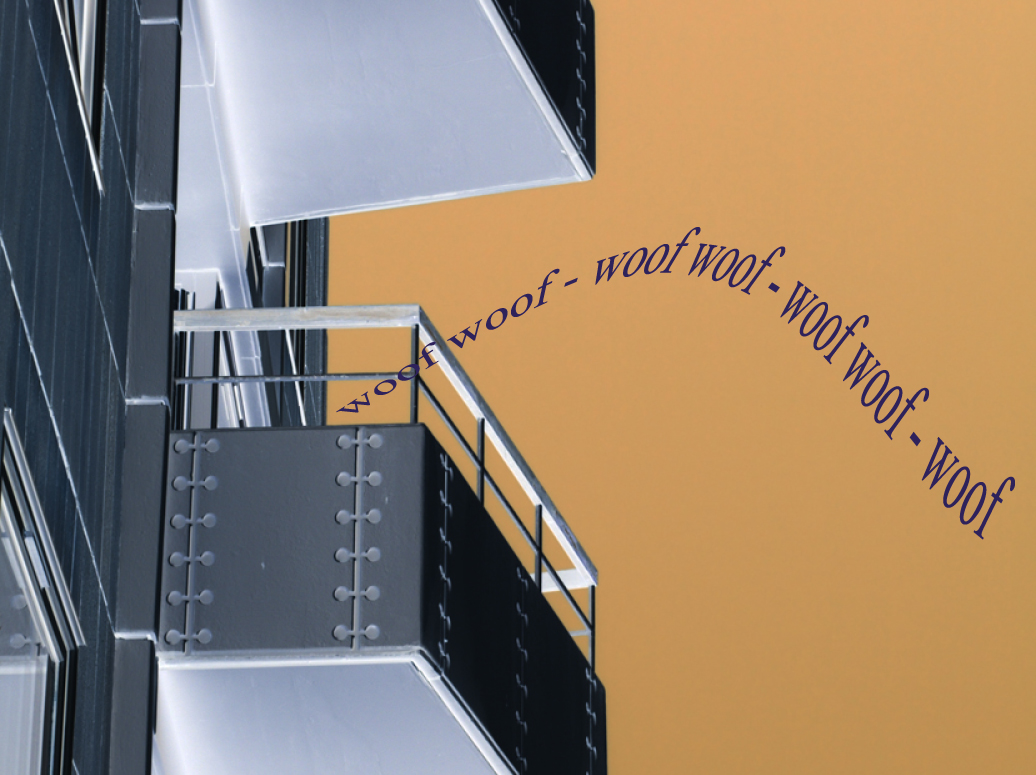
New Delhi: Around midnight, the neighbour’s dog starts barking. It’s done this before. I know where it is; standing out there on the second floor balcony, facing the tall trees in the park, where birds, squirrels, and small creatures are trying to sleep. Other dogs must be thinking: really! what’s all the fuss about? The dog barks (sounds more like a shouted ‘woof’) in multiples of 7 woofs: woof, woof – woof, woof – woof, woof – woof! Then it stops for a breath and starts on the next round of woofs: woof, woof – woof, etc. The only voice in the silence of the night. It’s a guard dog; it barks for a living, just doing its job. The problem is, it’s left alone most of the time in a house owned by people who don’t live there. They go away and the dog shouts out: I am here, I am here….

An irritating situation, ‘mind’ racing around in a panic, bordering on anger and outrage and I’m very conscious there’s nothing I can do about Dog; mindfulness is all there is. I need to try to be mindful, then doubt comes along: I’m trying to be mindful, but still feeling the irritation, so maybe I’m not doing it correctly? Why isn’t the mindfulness easing the suffering? Fortunately I find a short video of Ajahn Viradhammo talking on this subject. Ajahn V is saying that mindfulness is the capacity to know what irritation is. That’s different from being irritated. Being irritated means, ah, now you’ve got this barking dog, okay, so that’s bad, very bad; it shouldn’t be like this, no, etc. That’s not being mindful, that’s being irritated.

So, gratitude to Ajahn V, I managed to see the difference between ‘irritation’ and ‘mindfulness of irritation’. With mindfulness, I can make a choice: get irritated about Dog? or watch my breathing. I can choose to mindfully listen to the voice of the dog and use aspects of the experience to calm my mind

Dog usually goes on barking for about 20 minutes and then has a rest. Well, I suppose all that energetic barking must be quite tiring… yeh, well after it’s had its rest, it comes back to the balcony and gets into its next round of multiples of 7 woofs for another 20 minutes or until it chooses to stop and the night can drag on like this…. So, eventually I realise I have to get to know this dog voice; make friends with it. The ‘woofs’ are dog-shouts – I am over here now – large, breath-sized, full-lung-capacity, plosive, gusts of dog breath forced at velocity through vibrating vocal cords – a kind of dog song.

The woof  sound has a deep, rich bass quality, an acoustic resonance that suggests to the listener a spacious hollow chest cavity; definitely indicates size, a large creature. I’ve seen it up there on the balcony, a black Alsatian, but when it sees me, it goes into accelerated barking mode. Unfortunately, it seems to take a long time for Dog to wind down from this excited state of dog-shouts to the ordinary pace so I don’t allow that to occur. I don’t have eye contact with it.

As the night goes on, it becomes heavy and laboured; barking requires energy,  and there’s a noticeable tiredness or monotony about it – the dog is not spirited and happy, rather, it’s like it’s bored; why am I doing this? What’s the point? Motivation for barking at its best is beginning to slip. That’s when I’m inclined to start thinking it’s going to stop any minute but I’ve been caught in that wishful thinking state before and discover Dog has sufficient energy to go on for very much longer: woof, woof – woof, woof – woof, woof – woof!

So, necessity determines the right action, and that is mindfulness. Ajahn says there is the irritation, I feel it, but I don’t become the irritation. I now have some space around this thing called irritation; I see there is a choice. I’m not that irritation; I’m bigger than it. Mindfulness is bigger than that, I’ve met it, I know it, and I can make a choice because I’m not caught up into it. I’m not caught so I’m able to let go at last and fall into profound sleep, where I’m happily unaware if Dog is barking or not. Wake up next day and I’ve forgotten all about it.

……………………………….

‘The choices I make with thought, with intention with action with speech, they have a consequence. So if I just (tolerate the situation) in a state of frustration then that means a certain amount of stress is going to carry on into the next five minutes. And if I’m not mindful of that sort of stress and not able to say, well this is the way it is now, I will feel rotten or negative or unhappy and I never really awaken to the moment then each next moment is just driven by habit and I’m like a leaf in the wind…. The craft of the heart. Pottery, carpentry, knitting. A craft requires skill. We, as human beings can do skillful things, do our craft, get better at it. It’s the same with our minds. Our minds are not just hard-wired to be a certain way, they are flexible’ Ajahn Viradhammo [Link to video]


Power Failure

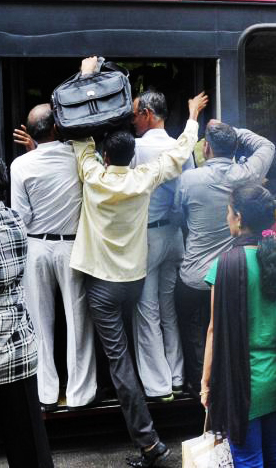
New Delhi: Power failure across 21 States of the North, East and North-East regions of India on Tuesday for about 10 hours. Trains came to a standstill, commuters squeezing onto overloaded buses (see photo). Newspapers say 300 million people were affected, half the country of India; it means something like the whole of Central Europe without electricity.

I didn’t know the full scale of this power failure until the next day. As far as I was concerned, I was the only one; it was just ‘me’ that was suffering; padding around in the house, barefoot, like a wet frog in T shirt and shorts, dripping little puddles of sweat on the floor. The AC went out straight away, that was at 2.30 am and there’s a back-up system in the house but it lasted only a few hours then the fans stopped, one by one. The last fan stopped spinning mid-morning and that was it, no alternative. Hot like this for an indefinite period.

So I open up to it and take stock of the situation: 30°C, not too bad, skin feels like the sticky side of scotch tape, could be worse. Struggling with the need to be mindful. When something like this happens, there’s a tendency to feel that it’s ‘wrong’, so wrong you can get caught up in a kind of imagined, collective guilt – that’s how seriously ‘wrong’ it feels. There’s a Pema Chodron quote about this: ‘People get into a heavy-duty sin and guilt trip, feeling that if things are going wrong, that means that they did something bad and they are being punished. That’s not the idea at all.’  The heat is bad enough but ‘mind’ makes it worse with all this, it’s ‘my’ fault, stuff.

‘Fault’ is a loaded word: it leads to ‘blame’ and this tenacity of the mind-lock around ‘my fault’ is so fierce it takes continuing mindfulness to keep mad thoughts from spiralling way out of control, problems proliferate and body discomfort equals ‘mind’ discomfort. Thinking, it shouldn’t be like this; ruminating over why the power outage occurred in the first place, and who’s to ‘blame’ and why and what’s really going on?

It’s not getting me anywhere, so there’s only one thing to do, open all doors and windows to maximum, get on to the cushion and try to settle the body/mind. Shirt sticking to back, takes some wriggling around to get it to unstick, then it’s better. There is the immediate advantage in that sitting absolutely still, even though you’re hot, doesn’t involve energy and doesn’t create body heat. The body just takes up the position; it’s getting the mind to settle that’s the problem.

Sweat dribbles down the face and at first it seems like there’s no air; the outside temperature feels like it’s the same as the temperature inside the body? Then there’s an awareness of tiny movements of air across the forehead and everything inclines towards this source of relief. The effect of deep breathing comes with the first conscious long inhalation, and it’s like there’s a great space opened up inside: all the distress is gone. For a moment, there’s awareness that the heat has dispersed. So, if it can just disappear like that, then I need to look at the conditions that caused it to happen. I’m naturally inclined to investigate this.

Ajahn Buddhadasa talks about learning from the experience of suffering: ‘If I see things in terms of suffering, I come to know the truth. It’s a natural process. The whole purpose of life is to find out what’s going on, to gain knowledge attained through clear insight….The simple fact that we exist means we are working with mind/body every day; what we learn about ‘self’ comes from the direct experience of being alive. To do this, there needs to be sufficient mindfulness to carry out a detailed investigation every time suffering arises in nama-rupa.’

There’s a distinct sense of ‘body’, just sitting there, patiently waiting for instructions, quite still and at ease. It’s an awareness of the mass of the physical body; the totality and volume/weight of all the internal systems – it feels kind of heavy or something like inert, comfortable just to be in that one position. Body acts as a measure, against which the hectic thought flow can be stabilized; the nama-rupa relationship.

After some time sitting, I realise it’s not a problem anymore. As soon as it becomes possible to ‘know’ ignorance, well-being follows and the knowledge that such a thing is possible motivates me to identify the cause of suffering. ‘Craving is completely destroyed because ignorance cannot be in that same moment when knowledge arises.’ [Link to: Ajahn Buddhadasa text]

The power came back on after about 10 hours and the house seemed like a different place, bathed in all the comfort of cool airflow from ACs.

————————-

[image link]

High Altitude Sunset

Bangkok-Delhi flight: A glance around the departure area at the gate for the Delhi flight, children running around. It’s a weekend flight; plane is going to be full of kids. Okay, ready for boarding, I have a gold card (frequent flyer) and can board early. It gives me time to get things stowed away and squeeze into my seat. Not a lot of room in economy class. I’m in an aisle seat. Keep shoulders in to avoid getting hit by people with large bags. The line moves along slowly and children are on the same eye level as me, seated in my aisle seat. They look at me – first close encounter with a blue-eyed foreigner, all part of the experience, the plane has their attention

“Crew at your stations,” we’re all set to go, one boy crying – boys cry more than girls, the voice is very loud; nothing is the way I want it to be right now so leave me alone and don’t bother me, okay? But we’re soon on the runway then takeoff, engine sound increases and as plane lifts off from the ground, all the children’s voices are combined in one small exclamation: WOOOOOO-OOH!… are we flying yet? Yes! And there’s a straining of necks to look out the window to see if it’s true, ground disappearing below. Jumping out of the seat belts, a stewardess raises her voice. After that everything quietens down.

And the various services start, the food and the drinks come and go; children running up and down the aisles chased by a parent, brought back to their seats and they run off again – it’s the game, playfulness. We’re in the Hindu world here, mostly, on this plane flying to India – thinking of the Hindu concept of a world created by Gods in play. This high altitude sunset glow going on and on, and I’m sitting there looking out the window at this eternal sunset, when the stewardess leans over and pulls down the shade: Plap!  Goodbye sunset. The opportunity to fully experience flying through time and the eternal sunset is not available right now; we have to watch the movie instead, okay? Yes, so that’s all right with me, no mustn’t have a tantrum about it, I’m not a kid anymore.

Some time later we land at Delhi airport, get out of the plane and set off on the long walk to immigration, children laughing, playing and running wildly along the miles of beautiful autumn-coloured carpeting.

……………………………….

‘Everything is impermanent. Nothing has a “self-being” of its own apart from its time. All of us are actually part of the same current. My sense of self is composed of habitual ways of thinking, feeling, acting, and reacting—all of them being temporal processes, different forms that time takes. If the flowing current includes everyone and everything, our normal understanding of time as something external to us is misleading. Often it’s convenient to distinguish things from their time, but that is the relative truth. According to the ultimate truth, things can’t really be distinguished from their temporality, and when they are nondual then time is really not different from eternity. The eternal present always stays the same—it’s always now!—even as it always changes.’ [David  R. Loy ‘Money Sex War Karma‘]