memories and the wind

stonefootCropNew Delhi: Gusty warm winds blow through the trees in the park, rustling the leaves and swishing the branches like the sound of waves breaking on the shore. The pigeons are exhilarated by it, flying over at tremendous speeds past me here sitting on the roof terrace, watching them now swoop up above my head – so actively engaged with the mechanism of flight, it’s as if the movements of their wings and the movement of the air are one and the same thing. A wind like this is energy to the birds; it’s a dance. Flight is an expression of the air displacement itself – flying and the wind – ground level is not the reference point; ‘up’ is not necessarily up and neither is down. I see them caught in rapid flight; a stationary moment in the air, suspended in time and space, then an audible flap of wingtip and change in direction.

This wind buffeting me around, hair whiplash on the forehead and the pages of my notebook suddenly leap and turn over on the spiral binding, fluttering through all my various handwritten notes over the last month. In this way, the wind blows through ‘mind’, stirring memories and things from the past, held for years, and released, they come flooding into present time. Each memory stays as long as it takes to examine, and the fullest extent remembered, like meeting an old friend. Time disappears for how long it takes to tell the story and, towards the end of the memory stream, the space behind is seen shining through, the images become transparent and vanish.

The next memory arrives after a moment, I examine that and it disappears like the others. It goes on like this, a collection of things from long ago and far away. Allowing thoughts to go by, unheld, uncaught – the opposite of catching fish; consciously unhooking fish-thoughts caught in the mind at some earlier time; letting them go free and they swim away. Memory stream moves from one moment to the next and I can’t actually see these moments… is this it? Is this the next moment? Is this it, now? Can’t be measured like that; just the circumstance itself; the situations and occurrences follow one another – not a sequence in time, it’s dependent on the nature of the events, there’s a linking that groups them together like coloured beads strung on a necklace.

Going back to Thailand tomorrow where it’ll be hotter than a locked laundromat dryer. Ah well, better go pack my bag now and… has the next moment arrived yet? The mental images and fragments have reformed themselves in the endless stream of things? Can we say, possibly, yes, this is, actually  the next moment? If so, I must have missed it, everything seems like it’s in the past again…

————————-

[Includes excerpts from: Birds on the Balcony 4]

‘Unhooking fish’ taken from an original idea by TJH
Photo image: dreamstime

quicker than thinking

140220131706

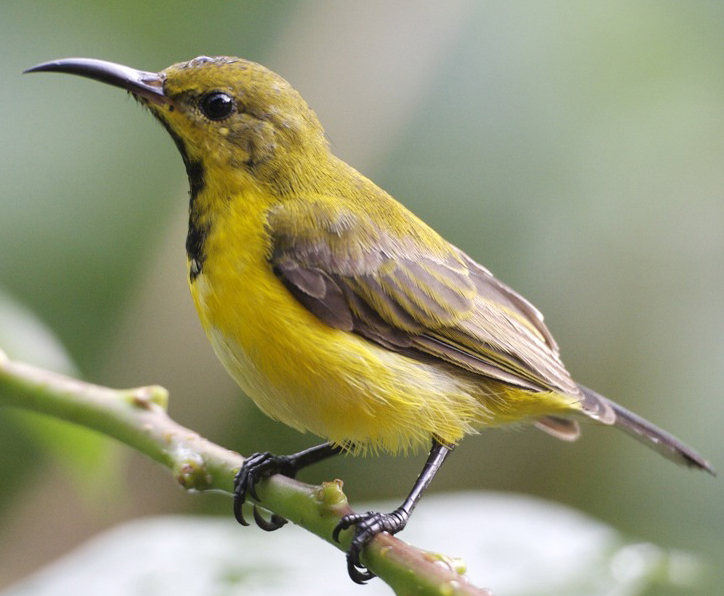
New Delhi: Sitting under the thatched shelter built on the roof terrace here, watching a small bird about the size of a large bee, so tiny! Is it a relative of the humming bird? Wikipedia says it’s a Purple Sunbird, less than 10 cms, the male is a kind of black-purple. This one, I see from the photo, must be the female, a more sedate olive green. Yep, this is the lady Sunbird, so small, it’s like it’s almost not there at all; takes my breath away. How can such a thing exist? A delicate speck of life, fragile and light; there’s birth and there’s death and there’s the bit in between. That’s where the Sunbird is, so brief… I suppose these tiny birds have just evolved like that because predators can’t catch them – always one step ahead of everything. Its movements are immediate, now here, now there; the quality of sunlight – elusive, a flicker of pure reality. Not like a bird, more like the shifting of my line of vision as I try to follow where its gone, then my conscious seeing of it in another place happens at the same time as the actual presence of the small creature itself, perched on a twig and ready to dart off somewhere….

olive-backed-sunbird-878cd193cd11f74dfc50b102c567baa7The alertness of the Sunbird is having an effect on me, how to identify this? It’s as if there’s a space between the things we take for granted and ponder over; a small gap, there in the absence of the object that has not yet arrived. The Sunbird gets to that place before we can even think of it being there. Faster than thought. I’ve noticed a few references to this space before something happens and after it’s finished; recently found it in the context of the short emptiness just before giving way to an emotion [Kadampa Life calls it ‘an inch of space’. Follow this link: Being realistic]. There’s room to move before giving way to an automatic thought response. There’s a moment before cognition locks in; a gap in time, quicker than thinking that allows the mind to see it all as it is – a small window opens and we see the whole thing passing by, sorry, can’t stay, got to rush, bye! Off it goes in a continuation of its itinerary, if it comes around here again, everything will be completely different; we may not remember it was this…

My eye follows the little brown bird as it flits and hovers from flower to flower and doesn’t seem to mind me being here quietly watching. Then it flies over the parapet of the roof terrace, hesitates there in the air, buzzing wings, makes a decision to go left and down, veers off in that direction and it’s gone…

————————-

‘This awakened consciousness, as pointed out by the Buddha, is not conditioned as with the six kinds of consciousness (the six sense-doors: eyes, ears, nose, mouth, body or mind), neither being part of the natural world (earth, water, fire, and wind), nor having size, being neither long nor short; it is without texture, being neither fine nor coarse; it is without moral quality either, being neither pure nor impure; neither is it psychological in nature (nama) nor physical (rupa). It is invisible, limitless, and radiant.’ [Ajahn Sumedho, ‘Awakened Consciousness’]

everything that arises…

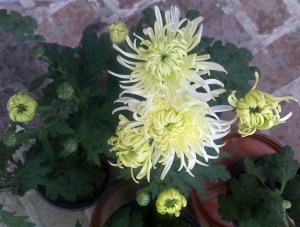
bgv2New Delhi: Flocks of chattering green parrots in the trees and birds of prey slowly circling around in the upper sky. I watch them from our place on the roof terrace. There’s a table, chairs, an extension cable for electric kettle and all kinds of plants in the sunshine; bougainvilleas and chrysanthemums. If you have ‘chrysanthemums’, why can’t you have ‘chrysanthedads?’ I ask Jiab who is reading the Matichon (Thai) newspaper with great scrutiny. But this doesn’t seem to be worthy of comment right now… and after a period of silence, I get busy with shifting these heavy flowerpots full of earth into a beam of sunlight. Much huffing and puffing, when I’m finished with that and sitting on my chair, looking at what I’ve done, Jiab says to me: ‘… happy now?’ And I suppose I am.

Happy, yes – except of course for that lingering sense that things are not right; not as I’d want them to be. But I’m happy enough, yes. Why? Because all these things that I think are not as good as they could be or should be (even worse); all these things are just there – then they’re not there, I’ve forgotten about them. That’s how it is, I’m not holding on to them. The dark cloud of unhappiness is not hanging over me today up here on the roof terrace with flowering plants in the sunshine. No, it’s a clear blue sky and I can see there is suffering dukkha in the world, yes, but that’s because we’re holding it there, unknowingly. Let it go and there’s no suffering – can it be as easy as that? Maybe it needs sustained effort, over a long period of time. But even so, that’s the idea of it. One can feel inspired, motivated knowing there is an end to it. And I suggest this possibility to Jiab, who now inclines towards me thinking maybe I seem to be making a more intelligent remark this time.

And we talk about that for a while. It’s always interesting for me to hear what she says because like most Thais she knows the Pali terms in the buddhasassana, having learned the chanting by heart in elementary school. Jiab is also fortunate because her Dad was a monk for a couple of years and was able to explain the dhamma to his children: that life is permeated with suffering caused by desire, that suffering ceases when desire ceases and that enlightenment obtained through sila, samadhi, panya (right conduct, meditation and wisdom) releases one from desire, suffering, and rebirth.

What it comes down to in the end, is the basic truth that everything that arises passes away and the Venerable Assaji statement: “Of things that proceed from a cause – their cause the Tathagata has told. And also their cessation — Thus teaches the Great Ascetic.” [Venerable Assaji answers the question of Śāriputra the Wanderer], and how Śāriputra was totally blown away by that and people were getting enlightened on the spot as a result of the Venerable Assaji statement. In this context I’m thinking it means if you can see and are aware of suffering caused by tanha, the attachment to things you love and hate, that’s all there is to it; you see it, you know it, ignorance is gone and no matter how much it is held or the tenacity of the habit to hold on, suffering will pass away of its own accord: “Whatever is subject to origination is also subject to cessation.” And there’s a sudden burst of noise from the green parrots in the trees opposite, so we go and take a look at what’s going on over there, but it’s not anything.

chrysanthemoms

Photos: bougainvilleas and chrysanthemums