the thinking thing

hNew Delhi: It’s the middle of the night, it’s cold, I’m in bed and covered with a mountain of bedcovers. Can’t sleep, just lying here thinking about things in the darkness. All the stories of my life come and go, click the channel-changer and there’s another one. I remember this, yes… so, he said that… and I said this… and then what happened? Click the channel-changer again and I’m somewhere else. It’s the thinking thing, continually pondering over this and that and when I ask myself how to stop thinking the mind starts to look for a solution, drawing conclusions from known facts ad infinitum and I’m thinking again. It’s my Western cultural inheritance – separate from God, we are created by Him –  studying the ‘object’ and logical, applied, deductive reasoning. Here in the Eastern context it’s more like a gradually accumulating lake of inductive reasoning; the ‘whole’ is a pre-existing pattern composed of its parts. I can ‘feel’ my way into it and see where that takes me.

So I stop thinking. There’s an awareness of the cold air on my face, sensory response vedanā; the mind engaged with the other senses tuned to reception from the outer world like satellite dishes search for a signal. When there’s no thinking, there’s an empty space where the thoughts used to be. I’m aware of the desire to be actively thinking, I see the invitation to be engaged with thinking – same as other forms of ‘wanting’ and mindfulness kicks in. But it occurs to me this is the Buddha’s teaching about the origination of the world: ‘Dependent on the eye & forms there arises eye-consciousness. The meeting of the three is contact….’ (phassa) and I’m back into thinking again.

There’s something obvious about this, the mind is one of the six senses and functions like a receptor in the same way as the others do, except that it also has the purpose of ‘guarding’ the entry point; sense object activates the chain of events and mind has an intuitive, cognitive function; it is capable of discerning the object, like a security system. The exact nature of the cognitive mind holds my attention. I experience the absolutely empty space of no-thinking and either there’s not any sensory input the mind needs to be engaged with, or the apparent emptiness is caused by the mind’s awareness of being aware. There’s more of this empty space. Thoughts come in and go out again and the mind is watching the whole process. Sometimes I’m here as an observer, watching from behind the curtain. Other times the observer disappears, and it seems like only the mind itself is left there. That disappears too and in its place, a sequence of momentary mental events, each one linking with the next as if it were electronic activity. It’s like a small fireworks display, arising and falling away. Some time later sleep comes and the world disappears.

————————-

the end of the line

IMG_4239 (1)Safdurjung station: Welcoming committee, red carpets and flower petals strewn around the platform, it’s the end of the line; the end of the trip. It’s where the train stops and we get off, but not really the end of the line. The line goes on from here and connects up with other lines in the network and links up with neighbouring countries then ultimately with the network that stretches out over the whole planet. It doesn’t start anywhere and it doesn’t end. There’s an interesting reference to this in the Hermann Hesse novel, ‘Siddhartha’, saying that time doesn’t exist in a flowing river, it’s everywhere at the same time, only the present exists, no past, no future….

There’s something about being on a train that imposes a kind of inevitability of circumstances on everything. There’s no deviation from the direction the train is moving in. The thought sequence, following an ongoing linking, travels along of its own volition, and takes shape as it goes; episodes from an anthology of short stories. It stops sometimes but that’s not the end; the stopping/starting of it is a characteristic of the story’s unfolding.

A particular event occurs somewhere in the process that suggests how the beginning might have taken place. Later this goes into ‘refresh’ and there’s a new possible beginning. Then another one after that and again, then it’s not important anymore. Mind links it all up or associates random parts of it in some barely satisfactory way and this is how the whole thing seems to sustain itself from moment to moment. It’s samsara; driven by some kind of underlying seeking-for-something that can never be found; there’s only the ‘seeking’. A slightly suffocating, enclosed feeling about it all – it can’t be “held” beyond a certain limit, and eventually I wake up. Everything still quite clear in the memory for a while then completely forgotten.

With mindfulness of papañca (mental proliferation), the process of conceptualising is just a process – no person there doing it. The application of mindfulness, which puts an end to belief in the fictional ‘self’, is also just a process – no person there doing it. It sort of does it itself. As long as there is an intuitive notion of “wholesomeness”, the recognition that what I’m doing is ethically correct sila, then there’s an opportunity to sense if something is right, or it’s the right way to go about it and the process of mindfulness runs by itself. No self, anatta, nobody at home; just an operating system, Windows 8, MacOS Lion, and beyond. A determined and purposeful search to find out exactly where this ‘no self’ exists will yield nothing, of course, because ‘no self’ doesn’t exist. Follow this reasoning to its obvious conclusion and it’s a way of saying nothing exists. So, if there is no ‘self’, who or what ‘sees’ there is no ‘self’ and I asked Ajahn about it: ‘If everything without exception is “not self” including the “I” that’s investigating this – then where does it all lead?’ Without hesitation, Ajahn said “enlightenment” and looked at me with these grey eyes, waiting for the next question ….

IMG_4241

Many thanks to Khun Witit Rachatatanun for the photos in this series of posts

things not being right

121120121558Road to Gorakhpur: 18.00 hours, we’re on the bus, there’s an immense noise from the engine and the driver is pressing the shrill, twin-pitched, piercing horn continuously as if he were practising a Miles Davis piece on the trumpet, over and over. Three and a half hour journey and I’m getting thrown around all over the place on this unbelievably rough road. The bus makes a sudden lurch and overtakes a slow moving vehicle; then again, rapidly making our way past all these trucks, one after another. It’s a convoy of Diwali Lakshmi Puja pickup trucks, each one with a generator throbbing in the back: boom, boom, boom, boom. And there’s the Lakshmi shrine all lit up with flashing red, blue and orange disco-lights and Hindi dance music at max volume: thud, thud, thud, thud, thud, thud – followed by a long line of young people running and dancing behind it. The distraction of this holds my attention for a while. It’s really like being on another planet – after a day spent in the silence of Lumbini and minimalism of Theravadin Buddhism.

It wasn’t a good day, pity. I was in the park with the group doing a couple of 45 minute meditation sits on the grass under the Bodhi trees in that historical place and it didn’t come together for me – just one of those things. I spent most of the time tossed around in the samsara of mind stories and now here on the bus, the difficulty of this journey propels me further into a small vortex of thoughts that I failed something, hopelessness and… what to do?

Try deep breathing, keep it simple and allow the chaos to be what it is. See it harden into a grasping knot of discontent and stay with the focus on breathing as I tightrope walk across the raging inferno of things not being right, not being the way I want them to be. It goes on like that for a while and eventually the fierceness of it lessens. The fires reduce to smouldering ashes and there’s a moment of relief. The pain of it is not there now – wait to see what this change will bring and when I look for it again it’s like there’s an empty space where the suffering used to be. I realize it’s gone.

Now it’s later. I’m looking through various notes and there’s a reference to the Noble Truth of Suffering that I copied from somewhere and I can’t remember where: ‘…the disenchantment, listlessness that arises from familiarity with fearfulness, unsatisfactoriness and the comfortless nature of things.’ Hardly an inspiring statement and I can understand why people see dukkha as pretty negative – what is this… masochism? It’s not that, it’s just facing up to it, no avoidance behaviour. I’m saying this because there was one time I was in a situation of no escape from serious physical pain; just no way out, the only thing to do, the only way to go was towards it; no more backing off from it. I had to accept it, let it in. Immediately I notice a small easing, enough to somehow find a release from it – not hard to do when there’s no choice and there’s no other direction to go but straight into it. In hindsight it seems as if I didn’t know it at the time but this was an important part of finding the way out? That’s how it was in the end; I could see the suffering, identify it – it’s like, oh yeh! I see now… and seeing it dispels the ignorance of not having any idea what’s going on and being controlled by it. That’s what lets it go (frees it). Off it goes, bye bye and the suffering is suddenly not there anymore. [Link to: Homer & the 1st Noble Truth]

The struggle itself is what causes the suffering. It’s about the energy used in trying to get away from it just fans the flames and makes it worse. And, because it’s habitual, maybe a lifetime of allowing it to be like this, it’s chronic and things just go on like that until I see the only thing that’s preventing me from letting go of suffering is that I’m still holding on to it….

————————-

‘We learn how to let go, in the process of observing the consequence of our grasping.’  [Ajahn Munindo, Dhammasakaccha]

how it looks from here

Sravasti: These shrines and monuments stay the same, perhaps sunk deeper into the landscape than they were in ancient times; there’s a presence. The seasons revolve around them, rainfall, heat, sand storms and the centuries come and go. People from all over the world come to visit, pray, bow, apply goldleaf, string garlands, light incense, show reverence and take pictures of their friends standing next to them. A great shower of digital flashes lights up the environment like a fireworks display; camera phones, iPads held up like a tray, with an image as large as a small television, ‘and here is the place where the Buddha was enlightened:’ flash, click! Thus, a small piece of the outer world is captured; perhaps a small landscape showing the shrine, prayer flags strung across branches of a huge Bodhi tree and my friends standing below smiling for the camera. Everybody hurries to look at the picture just taken; camera device held by finger tips, the image never quite hits the spot. So we reach into the outer world and ‘take’ another one, a nicer one maybe, have a look, but it doesn’t hit the spot either.

Taking a picture is a reflex action, a simple curiosity; I want to ‘take’ a picture of it and there are hundreds of images in this camera memory we have to load somewhere else to make room for more. All of them are simply showing the passage of time: people get older. But it’s meaningful to us, a metaphor we’re deeply familiar with; consciousness of outer object meeting inner sense base and we respond to it in much the same way as sensory input, by way of eye/ ear/ nose/ tongue/ skin/ mind, is the means by which the outer world enters the inner being.

Receiving data from the outer world through sense organs situated around the face and head has the odd effect, somehow, of pushing the whole head into the bubble of the outer world and I can understand what Douglas Harding was saying when he spoke about ‘having no head’, and the rest of the body, seemingly connected. That’s how it looks from here. I can see all these other beings walking around too. Some of them seem to know what’s going on and some don’t know at all because they’re preocccupied with taking a photo of the event, or maybe they’re watching the video they made of it. Some believe it’s God’s world and contemplate experiential responses to outer stimuli, thinking God created this, so it must be okay. The idea that God also gave us the gift of insight to see for ourselves is not something they feel they need to take into consideration and just leave it at that. Others are walking around just browsing the options, hoping to stumble upon something soon. It could take eons for them to find it, stuck in the samasara of Search Mode. Other beings are in a historical time period but otherwise the same as what we have today and I am here thinking about the possibility that the Buddha was standing in the same place where I’m standing now.

————————-

‘At Savatthi. Then the Venerable Kaccanagotta approached the Blessed One, paid homage to him… : “In what way, venerable sir, is there right view?”

“This world, Kaccana, for the most part depends upon a duality—upon the notion of existence and the notion of nonexistence. But for one who sees the origin of the world as it really is with correct wisdom, there is no notion of nonexistence in regard to the world. And for one who sees the cessation of the world as it really is with correct wisdom, there is no notion of existence in regard to the world.

“This world, Kaccana, is for the most part shackled by engagement, clinging, and adherence. But this one [with right view] does not become engaged and cling through that engagement and clinging, mental standpoint, adherence, underlying tendency; he does not take a stand about ‘my self.’ He has no perplexity or doubt that what arises is only suffering arising, what ceases is only suffering ceasing. His knowledge about this is independent of others. It is in this way, Kaccana, that there is right view.

“‘All exists’: Kaccana, this is one extreme. “All does not exist’: this is the second extreme. Without veering towards either of these extremes, the Tathagata teaches the Dhamma by the middle: ‘With ignorance as condition, volitional formations [come to be]; with volitional formations as condition, consciousness…. Such is the origin of this whole mass of suffering. But with the remainderless fading away and cessation of ignorance comes cessation of volitional formations; with the cessation of volitional formations, cessation of consciousness…. Such is the cessation of this whole mass of suffering.”’[SN 12.15(5)]

Photos from the Witit Rachatatanun Collection

the journey to get there

Nepal/India border: Trying to find a wet-wipe in my pocket to remove a food stain on my white T-shirt here in the hotel dining room (on the way to Lumbini). If you’re on the road, you have to carry all your possessions in your pockets and it ends up like you’re a walking bathroom cabinet, laden down with personal effects and bits and pieces from the journey. I start to unload things, a toothbrush, a shaver, a wrapper from a holy piece of gold leaf, a ticket stub that allows entry to Bodh Gaya shrine, a pack of tissues, a wad of 10 Rupee notes (US$0.18) for giving away to beggars and all kinds of coins in small denominations; heavy bulging pockets but no wet wipe, so I go to the bathroom to get some water to wash the stain out.

Step inside and the floor is covered in water of dubious origin, splish splash across to the sink. Wash stain off T-shirt and I just know that if I start thinking, I don’t want it to be like this, I’m going to make it worse than it is already: ‘Feelings of pleasure and pain, like and dislike, arise from sense-contact…’ [Ajahn Chah, Timeless Teachings] So I focus, mindfully, on the task right now and, splish, splash, splish out into the sunshine. I suppose it’s just a different way of looking at priorities. There’s a whole lot of things going on here I just don’t know anything about – some of it is difficult to accept, all of it is richly vibrant. Another instance of it was when we entered the hotel dining room, white linen table cloths and silverware, and there was this absolutely deathlike chemical smell. Somebody said afterwards it was the disinfectant that’s used here. It was like something volcanic. The sensory cognition mechanism gets hold of something it hasn’t experienced before and attempts to identify it by retrieving files from the data bank. What gets conjured up is a series of exotic possibilities. After a while, it became less noticeable, then it seemed like it was completely gone – maybe it was still there but we just didn’t notice anymore.

I’m inclined to think visiting the Buddhist historical sites is mostly about the journey to get there; if you’ve done it, you’ll know what I mean. There are extraordinary and wonderful stories about this journey, some can be found in Ajahn Sucitto’s two volumes: Rude Awakenings and ‘Great Patient One’. And I’m wondering how things were during the Buddha’s time, less people and pre-industrial, but was this vibrant energy, that’s here now, present then? Could this have been, in some way, the context that played a part in and inspired the effort to find a way out of suffering?

All kinds of stuff going on. Some time later in the day, I passed a cow eating cardboard packaging from a wastepaper bin. It raised it’s head from the bin and there was a long strip of torn cardboard dangling from the mouth, chomp, chomp chomp. Then later I saw another cow tearing off a piece of paper poster stuck on a wall, using it’s long grey tongue with front teeth to trap the small paper scrap quite skillfully. It must be the paper saturated in paste made from some kind of ingredient like flour and the cellulose in cardboard is edible. Just snacking; they  looked like healthy animals. In the time of the Buddha they wouldn’t have been eating cardboard, they’d have been eating other things but allowed to roam around freely, same as they are now. And here I’m looking at things that are not much different. The centuries pass, industrialization arrives, and the cows wander into the 2nd Millenium AD in a rural environmnet that’s pretty much the same as it was in those ancient times.

Upper photo: view from the bus to Nepal, Lower photo: from the Witit Rachatatanun Collection

expecting the unexpected

IMG_3972Gorakhpur station: 21.00 hours, just got off the bus and we’re waiting for everyone to assemble and walk together to the train. There are security guards here with short lathi sticks as if expecting a small riot. Darkness, shadowy figures flitting around and trying to see what’s going on, I’m confused by something that seems to be heaped on the road beside some parked cars. It’s a shapeless mass I cannot identify; looks like a pile of brownish-grey sacks filled with something – no, wait, it’s alive. I saw it move! What is it? And for a moment there’s uncertainty… something I cannot recognize, no matter how hard the brain fathoms it. Eventually I see it’s a cow sleeping on the road. I forgot, of course, that they have to lie down and sleep at night. I’ve seen plenty cows standing about, but somehow I assumed they’d be rounded up at night and put in cow sheds. Of course not; they just sleep on the streets; as if the whole environment were fields and meadows. Surprising really, a cow sleeping in a car park is the last thing I’d have expected, but you can expect events and occurrences to be unexpected here. It’s that thing again, difficult to understand, a consciousness of a sense object that’s unknown and the subsequent search for something that’s not in the data bank inevitably causes the mind to invent an explanation that will fill the empty space.

Tour guide blows his whistle, raises his little flag. We have to follow him. So we set off walking through the station in a long line, headed for the train. It attracts attention; we are the Buddhist pilgrims, dressed in white and black costumes and flanked by uniformed guards who raise their sticks and shout at the local people to get out of the way. Seems to me people here are used to the idea of privilege, hierarchy and the sons and daughters of the Buddhist feudal lords in some distant country are passing through, so get out of the way. It’s not a good feeling but that’s how it is here. On to the train and into our little carriage – just Jiab and me in this cosy place, quite nice. Preparing now for an overnight journey to Gonda then Sravasti.

IMG_3901After some time the train sets off, speed increases and the track is rough and bumpy, we have to get used to being thrown around. Along to the little bathroom to brush my teeth and holding on to every handhold available along the corridor; mindfulness of rock-and-roll. Inside, there’s a tiny sink in the corner with a shelf above it and I have to bend down, lower the head under the shelf and brush my teeth quite close to the sink. The movement of brushing teeth: updownup downupdown updownup is in sync with the rhythm of the train for a while then there’s a sudden lurch of the carriage, down and up. I hit my head upwards on the underside of the shelf and whack my elbow sideways on the wall, simultaneously.

Getting shoved around and bullied by the train causes irritation to flare up, it shouldn’t be like this, then it falls away – easier to see that letting-go thing when you’re in an unstable situation like this on a moving train and all the rough and tumble. There’s an underlying awareness that I’m rattling along at about 70 mph, everything is moving past me, sorry can’t stay, got to go, bye!… and I’m in a long tube, penetrating stable realty. Back along the corridor jiggidy-jig jiggidy-jig, nursing slightly painful elbow and into the carriage. Jiab is in the top bunk, and I’m down below. It’s all very different from normal environmental conditions, where there’s stability and a tendency to sink deeper and deeper in the slow mud of thinking-about-things.

I’m asleep straight away then four hours later something wakes me; back in the world of bump, rattle, bang – rattle, bang, bump. How to get back to sleep? I try watching the inbreath, the outbreath, lying flat on my back and the extremely bumpy track becomes the object of attention. It helps to see the bumps on the line not as bumps but as downward movements; small steps going steadily downwards, some steps are lower than others and it’s all going down bit by bit; sometimes there’s a little upwards return but mostly it’s small incremental steps getting lower and lower. Then it seems to land on a much lower step and down into a place where consciousness seems to remain steady, smooth and restful. It stays like that. A space stretches out from here that seems to encompass all the small steps that have occurred so far and all the steps yet to come. It’s in this space I’m able to settle. Sleep returns and the train goes on through the night in a straight line across the moonlit landscape, jiggidy-jig jiggidy-jig jiggidy-jig….

————————-

Photos from the Witit Rachatatanun Collection

Buddhist tourists

Angulimala stupa, Śrāvastī: The Buddha is gone from here, it’s like languages that become extinct; if the language is not used, refreshed and evolving continuously, it disappears in history. And there are no signs of Buddhism beyond the gates of these historical places, no characteristics of mindfulness, compassion, there’s not even an understanding of it. It can so easily fragment and we can’t hold on to these historical times, annica, impermanence; what’s left are the teachings and sati sampajañña (mindfulness and clear comprehension); a deep and thorough understanding of impermanence. This teaching helps me to understand impermanence in a way that suggests some other kind of temporality. It’s enough to know such a thing is possible and this helps me accept the fact that things are so completely changed now, in the places where the Buddha used to be.

Begging children gather outside the gates and as we are leaving, the tour guide gives us packets of sweets to give to them – intended as a gesture we can make, reflecting on the generosity of Anathapindika (“feeder of the orphans or helpless”), all those centuries ago. But when we start to distribute these small packets, there’s such a fierce clawing and snatching that most of us have to drop the gifts and make a dash for the bus, chased by beggars. Last thing I see is a scuffle amongst them fighting for the ’gifts’. It was a feeling so completely different from the generosity of the historical figure who covered Jeta’s grove with gold coins in order to buy it from Prince Jeta. The Prince was so impressed with the generosity of Anathapindika, he gave the rest of it to him for free and joined with Anathapindika in offering the whole grove as a gift to the Buddha.

Is it possible that the presence of Buddhist tourists has created a generation of beggars at the gates? Anyway, this kind of thing seems to be unavoidable in India; there are beggars in other tourist places also. But the giving of money and gifts is a bit of a shambles and it would be better for everybody if this could be properly organized. What I did see that seemed more positive was a couple of people giving money to the beggars with an honest generosity, joyfully sharing; they were very good at doing it. I learned from this, it seemed to me to have a quality of dignity and mindful generosity and I tried to do it that way afterwards.

So, I wasn’t expecting the presence of beggars to have such an impact during this visit to the Buddhist holy places. Maybe it seems so dominant because what else is there here to see? Only ancient mounds and reconstructed low walls that show the location. I doubt if the bricks are original. There are very old Bodhi trees decorated with prayer flags but not of an age that could be anywhere near to the Buddha’s time. Otherwise there’s the earth and the sky; the air, nothing more than that. What is present is a special kind of sensitivity; visitors are all Buddhists or persons that way inclined, respectful and sincere and what we’re all considering is something that is unseen. If you can focus on being in these places where the Buddha used to be, and allow space for mindful contemplation, just being here becomes part of conscious experience; there’s a reality of that ancient time that comes through, such a fragile thing, barely noticed. It triggers something about these events that happened here all these centuries ago – just knowing it’s possible is enough.

The light and warmth; coolness in shadows in the afternoon, sense impressions, the laughter of a child in the trees and I’m thinking, yes, there would have been this also. I can allow it to be present for a moment and I’m in the 5th Century BC. It’s a simple feeling of just being here. I know how it must be for all other beings to experience this feeling; just like this. Subjectivity; we’re linked like this. The feeling stays for as long as I’m aware of it then it falls away.

————————-

Photos – Upper: Bodhi tree with prayer flags.  Middle: Beggars at the gate [Witit Rachatatanun Collection]

a sense of urgency

India-Nepal highway: more like a simple farmyard road than a highway leading to an international border crossing; rough surface and missing chunks of tarmac create an incredible, bump, crash and rattle in the bus that goes on without end. Too much vibration to be able to sleep and impossible because of the noise the bus driver is making with the horn, a high volume squeak-and-squeal alternating between two notes. Cows and goats wandering around scramble to get out of the way; people on bicycles scatter to make room. If there’s a traffic jam, he gets angry, leans out the window and shouts. There’s a co-driver in the cab and he’s sent out to bully, threaten and persuade the drivers of the vehicles to move to one side. Co-driver gets back in again, then another obstruction. I’m sitting at the front of the bus behind the driver, looking through the large windscreen and it’s like everything is held together in a makeshift, temporary way; no time to do it properly, we have to hurry on – what is it? I’m thinking along the lines of a war-zone or some kind of catastrophic event has taken place and this is an emergency vehicle; there is danger and we are fleeing for our lives. But it’s not that, it’s just normal.

The bus gets seriously stuck behind a buffalo walking slowly, with her calf, down the middle of the road; despite the driver’s trumpeting two-note horn, mother buffalo won’t move from her place in the center of the road. Co-driver is sent out to chase the buffalos to the side so the bus can get through and he whacks mother buffalo hard on the rump, an audible WHACK! I can hear above all the racket. Unfortunately, this sends mother and calf off into a frantic gallop straight down the middle of the road. The bus still can’t overtake and has to follow these galloping buffalos for some distance. The driver is getting worked up into a fury, bus lurches to and fro while he’s yelling like a wild man out of the window, and barely in control of the vehicle. Eventually the buffalos run off to the side of the road, the engine roars into life and we accelerate away. Co-driver climbs back into the cab, breathless from trying to steer the buffalos and for a few minutes he has to defer to the driver’s seething anger directed at him. It’s bizarre and funny, but nobody on the bus is laughing.

I’m with a Thai tour group, reserved, polite, quiet behaviour, small body movements and everyone is sitting straight up, dressed in white top and black trousers or sarong. Could be they’re in a state of shock, never having experienced anything like this before. Somehow they all thought (and I did too) that in India there would be vestiges of the Buddhist loving-kindness and the generosity of letting-go but instead of that the whole thing seems to be about blatant greed, hatred and delusion; a skeletal hell realm of holding on tight and mad with desire. India is discovering it’s identity in the media and advertising. The bus went past a poster showing the actor Riz Khan in an advert for whiskey and the slogan is: ‘I have yet to become me’. I managed to get a slightly blurred photo of it.

What happened to Buddhism in India? There were the Islamic invasions and what little remained was assimilated into Hinduism. It could be that, long before that, King Ashoka considered that one day Buddhism in India would come to an end because it has no built-in mechanism to withstand a forceful take-over; it’s fragile and light and doesn’t attach to anything. For this reason he erected simple stone pillars in places where significant Buddhist events took place; they function like markers on Google maps. The locations are verified and Buddhists coming to India, foreigners like me, visit the sites, Bodh Gaya, Sravasti, Lumbini, see these pillars and take a moment to consider that, yes, it happened here. And if it weren’t for King Ashoka’s sense of urgency that these places could eventually be lost in history, there might be no traces of Buddhism in India at all.

now as it was then

Bodh Gaya: 04.00 hours, this is where the enlightenment took place. I’m in a hotel not far from where it happened, early morning and the window is open, sitting on a cushion with mindfulness, watching the breath. There’s a sense of, it’s just over there, out the window and over to the right a bit; yes, it was there that the event took place. I’m near to the epicenter, ground zero. From here, it spread outwards to the people close by and dispersed among everyone who had a mind to listen. Then, in the course of time, reaching out to all parts of the world, so that visitors from Tibet, China, Japan, Korea, South East Asia and other places eventually came here to see for themselves. Ordinary lay people came, conversions from Hindu castes, bearded sannyasis with matted hair and white marks smeared across the forehead, and monastics came from all over Asia, robes in shades of ochre, maroon and grey; chanting … namo tassa bhagavato arahato samma sambuddhassa … various intonations and melodic rhythms altogether in a pleasant discord.

How much of this is the same now as it was then, 2,600 years ago? The sensation of the breath is the same. The air gently touching the inner surfaces of nasal passages and throat and the consciousness that arises with that feeling. Through my own humanness and in a subjective sense, I can recognize the humanness of the bodhisattva. As well as the same blue sky, brown earth; green foliage, and even though the outer objects I can see may not be the same, changed over the centuries, the process of seeing is the same. The consciousness that recognizes this is the same for me as it was/is for everyone, and the ‘me’ and ‘mine’ I experience is not in any way different from anyone else’s ‘me’ and ‘mine’ who lived at that time, or now, or will live any time in the future.

You could say it’s just a sense of history that’s present whenever you enter a historical site, or a building or museum. It’s possible to know how the people, who lived then, felt and understood the world; the things they looked at and what they heard, smelt, tasted, touched and their mind responses; all of that is the same for me now, here in this place where the bodhisattva walked 2,600 years ago. I’m connected with the outer world by consciousness, in the same way the people at that time were; the conscious experience of what is seen is the same for me as it was for the bodhisattva – simply that function. And the environment I’m in, the outer world, may be different from how it was at that time, but the body/mind organism that receives the experience is universal. All beings are caught in this conscious experience. There’s no need to add anything else. The sense of ‘now’ that’s the same today as it was then could be the sounds I hear, the feeling of sunlight and the gentle wind blowing in my face; an awareness of the ever-present sensory data telling me outer and inner are the same and I’m an inseparable part of it all.

————————-

Where there is the mind, where there are mental phenomena, mind-consciousness, things to be cognized by mind-consciousness, there a being exists or the description of a being. Where there is no mind, no mental phenomena, no mind-consciousness, there a being does not exist nor any description of a being. [SN 1.65]

Photo: prayer flags, Sravasti

Buddhists and Christians

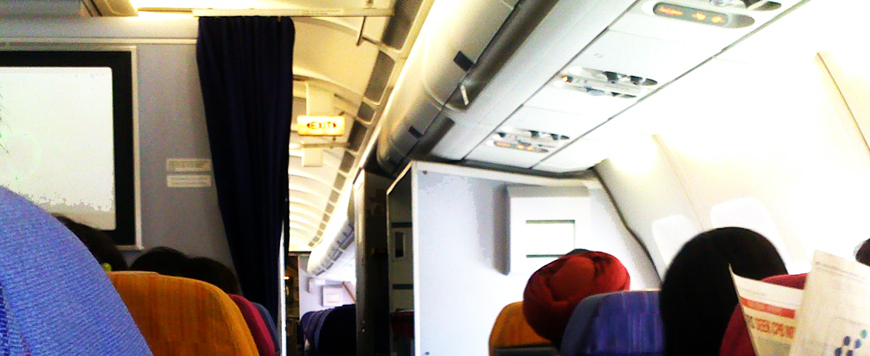
Chiang Mai: A very nice short flight here from Bangkok yesterday, 1 hour 10 minutes. They serve a small meal; it was like going upstairs to have lunch in the clouds, then it’s time to come down again. During the flight I was able to have a discussion with somebody I met there about Christianity and Buddhism – is there ‘something’ there (God) or is there not anything? And ‘not anything’ implies something that cannot be verbalised.

It is a bit like tight-rope walking for me as a Western Buddhist and now 30 years in Asia but still subject to the conditioning of the Church and childhood memories of it in the West. With my Christian companion here, there is agreement on many things. The main thing we agree about is that human beings may experience a certain kind of realization that there is no ‘self’, no identity, nothing there; nothing in the mind/body organism, it’s a construct. There’s a feeling of ‘lack’, and the shock that comes with this discovery causes dismay, distress, etc. Christians say the realization of emptiness is the absence of God, and this knowledge facilitates the entry of God, the creator of everything. This is what fills the emptiness; a significant turning point for all Christians.

Buddhists encounter this feeling of ‘lack’ in the same way but will not ‘fill’ it with anything, rather, they contemplate the emptiness of it in depth; examine the associated emotional reactions with mindfulness and come to see that, this is how it is. Śūnyatā, the emptiness, the lack of ‘self’ is everywhere and in all things. The understanding that everything is without ‘self’ helps Buddhists to contemplate the constructed nature of the mind. It’s possible to see the whole picture; how everything works and where we go from here. It’s an open-ended, investigative approach that may lead to an understanding of the non-duality of the observed world and the observer of it, together as a oneness. What the Christians call God must be inside this, because it is all-inclusive. There cannot be anything outside of it.

Christians will depend on the attachment to a belief in God for guidance and that’s how they see the world; they might say that ‘emptiness’ for the Buddhist is the Buddhist sense of God? And Buddhists could consider it this way, but the Buddha didn’t see any point in going further with that because the important thing is to make sure you are seeing reality correctly; anything else is getting caught in wishful thinking. Necessary because working only with belief and faith and no pragmatic teachings means there are all kinds of things that can go wrong with it. Christians are focused on the experiential aspect; Buddhists say conceptualizing a God leads to attachment, tanha; the desire for, and attachment to, ideas and ideals, views, opinions, theories, conceptions and beliefs. [Dhamma-taṇhā, Walpole Rahula].

If I say the word ‘God’ to myself, something comes into my mind, the word ‘God’ has an immediate emotive effect. Certain assumptions arise and the mind is already closed around it; it’s a ‘special’ thing. When Christians talk about God, what they’re referring to (I think) is the God they are creating in their own minds – their loving devotion to a personal god: a deity who can be related to as a person, but God is beyond everything that is conceived or thought about. There is no adequate analogy, words cannot describe it. It cannot even be imagined because it is beyond space and time. Buddhists stay separate from the God concept because to become involved with it means making assumptions about a kind of consciousness that is totally different from ordinary mind states. This is not to say there is no God, for me, at this time, it is impossible to express in words what God could be.

Then there’s a stewardess announcement, the plane is starting its descent, please put your fold-away table up, arm rest down, and chair forward. I get lost in the directions for a moment; a small clutter of prepositions, then were on firm ground again.

————————-

‘Both Jesus and the Buddha were pointing to something that could not be found in the context of ordinary ‘mind’, the Buddha’s goal was to strive to realise the unconditioned, the unoriginated, the deathless, that which is free from mortality. So did the Buddha find God? Was it this that he called Nibbana? God is not Nibanna, because when we speak about ‘God’ we start getting ideas in our head about what God is and that is very far from the unborn, the unconditioned, the uncreated, the unoriginated, the deathless. All these words tell you nothing. What comes into your mind? Nothing. Anything you might say or try to put into words to describe God is an image in the mind. There are no words for it.’ [Ajahn Jagaro]

‘God is God only in relation to man. God appears in the material world like the reflection of the moon in a pool of water, as part of the illusion that is the context of man searching for God with his mind. What man sees becomes “God” (gender neutral; “He” only for explanatory purposes). He is Omniscient, Omnipresent, Creator of the world. He is both immanent and transcedent, full of love and justice. He may be even regarded to have a personality. He is the subject of worship.’ [Wikipedia Brahman page]

Image: Peter Henderson