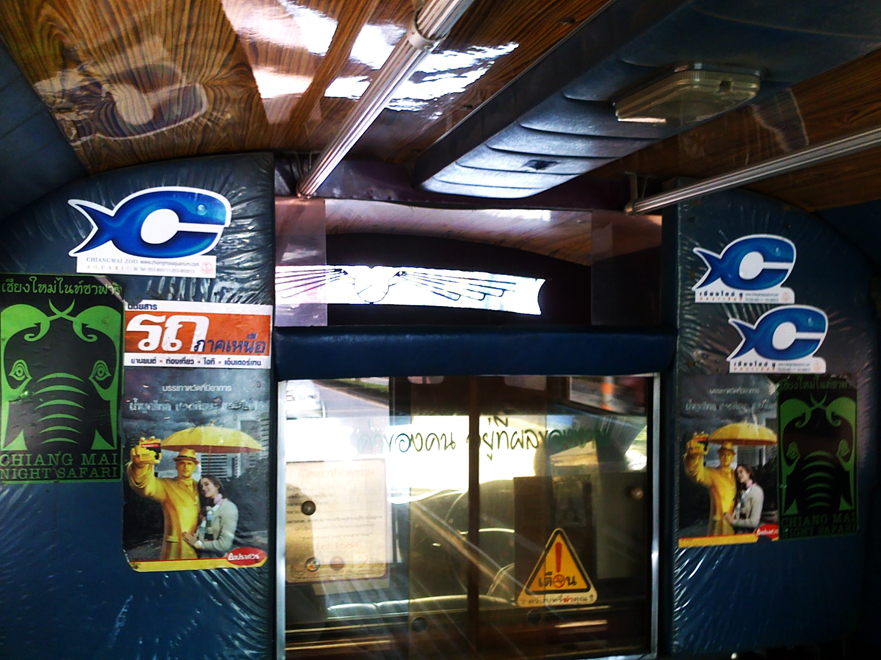
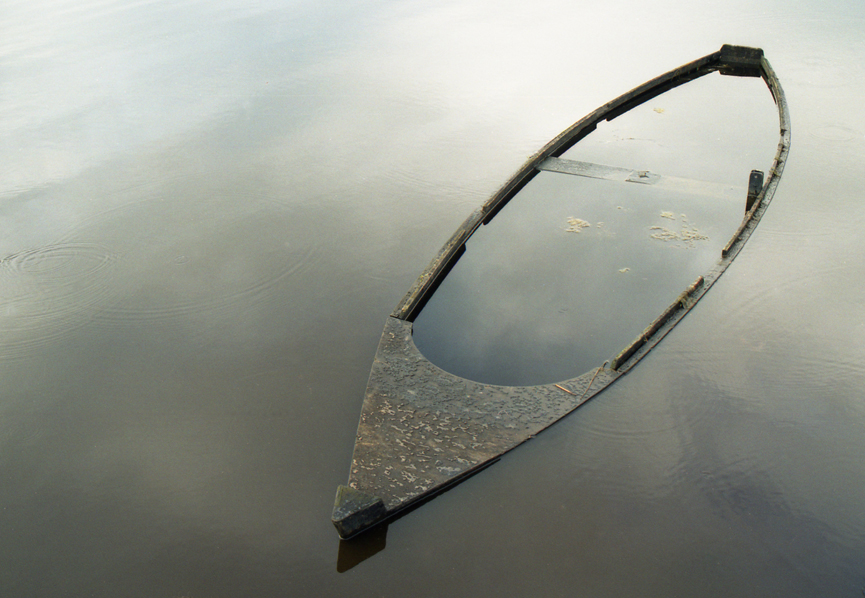
being here

131120121589

New Delhi: This is the 100th post! I feel like I should celebrate, I’m a blogger centenarian! But still a youngster, I think. Many bloggers are much older than me. So, what’s going on here? This blog is about the Buddha’s teachings, Advaita Vedanta, non-duality. I went public on July 6th, 2012 and I’ve been putting up new posts every three days, mostly, since that time. Now it’s ‘The One Hundredth’, and I was going to use that title for this post but it’s been used already – the 100th in the TV series: ‘Friends.’ The dhammafootsteps blog is, of course, about reaching out to friends, but the discussion is about just being ‘here.’ We’re all here in our various states of being, in different parts of the world; in different time zones and we’re all individually contemplating our own experience of being ‘here.’ Blogging is a good medium for this kind of thing because, just being ‘here’ is what everybody is talking about or describing, one way or another – isn’t it?

Here’s something from: Beyond The Dream: ‘…the awareness that looked out of our eyes as a five year old is the awareness that’s looking out of our eyes now.’ When I read that sentence it had a curious effect; there was an instant understanding of what being ‘here’ means. Then the next thought was, what is ‘the awareness’? And it’s a good question, that one, you can just go on asking it…. It’s like trying to understand sati-sampajañña, clear comprehension; what does that mean? And maybe I’m off somewhere searching for the meaning of clear comprehension, overlooking the fact that all the confusion is still there in my head. So, I’ll never find clear comprehension that way, because every time I think I’ve found it, the confusion just jumps up in its place. Eventually I realize clear comprehension means understanding the confusion. It has to be that way; clear comprehension of the confusion, and not some kind of desired state of clarity that doesn’t exist. The confusion is, I can’t see reality because I’m too engaged with the idea of it.

In the West we suffer from the creator-god condition; God made the world so the world and God are two separate things. I see the world from some impossible place outside of it; I’m on shaky ground here, in control mode, there’s the paranoia of thinking I can’t let it go and the fear of having to hold on indefinitely. All the clutter and stuff and mental goings-on and stumbling over all the indistinct, half-seen, misunderstood truths – believing that this is what life is about. Not able to see that it just doesn’t matter what kind of story is showing on the screen, it’s all fiction, created by the mind, arising and ceasing, dependent on causes and conditions and the karmic outcome of past events.

The mind doesn’t create awareness, mind is contained in the awareness. It’s something like, awareness is there, I just think I can’t see it. Thinking I can’t see it, is another mind moment that exists temporarily in the awareness. Being here is about getting to know everything there is to know about what that means….

————————-
world as thought-construct

Chiang Mai: 06.00hrs. Sitting on the cushion before the day actually begins and there’s that colourless light of dawn filling the room, a greyish-green glow. After what seems to be quite a long time, the day gets it’s total act together and the sun rises; things take shape in my vision and colour enters the visual world. The show has started. Sky is blue, sun is yellow, plants and trees are green. That’s how it is here at, 18°47’N, 098°59’E. I notice it because of having only recently returned to this place from the Northern Hemisphere where there are these same colourless dawns; but they’re followed by colourless days – often and unforeseen; the changeability of everything. For the local people there’s no experience of continuity.

I do find it curious here that every day is pretty much the same, some small seasonal differences but not much. For the people in this location it’s always been like this, of course. It’s how it was when they were born; it’s how it was when all known persons in their lineage were born and future generations will go on like this. There’s never any experience of anything being different from this. And for me too; all my sunny days in Asia in the last 30 years could be said to be simply one very long day – the period of night time is a blink of the eye; one huge flow of days, like moments moving along in their sameness, never ending.

In this context it’s easier to get a handle on the teachings of Ādi Śaṅkarācārya, in South India, in the 8th Century (the days were exactly the same then as they are today) and the Advaita truth of timelessness where the endless day, that I am experiencing now, stretches all the way back into the past and out into the future, in one continuous ‘now’ time happening everywhere. There’s no end to it and no beginning. Time and space phenomena are delusions, add-ons. There are, therefore, no causal relationships; cause-leading-to-effect is a temporal process – thought-constructed, and not what I take it to be because the entire objective world is a thought-construct, created by desire-motivated ways of thinking and acting. ‘…Time is generated by the mind’s restlessness, its stretching out to the future, its projects, and its negation of ‘the present state.'[6]’

Knowing this, from the Advaitist perspective, is the whole Truth. Nothing needs to be attained or done; one simply wakes up to the truth of Ātman/Brahman, and anything other than this is māyā, delusion. Where does māyā fit in? No explanation; it cannot be inside or outside Brahman; one doesn’t know where that could be (māyā truly is a delusion). Buddhist practice or any spiritual practice is not a solution to the problem, just another version of the problem itself. Any practice leading to an enlightenment experience maintains the dualism that it strives to escape; projecting a thought-constructed goal like this into the future loses the ‘now’, the place of liberation.

‘… there is absolutely nothing to attain, which is not to deny that that is something to be realized clearly. The difference between attainment and such realization is that only now can I realize I am that which I seek. Since it is always now, the possibility is always there, but that possibility becomes realized only when causal, time-bound, goal-directed ways of thinking and acting evaporate, to expose what I have always been: a formless, qualityless mind which is immutable because it is “nothing,” which is free because it is not going anywhere, and which does not need to go anywhere because it does not lack anything.’ [David Loy]

The colourless dawns, followed by colourless days in the N. Hemisphere did not bring me to this experience of continuity. I stumbled upon it in Asia and found traces of it in this location: ‘Everything – subject, object and the perceiving thereof – is inseparable from this experience-ing-aware-ing-ness … and who can escape this immanence?’ The Buddhist experience tells me there has to be a middle way in here somewhere. I’m looking for some route that allows Sankara’s truth of Ātman/Brahman to be combined with the Buddha’s no-self truth in nibbana. The Buddhists will say I’ll not find anything, the Advaitists will say there’s only One thing to be found: “all of the above”. But there has to be a middle way in here somewhere. The investigating process itself is the Path: ‘the nature of the self and causes and conditions.’ Beyond that is speculation.…

————————-

This post created with excerpts from: ‘The Path of No-path: Śaṅkara and Dogen on the Paradox of Practice’ by David Loy

Quote from: miriam louisa

Quote from: undividedexperience

– g  r  a  t  i  t  u  d  e – 

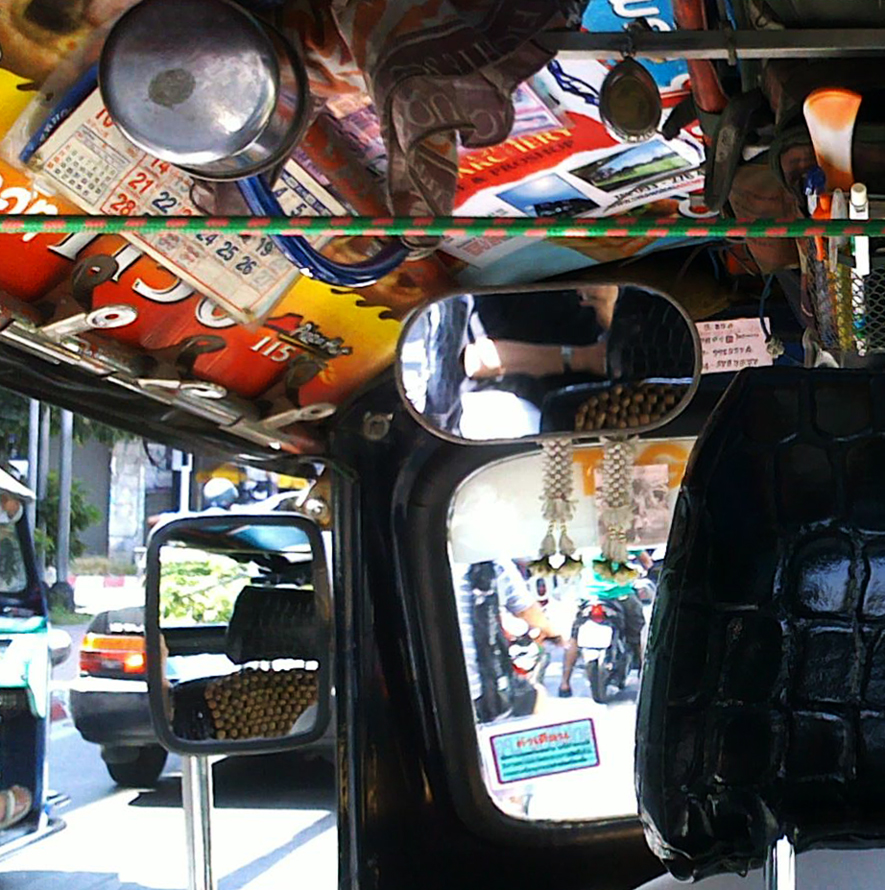
Photo image: Ch’mai TukTuk

Constructedness

Chiang Mai: I met somebody in a coffee shop the other day and he was saying, it’s all just words, isn’t it? We were talking about the difference between the Advaita Self and the Theravada Buddhist no-self. I was saying no-self is a deconstructed form of Self. The man in the coffee shop wouldn’t say yes or no to that (it’s all just words). Theravadin Buddhism is about seeing through the constructedness of the ordinary self we all experience as who we are. Take that to pieces through meditational investigation and wise reflection, follow the Path and you end up with the state of final deliverance, the unborn, ageless, and deathless; Nibbana.

Advaita doesn’t need to get into that because the state of non-duality is pre-existing. You can’t break it down into its parts because it’s already there. You just need to ‘see’ it. Speculative conjectures, say the Theravadins. The quest to know the Self in Brahman is simply the mind’s natural yearning for a comprehensive unity; trying to reach ‘Nibbana’ by intellectual means. What we need to do is remain grounded in actuality and by humble, sustained spiritual practice, work to liberate ourselves from the dualities contained within human experience. This living experience of things as they really are, is the starting point and framework. Buddhism attempts to diagnose the central problem at the core of human existence, dhukka and to offer a way to its solution. ‘This is suffering, this is the origin of suffering, this is the cessation of suffering, this is the way leading to the cessation of suffering.’ The Buddha didn’t say exactly what happens after that.

In Advaita there’s a kind of built-in narrative that seems to be associated somehow, more literalist than what I’m used to in the Theravadin Buddhist way. This is where I return to at the end of the day. Maybe it’s because that’s how I started out on the Path. I learned how to take things apart carefully to see how it all works; how it can be reconstructed or deconstructed and it looks like there’s no final state, the ‘world’ remains as transformation; it’s all about phenomena that are dependent on other phenomena, and nothing in the world has a true independent reality.

This is different from the Advaitist ‘absolute reality’, the single homogenous and continuous structure of Brahman, the ‘Oneness’. The question is, what’s the difference between ‘absolute reality’ and ‘no independent reality’? An intuitive sense tells me both ‘absolute reality’ and ‘no independent reality’ are relevant to the Path – I don’t see why there should be an impossible difference between them because the ‘Oneness’ includes everything. Like my friend in the coffee shop says, it’s all just words, isn’t it? Take the words away and and there’s nothing left – only conscious experience.

————————

‘Early Buddhism conflates subject into object. Consciousness is something conditioned, arising only when certain conditions exist. The self is merely an illusion created by the interaction of the five aggregates. The self shrinks to nothing and there is only a void; but the Void is not a thing — it expresses the fact that there is absolutely nothing, no-thing at all, which can be identified as the self.

Advaita Vedanta conflates object into subject. There is nothing external to Brahman, the One without a second. Since Brahman is a non-dual, self-luminous consciousness, consciousness expands to encompass the entire universe, which is but the appearance of Brahman; everything is the Self.’ [Enlightenment in Buddhism and Advaita Vedanta: 
Are Nirvana and Moksha the Same? David Loy]

Photo: People Carrier (Songtaew) Chiang Mai

non-becoming

OLD NOTEBOOKS: East Anglia: Dreamy half-formed images swim before the eye without identity, no recognizable or known parts of the image. I’m trying to see it this way: no identity, otherwise ‘self’ intervenes and it ‘becomes’ something [bhava]. I’m falling asleep again; still early morning, comfortably dark and sitting on the cushion on a futon on the floor in the upstairs room. One advantage of sleeping on the futon is that you can roll over and up into the sitting position on the cushion quite easily – a smooth transition from sleep to wakefulness. The disadvantage is that it’s difficult to stay awake.

The process of waking up in the morning means the mind is in the process of getting shaped into a form, a ‘self’, and it all gets locked down then; ‘becoming’. So what I’m trying to do here is not let that happen. Without the habitual inclination towards ‘self’, conscious attention gently searches out another way, one that is identity-free, no ID card. The problem is, of course, ‘self’ tries to take over, as usual and if the identity-free state is present, ‘self’ understands it to be sleep. So I start to drift off to sleep again. I see it happening and think: Hey! Why should the ‘self’ impose itself like this? But the ‘self’ goes around imposing ‘itself’ and making assumptions about everything all the time and if I were to just let it go on doing that, I’d not see that things are actually quite different from how they appear to be.

Continue the meditation by following the breath, and a curious feeling that I’m sitting at an angle, or the weight of the body is over on the right side and on the left side there’s something like an empty space… what’s happening? Next thing is, I’m thrust into another dreamlike scenario and some sort of memory sequence. Here we go, I’m falling asleep again and losing it all in the dreamy half-formed images of the sleep I just emerged from. Mindfulness cuts in when I remember to let it all go. Hold on and let go… I need to hold on to the intention to let go. Everywhere I look there’s a ‘self’ searching for an opportunity to create an identity, (sakkayaditthi) ‘personality view’. It’s what holds beings in the cycle of rebirth. Breaking out of the cycle is arrived at by non-becoming – allowing it to ‘become’ without becoming.

————————-

It does not appear or disappear.
It is not born and does not die.
It is neither constructed nor raised up,
Neither made nor produced.
It is neither sitting nor lying,
Neither walking nor standing still,
Neither moving nor turning over,
Neither at rest nor idle.
It does not advance or retreat,
Knows not safety or danger,
Neither right nor wrong.
It is neither virtuous nor improper.
It is neither this nor that,
Neither going nor coming.
[Lotus Sutra]

Photo: Louk Vreeswijk

Low Headroom

East Anglia: Here in the cottage and wide awake at half past three. There was a full moon shining in the window of my little room like a headlight in the clear sky and it woke me up. Came downstairs and got a fire blazing in hearth. The last of last years logs in the shed covered in cobwebs. Nothing has happened here for a year except the neighbour coming in to clear the junk mail once a week. Cold, quiet and that alone feeling; fields all around. I must be the only one awake in a radius of some miles, except for party-people and the night shift down at the Quay. I’m in this wide-awake condition, alert and ready to get on with the day, ears buzzing with the absolute silence of the English countryside.

In this 200 year-old building, the main door is very low, 5ft 6 inches; duck your head to enter and exit. Sometimes the rising up occurs too early and the head collides with the door frame.

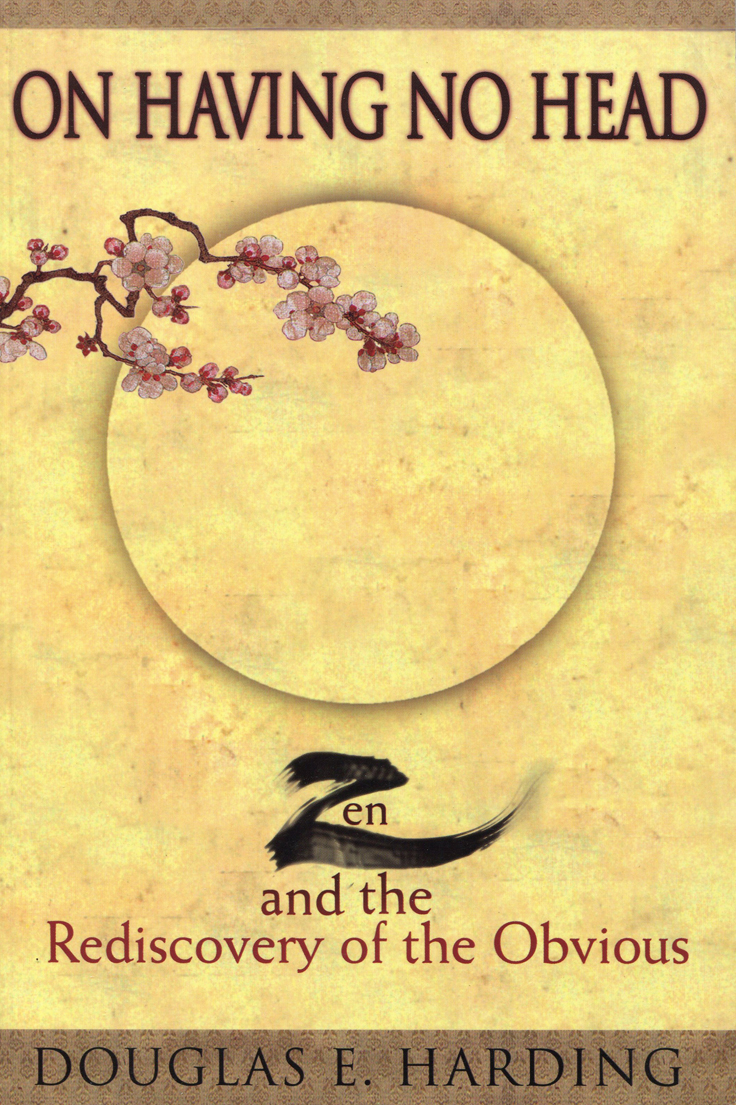
I know it well, it’s happened a number of times and thus I have this bruised head and resulting consciousness of the head situated at the top of the body that reminds me of Douglas Harding’s idea of Headlessness. I met him once at his house near Ipswich, not very far from here. He was my neighbour but I never knew him, met him only that one day when Jiab and I went to visit with two bhikkhus. We stayed for the meal and after we’d eaten, did the thing with the paper cylinder that Douglas used to demonstrate the headless reality. What I remember was seeing his cheerful pink-cheeked face at the end of the cylinder he and I were holding and the distinct fragrance of lunch. Sad to think he’s gone now. Douglas Harding passed away in 2007 at the age of 98. The photo above was taken in 2005.

After that I ordered his book: ‘On Having No Head’ on amazon and delivered here by Parcelforce, a company that sounds REALLY assertive. Looking at this now and the description of his visit to the Himalayas and that moment when he discovered he had no head: ‘…what I found was khaki trouserlegs terminating downwards in a pair of brown shoes, khaki sleeves terminating sideways in a pair of pink hands, and a khaki shirtfront terminating upwards in—absolutely nothing whatever! … this hole where a head should have been was … a vast emptiness vastly filled, a nothing that found room for everything—room for grass, trees, shadowy distant hills. I had lost a head and gained a world.’

The ‘headless’ condition he describes at length is something I’ve considered many times. Now seated here at the desk upstairs on revolving office chair, yellow vinyl floor surface, facing the small window, no curtains, dark black outside, the window glass reflects the interior of the room and back of desktop computer. I find the Douglas Harding Quotes page.

‘The lost Gospel according to Thomas, discovered “by accident” in an Egyptian cave in 1945, couldn’t have appeared at a more opportune moment in history, or with a message that speaks more directly to our condition and needs.’ [Link to: Douglas Harding Quotes]

Birdsong… sun is coming up and I see a flat landscape; low lying sunbeam illuminates a few remaining cornstalks in the harvested field, they are a golden colour. Blue sky, it’s a new day, clear away all the shadows of night and I’m pondering the evidence that all and everything is in the space where the head used to be. Is this what Jesus was really teaching? [Link to: Nag
 Hammadi Manuscripts]

————————-

‘… your humanity is like a disguise, an incarnation you have taken on to be here in this world. Inwardly you are God, outwardly you are a person – a unique person with a special contribution to make. Instead of thinking you are just that person, that appearance, you are awake to the Power behind you, the Safety within you, the Source of inspiration and guidance at the heart of your human life. This enables you to be yourself even more so.’ [Douglas Harding Quotes (link above)]

Main Photo, left to right: the Author, Catherine Harding, Douglas Harding, Ajahn Dhammiko and Ajahn Visuddhi

Causes and Conditions

I’M STANDING AT THE BUS STOP. It’s a public holiday, the bus times are Horaires Vacances (holiday schedule). Some buses are cancelled and I can’t be sure of anything. Heavy urban traffic situation, heat, noise and it’s been a day of struggling to be calm. Try to remember everything is as it should be. I’m just having to deal with this contracted mind, right now, that’s all. I’m tightly focussed on something very much ‘held’. I need to ease back from that. It’s the ‘letting-go’ thing again.

On the other side of the road there’s a noticeboard with the holiday schedule times displayed. I’ll have to go and take a look, but the constant flow of traffic means it’s difficult to get across; everything seems charged with the energy of: get out-of-the-way please? I manage to get over eventually and studying the bus times on the schedule and, at the same time, watching for the possibility of the bus coming on the other side; I have to be ready to make a dash back across the road to catch it. Causes and conditions by themselves; things seem unattached and random. ‘I am a construct; a body/mind existing within time and space. On some level prior to this, I selected elements that resulted in this problematic sense of self; this calamitous world I now experience.’1

A huge lorry pulls in next to me, squeal of brakes, hiss of decompression and it blocks out the view of the street entirely. I’m suddenly in deep shadow. The driver climbs down from the cab, holding an ice cream cone in his teeth so that his hands are free to hold the various handles and negotiate the steps down to street level. He takes ice cream cone out of teeth in order to speak. ‘Bonjour monsieur,’ holds ice cream cone in one hand and unfolds a piece of paper with the fingers of the other hand; difficult to do this and keep the ice cream cone upright, but completely calm. He studies the paper and reads out a company address.

Mr Ice-Cream man wants to know where such-and-such a place is and I can’t hear clearly because of the noise of car horns behind the lorry, and drivers shouting about him blocking the road. But Mr Ice-Cream man remains completely okay about that, looks at me politely with arched eyebrow as I tell him that he needs to go to zone industrielle and how to get to the road that leads in that direction. ‘Merci monsieur’, he says and climbs back up, ice-cream cone held again in teeth; gears wrench into place and lorry lumbers off, followed by a long convoy of harassed cars who’ve probably been following him for some time through these narrow streets.

After he’s gone, I get back across the road to wait for the bus at my stop. It still hasn’t come and I’m worried now that it could have passed behind Mr Ice-Cream Man’s huge lorry when I was talking with him – hmmm, this is not good… or maybe I didn’t read the schedule correctly? I should go back over and read it again, but if I do that, what’ll happen if the bus arrives over here and I’m over there and not able to get back to this side in time? Deep breath. The entanglement of anticipation; the actively ‘waiting-for-things-to-happen’ mode. I’ll stay on this side. After a few moments the bus comes round the corner, I’m reassured; a wonderful system that has it’s contingency plan monitoring function built-in.

Double doors hiss open, cool air-conditioning, I enter into the familiar world of ‘being taken’ and join the passengers facing the direction of travel: ‘We are going THIS WAY’. Bus moves off into the town. I’m seated, looking at the back of people’s heads and beyond that to the back of the driver’s head and the view of the street out front. I can see where we are going and I can turn around, look out the back window and see where we are coming from. The whole outside world is coming in through these large windows, passing through the inside and out again; it feels like there really is no bus.

I wonder if Mr Ice-Cream man found his way allright and where he is now ….

————————-

… Ramakrishna came out of his trance and acknowledged that if the world is an illusion of our senses then we ourselves are part of that same illusion…. The mind is a construct of the mind and therefore does not truly exist.’ [Peter Harvey, Wikipedia, 86.27.37.82 (talk) 22:36, 30 November 2011 (UTC)]

1[Link to: David Bingham, Conscious TV]

Bus Image: detail from a photo by Louk Vreeswijk

the seer & the seen

I’M ON THE DOWNTOWN BUS, on the way to meet Jiab to help her choose a new pair of shoes. There is this short piece I’m reading from ‘The Essential Ken Wilber’: ‘… the mystics are not describing the real self as being inside you – they are pointing inside you. They are indeed saying to look within, not because the final answer actually resides within you and not without, but because as you carefully and consistently look inside, you sooner or later find outside. You realize, in other words, that the inside and the outside, the subject and the object, the seer and the seen are one, and thus you spontaneously fall into the natural state.’ I have an understanding of this but cannot experience it right now because I’m holding on to something that’s causing it not to happen. I’m a ship sailing away but only as far as the anchor chain allows… tug! The anchor is firmly embedded in the duality of the world – I need to see that the anchor is part of subjectivity too.

Bus arrives at the stop and I get off. Go find Jiab and we look at a few pairs of shoes. She is browsing so I slip away unnoticed and wander into the men’s department to look around there. In the corner there’s a chair in the section where they have folded socks placed in display stands. Nobody here, secluded, I could sit on the chair and read my book. Okay, sit down, open at the page and then thinking there’s something interesting about this totally unknown place, it feels nice. And a quick decision, I’ll try some meditation, let go, and see what happens.

Eyes are closed for a while but flickering eyelids: the ‘public’ aspect of it is making me a bit uneasy. There is the tendency to open my eyes whenever there’s a sound nearby, wondering if somebody is coming. Difficult to concentrate, so I try it with eyes half-open. After a while I can gradually relax into this state of focusing, not on anything in particular, just focusing on focusing; the act of focusing itself. Looking at everything that occurs with mindful alertness.

It’s about the experience of just being here; random sounds, voices, and the patterns of socks folded in packs to show off their colourful designs. Folded socks all around, up above my head and down almost to floor level. There’s a kind of peripheral vision thing going on, pulsating colour: maroon, bottle green, cream coloured diamonds and brown/orange diagonal dashed lines – like North African ceramic floor tiles. All the sock patterns start to move and vibrate. This must be exactly how the sock manufacturers would want the sock-buying customer to view their product.

Phone rings; it’s Jiab. I have to go and take a look at shoes she likes. I can hear my voice in this small space I’m in, but it’s somehow not the ‘me’ I’m used to. I get out of there and next thing is I’m looking at Jiab’s feet in different types of stylish footwear. A purchase is made and we head for the exit. I have to wait there for a moment as Jiab goes back inside to get something and really for the first time I’m able to let go of a whole lot of habitual stuff.

Just standing there at the exit watching the people go by, the traffic, the noise; there’s something about doing this in a public place that makes it more meaningful. It’s also the first time for me to enter this kind of contemplative mind state outside of Asia – and in the familiarity of European surroundings. Then walking through the streets, I’m seeing blurred images of people going by in a strangely different time and space. What I’m thinking is that this kind of contemplation in Europe, in close proximity to other human beings in a public place where, normally, nothing like this ever happens, initiates a special kind of mindful alertness; and it is, what you could call, quite exceptional.

It goes on like this; moments of mindful alertness all over the town; easily falling into a state of no thought, just colours/sounds in the immediate environment. Then waiting for the bus, just watching that moment, and suddenly the bus looms up silently, fills my vision, get on, sit down and we sail away as one group contained in a large vehicle. Public transport is wonderful. All senses awake, functioning. Alert and wakeful about the surroundings, idle thoughts just become silence.

I am a human being on a moving bus, large windows and whole landscapes move through the interior of the bus in waves, washing away mind processes as we go on. Here, in all this movement, I can have a sense of: ‘…what I am looking out of is what I am looking at’, and what that means right now. I can see it’s about the journey to get there rather than the arrival because after that there’d be the full understanding of it and none of this would be important.

————————-

‘The Absolute Subjectivity that can never be objectified or conceptualized is free from the limitations of space and time; it is not subject to life and death; it goes beyond subject and object, and although it lives in an individual, it is not restricted to the individual.’ [The Essential Ken Wilber, The Real Self, page 23](see summary in Texts)


Listening 1

palmtree sunset

South India: Birdsong. A small wave of tiny notes. Sitting on the cushion under a thatched structure built on the roof. Focus on breathing, soft warm air, it’s the end of the night. Dawn light coming up. The birds near to me are surprisingly loud, so much energy from such a small body, such a tiny breathing system. There are these silent intervals, to take a bird-size breath of air, I think, then a long musical ‘verse’, and another silent interval for breath; the ‘song’ moves on to the next verse and so on. The regular pace of these silent intervals contributes to the pattern of the verses. Birdsong is a ballad, a story about something that goes on and on; more than enough; an abundance. It blows away the scarcity of my small mindedness. I can see why they call it ‘The Dawn Chorus.’ Sky is full of sound, a huge chord played on an instrument with a great number of strings

Listening consciousness and sound object are one and the same thing, there’s an affinity with birdsong. Maybe it’s about acoustic resonances of the bird cranium being all of a oneness as far as we other living creatures in the world are able to perceive it. And, part of it too, are the echoes in the spaces between things: reflective surfaces, tree trunks, branches, walls, the air, clouds. Sympathetic resonances create multiple frequencies like the echo it makes on the underside of my thatched roof. And now it’s gradually diminishing; no grande finale, just a musical occurrence that takes place every day and gets forgotten about as soon as the sun rises in the dramatic way it does, expanding into our lives and everything becomes secondary to that main event.

Other sounds become heard; ordinary household noises, miscellaneous gentle ‘clatter’ from houses through open windows. Dishes clink, aluminium pots make that dull ‘ding’ sound. A shout, partial sound of a goat. child cries, cock crows, dog barks, a bicycle bell, street trader’s call, a car horn honks. Something clinks, and it goes on, individual recognisable sounds all appear in consciousness exactly as they occur, no end to it. Each has its own space, situated in its place in a clear sequence, one after the other.

I’m thinking there’s something about it that suggests a composer could create an orchestral symphony out of this? But it doesn’t work that way, I realise. It’s not the ‘actual’ sound I’m listening to, it’s the ear consciousness function that is set to rationalise the flow into an orderly pattern of ‘virtual’ sound. Each unit of sound has a place, according to how the consciousness function selected it, unknown partial sounds are replaced by known sounds, ear consciousness triggers a process so the object is placed according to the ‘closest match’ that can be found in the filing system.

The actual sound space I’m surrounded by may well be a tremendous complexity of pieces of things; an ocean of permutations. There’s some insight into what this amounts to but I know I’m not even taking on anything resembling the scale of it. I seek stability from this chaos: the ‘self’ shapes the randomness of the universe into a manageable chunk and I can settle with that thought.

‘In the normal way, attention shifts from one thing to another. Surprising events grab the attention: other chains of thought wait to be finished as soon as there is a gap. So there is never any peace. This is efficient in using all available processing capacity, but what does it feel like to be … in such a system? I suppose it feels like most of us do feel – pretty confusing. The only thing that gives it any stability is the constant presence of a stable self model. No wonder we cling to it.’ Dr. Susan Blackmore [link to: Science tackles the self ]

[Link to: Listening 2]

rope seen as snake

OLD NOTEBOOKS: Nontaburi, Thailand: Alone in a house surrounded by trees. Leaves filter a lovely green light all around; birds, lizards, squirrels, I see something move out on the patio… is it a bird, dropped down from a branch to peck at something? There, it moves again – just a hop and it’s a few feet further on. I sit very still, don’t want to frighten it away. I see it now, in the same position, not moving. After a long time waiting for it to change position, I decide to slowly get up and see what happens when I do that. It’s still not moving – maybe it’s injured. I go out on the patio and walk up to it. Ahhh… the bird is not a bird, it’s a large brown leaf, blown by the wind across the patio surface.

Go back inside and look at it again. It looks exactly like a bird, and just then a gust of wind blows the leaf. The animation of it is absolutely convincing, but I see it now as a leaf, not a bird. How strange, believing that something is there, then having to accept that it’s not. The teaching about the rope and the snake; a piece of rope lying on the ground is thought to be a snake. It’s an analogy of ‘self’ seen in consciousness + name-and-form: I recognize that the rope is a rope, not a snake, and can see how the illusion occurs. Or I may not see it and be convinced it’s a snake… maybe for a long time – a whole lifetime preoccupied with a ‘self’ that isn’t there.

This small epiphany occurs after another curiously similar event took place in this quiet house. I’m alone here except for D who is a grad student, working part-time, and he also takes care of the place. I don’t see D much, he works night shift sometimes, sleeping in the middle of the day. The house is large and I’m never absolutely sure if he’s here or not. Usually he stays in his room so I’m used to not seeing him around. I just quietly go about the house, day after day, not making too much noise in case he’s sleeping and quite often forget about him completely.

Then, just the other day, I start to wonder what happened to him. I look in the car park and his car is not there. When did I last see his car? Two days ago, or longer than that? I go to look at his laundry – could be the same laundry that’s been there for a while… clothes without a person inside them – remembering the movie: The Time Traveller’s Wife. I have to stop for a moment and think, when did I see him last? Go up to his room, door is open, nobody there. Hard to believe, I assumed D was in the house but I’ve been alone the whole time. The leaf-seen-as-bird metaphor. Something I thought was there, wasn’t… thinking it’s one thing, then it’s not. The usual sense of ‘me’ suddenly gone… then it returns again. Everything feels light and transparent.

‘It was as if lightning coursed within my chest. The impact lasted for a while, and for the next few weeks whenever I saw people, they seemed like a magician’s illusions in that they appeared to inherently exist but I knew that they actually did not.’ [‘How to Practice: The Way to a Meaningful Life’. The Dalai Lama, in the sixties reflecting on the Rope Seen As Snake metaphor, phenomena being dependent on conceptuality and his discovery that the “I” exists conceptually, dependent on mind and body; not an entity in itself] Source: Emptiness and Existence:

————————-

This post reblogged from July 12, 2012 

Jesus and Advaita Vedanta

 I didn’t know about Advaita Vedānta when I was a child and only recently discovered there were people like Alan Watts (and others) writing about non-duality in the Christian context, [link to part of the Alan Watts’ essay: This Is It].  Now I’m convinced it is important to focus on the fact that there is something at the heart of Christianity. The uncomfortable feeling that’s followed me all these years – that somehow I missed the point of the Jesus Teaching – all this has gone when I think of the Advaitist aspect of the teaching. It’s the missing piece of the puzzle I just stumbled upon, coming from an Asian perspective, an inductive knowing and that’s how it works.

The reason I didn’t see it before is because the Western concept of God, having human attributes (similar to the Advaitist idea of Ishvara), contradicts the rational scientific view. Accepting something that’s scientifically impossible, just because it’s written down in the Bible, doesn’t make sense. It’s like a myth and that’s why Christianity never had any reality in the West. What’s needed is to take it all a bit further.

‘… when human beings think of Brahman, the Supreme Cosmic Spirit is projected upon the limited, finite human mind and appears as Ishvara. Therefore, the mind projects human attributes, such as personality, motherhood, and fatherhood on the Supreme Being. God (as in Brahman) is not thought to have such attributes in the true sense.’

In Western countries, people are wandering around without a map. There’s the shopping mall and that’s all. How to let go of the individual ‘self’ if everything in the system is aimed at getting you to hold on? Looking for the way out by browsing possibilities will take a lifetime. The distractions built-in to window shopping behaviour are designed to keep you ‘shopping’ and prevent you from finding the way out too easily. By the time you get there you’ll have forgotten what it was you were looking for.

‘The Advaita Teachings are pointers, offered at the level of the audience, so to some people Jesus would talk about “a mansion with many rooms” and to other people he would say: “(heaven) is within.” (And) without understanding Advaita and the way pointers are adjusted depending on the audience, (most) Christians haven’t a clue what Jesus was talking about ….’ [link to Advaita Vedanta page]

Those who didn’t fall into the shopping mall trap just took the belief ‘thing’ to pieces to see what it was made of. That’s how it was seen that there was/is no substantial “self” in the centre of consciousness. It’s an operating system that keeps all working parts in the state of  ‘oneness’. ‘We are, right at this moment, God itself, and we can rejoice in that – if we can break out of our individual identity….’ If someone had been able to explain it to me like this when I was a child, the challenge to find out what it could mean would have been enough motivation for a lifetime.

‘When you fully understand that which you are and cannot not be, there is nothing to do to be what you are.’ [Jac O’Keeffe]

………………..

I wrote another post about this: ‘Jesus and Churchianity‘.

Note (i): There are two references in the Upanishads: aham brahmasmi (Brhadaranyaka Upanishad 1,4,10), and tattvamasi (Chandogya Upanishad 6,8,7), the instruction of Svetakatu by his father – very much earlier than the Jesus teachings. The 8th Century development by Adi Shankara is something for a later post. [link to ‘Christian Consciousness and Advaita Experience‘]