a terrestrial ocean

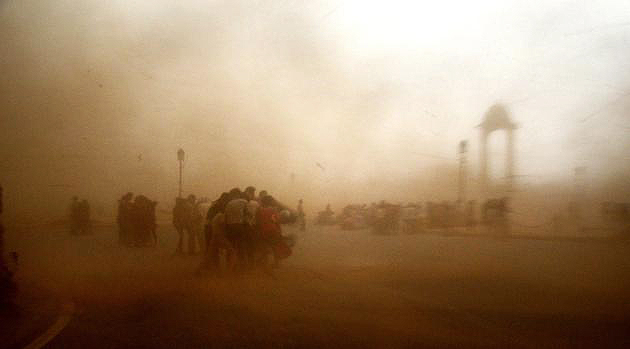
D-NDcropPOSTCARD #24 Delhi: It’s colder here at this time of year. No fans, no ACs, people have their windows open and you can hear TVs, the clatter of dishes, cooking pots, ding, and bits of other people’s conversations. A child crying, a dog barks, somebody calling a person’s name in a language I can’t understand. It dwindles down as everyone settles in for the night, silent breathing in all the labyrinths of rooms and apartments that surround us here; people asleep on the floor, in beds, in cots, in hammocks. That’s how it was last night, then just after midnight, there was an earthquake.

Jiab wakes up, gives me a shake, ‘earthquake’ she says (Jiab is a linguistic minimalist). It takes me a moment to realize the house is trembling, bed is shaking, floor is like a sheet of tin stretching out from here to everywhere, connected with all other houses in the community… and the uneasy sensation of it undulating slightly; a flexibility, like the surface of the sea – a terrestrial ocean. Voices of neighbours outside, shouts and kerfuffle.

After a moment it settles down and the urgency passes. Trying to be mindful but I feel like I could go back to sleep maybe, just lying there, waiting to see what’ll happen. Then there’s another tremor, and we’re back into the unstable feeling again; louder shouts of voices, and more commotion outside… hmmm, the idea of death just going to arrive one day, anyday, could be a Tuesday, for example, or a Thursday, yes, nice if it were a Thursday.

Falling into a half sleep; there’s that Donovan song ‘Jersey Thursday’… did he mean the pullover or the island? Another tremor rocks the bed slightly and the gentleness of it helps me to drift off a little bit more. The day I die will be an ordinary day, nothing different about it. The moment after I’m gone the next moment will come along; that’ll take place, and there’ll be the next day, the next week, the next month, the next year.

No more holding on to ‘me’, the identity; who’s who or which is ‘what’ and ‘where’, ‘how’ and ‘when’ and ‘why’… particularly WHY? How to answer that? It’s M’s favourite question, she’s only 9 years old and has this curiosity about everything. Well, it’s just the way it is, you know? It’s all happening for it’s own sake, the inevitability of circumstances – things moving along of their own volition and whether they continue or discontinue doesn’t seem to be a question. (M looks at me: ‘… yes, but WHY?’) It’s like a story that I may think will, one day, come to an end… the final curtain: THE END, but it starts again and the period of ‘ending’ becomes a defining characteristic of it all: it ends sometimes and then it begins again. More like an epic anthology of short stories: ‘as old as we are able to imagine’ and going on forever, the panchatantra, the great cycle of it is always there. All the way out of this tiny space and knowing I’m an integral part of the whole universe.

It’s 4am, can’t sleep, get up and go through to the front room. Start up the laptop and google ‘earthquake’… amazing, the news is there already: ‘Four earthquakes (in Delhi) within a period of 4 hours, measuring 3.1 (12.41am), 3.3 (1.41 am), 2.5 (1.55am) and 2.8 (3.40am) on the Richter scale respectively. No reports of any casualty or destruction of property received so far.’ [reports: NDTV]

————————-

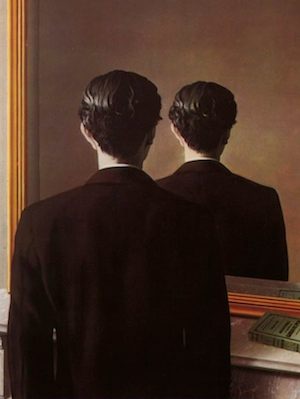
Upper image by Manish Jain spiritualartwork.wordpress.com

uncertainty (mai nae)

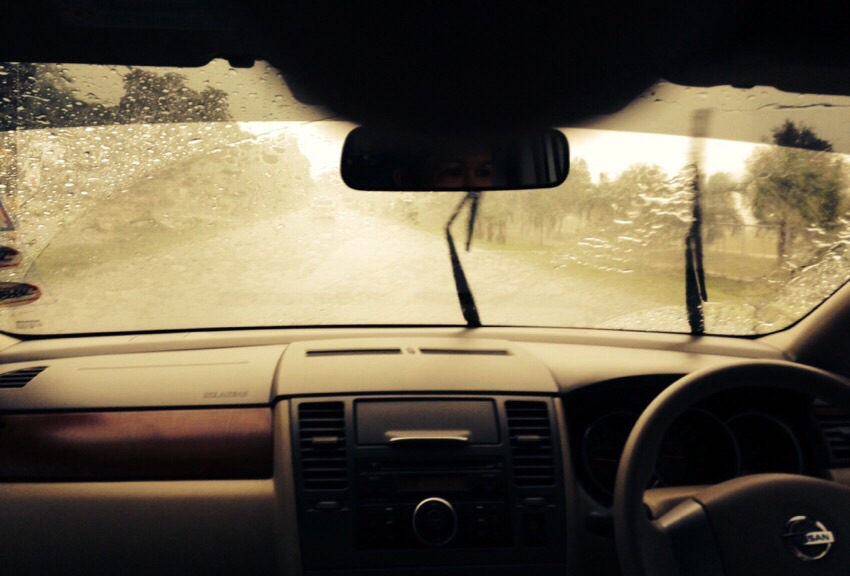
IMG_0141POSTCARD #13: Bangkok: Raining heavily at the airport, poor visibility on the highway into town. Traffic moving steadily through the downpour, a large spray of water hits the windscreen, sploosh – like driving through a car wash. Reminds me of Scotland, wild, wet and windy; weather is unpredictable. You expect it to be one thing but it’s something else instead; uncompromising in its insistence that it is what it is – and not what you think it is. Thai language/cognition is like this, so different from the West; making assumptions based on the Western model doesn’t always get you where you want to be.

I explain to the taxi driver where I want to go, saying there are two ways to get there: he can go on the tollway but better to take the turn that gets us on to vipawadi. We come to the place to make the turn, but the driver doesn’t go that way; we pass it…. It takes a moment for me to see what went wrong: he’s thinking the vipawadi turning is the way I don’t want to go, not the way I want to go. All it takes is one small slip in the logical sequence of the language and I get the opposite of what I intended. Ah yes, well, sometimes it’s like that. No holding on unduly to things you expect to be ‘right’ when they prove to be otherwise. After two decades in Thailand, I suppose I’m used to it; a familiarity with not quite knowing what to expect. ‘…many problems are the result of us expecting that there should be a solution.’ [Ajahn Tiradhammo]

Thai semantics are a bit elusive, the language doesn’t stretch the way you’d expect it to. Anticipating reactions to a request, statement or question – not the best way to go. A structure created by words to explain a concept and the assumption is that the listener understands what I’m saying in the way I mean it to be understood, but it doesn’t work like that. Words are just reference points; they’re sort of out there, ready to be shared with everyone. People interpret them in the way they understand it best. Usually it’s the meaning I’m hoping for, but not always. I try to be minimalist, the complexity of it reduced as far as it’ll go. Allow the selected words to carry the meaning and if it’s misunderstood, try to find an indirect way to approach the problem by letting go of the idea that it’s somehow ‘wrong’. This is ‘the land of smiles’, a cultural  tendency to not confront the issue – we become so focused on the ‘should’ we forget the ‘maybe’. The journey takes the time it takes, through the floods and downpour, but we reach the house okay, of course. The sky clears. Rainbows, green leaves in the trees drip crystal drops… soon after that the rain stops.

‘We can easily get caught up in thinking that life should conform to some definite plan. But by keeping a close connection with the truth of uncertainty we can soften the resulting frustration and negativity when the plan doesn’t unfold the way we think it should. We may even gain a clearer understanding of the real nature of plans: mere concepts about possibilities, rather than concrete programmes of actualities. Then whenever we find ourselves having to make plans we do it in pencil with an eraser in hand, and with the clear understanding that many other possibilities are available as well.’ [Ajahn Tiradhammo]

————————-
‘mai nae’, in the Thai language, means ‘uncertain’ – the living expression of the fundamental Buddhist teaching of anicca, or impermanence [Ajahn Tiradhammo]

plasticity

190320131769Chiang Mai: Holding the inverted eye-dropper bottle close to the eye, head back and squeeze a drop… it goes in, blink, and overflows, trickles out of the corner of the eye down the cheek like a tear drop and falls into the ear. I wipe it away with a tissue – the action triggers a memory, something emotional. I have new vision now, eye surgery for cataracts. The left eye is done, the right eye will be operated on next month. I’m seeing everything with such clarity; hard to believe the natural process of seeing that I’ve taken for granted all these years now involves a plastic lens. I see the world refracted through a man-made device and it doesn’t make any difference – well it does make a difference, of course, it’s very much better. My glasses don’t do anything any more; in the good eye the lens distorts vision, in the bad eye it enhances some things but it’s dull, blurred and yellowish in colour. I’ve had an overhaul – like taking the car to the garage to have new parts fitted. Or it’s how the system gets updated, the latest version is now installed. I feel renewed.

There’s this plasticity about the human body (and mind) that allows all kinds of changes to take place. I’m a Buddhist and I’m inspired by the thought that things can adapt, evolve, move on. It feels like there’s no such thing as getting stuck with anything or any state of mind, because we can learn to ‘unstick’ from it. In the same way, we can study a new subject; we put our minds to it, get interested in it and learn how it works. If I’m stuck with something, I’m attached to that thing in a strange kind of way; a locked-in response to adversity – more of a driven, unaware action than something done knowingly, mindfully. It’s a deluded attachment to habituality and I’m inspired by the very real possibility of working towards being free of this; acting always in awareness, seeing clearly.

Metaphors like ‘clouded vision’ describe tanha, habitual craving for something thought to be deservedly earned because of the endured hardship seemingly required to get there, unaware that one gets lost in the getting-there and there’s no end to it. Because I don’t normally understand things as they truly are, usually it’s how they’re seen habitually, I choose to see everything according to what’s already known; apperception, understanding newly observed data in terms of past experience. Before I get stuck in the delusion that it’s unavoidably like this, an opportunity arises to escape the cycle at Step 7 vedana in the paticcasamuppada (Cycle of Dependent Origination). Interrupt the causality sequence, go to the door leading to the emergency exit, aware that in the Buddhist sense of ‘no-self’, the habituality of mind’s perception of itself as the central actor in its own world, personality-view (sakkaya-ditthi), is the root of the problem. Step out of the cycle and I’m free…

Then later that night, walking to 7-eleven to get a few grocery items and I leave my glasses at home because they don’t help – I’ve worn glasses for most of my adult life and this is the first time I’m going out without them and at night time too. It’s been raining, there’s the glare of car headlights, and street lights reflected in large puddles. Only a short walk and arriving there, I notice some of the tiles on the floor of the lobby forecourt at the supermarket are shiny, glossy, and these must be new ones, replacements for the ones that were damaged? Why am I seeing this? I cover the good eye and look at the tiles with the old eye, no it can’t be seen, but I can see them with the good eye. It’s a repair I’d not have noticed before. People must think I’m acting strangely, better move along. So many discoveries about the world, and I’m stumbling around like this, seeing everything for the first time…

800px-ChiangMaiNightMarket————————-

‘Instead of starting with a perception or a conception of anything, the Buddha established a way based on awareness, or awakened attention. This is an immanent act in the present. It is sati-sampajañña, an intuitive awareness that allows the consciousness to be with the present moment. With this attention, you begin to explore personality-view (sakkaya-ditthi) in terms of the perceptions you attach to as yourself.’ [Ajahn Sumedho, The Problem of Personality]

Upper photo: Interior of Chiang Mai songteaw (public transport vehicle). Lower photo: Night Market, Chiang Mai


a kind of alertness

100720131952POSTCARD #01: Chiang Mai: A slight breeze disturbs the wind chimes, tinga-tingaling… ting. An unfinished sequence of musical notes. It diverts my attention from these rememberings, one by one, rushing towards me like a single wave quickly covers the smooth beach sand for a moment then recedes. The wind chimes again: tingaling-ting… ting, a sense of something suspended, isolated, uneasy – butterflies in the tummy – why should it be like this? The fact that I don’t know why it’s like this, causes the uneasy feeling to be there, ‘a riddle, wrapped in an enigma.’ Uncertainty, impermanence, the Ajahn Chah teaching, ‘Not Sure’ [mai nae]; poised on the edge of something – a kind of alertness. I’m going to UK, it’s to do with that; leaving Chiang Mai tonight, only a few hours left. Flight to Bangkok, change planes and I’ll be in London on Sunday morning – 5½ hours in the past. Thinking about Inkland (England, as M calls it), a great flood of memories and the revisiting of these times. I’m not feeling sure about it; Inkland is such a ’proper’ place (compared with Thailand), not sure about being not sure and remembering other times when I was not sure.

Only two weeks in the UK and too many things to do; a sequence of events planned; connecting with trains often delayed, sometimes cancelled, and meeting people in places I don’t know. So many things dependent on so many other things. And so much of it is unresolved until it unfolds, piece by piece and fits together in the right order. A handful of printouts of train tickets and hotel reservations, it’s hard to keep it all in my head. I feel cramped, it’s time to finish off planning for this event – the event is already here, it’s happening now! Time to get ready to go to the airport. Tidy up this placet; the Zen of housekeeping, inner peace, do the ironing…

Hot iron on freshly laundered fabrics, comforting, homely, perfumed smells. It has a soothing effect. Ironing out all these little wrinkles, the silvery nose of the hot iron smoothens them all away, warm to the touch. Place the folded packets of clothing in the suitcase. Peace and flatness. Being mindful of the ‘not sure’ thing, it’s caused by my being not sure about it. As long as the uncertainty is out there somewhere, neither in nor out, it’s uncertain. So I know I have to embrace it, give it a hug, be open to it and allow the uncertainty to enter – there’s nowhere else for it to go. The willingness to let it in, leads to an immediate sense of release, inside and outside. Wind chimes go: tingaling again, joyful sound. Passport, ticket, wallet, I’m on my way. Goodbye house, anjali…

————————-

a sense of release

Pindabat 07Chiang Mai: 06.30 hours, sitting on the cushion watching the breath and listening to the monks chanting, some distance away. Soon they will stop just below my window, it’s takbat, people offer food, and there’s a special chanting of thanks anumodana. Suddenly the sound fills the room, that particular pitch of human voice frequencies that brings with it a kind of physical sense, an awareness of the body, heat, air, fluids, and bone, the experiential aspect of simply being alive, here and now. It has a familiarity to it, a resonance in the air triggers consciousness of the chest, drum-like lung cavity, the heart organ and the lower abdomen, limbs extend out from the centre. The soft hot brain organ at the top of the body, cranial cavities behind the face, ear membranes. It’s a discovery to revisit this known experience of the living body. There’s life for a short time. Then there’s death, something every living being is deeply familiar with; a feeling that’s comforting and stable here that says, Yep, this is OK… it’s allright, it’s exactly as it should be. There is no death; there’s only the end of life.

Somebody I know died recently and I’m a bit caught up in it. The memory of that person is all there is; faded like an old sepia tint photo. Where ‘is’ he right now? Do I believe in the idea of a heaven? I don’t know. It’s not an idea; it’s real. I choose to think in terms of reality – not abstraction. The enigma… the empty space where that person used to be. Nothing there now, but that’s just how it seems to be; if it is just ‘nothing’, I’d need to have something else there to confirm it is nothing. So it’s ‘nothing’ in the sense that it’s not ‘something’, not anything? Language tends to identify things, I have to try to see past the concepts the mind creates: ‘nothing’ is more like a feeling of no-thingness. It’s accepting change, aniccan, an easing-away from the tendency to hold on, to adhere, to stick like glue. Releasing that heaviness that doesn’t have a name; welded metal, concrete, brick and iron embedded in stone, it all just fades away. ‘melted into thin air … the baseless fabric of this vision… we are such stuff as dreams are made on…’

Thinking about death is really thinking about life. It’s always an overwhelming wonderful moment; story with a happy ending, details accumulate and appear to have form and direction. But only when the end comes near does it have a context. There’s something about it that’s seen in hindsight. The route by which I arrived at this point becomes somehow … satisfactory, just right – it was the correct way to come here and everything seems to unfold from this place. A curious reversal happens and I’m on the route to getting here and at the same moment I’m looking back on how it happened and how everything happens like this. And time is ordered, in the sequence it is, simply because it would be too confusing if everything was happening at the same moment.

In the end what’s left is the conscious experience of just sitting here in this quiet room with morning coming in through the windows. The monks have gone; nothingness means ‘I’ no longer have the burden of ‘my’ thoughts about ‘me’. There’s something  very normal about it; I let it all in and let it go; a great sense of release, of peace, of rest, of ease and gentleness…

————————

Photo: Monks go to collect food in the morning, from the WPN collection

how it seems (1)

2013-01-09 11.48.37I SEE THE WORLD through a built-in selection process that reflects and supports the default state of mind; it’s like fish cannot see the water they swim in; so obvious, yet… but I can get it to fit, more or less, according to my likes and dislikes and fall deeper into the dream. I make it into something good or bad or whatever and the fact that I can’t see it – well, it just does that. I call it reality. How I perceive the world is dependent on causes and conditions that were here before I was born; you could say it comes with the software. I think I’m an independent being not affected by anything or not affecting or influencing anything else. I can’t see this is a work of fiction and it’s all being monitored by the ongoing needs and requirements of an entity I created; a ‘self’ that has no real substance. I’m dismayed, of course, by how it all gets swept away in randomness; subject to the kamma, unknowingly created at some earlier time.

 ‘… It’s because of not understanding and not penetrating this Dhamma that this generation is like a tangled skein, a knotted ball of string, like matted rushes and reeds, and does not go beyond the cycle of the planes of deprivation, woe, and bad destinations.’ [Tanha Sutta: Craving” (AN 4.199)]

The outer world just rolls along, as it does, in all its diversity, and totally neutral. Whether there’s belief it’s this or that, makes no difference; it’s just how it seems. The devastating emptiness of it all means the population is driven to get and do and attain and protect and defend. It’s a battlefield. To avoid and deny, to have fear and anxiety and be controlled by authority and feel threatened with the flimsy nature of existence, although the absolute fragility anicca, is the beauty of it. But the population can’t see it like that. They are clutching at straws but don’t see it like that; don’t see they are maintained in an unknowingness of the world like penned animals are by the farmer, well intentioned though he may be, in order to cultivate a special kind of hunger, upadana tanha (clinging and craving) – and the economy depends on this. The greater the craving, the faster the turnover of stock and the Western style of God together with governments and the corporations are simply involved in farming the population.

I can understand why the Buddha was thinking the Dhamma was too subtle and there was no point in teaching it because no one would understand. I can see how, in those historical times of feudal hierarchy, it would have seemed impossible to create social change…. and is it any different now? It seems just as impossible for people to understand today. I wonder if I really fully understand it myself. I’m no different from other people, this is our shared suffering. But the Buddha changed his mind about it being too subtle. He said there is a way out and we can find it in the framework of the Four Noble Truths. The teaching has survived 2600 years. Understanding replaces misunderstanding; ignorance is pushed out. There’s a simple curiosity and this quiet state of at-ease knowingness….

Big_Buddha_statue,_Bodhgaya

————————-

castles made of sand

2013-01-13 09.40.12

Chiang Mai: Traffic congestion at the intersection and everything comes to a standstill. The tuktuk driver makes some remark, I ask him what he’s saying and out comes a whole string of words I think I can’t understand. Then I start to recognise a few familiar vocabulary items and can reply with the same kind of observation. He laughs and says this thing I’ve never heard before: jai yen-yen (heart stay cool) jai ron mai dai (heart hot – not okay). So what now? He looks around to see if we can do a U-turn; not possible, we have to wait and see, and he switches off the engine. Sit back, relax, silence, it’s strange to be suddenly quiet after the large sound of the 2-stroke engine stops with the flick of a switch. Seems like another world; sitting on a sofa in someone’s living room, decorative chromium bars – an old-fashioned ice-cream parlor on wheels? The driver has photos of his family stuck above the windscreen, and decorative flower garlands swaying in this slight wind. No walls, a canvas roof and the outside world enters my space, like it’s always been here; the inside merged with the outside. Birds could fly through… it’s odd, just metallic creaks and the sound of other engines turning over. The smell of fuel, tarmac; this is somewhere in some part of town. Ah well,  I’m glad it’s not too hot, we might be here for a while.

I could send someone a text message …reach for my phone – then resist the urge. Okay, so, what’s the plan? All things are now directed here: the Plan; an habitual thing from long ago, frequent updates, always in line with current changes. It’s a comfortable space I create in the mind and that’s okay but sometimes I feel compelled to have a plan about the Plan. Then a plan about the plan about the Plan. The Plan is an end in itself, detached from its location in some future time, it’s now placed in present time – more like a plan for the present moment. We’re always only part the way through anything, anywhere, anyway and never at the end – we just don’t know what happens after that. Nobody ever came back from What Happens After That to say what it was like… we just don’t know.

Nothing is permanent, anicca, but the intervals between change may be immense; it doesn’t change for a very, very long time – then it does. I have a vision of it coming to an end one day… there goes the world, collapsing like a dead star, all matter reduced to an atom… all gone in a flash. Or maybe it’ll be slower; bits start to fall off and you hardly notice. And there’ll come a time when the System and all who sail in her will begin to fall in on itself like great empires do that have spanned the centuries; in the end, become too unreal and like castles made of sand and all things subject to collapse, tumble to the sea – nothing is permanently permanent – eventually. But it depends how you choose to see it, of course. In a different kind of temporality, it would just arise again and pick up where it left off; a continuous unfolding transformation and that’s how it is, even as we speak.

Something happening up front, cars beginning to move, the driver switches on the engine and it starts up immediately, a few turns of the throttle and we’re suddenly not there anymore, away in an exhilaration of speed and noise….

————————-

‘For many lives I have wandered, looking for, but not finding the house-builder who caused my suffering. But now you are seen and you shall build no more. Your rafters are dislodged and the ridge-pole is broken. All craving is ended; my heart is as one with the unmade’ [Dhammapada v.153-154]