metta, ‘that loving feeling’

POSTCARD#339: Bangkok: The 4 Brahmaviharas, maybe you don’t know about these wonderful states of mind, if so they are a light in the midst of all this political darkness swirling around Valentines Day 2019. It’s hard for me and sometimes I think of it as searching for something that’s lost. So inexplicably lost that I’ve forgotten what it was I was searching for too, and I don’t know what I’m doing any more. No point in trying? No because I’ve found it in the past, and I remember how wonderful it was. Besides, it is well documented in the Buddhist discourses and, beginning with myself before moving on to other persons close to me and outwards to others with whom I may have an ambivalent relationship: “may I be well, may I be free from suffering, may I not be parted from the good fortune I have attained. It’s not easy but through these willful intentions I’m able to liberate the mind from time to time.

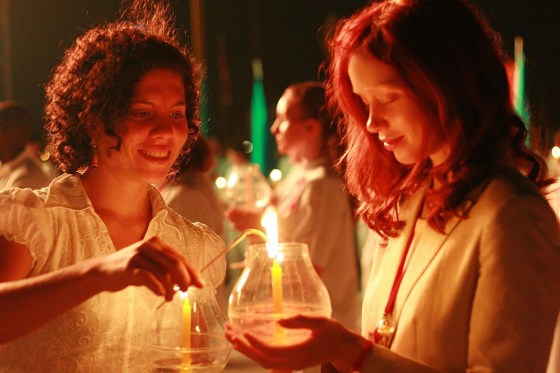
  1. metta (Pali), is that loving feeling, the practice of cultivating loving kindness, universal love. All beings have the innate ability to generate metta; loving kindness; an intentional dwelling in heart-felt emotion. Breath meditation with a focus on the breathing organs which are situated in the heart; metta-chit, with a heart of loving kindness, wishing all beings well, using thought to generate goodwill… like falling in love with goodwill, in its highest form, over and over again.

Through the practice of meditation, metta is felt in the centre of one’s being; the middle of the chest and radiating outwards on all sides. But these days, when I try to bring out that feeling of loving kindness, I experience pain – even though it’s been months since the violent ‘punch’ exactly in centre of the ribcage… the aching is still with me. Also the damage to the right occipital nerve (right side of the forehead) echoes and reinvents trauma of some sort or another although these last few years this too seems to be less than before.

Distressing, the thought that I may have lost the ability to generate loving kindness. There is however, the ability to receive metta through the goodwill and generosity of Noble Friends in the form of compassion.

  1. karuna (Pali), compassion is what goodwill feels when it encounters suffering: it wants the suffering to stop. Karuna is the capacity to remain present in the face of pain and suffering, dukkha (Pali). “May all beings be free from suffering.” Karuna essentially is the application of goodwill.

Whereas dukkha generates an urgency, more and more suffering, karuna is right in there, trying to understand the suffering, at the same time generating wholesome intention, and looking for the way out of suffering.

I can feel metta karuna and that’s as far as it goes for me at this point; although I can understand, of course, how metta karuna becomes Sympathetic joy

  1. mudita (Pali), sympathetic joy is the opposite of envy. Mudita is the capacity for boundless, appreciative joy and gratitude to all beings. Mudita is what goodwill feels when it encounters happiness: it wants the happiness to continue.

You are happy for others’ success. Important in this world of arm twisting, back stabbing, elbowing competition in some form or other. It becomes imperative to have the intention to wish others well, rejoicing in the attainments of others.

As Buddhists we depend on metta karuna, wishing others well and mudita rejoicing in their happiness “… may they not be parted from the attainments they have achieved.’ Rejoicing in the goodness of other people, and the fullest extent of this, back to suffering… and maybe when I encounter suffering I can’t stop no matter what. This is when equanimity arises.

  1. Upekkha (Pali), equanimity is the capacity to be with things as they really are. Not to create more suffering or joy than is there in reality. With the intention to avoid creating additional suffering and to channel my energies intelligently to areas where I can be of help. In this way, equanimity isn’t cold hearted or indifferent. It simply makes goodwill more focused and effective.

Upekkha means the heart is balanced, no ‘likes’ or ‘dislikes’. I’m able to look on, rather than being actively involved at this stage. May I abide in equanimity (may I just look on without Liking or Disliking) And whatever has the nature to arise, ceases. All things are of the nature to arise and then fall away – allow these things to develop without my engagement. Let go of Liking or Disliking – these things only cloud the mind.


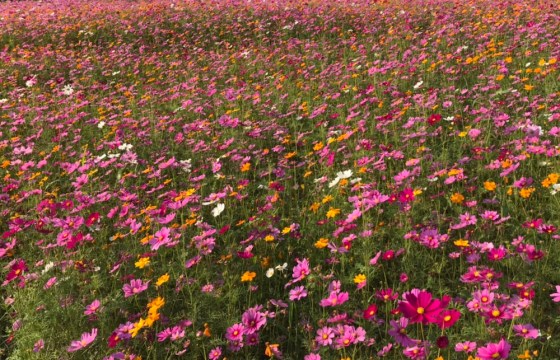
Note: I’ve used many sources to write this post and I may have lost some but below are the best links. Also, the upper image I found on the internet some years ago but since then I seem to have lost the origin. If you happen to know it please let me know, thanks. The field of flowers is a pic by Pok near the submerged caves where the boys were rescued in Chiang Rai in the North of Thailand


https://www.thoughtco.com/loving-kindness-metta-449703

https://www.youtube.com/watch?v=Z8H6KivldfU

http://www.buddhanet.net/mettab5.htm

https://www.accesstoinsight.org/lib/authors/nyanaponika/wheel006.html

https://www.youtube.com/watch?v=uOnYY9Mw2Fg

inclusiveness

POSTCARD#337: Chiang Mai: 05.00 hours. Dreamscape of spinning fans in a warm dark night, gives way to another sound, a motorbike intrudes, coming nearer and nearer, voices talking loudly – the driver and his companion sitting behind, shouting to be heard over the sound of the engine. Driver lowers the throttle to listen to what’s being said. The sound fills my room up here on the third floor, as it passes below, engine noise and a few disconnected words, then it’s quiet again.

I hear them, faintly now, fading into the distance, enclosed in the small environment of their moving world. Curious acoustics in this narrow street, the sound of the shouted conversation sliced into pieces only where there are facing buildings – and other people, I assume, are wakened for a moment, as I was, then fall asleep again. Consciousness creating continuity between otherwise unrelated but similar things. Thus long strings of events linked together form a lifetime, included in one seamless reality.

Just as a monkey moving through the forest or the woods holds on to a branch, lets it go and holds on to another; in the same way what we call viññāṇa (consciousness) arises as one thing and ceases as another, by day and by night.’ [SN.II.95]


reflections on an earlier post

death and divorce

POSTCARD#335: Bangkok: The sad truth about the West, is that divorce is about as common as marriage. Religion got deconstructed; the story came to pieces, no belief, no myth to feel directly connected with, except perhaps the myth of no-myth. We’re married to the economy, worship the consumer god, seek refuge, gratification, fulfilment and consolation in the purchase of goods and services. What’s left over after that, in terms of belief, we have to figure out any way we can.

It’s a world of our own choosing – for better or worse, wedded to the belief in a concept, no more. Here today, gone tomorrow… but it can take many years to wake up and see it for the illusion it is. Sadness, loss, but no one to blame, think forgiveness, wellness and the honesty of living in the world while waking up to it. Who am I? Who is the one who seems to inhabit this place? And a ‘self’ slips into view, flimsy, insubstantial ghostlike being. Life looking in through the eyes, input/output, and the experience of this room, inside-out, this space that contains the sensory apparatus I believe to be ‘me’ appearing in an agreed-upon reality.

Borderline cat burglar, a master of disguise, the skilled actor is one who’s had to lose his/her identity through necessity (hereinafter called The Party of the First Part), becomes an expert in taking on a ‘self’ that fits into context… a suitable arrangement. The ‘me’ I live with now, is not the ‘me’ I was then – more than 30 years since, a ‘self’, seen in the shadow of a dreamed-up past, the divorcé in mourning for a family lost in death and divorce. Mourning over that which was started but left unfinished, abandoned through forgetfulness.

One signature and all of it annulled, lineage discontinued. No time to say goodbye to my adoptive family who had all welcomed me, the in-law, into their hearts as a brother and son. I like to think they wished me well, in fact… I’m sure of it, but gone is gone, empty spaces in the fabric of my life. I am the one who went away and forgot to come back; since then, wandering through the overwhelm of many years in Asia, and the ruins of a life I lived once.

The absence of this person or that person, heard about years later, passed away a decade ago already mourned, forgotten even. My ex-mother-in-law gone from this world, her husband, Pops, gone too. How could I have let this happen? Remembering, there’s-no-one-to-blame, forgiveness asked-for and given. Forgiveness asked-for from those we thought to be blameworthy. Forgiveness to ourselves for bearing the burden of applied blame… forgiveness is our mantra throughout the day. Forgiveness, said in a whisper of unvoiced consonants, over and over.

Today I am willing to see past illusions to the truth. Today I am willing to become as a little child and be taught by the One Who knows. Today I step back and take my unhealed thoughts to the Light, that I might see them for the nothingness they are. I am willing to let my projections be undone. I am willing to remember Where I am always. Today I am willing to be happy, instead of right.

[Forgiveness Prayer: A Course In Miracles]


the world of the dream

Mpic2POSTCARD#334: A village near Hat Yai: Here in a house surrounded by trees, it’s nearly one year since I was last in this place. Birdsong and mostly quietness; only a faint noise from the road reaches us here, drifting in according to wind direction. And the sound of two puppy dogs yap-yap tied up on long leads, getting bathed by being dragged along the concrete path, pulled under the garden tap and held there as long as possible (they’re so small you can do that), then untangling the leads is the difficult part. They soon dry off in the hot sun. The chicken population chirp-chirp of last year has disappeared from this world, some eaten by carnivorous nocturnal creatures that watch from the edge of the clearing. Most are eaten by carnivores who live in the house – thus the truth of farmyard life is revealed. A new population of chickens pecks the ground chirp-chirp where the others once pecked, and who’s to say they’re not the same ones reborn? A piebald kitten miaow goes around seeking attention, miaow. Four cows; three have bells tingaling, tingaling, tingaling around the neck and there’s one with a bamboo bell that goes clacka-clacka. Three of the animals are dignified and silent; there’s one that goes moo-aaaah, feeling a bit hard-done-by, maybe. I don’t know if it’s the one with the bamboo bell; that’s just the way it is, no obvious connection; no reason for it – or for anything. There’s just this multiplicity of loosely related phenomena that has the characteristics of a farmyard scene. It’s like this right now because it’s nearly evening, and everything’s going: chirp-chirp, yap-yap, miaow-miaow, tingaling-tingaling, clacka-clacka and moo-aaaah. Sun turns orangey, pinkish purple, sinks rapidly below the horizon – no twilight. Approaching darksome night mystery, and wild nocturnal carnivores wait in stealth at the edge of shadow. Insects zzzzzling and large moths surround the porch light that’s left on till morning. Upstairs in the half-dark of the guest bedroom, M can’t go to sleep. ‘I not go to sleep yet, Toong-Ting. You have to tell me a story’, she says, addressing me as Toong-Ting, in her 9 year old way of giving people and things in the World different names. It’s my responsibility, I’m the fictionist. Too late now to go find a story book from downstairs, and I try telling her that…‘Then you tell me your story, your own’, M says. This means I have to invent something… there’s just no getting away from it. So, in an inspired moment, I start telling her about all the birds here around the house and, when we leave next week, all the chickens and the rooster and the ducks and birds in the trees and the owls will come with us to the airport. They’ll have to take a taxi by themselves because there are so many of them but the driver can follow us in our car. They don’t have to check in any bags because they don’t have any bags, of course. They just get on the plane with us, perch on the seat backs and arm rests and fold-away tables and go: chirp-chirp, cockadoodledoo, quack-quack, woo-woo, tweet-tweet as the plane rushes along the runway, up into the air, flies away into the clouds, far far away until nobody on the ground can see it anymore. There’s a short pause and M asks me, ‘Leally (really) Toong-Ting? Why the birds go in a plane, they can fly by themselves?’ And, yes, there’s this unforseen problem about the story, I realize – so, I begin my explanation for these circumstances then notice that M has fallen into the dream and is already asleep…


reflections on an earlier post

gate 10

POSTCARD#333 Bangkok, Suvarnabhumi Airport: We are awake very early and into the car before sunrise, through the empty streets, darkness and strange yellow sodium streetlights. Then the elevated highway over the rooftops of the town and out to the airport to meet the Air France flight, ETA: 06.15 hrs. As it turned out, the flight was delayed by two hours, so there was time to sit in the seats at the tour group end of Arrivals, near Gate 10 and I have time to open the laptop to write this.

Gate 10, at Bangkok airport, is where the tour groups gather, bleary-eyed and sleepless, having just got off the plane from some distant part of the world. I hear people around me speaking Russian, and see from the Arrivals board it must be the flight from Novobirisk. They assemble at Gate 10 and have their names ticked off a list by the Thai guides. There’s 30 minutes allowed to have a cup of coffee; children run around, and everyone is ready to get on the coach.

But before that happens, the Russian tourists spend the time intensely absorbing everything around them; speaking with the tour guides and taking pictures of everything; roof structure, walls, illuminated adverts, airport signage, and each other posing in front of vases of purple orchids, dressed up in their best summer frocks and smiling for the camera. It’s as if they’d stepped out of the 1950s, remote from anything I know of and yet there’s a familiarity; starting to see people I knew in my childhood in the North of Scotland.

There are so many photos being taken, it’s like a small press event; digital camera lights flashing too much. I’m dazzled by it, blinded for a moment and have to look at the floor to allow normal vision to recover. Look up again and they’re all leaving, the whole place captured in pixels and taken away back to Novobirsk, at the end of the holiday, where all the views of it are reassembled to form one composite image of the waiting area at Gate 10.

When they’re all counted and answering names shouted from a list, the tour leader gathers them together in a long column. The mass exodus of the group is dynamic, following the leader in front who’s holding a coloured flag high in the air so they can see it. Off they go, through the wide passageways and shuffling along with their luggage and running children and moving as one great lake of beings in the direction of the coaches somewhere in another part of the airport.

In a short time all the seats at Gate 10 are suddenly empty, strangely quiet, light slowly coming up and then it’s completely daylight, people again start to assemble in the seating area at gate 10. It’s another group from Beijing, same thing as last time but the conversations I hear this time are in Chinese.

“God experiences Life through each of us, and we experience Life thanks to God.” [Peter Shepherd]


Reflections on an earlier post

hold on and let go (2)

POSTCARD#332: Bangkok: Waking up from a dream on the outskirts of reality, strange doorways, crooked pathways seen in the flickering yellow of a street lamp, and there’s the headache that’s always with me. Recognition of this breaks through everything, as does a piercing shaft of light in a darkened room. I see the headache that hasn’t become anything yet, and allow it to ‘become’ without becoming it. A headache without a ‘self’, a subject without an object; this is not happening to me, there’s no ‘me’ to whom this headache is happening… I insist, refuse to be the headache-ee. It seems to me to make good sense then, that the normal holding-on to everything is not as important as the letting-go of it all.

Elbow props up the body, legs unfold and feet placed on the cold floor. Settle down, awareness of the in-breath/out-breath, and a curious feeling in the air; an atmosphere that’s suddenly different from what it usually is. The cool season, our tiny little winter, and in January, you may have a day when it’s necessary to wear a jacket.

Reach for the meds; two capsules and a gulp of water… everything swept away in speculation of what it might be, or could have been, in the stream of mental chatter, commentary blinkered, dysfunctional; endlessly recreating the world according to the mind’s perception of it, filtering out anything that doesn’t fit.

Supporting elbow removed and body falls back into the warm place where it was, legs follow, feet tucked in. No end, no beginning, leaving everything in the ‘now’, the continuous form of present tense – it never started so it cannot stop – it cannot leave because it never came [Mooji]. No past and no future except for the necessary getting-of-things-in-the-right-order in linear time.

Prompted in a certain way, Mind makes up the reason for things being the way they are; reasons for this, reasons for that, reasons why certain things are done according to some unwritten rule we comply with, and other things not done, as defined by Mind, but when looked for, are nowhere to be found. Dispersed, dissolved as soon as we of think it, and everything comes to a standstill… a sudden lack of things to think about, or an absence of things I think I should be thinking about. No words, no nothing, emptiness, vanishing trick, one two three, gone.

“…your real nature is not-knowing. It is a total absence of all that you think you are, which is all that you are not. In this total absence of what you are not, there is presence. But this presence is not yours. It is the presence of all living beings. You must not try to be open. You are open.” [Jean Klein]


Note: reflections on an earlier post. Art by Jill Lewis

mindfulness of pain, part 1

POSTCARD#331: Bangkok: I’m a Western migrant, living in the East for these last 30 years, and looking at my conditioning in the light of being inescapably part of the Eastern culture; all the ups and downs of life in Asia, and finding the way through in situations where language/behaviour are unfamiliar to the Western mind. Also the headache, from three years ago, learning how to live with that, requires an alertness, a sharp focus on how the pain gets stuck from time to time. There’s a built-in wake-up alarm that rings when this happens and every other time mindfulness is absent.

Being mindful of pain and the experience of suffering (dukkha) is necessary because there is the negativity surrounding pain, “Pain is bad – I must have done something ‘bad’ to deserve this!”… The locked-in reaction to criticize oneself for having the pain. Knowing there’s a difference between the pain itself and the act of resisting it.

I’m aware also of the attachment to wanting the pain to go away, “I-don’t-want-it-to-be-there!” Giving way to the energy generated by the craving, profoundly desiring it to ‘not-exist’. And knowing I’ll not find any peace in attempting to gratify that need, although I may persist in trying. Returning again to that confusion of thoughts and feelings; what to do? There’s nothing I can DO about it, except to notice how the pain arises when I try to get away from it. Better to be as calm as I can with the present moment and see how that goes.

There are many routes that take me to the awareness that it’s only in that no-choice situation… there, that a tiny moment of ease is felt, and I discover how it turns around; things start to improve as soon as I stop trying to do something about it. I need to be reminded the problem is not the pain; the problem is the concept of ‘me’ coping with the pain.

One of the first things I understood about the Buddha’s teaching is that the mind is not self. Mind is a sensory organ like the other five – mind is the sixth sense – everything I see, hear, smell, taste, touch, feel and think. The mind sense leads to a consciousness of how everything is coming in from the outer world through sensory experience and that default to the sense of self: hey, this must be happening to ‘me’. But the basic truth is that there’s no substantial ‘me’.

These wonderful smallest of smallest instants of mindfulness… the pain disappears for a moment and immediately the question arises, “How did it do that?” The answer comes in a different voice, “The mind sense can bypass the pain, so that the pain is not happening to anyone – there’s no ‘me’ engaging with the pain.” Instead there’s an awareness of the vast space of no thought and no attachment, abiding there, in a state of mindfulness and careful receptivity, a ‘looking’ to see what it could be, and what it couldn’t possibly be. There’s a kind of alertness about the sensory function, and the simple curiosity, “What is it doing now? Just being open to what this could be, is enough to understand how it works…

“I have found the paradox, that if you love until it hurts, there can be no more hurt, only more love.” [Mother Teresa]


presence

Old Notebooks: Bangkok: Sravasti 2012: There’s a presence about these statues and Buddhist ruins, sunk deeper into the landscape than they were in ancient times. The seasons revolve around them; rainfall, heat, sand storms and the centuries come and go. People come to visit, pray, bow, apply gold-leaf, string garlands, light incense, show reverence and take pictures of their friends standing next to them. Showers of digital flashes light up the old walls like a fireworks display; ‘and here is the place where the Buddha was enlightened’, flash, click!

Thus, a piece of the outer world is taken; perhaps a small landscape showing the shrine, prayer flags strung across branches of a huge Bodhi tree and our friends standing below smiling for the camera. Everybody hurries to look at the picture just taken, but the image somehow, never quite hits the spot, so we reach into the outer world and ‘take’ another one… have a look, but it doesn’t quite hit the spot either.

Taking a picture is a reflex action, a capture; I want to ‘have’ a picture of it, even though there are thousands of images in this camera memory and we have to load them on to an external hard-drive to make room for more. They show us in different locations, in the passage of time… see how we are all getting older. But it’s meaningful to us, a metaphor we’re deeply familiar with, consciousness of outer object and inner sense base.

That’s how it seems to me. I see other beings walking around, some of them appear to know what’s going on, and others preoccupied with taking a photo of the event. Some believe it’s God’s world and contemplate experiential responses to outer stimuli, in the context of their conditioning. The idea that God also gave us the gift of insight to see for ourselves is not something they feel they need to take into consideration and just leave it at that. Others are looking here and there, browsing the options, hoping to stumble upon something soon, otherwise stuck in the samsara of Search Mode.

You could say it’s just a sense of history that’s present in any ancient site, or a building or museum. It’s possible to know how the people, who lived then, felt and understood the world; the things they looked at, and what they heard, smelt, tasted, touched and their mind responses; all of that is the same for me now, here in this place where the bodhisattva walked 2,600 years ago.

I’m connected with the outer world by consciousness, in the same way the people at that time were; the conscious experience of what is seen, is the same for me as it was for the bodhisattva – simply that. The environment I’m in may be different from how it was at that time, but the body/mind organism that receives the experience is universal. All beings are caught in this conscious experience. There’s no need to add anything else.

The sense of ‘now’ is the same today as it was then; the sounds I hear, the feeling of sunlight, the gentle wind blowing on my skin; an awareness of the ever-present sensory data, and the simple truth that there’s a likely possibility the Buddha was standing in the exact same place where I’m standing right now.

‘At Savatthi (Sravasti). Then the Venerable Kaccanagotta approached the Blessed One, paid homage to him… : “In what way, venerable sir, is there right view?”

“This world, Kaccana, for the most part depends upon a duality—upon the notion of existence and the notion of nonexistence. But for one who sees the origin of the world as it really is with correct wisdom, there is no notion of nonexistence in regard to the world. And for one who sees the cessation of the world as it really is with correct wisdom, there is no notion of existence in regard to the world.

“This world, Kaccana, is for the most part shackled by engagement, clinging, and adherence. But this one [with right view] does not become engaged and cling through that engagement and clinging, mental standpoint, adherence, underlying tendency; he does not take a stand about ‘my self.’ He has no perplexity or doubt that what arises is only suffering arising, what ceases is only suffering ceasing. His knowledge about this is independent of others. It is in this way, Kaccana, that there is right view.

“‘All exists’: Kaccana, this is one extreme. “All does not exist’: this is the second extreme. Without veering towards either of these extremes, the Tathagata teaches the Dhamma by the middle: ‘With ignorance as condition, volitional formations [come to be]; with volitional formations as condition, consciousness…. Such is the origin of this whole mass of suffering. But with the remainderless fading away and cessation of ignorance comes cessation of volitional formations; with the cessation of volitional formations, cessation of consciousness…. Such is the cessation of this whole mass of suffering.”’[SN 12.15(5)]


reality construct

POSTCARD#330: Rutnin Eye Hospital, Bangkok: I’ve had eye surgery for cataracts and there’s a protective eye shield with cotton wadding taped over my right eye, a newer version of part of the eye mechanism has just been installed; I’ve had an upgrade. But the eye has to stay covered today, so I can’t see anything, except when the nurses take off the shield and I get a brief glimpse; they give me eye-drops then it’s covered again. A great flood of liquid in the eye, slight taste in the mouth as it drains through the tear duct into the back of the throat; swallowing my tears, gulp, gulp…

They take the eye shield off the next day. I go downstairs, through the outpatients department to the exit. The décor in the waiting area is in shades of lime green and ice blue – the colours are amazing. Unexpected. Outside, there’s a completely clear perception of distance for the first time in many years. Fascinating. I’m distracted by colour and movement at the edge of vision, face turns in that direction, curiosity – an involuntary response. Head spinning like a child or a small animal, noticing all kinds of things. Sense organs filter incoming information. In my case, visual data enters through implanted intraocular lenses (IOLs). I see the world and assume it exists exactly as I perceive it, but I know the lens implant has, to some extent, created my version of the world; perception is subjective, reality is a construct in the mind. I can see a wide range of colours around me, where insects see ultraviolet, reptiles see infrared, and cats and dogs see the world in only two colours. Viewed in this way, the world is suddenly endowed with great mystery; ask any question about this reality, and it takes you to a different place entirely.

Out of the exit, into the taxi, on to the highway system and step into a world that looks like it’s been Photo-shopped, high resolution, multi-pixel display. Astonishment! If there comes a time in the future when I’m no longer able to see it in this way because the novelty of it has gone and consciousness doesn’t regard it as special anymore, then I can return here, read this post and remember how wonderful it was…

‘Normally we human beings assume the world ‘out there’ exists just as we perceive it (by way of eye, ear, nose, tongue and physical contact) but if we consider these sense organs, it must become apparent to us that the world ‘out there’ is really dependent on our particular modes of perception. For instance, the human eye limits conditions, by its very structure, the objects we see. It is well known that a bee can see, as a colour, ultraviolet but we have no idea what such a colour looks like nor, of course, can we find any words to describe it. It follows therefore that our sense organs being differently constructed from that of a bee (or any other non-human being), our world “out there” is not necessarily the world as it really is.’ [Phra Khantipalo, ‘Buddhism Explained’ 1965]


Reflections on an earlier post

‘here’

POSTCARD#327: Bangkok. It’s not anywhere, it’s not everywhere, or somewhere out there… it’s about being ‘here’. It’s not no-where… it’s now-here. We’re all ‘here’, situated in various parts of the world, in different time zones. We are all ‘here’, each and every one of us, individually contemplating our own experience of circumstances associated with being ‘here.’ Blogging is a good medium for this kind of thing because, just being ‘here’ is the presentation, it’s what everybody is talking about or describing, one way or another.

Here’s something a blogging friend said: ‘…the awareness looking out of our eyes as a five year old is the awareness that’s looking out of our eyes now.’ When I read that sentence it had a curious effect; there was an instant understanding of what being ‘here’ means. Then the next thought was, what is ‘the awareness’? It’s a good question, I was told, keep on asking it…. Is it this? Is it that? Is it like trying to understand something? Like the ancient Pali/Sanskrit term: sati-sampajañña, (clear comprehension), what does that mean? I’m thinking of some kind of desired state of understanding but I can’t see that because I’m too engaged with the idea of it. So, I’ll never find clear comprehension because every time I think I’ve found it, the confusion just jumps up in its place and I’m trying to get that out of the way, in order to continue my search for clear comprehension. Eventually it falls into place, knowing clear comprehension means understanding the confusion in my head.

In the West we suffer from the creator-god condition; God made the world so the world and God must be two separate things. God is an object and I’m on shaky ground here, I can’t let go, I have to hold on indefinitely. All the clutter and stuff and mental goings-on and stumbling over all the indistinct, half-seen, misunderstood truths – believing that this is what life is about. Not able to see that it just doesn’t matter what kind of story is showing on the screen, it’s all created by the mind, arising and ceasing, dependent on causes and conditions and the karmic outcome of past events.

God is a subject, a subjective state, the mind doesn’t create awareness, mind is contained in the awareness. It’s something like, there’s ‘awareness’ but I think I can’t see it. And thinking I can’t see it, is another mind moment that exists temporarily in awareness. Awareness is a subjective state, and a lifetime can be used up in getting to know everything there is to know about what that means and in whatever context, and wherever that leads. It’s all ‘here’.

“To many, meditation suggests a process of relaxation to find peace and stillness within. But from the Buddhist perspective it is not a contrived effort to make oneself peaceful; it is a process of seeing accurately, so that we can step out of our fundamental confusion. All our sufferings, in life and death, are caused by this fundamental confusion that prevents us recognizing our true nature.” [There’s More to Dying Than Death, by Lama Shenpen Hookham]


observations on an earlier post, ‘being here’