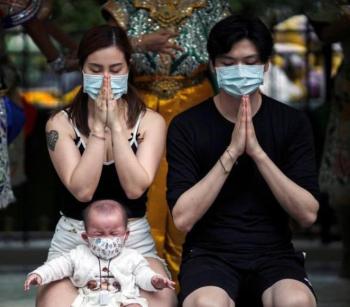
 POSTCARD#368: Bangkok: Practically no traffic in Bangkok on my first day out – clear blue sky because there’s no pollution. I’m going to the dentist, and fortunate that I’m able to share in a car with two other friends and a driver, all of us wearing face masks, venturing out for the day. Wonderful to be back in the outside world and I send best wishes to blogging friends in the UK and US, who are stepping out today, as the car seems to leap across empty Thai highways.
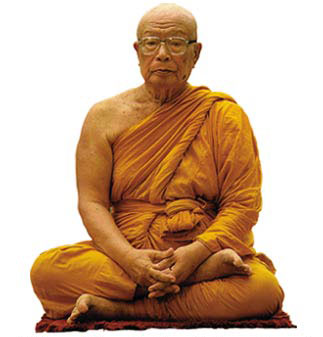
Almost nothing of my UK ‘self’ remains. I have a sister, the other chick in the nest. Also gratitude to our cousin who tries to keep the strands of family together. The others… all gone in the passing years, and all that I’m inclined towards is in my Thai family and the monks I’ve spent time with – Theravada Buddhism Ajahn Chah lineage.
Eyes closed and everything disappears… allow it all to fall away for a meditational moment; just the in-breath, the out-breath, but I can’t continue because thoughts of the dentist come crashing into mind. You may be surprised to know however that she’s a very good-looking lady, dazzlingly perfect teeth to smile by, and this makes the pain easier to bear. Also, I have to say they are generous with the Lidocain needle there, I haven’t experienced any pain after the needle goes in during the many extended restructure sessions I’ve had in the chair. Maybe also the meds I take for headaches combine with the dental painkillers and these contribute to a painless experience.
So I get to the building, up in the elevator and check in with the receptionist. Sit for a while in an empty waiting area, thinking of my old dentist in Switzerland, 18 years ago, who told me about stress and depression among dentists, and he did have a few personality quirks. I googled the subject and found the suicide rate of dentists is more than twice the rate of the general population. September 1, 2007 Randy Lang. DDS, D.Ortho
Then I’m escorted to the dentist’s room. Undo my mask as I enter and “Hello, how are you”, greeting also the dentist’s assistant, who seems less beautiful but happy enough with the way things are.
The Dentist is absolutely stunning, dressed in her PPE (Personal Protective Equipment) she has a mask and a face guard with shower cap covering her hair. Movie-star painted eyes, but it’s the whole body covering that gets my attention; it’s clear smooth plastic, not wrinkled as we see in the busy COVID-19 wards, and… it looks like it’s been made to measure?
Beneath that is a tight fitting white plastic suit with a black belt and she’s wearing white high-heeled shoes – very high, with slender heels. A vision of dental loveliness… she sees me watching and does a little-girl twirl, I think: should I say “cute” or otherwise remark on her costume. But I can only smile and that’s convincing enough because I am genuinely surprised.
Are there any traces of a personality disorder here, I wonder, remembering the google texts about Stress in Dentists:
“When performing dental procedures that evoke patient fear and anxiety, dentists experience patterns of physiological stress responses that parallel the patient’s responses.”
Seems to me it would be hard not to, being so close, head to head with a reluctant and disinclined patient.
Another factor is people just don’t like going to the dentist, evidenced by the frequency of missed appointments. Nobody wants to visit the dentist and it’s the last place they want to come back to.
In my case it’s different, I’m in a mesmerized state. We continue with the opening pleasantries, as I sit down in the fearful chair which sinks to a lower level that raises my feet slightly higher than my head – it seems very comfortable to me and I tell the dentist this, thinking I have to be nice to this lady who may have a personality disorder, and she’s hiding a razor sharp drill somewhere which is going into my mouth – no escape now.
Her assistant covers my upper body with these heavy green hospital linen covers and puts one over my whole head that has a round hole in the centre. I found it disarming and claustrophobic the first time but I’m used to it now. She adjusts the position of the hole and does an examination of my mouth, indicates that it’s all good, and starts numerous injections to block off an entire area on the right side
After that, I’m raised up to the normal sitting position, while we wait for the Lidocain to numb the jaw. I take the conversation further by asking how long she’s had a dentist practice here in this location. She tells me it’s been 11 years and likes the process very much. Then she says: “I was in the US for five years”. I understand her to mean she studied there and prefers the American way of operating a dental practice, therefore the Thai way seems really old fashioned to her. I think she thinks I’m American and therefore I should respond in a welcoming, member-of-the-family, ‘warm hug’, in a manner of speaking but I don’t know how to do that, coming from Scotland as I do, ancient and remote. Even though I feel like I should have been able to respond better than I did.
Sometime later in the sequence of time we were talking about something else I can’t remember exactly and “I was in the US for five years”, she says, unaware that it’s the second time she’s said this. Is she, a Thai person, so deeply acculturated in all things American, she has to tell me about it? It was difficult to see how this could be, having lived in Thailand for 35 years with its ups and downs – 5 years seems like such a short time to me.
I wasn’t able to figure out how best to deal with this. A big smile will suffice – anyway it was time to get down to business and she sends my chair back into that devastating lower position, it seemed to me now, where the drilling begins.
No choice, settle into a space in my being, and try to accept these fierce sounds. The dentist’s drill is a fearsome thing as we all know. it can change from high speed: tee-ee tee-ee to low speed: bhrrr-bhrr bhrr-bhrr and variations on that: bhaaa-bhee, chugga chagga, daaa dit daaa dit daaa!
The dentist’s assistant takes charge of all the sucking devices she holds in place in a way that obstructs the movement of the tongue and drains the blood or liquid or water from another device crammed into place leaving enough space for the Hollywood dentist to do her drilling.
Everything to do with my mouth is seen through the round hole, I’m aware of some movements in the darkness. An overwhelming experience if you’re not used to it, now trying to embrace these intense sounds as my jaw is being carved into a new shape. There’s a natural tendency to escape from the body. Then the attempt at meditation starts.
The sound and vibration is hostile and shocking and pulls my attention back into what is immediately present, I can’t find a balance at first… I feel confident enough about the painkillers, about how effective the headache meds are, but the vibration is traveling through every bone in my body. It’s possible for the first time in my life to ‘see’, to be aware of my skull and skeleton. Maybe I can be confident about the full extent and the limitations of the experience; the drilling sounds, the pushing and tugging. I know this and I know Consciousness is vast. This realization just tumbles out. For a few moments the drilling sound and scale or scope of the issue becomes smaller and smaller, less and less important.
After that I’m able to find a place up and above my head and focus on staying there, as all the unexpected jabs, jerks and vibrations shake my whole body. The dentist’s assistant pulling on one side of my mouth and the dentist shoving and tugging the other side. My awareness has to include having to deal with the gag reflex and involuntary swallowing – all this can be going on because there’s enough awareness to go around. I can stay in this space up and above, and contemplate the experience as if I were in a barrel being tumbled down a rocky hill road, and other images.
The chair is moved up and the drilling is over, now to take an impression. Liquid rubber material is spread inside both upper and lower jaws. I clench my teeth together and have to hold it for 3 minutes. This provides me with a sudden quiet time… up and above in the space where I was meditating, there’s a golden glow. If I focus on it, the glow expands; it’s unintentional and spontaneous. The golden glow is sending out warmth and happiness, an entirely unintended action spreading outwards and everywhere.
Sadly it’s interrupted by the dentist, green covers removed, moving along now. Put the mask on, fix the next appointment, and it’s time to say Bye-Bye.
Down from the 6th floor and the driver is at the car-park level getting a stamp on his entry ticket. We pick up our two other passengers and out over the deserted highways again. I feel liberated and glad the next dental appointment is not for a month and the remains of the golden glow is with me.
The Thai Government reported three new coronavirus cases and no new deaths on Sunday, May 10, 2020 with a total of 2,969 coronavirus cases and 54 deaths since the outbreak began in January

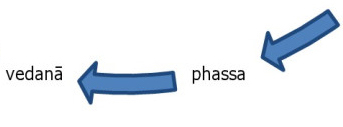
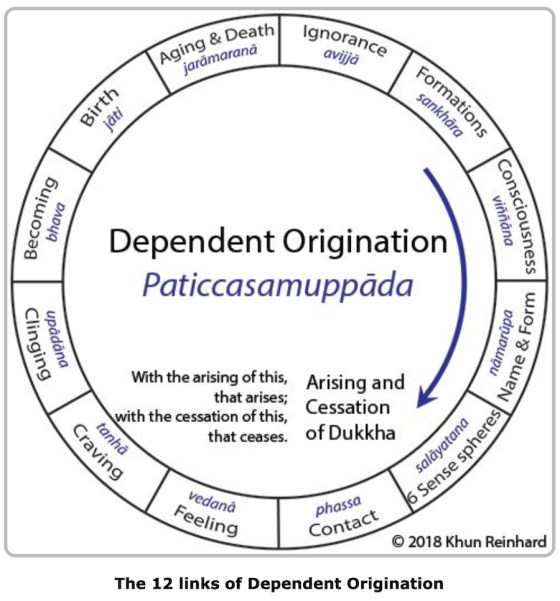
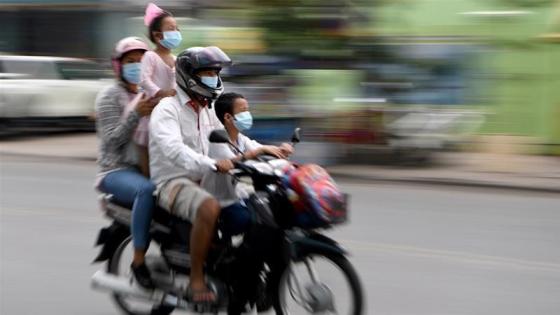 POSTCARD#376: Bangkok: “Heartwood From The Bo Tree”. This is a short section, Ajahn returns to phassa and vedana as the only places we can bring the sensory cycle to an end and prevent the arising of ‘self’ and dukkha. This will be familiar to some readers and to others, not. So I’m including some examples and comments to bring it more into the context of ordinary reality.





 dhamma footsteps
You must be logged in to post a comment.