letting it go

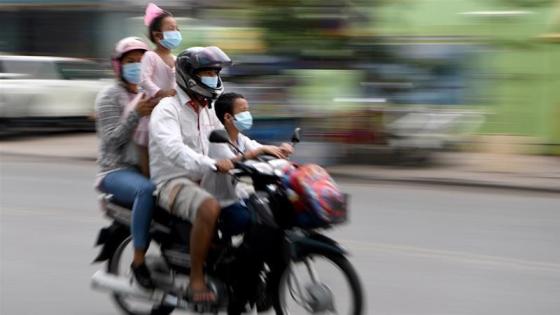
POSTCARD#388: Bangkok: The photo of the boy and his mum, and the old monk with hands that have done a lifetime of physical work reminds me of the automatic generosity of the Thais and how nothing is ‘held on to’ more than is necessary at the time. As far as I can see, the Thai culture is free of most of the typical psychological problems we have in the West.

There’s so much we could learn from sharing, giving things away, good-heartedness. Generosity, is letting it go; releasing the persistence of holding on to things; all that baggage we burden ourselves with can be removed in one single act of generosity.

I’m the same as most of us Western folks, internalizing all kinds of stuff without realizing. Holding on like that for a month or so and I’m talking here about a physical problem I had, uptight and worried about it. My health condition being as it is with my large consumption of water, a side effect of whatever it is in the meds for the headaches that makes me feel dry all the time. What happened was the sodium level dropped well below the norm, but more serious than that, was the throat now painfully raw due to what I thought was the excessive swallowing of liquid.

Whether it was that or not, I became aware by observing this sore throat, it did not feel like a benign thing. When the pain arose, it was like something that reached to the centre of my being. What could this be! A malign tumor hidden away somewhere in the digestive tract?

I wrestled with the thought for ages and eventually went to see the ENT doctor and in a few minutes, we were looking at a video screen showing the inside of the mouth cavity seen from the nasal passages, by way of an endoscope camera tube, passed through a nostril.

I was surprised and interested to learn the tube could not enter through the right nostril at the time because it was almost completely blocked, but the other nostril was clear. This is the nasal cycle where the actions of the blood flow according to the inflow/outflow of air, switch from one nostril to the other every 2 hours or so, and that’s just the way it works.

I was quite comfortable sitting there with this nice doctor and her assistant. Having the camera tube inside the throat cavity was painless and the video screen where I could see the funny-looking vocal cords and I felt even more relaxed when the ENT doc said there was no evidence of a tumor! The ghoulish presence hanging over everything was swept away and forgotten.

The doc said the deep pain was probably an aspect of the same neuralgia condition that causes the headaches. The Right Occipital Nerve Root is near to the back of the throat, and when a nerve is activated it sends off the same erroneous alarm signal that is characteristic of Post Herpetic Neuralgia. Ah well, same old thing, no worries I have learned how to cope with that ‘scary monster’.

It was learning about the nasal cycle, switching from one nostril to the other that was remarkable. I looked it up in Google and this is the gist of it: blood vessels in the sides of the nostrils warm and humidify the air coming in through the nose before it reaches the lungs. The process uses one nostril at a time rather than both at the same time. Blood flow is sent first to one nostril so that it warms the air coming in. The interior of the nostril receiving the blood flow starts to swell and blocks the space slightly. As a result, there’s less room for air to get in, that’s when it switches to the other nostril.

This little gem of info is important to meditators who spend time in meditation every day, focused on the in-breath and out-breath. It’s also a great example of the allowing, the giving of space, the widespread generosity found in nature; systems in place to allow more than enough of whatever it is.

“Species as diverse as bees, birds, bats, rats, and chimpanzees all exhibit forms of generosity, or what can be broadly described as ‘prosocial behavior’—acts that benefit others. The broad occurrence of generosity across species suggests that generosity may be an evolutionary adaptation that has helped promote the survival of these species—and our own.” [Summer Allen, Ph.D.]

Generosity is a glad willingness to share what we have with others. Give it away, we have more than enough. Ease the discomfort of being driven to fulfill that urge to ‘have’, to ‘possess’, a hunger created by always wanting more. All of it is gone when you’re generous.

Brainstorm the word ‘generosity’ and you come up with compassion, empathy, well-being, freedom. You find gratitude, grace, honour, motivation, encouragement. Generosity is everything. It’s nature is to share, recycle, circulate; it can only be given and never taken.


 

a hollowness

POSTCARD#385: Bangkok: 4.30 am: Alarm clock goes off, blinding light and deafening sound, touch-screen-tap and it’s silent again – getting up early today because Jiab has business down town. Car comes to collect her at 6.00 am,

5.30 am: So we’re getting ready, finishing off breakfast, and conversation comes around to how I’m going to manage the day. A slice of toast with peanut butter and coffee is not much if after that, you have to wait 7 hours until lunchtime at 12.30 pm (no snacks between meals). I’ll not be able to do that… have to bring lunch forward, say 11.00 am.

06.00 am: Jiab leaves and I close the gate. This is the first day of my 3-day-diet cycle, Wednesday, Thursday, Friday. Three days approx 1450 calories per day, followed by four days approx 1500 calories per day – a bit more generous with snacks between meals. Then back to the three days again. This is the 14th week, give or take, I’ve managed with eating smaller amounts, eventually got round to seeing meals as a 3 minute non-event.

It’s the long hours between meals that are the hardest. I have to cope with the headaches of course and there have been times when the diet gets abandoned in favor of a handful of meds and lying in bed in a darkened room. I’ve lost 12 kg (26.5 pounds) and it seems to have settled there, in fact it’s not the weight loss that motivates me now, it’s the mystical experience of fasting and “bhavaṅga” (luminous mind).

10.00 am: I go upstairs to the bedroom to lie down, conscious of the in-breath and out-breath. Consciousness of the hunger pangs, a yawning cavern of hunger. Just allowing it to happen without resistance so that what might be a huge agony is a sense of weightlessness because of that meditational state “bhavaṅga”. There’s a headache nearby that’ll need to be treated soon, in the meantime bhavaṅga has altered what could have been a desperate state of suffering and I’m feeling ok; the world has become gentle and dreamlike.

11.00 am: lunch brought forward by one hour… toast, two spoons hummus and half an avocado – consumed, and the plate washed in 3 minutes. Now there’s the long wait till dinner which may be a seven-hour wait, at 6pm, when Jiab gets back. For the time being the body is at peace, I take the headache meds and that goes down without nausea because of the food in the system.

I’ve been looking at some old YouTube videos of Sri Nisargadatta Maharaj, Papaji and other Nonduality teachers and just ordinary people like David Bingham and Sailor Bob who woke up to this kind of Self-enquiry. These guys are outside of the meditation and contemplation of Theravada Buddhists who focus on and abide in ‘No Self’ – things are done and there is no ‘do-er’. Anywhere, everywhere and nowhere (now here), things in nature happen without a ‘happen-er’. It’s not about me, not about you, or him, or her, or them. It is anatta and the Buddha did not speculate on anything further than that.

These days we are more and more aware of Non Duality. Life is just happening, life is/was always just happening… but to whom? Happening to ‘me’, therefore in this state of plurality and separateness. Eventually we see there is a step beyond No Self, different from the state of being conscious of sensory responses to the world ‘out there’, in the body/mind organism. “Who is the meditator?” No subject and no object.

I remember Ajahn V saying, “Outside the thinking mind there is the uncreated”. I look for the extended, stretched-out moment where there’s no thought at all. The ‘uncreated’ cannot be found. I can only experience something if I’m separate from it… and this is how I see it now, Nonduality, seen from Duality. The ‘seeing’ happens and after that you can’t ‘unsee’, inexorable change. Tat Tvam Asi “That thou art,” Chāndogya Upaniṣad, circa 800 BCE to 600 BCE

4.00 pm: a headache and the hollowness of body is calling for my attention and “bhavaṅga” takes charge of the situation. I’m in my chair, mind focused on just being here, the preferred state; agreeable enough to overlook the headache pain and discomfort, therefore allowing the time to pass in a gentle reflective mind state. Any other difficult feelings arising from separateness is not helpful at all. I’m able to find that space before it happens, wait there for a moment until bhavaṅga arises, then back to watching the in-breath, the out-breath. There is something about making do with less…

6.00 pm: Jiab is back, lays out two small tinfoil food containers and eats the contents with a white plastic spoon. I come downstairs and realize this food is not for me. “I didn’t have any lunch! Too busy”, she says and swallows audibly – but that’s just my consciousness of the act of eating. I could go through to the kitchen and steam the tofu and green beans that’s on the menu, but decide not to, because right now, the smell of exotic food is too much to bear. I go upstairs and return to the bhavanga state and wait until I’m called for dinner.


bhavaṅga

POSTCARD#380: Bangkok: I’m in the 8th week of my diet – three days approx 1450 calories per day, followed by four days approx 1500 calories per day. Then back to the three days again. I’ve managed the change in eating patterns without too much difficulty. It’s the long hours between meals that are the hardest.

Looking at my state of mind during these times, one thing that helps in the mornings in coping with the contractions of the empty stomach, is the remains of my Nortriptyline night medicine for the (PHN) headache condition I live with, and those chemicals may be still active in the dopamine receptors… neurological technospeak. Later in the morning when that medicine wears off I start the Neurontin and that goes for the rest of the day.

So today, I’m noticing there haven’t been any serious headaches and it’s been like this these last few days which is unusual. Does it have something to do with the way I’m managing the headache with pain meds and the same meds help with the hunger pangs? What I’m saying is, the reciprocal nature of the thing means I’m learning how to tolerate the hunger pangs at the same time as tolerating the headaches. Just allowing it to happen and there’s no conscious memory of it being painful.

It requires a certain kind of meditational attitude and I do have that, spending typically many hours seated in my chair with laptop on my knees, arms on each arm rest, and feet flat on the floor. and what might be a yawning cavern of hunger is simply a light, floating sensation because I’m in that meditational state “bhavaṅga” (luminous mind). “Bhavaṅga” occurs when there is no active cognitive processes going on. I’m in my chair, mind focused on nothing, or the space between things and this is the preferred state; agreeable enough to overlook the discomfort, therefore allowing the hours to pass in a gentle introspective mood.

Looking back on this whole thing, although I’d read about bhavaṅga a long time ago, I simply stumbled upon the way to do it in these circumstances; noticing how the body reacts, responds, and the mind reveals there’s a slightly deeper awareness in here, dormant until something like the correct password is entered then it’s activated… and I don’t need to know the password of course. It’s enough to know that this is how it works.

All kinds of other difficulties however and this morning is particularly awkward because I have to go and see the Neurologist about the headaches, and I need to have a blood test done before the appointment. So they tell me I have to fast (take no food) before the blood test. It means I can’t have breakfast until after 11.30 am – four hours later than the usual breakfast time, and I cannot take my headache medicine on an empty stomach, so if a serious headache comes along, no medicinal relief… I have to put up with it.

A ‘self’ arises, comes into being full of anxiety and scenarios of distress, anger and outrage… so it’s not hard to understand that this embodied identity I call ‘me’ is just not helpful at all. No, thank you. I will not get into this, and drawing confidence from the reserve of underlying calm, I’m able to find that space before it happens, and wait there for a moment until bhavaṅga arises, then watching the in-breath, the out-breath…

When I got to the Out Patients, the blood test was done then into the sandwich shop and the feeding frenzy (I must have eaten more than the approx. 450 calorie limit per meal). After that there was the medicine, three capsules of forget-me-nots in their crinkly acetate enclosures with a couple of gulps of water from a bottle I carry with me. I noticed again, to be honest, there hadn’t been any strong headaches that whole morning.

In to see the neurologist and she asked me how I was, I said yes ok, told her about the diet, now 2 months and about the meds, just last week I noticed I was forgetting to take the Neurontin doses. So I thought I’d try to intentionally reduce the Neurontin and it was easy, no problem. Now I’m taking less than 3000 grams per day, reduced by nearly half, and there are headaches but I’m able to put up with it until it eases off and lessens intensity.

That’s how it feels, but I don’t yet have the words to describe it adequately. Pain Management of headaches aligned with hunger pangs due to dieting for nearly 2 months (weight loss: 12 kg = 26.4 pounds). Also something learned is that the bhavaṅga practice can alter perception which enables me to endure the all-round discomfort better than before.


a hugeness of ordinary things

POSTCARD#379: Bangkok: Breath-taking expanse of forgotten afternoons and time just slipping away. For me the lock-down became television watching all through the day and night – an immense collage of overlapping images, and things of little consequence.

Working from home, or just sitting around, texting food deliveries, we always had enough. Now I see, all of that can be put aside, because “nothing is worth having or being”. Someday I’d like to return to Ajahn Buddhadasa’s words on Emptiness, Suññatā.

It was an opportunity to experience how it must be for those who live in a world of attachment and feel they can’t let go. But not the Thais… they don’t have that kind of problem. It was the Thais, in fact, and their small, slim stature who led to my awakening. One day in a shopping mall, I noticed my expanded waistline in a large mirror showing me and a section of the Thai public. I was a monster by comparison!

So I went on a diet. It is called “The Military Diet” (although it’s got nothing to do with the military as far as I can see), three days low-calorie diet followed by four days of light food, high protein, low fat, low carbs and low calories. Then back to the three days again. I’m now in my seventh week. I’ve lost the kilos I gained in the lock-down, and it continues to go down.

I’ll always be a giant compared to the Thais but I like my new lightness and more gentle impact on our surroundings. I’ve learned so much from this South East Asian Buddhist nation. Living here is like looking through a window on to the ‘old world’. Nearly everything happens in public, practically everything is known, is seen, is understood, and brought to a close in some form, in the eyes of who may be observing.

Fragments of people’s lives; a hugeness of ordinary things, a sense of well-being in the millions of every-day events taking place inside homes. It’s like the whole world is one large room; domestic life without walls, centuries of open-air living. There’s this quality about Asia, particularly India, where we lived for 7 years. It’s not about visiting ancient sites or jaw-dropping experiences that fill you with awe, it can be a single moment felt with the fragrance of something that’s suddenly gone; what was it? Incense, candlewax, ironed cotton clothes and the familiarity of the detergent they use there. I feel immediately at home in this place where multiple generations of other human beings have lived.

But the local people would be shocked to know I’m alone – Jiab my wife is Thai and we are together in this life, but there are no members of my own family here. Why? well… the aloneness is pleasing if you’re like me, an introspective person, practicing the ways and means of Right View, set in a wasteland of Wrong Views, populated by people with their handheld devices, mesmerized by the colorful window and three dimensional sound jamming in the ears.

Whenever there’s an opportunity, I’m letting it all go, and everything evaporates for a moment. In that instant there’s no thinking. The mind is alerted, an empty space opens up; if you are a contemplative and without wandering thoughts, then at times, there’s just this silence. It’s the space between things, easy to have it simply be here for a while. Silence and emptiness and everything held on ‘pause’. There’s the inclination to be actively thinking, the invitation to be involved with thought is there but it’s the novelty of no-thinking that holds my attention…

“Whatever method of practice you adopt, it should lead to equanimity with regards to the sense – objects which you contact, or to their cessation. Whatever sort of insight meditation you do, if you do it correctly without deceit, it will be in this same one form, that of not letting sense-data be compounded into the feeling of “I” and “mine”. Then it’s not difficult to destroy defilements since, when you practise like this, they are destroyed as a matter of course.” [Buddhadasa Bhikkhu, Heartwood from the Bo Tree]


photo: Monsoon in Bangkok

doerless doing part 6b, editor’s notes

POSTCARD#378: Bangkok: This is the last part in the series of posts created from source material in “Heartwood from the Bo Tree” by Buddhadasa Bhikkhu. It is a conclusion of sorts, although how this slim volume came to be with me and the events that go with it, is worthy of including.

I found the book again after 20 years of it being lost in a deep cupboard. Such a precious thing to have it leap into my hands again as if by magic. Maybe it got picked up along with the Nokia Phone Manual (that’s how long ago it was!) and got lost in the cupboard for two decades. Finding the book came with all the memories of how things were then, discovering Buddhism for the first time – although there was something déjà vu about it – and how it opened up an understanding in my world that had never happened before.

I arrived in Thailand in 1984 after 2 years in South India. I know I was reading something referenced to the Upanishads at the time and it had a big impact on me… but I can’t remember much more. I do remember ‘What The Buddha Taught’ by Walpole Rahula and it was in reading this that I decided (perhaps wrongly) the turn-around point was at tanha (craving)

All of it was triggered as a result of visits to Wat Pah Nanachat in the north of Thailand and Wat Suan Moke in the South, where I came upon Ajahn Buddhadasa’s book for the first time. Gratitude to the monks I met in these two Wats who helped me understand the subject in more detail.

Today, I have to admit that I can’t seem to bring grasping and clinging to a close at phassa (contact), or vedana (feeling), despite Gratitude and Respect for Ajahn Buddhadasa’s insistence that there is nothing worth having or being in this or any world. Feelings of like or dislike arise and the various kinds of desire that spring from the urges of tanha (craving) are with me until my escape route begins – just before upadana (clinging) sets in.

Another thing I need to say is the constant headache caused by PHN in the Right Occipital Nerve, that’s hindered me these last 5 years. Perception altered due to the struggle with pain and pain meds which always seem to be ‘more than enough’. I become lost in conditions where I’m in the midst of ‘being’; or I stumble and fall over objects that I currently ‘possess’. But I’ve learned how to let go when signs of suffering (dhukka) are arising – last minute relinquishments. The following paragraph illustrating the turn-around point in cognition at tanha (craving), found unpublished in some old notes I’m including here:

“Idleness, sort of a wide-awake sleepwalking around this empty house. Soon, I find myself in the kitchen, pause at the refrigerator, open the door, look inside. Well, let’s see, is there anything in here? Or better to say, is there something in here I can put in my mouth that’ll satisfy the craving? It has to be the right thing, looking for that which is exactly the right one, this craving is for something sweet but there’s nothing here at all that’s sweet, only cheese. So I grab the cheese, cut a large piece off and chew on that, have the flavor of cheese in my mouth for the next half hour. It’s not what I wanted. Now I’m craving for sweet things with the taste of cheese getting in the way.”

Maybe it’s just a matter of being situated in that ‘place’ of mindfulness in the here-and-now and that’s enough, observing how there are things that’ll displace, me; powerful emotions, a short flash of like or dislike. These mind states are ‘seen’ same as everything else, momentary, and let-go-of more or less immediately and stability returns.

If not, I lose my ‘place’ for a while and then before I get back on track, there’s that experience of being totally lost for a while. Then I get situated in the here-and-now again, focusing on where I lost the place. Suddenly I re-cognize something and see that I must be functioning in that remembered way, then firmly situated again. Okay, so the mind may fall into a fixation with a passing thought, but at least I know that’s where it’s been.

These days I’m thinking I need to move on from these old reference points in my old comfortable way of understanding the world. That is, if you can see where you are and are aware of suffering caused by tanha (the craving for things you love and hate), then that’s all there is to it. You see it, you know it. Avidya (ignorance) is swept aside, no matter how much these established views may be held or the tenacity of the habit to hold on, because suffering will pass away of its own accord:

“Whatever is subject to origination is also subject to cessation.” “Of things that proceed from a cause – their cause the Tathagata has told. And also their cessation — Thus teaches the Great Ascetic.” [Venerable Assaji answers the question of Śāriputra the Wanderer]

I need to explore Sunyata “Emptiness” which Ajahn Buddhadasa examines in the second section of the book, where we see the truth that emptiness is the remainderless extinction of self. ‘The ‘remainderless extinction of ‘self’ is the non-arising of ‘self’’. In the long term I can see a situation whereby we prevent the arising of ‘self’ completely so that it has no way of arising at any moment in the here and now, nor at any time in the future.


Photo source: Dewdrop

the time of physical death, doerless doing part 6

POSTCARD#377: Bangkok: Another short piece from the revised text of “Heartwood From The Bo Tree” by Buddhadasa Bhikkhu. In this section Ajahn describes our situation when faced with the acceptance of death and the elimination of our contrived needs (self) ‘to have’ and ‘to be’.

Buddhist teachers and scholars over the years have noted Ajahn Buddhadasa’s wider view on religion and spirituality, and his interpretation of Paticca-samuppada. He is/was definitely more than just another ‘loyal to the old traditions’, orthodox Thai Buddhist monk – he was someone truly wise. (Aj. K.)

Section 3. How to practice at the time of physical death.

The mind is extinguished and the body breaks up and dies, it is old and has reached its end. This is to have fallen from the ladder. As you fall from the ladder, you leap on to the practice of remainderless extinction. This is done by establishing in the mind the feeling that nothing is worth having or being.

Those who are old and unlearned, but for whom death is something definite and sure, can depend on taking remainderless extinction as their basic principle. The mind then will hold no hope of having or being anything at all. The phrase ‘absence of hope’ may be used in regard to the attainment of arahantship, not the resignation of the foolish and lazy – that’s a different matter altogether. It is this absence of hope of one who with true wisdom sees that there is nothing in this or any world that one should wish to have or be. Truly nothing is worth having or being at any time or at any place. There being no desire to have or be anything, the mind dissolves into emptiness.

When the time of death arrives let this feeling be present. You should remember that close to death the mind will gradually slip away. As the body runs down nearing its end, consciousness will gradually disappear. You will forget more and more until you forget everything. You won’t know what time it is, whether it’s day or night; you won’t be able to tell where you are or whose house you’re in, you won’t even be able to remember your name or your family. But the way for you to stay as the companion of the mind until the end is to be aware that nothing is worth having or being.

Volunteer for the remainderless extinction! Let that feeling of volunteering for the remainderless extinction, that readiness to accept it and be a partner of the mind until the very end. With this skillful means the mind will be able to dissolve itself into the emptiness that is Nibbana. This is the practice at the moment of physical death for those of little knowledge. With it an unlearned grandma or grandpa can reach the final extinction. We call it the skillful means of turning a fall from a ladder into a measured leap.

In the event of accidental death, such as getting run-over by a car, having a building collapse on top of you, being gored by a bull or getting blown up by an atom bomb, what should you do? If there is even a tiny amount of awareness left in that moment, resolve on the remainderless extinction. Through having previously developed the feeling that there is nothing worth having or being, until it is completely fluent and natural to you, on reaching the moment of death, you will be able to bring it to mind for a split second before the end. For example, someone run-over by a car doesn’t die immediately there is always an interval even if it’s only a fraction of a second or a single thought-moment, and for the flash of feeling resolving on remainderless extinction that is plenty of time.

The sublime Dhamma not only provides an infallible protection when faced with an unnatural death, dying but not wanting to die, dying unexpectedly, but can also provide Nibbana right there at the wheel of the car, beneath the collapsing building, at the horns of the bull or in the pile of bodies charred by the atomic blast. There is no violent unnatural death, instead there is Nibbana.

It is interesting to consider the way that people in the time of the Buddha prepared for death. For those who kept the Precepts of Virtuous Conduct, fasting was not at all difficult because they were used to abstaining from an evening meal on Uposatha days (The full-moon and dark-moon days when laypeople would come to the monastery and keep the Eight Precepts of Virtuous Conduct). When their illness reached the point that they felt that they had no more than ten days left to live they would stop eating and taking only water or medicine. As death got closer, they would stop taking even water or medicine in order to focus their mindfulness and self-awareness, so as to die in the way of remainderless extinction.

Unlike the people of the Buddha’s time, people today usually look for the most comfortable bed, the most comfortable room, the most expensive foods and medicines, and then die with a great fuss. They want to go on living, to put off their death even if it’s only for a single minute. They start having all sorts of injections and treatments and die with no mindfulness or self-awareness. It is the action of delusion.

/continued in doerless doing part 6b/


[Photo: A simile from the Pali scriptures (SN 22.95) compares form and feelings with foam and bubbles.]

doerless doing part 5

POSTCARD#376: Bangkok: “Heartwood From The Bo Tree”. This is a short section, Ajahn returns to phassa and vedana as the only places we can bring the sensory cycle to an end and prevent the arising of ‘self’ and dukkha. This will be familiar to some readers and to others, not. So I’m including some examples and comments to bring it more into the context of ordinary reality.

Section 2. How to practice at the moment of contact with sense-objects, phassa.

When visible forms, sounds, odors, flavors and tangible objects contact the eyes, ears, nose, tongue and body we must practice letting phassa stop the cycle at phassa and letting vedana stop at vedana. Letting phassa stop just at phassa may be difficult to do – on the ordinary level, phassa develops into vedana , so then we stop it just there, without allowing the further development of craving and grasping, of ‘I’ and ‘mine’.

The five sense-objects and the corresponding five sense-organs are presented. The sixth sense organ, the mind (that which is cognized) is not included… maybe because the sense of mind is particularly involved in the arising of ‘self’. There are other developments of the sense of mind later in the text.

The Buddha taught that when seeing forms there should be just the seeing, when smelling odors just the smelling, tasting flavors just the tasting and touching tangible objects just the touching. If you can, stop it at contact then there is no arising of ‘self’, the ego is not born. It is the end of Dukkha, immutable emptiness.

This reminds me of the Buddha’s teaching to Bahiya in the Bahiya Sutta:

“Herein, Bahiya, you should train yourself thus: ‘In the seen will be merely what is seen; in the heard will be merely what is heard; in the sensed will be merely what is sensed; in the cognized will be merely what is cognized.’ In this way you should train yourself, Bahiya.”

It is interesting to consider one’s reactions when a neutral form appears at contact phassa. Try looking at a door or a window and you’ll notice that there is merely phassa, there are no feelings of satisfaction or dissatisfaction. When visible forms, sounds, odors, flavors and tangible objects enter the mind as contact, let them stop there in the same way.

Let it be like the soldier asleep by the side of a piece of artillery. When a shell is fired he merely registers the sound without feeling anything and just goes on happily sleeping. No matter how heavy the shelling he is not startled or disturbed. There is just the sound of the piece of artillery contacting his ear and then ceasing.

I cannot imagine how we would not be startled by the sound of large guns being fired, and able to sleep through it all. The example of the sleeping soldier comes from a time in Thailand when guerrilla warfare was going on in the jungles. At that time, ordinary people were familiar with the presence of the militia here and there.

Can you let phassa stop at phassa in that way when you hear the sound of a man or the sound of a woman or the sound of a loved one? If you can, then you’re really adept. Here animals may be more accomplished than we are because they lack all the excess mental baggage carried by humans. If we wish to reach the peak of excellence then we must train ourselves to let phassa remain as merely phassa.

But if you can’t do it and concede defeat, you can still stop at vedana. As soon as there is a feeling of comfort or discomfort, of satisfaction or dissatisfaction then extinguish it just there, without giving birth to the various kinds of desire that spring from the urges of craving and clinging. This is the practice on the occasion of contact with sense-objects.


/Section 3, the time of physical death, continued in part 6/


doerless doing

POSTCARD#372: Bangkok: “The doing is done but there is no doer. The principle of doerless doing must be taken up and utilized in our daily lives. Whether we’re eating, sitting, laying down, walking, using, seeking, whatever we’re doing we must have enough truth-discerning awareness to prevent the arising of ‘I’ – the feeling that ‘I’ am the doer. ‘I’ am the eater, the walker, the sitter, the sleeper, or the user. We must make the mind constantly empty of ego, so that emptiness is the natural state and we abide with the awareness that there is nothing worth having or being.” [Buddhadasa Bhikkhu, “Heartwood from the Bo Tree”]

Practical Dependent Origination, emphasis on the word: ‘Practical’… otherwise difficult to understand – the Buddha describes the confusion arising from wrongly perceiving it, as follows: beings have become entangled like a matted ball of thread, become like muñja grass and rushes, unable to pass beyond the woeful states of existence and saṃsāra, the cycle of existence.”

Back Story

I found this slim book the other day, in a cupboard inside a box with manuals for electrical appliances and other stuff 20 years old or more. It must have been put here by accident – the size, maybe it got picked up along with the washing machine manual and got lost here for two decades. It was such a precious thing to have it leap into my hands again with all the memories of how things were then, discovering the study of Buddhism for the first time and how it opened up an understanding in my world that had never happened before.

“Whenever one sees a form, hears a sound, smells an odour or fragrance, touches a tactile object, or has a thought arise in the mind, the feeling of ‘I’ and ‘mine’ arises, and it can be taken to mean Dhukka, suffering, which manifests itself therefore we are caught; the mind disease is fully developed.”

Sabbe dhamma nalam abhinivesaya: Nothing whatsoever should be clung to.

“If anyone realizes this truth that there is not a single thing to be clung to, it means that there is no ‘germ’ to cause the disease of greed, hatred and delusion, or of wrong action of any kind, whether of body, speech, or mind.”

“[Thus] whenever forms, sounds, odours, flavours, tangible objects, and mental phenomena crowd in, the antibody, ‘nothing whatsoever should be clung to’, will strongly resist the disease. The ‘germ’ will not enter or if it is allowed to do so, it will be only in order to be completely destroyed. There will be an absolute and perpetual immunity.”

Usually, the ego is thinking ‘I am me,’ and ‘this is mine.’ It’s divisive and selfish. So Ajahn asks that whenever possible, we mindfully drop all claims to our Self. “If we are empty of egoism, there is no consciousness of ‘I’ and ‘mine’. We have the truth-discerning awareness that can extinguish Dukkha and is the cure for the spiritual disease.”

The Diagram

The cycle begins with Ignorance and ends with Aging & Death. It might seem curious that Birth is only one stage before Aging & Death, but Birth is to be understood as a momentary ‘birth’ and death is the end of the cycle. It is possible to go around the cycle in an instant.

We have to try to stop the cycle at Phassa (sense-contact) and not allow the cycle of dependent arising to take place; by sheer force of mind, cutting it off right at the moment of sense-contact. As soon as there is contact with a sense-object there is Phassa, and the subsequent development of Vedana, Tanha and so on, it happens immediately – right around the cycle. If, at the moment of sense-contact, when there is only Phassa, the cycle can be stopped, there is no arising of ‘I’, ‘me’ or ‘mine’.

If it is too difficult to stop the cycle at Phassa, we can focus on the next stage, Vedana and stop it there. By not allowing the development of Vedana, not allowing feelings of satisfaction or dissatisfaction to arise, there is no development of the next stage, Tanha (craving) and Upadana (clinging). So the cycle completes in an instant and there is no arising of the ‘I’ ‘me’ and ‘mine’.


Link to Heartwood from the Bo Tree

causally connected momentary dhammas

POSTCARD#371: Bangkok: A couple of weeks ago I wrote a very long post about the dentist. This post will be as short as possible. It’s like this, I went back for the follow-up appointment and started to think about aspects of No Self and the Paticca-samuppada Dependent Origination. That’ll come after this.

So anyway I went back to see the lady dentist on Tuesday 26 May and after five minutes of inserting needles to numb the nerves, a lower jaw extraction happened; so easy! Then prolonged drilling in the bone of my jaw to situate an anchor for a dental implant (in the x-ray it looked like a rawlplug in a masonry wall).

It was painless, amazing – yes my head was jerked around a bit, and there was the dentist adjusting her tools to get a hold of the tooth, to get maximum clench, grasp, grip so that it wouldn’t slip, then steady pulling to extract the tooth, with dental assistant behind me, arms around my head and holding, while pressing down hard on the lower jaw. Then one, two, three: ‘pop’ and it was out.

The painless aspect of it was breathtaking, especially as the lady dentist quietly told me what was going to happen next; drilling a hole in the jaw bone for the implant. It took about 30 minutes to get it finished – all without any person to feel the pain. An example of the Buddhist selflessness (anatta). There was no Self to whom this was happening – I could hear all the sounds of drilling inside my head… and there was nobody there to hold out against the sustained pain, It wasn’t happening to me. I felt like laughing out loud.

A note about the flow of changes to do with normal cognition: All dhammas (“phenomena”) arise in dependence upon other dhammas: “if this exists, that exists; if this ceases to exist, that also ceases to exist”. As a dhamma vanishes, it gives rise to a new dhamma which appears immediately afterwards. In this way, there is an uninterrupted flow of causally connected momentary dhammas. In this flowing continuum, there is no enduring Self since everything Is dependently originated.

Changes take place in the context of this momentary arising and falling away of dhammas. In the first list below, we see transitional stages that lead to Suffering. In the second list we can see how the problem can be solved; the step by step cessation of the preceding stage leads to the end of suffering

The Standard Description Of Dependent Origination

By Ajahn Bramavamso (click on this link for the whole essay)

From delusion as condition, volitional formations [come to be]; from volitional formations as condition, consciousness; from consciousness as condition, name-and-form; from name-and-form as condition, the six sense bases; from the six sense bases as condition, contact; from contact as condition, feeling; from feeling as condition craving; from craving as condition, clinging; from clinging as condition, existence; from existence as condition, birth; from birth as condition, aging-and-death, sorrow, lamentation, pain, displeasure, and despair come to be. Such is the origin of this whole mass of suffering.

But from the remainderless fading away and cessation of delusion comes cessation of volitional formations; from the cessation of volitional formations, cessation of consciousness; from the cessation of consciousness, cessation of name-and-form; from the cessation of name-and form, cessation of the six sense bases; from the cessation of the six sense bases, cessation of contact; from cessation of contact, cessation of feeling; from the cessation of feeling, cessation of craving; from the cessation of craving, cessation of clinging; from the cessation of clinging, cessation of existence; from the cessation of existence, cessation of birth; from the cessation birth, aging-and-death, sorrow, lamentation, pain, displeasure, and despair cease. Such is the cessation of this whole mass of suffering.

(SN 12, 1)

(dhamma = an aspect of the mind that captures the quality of an object, and that has the ability to colour the mind)


coronavirus: a living organism

POSTCARD#369: Bangkok: Before I came to live in Thailand, I was in Pondicherry, South India for one year, then Bangalore for another year. Things were quite basic in those days and in the first few months I caught Amebiasis from drinking unboiled water. Sickness, intestinal pain and bouts of dysentery so I went to the doc and he prescribed Flagellin, saying Amebiasis was a microbial infection in the gut. He also said he believed that in some communities at the lower end of the social scale in Pondicherry, the disease lives in their intestines for extended periods, maybe permanently. The people with the disease, get seriously ill once a year and otherwise go on with their lives.

Flagellin, the medicine, was dramatic, a purge; vomiting and dysentery… the cure was worse than the disease. It really was worse… I couldn’t go on with it, knowing full well it was a bad decision. Eventually I got back to the UK and it was winter. That fixed it. Then a month later I returned to South India and the disease came alive again.

The next year I moved to Bangalore and the sickness left me. That was in 1983 and there has been no sign of it after that, although if I went back to live in Pondicherry now, it would be a different story. So I was reminded of it all in the light of COVD-19 from the point of view that both Amebiasis and Coronavirus are a living organism, (and thanks Paz for reminding me of that) like a plant or a tree. We can only mitigate the risk of Covid infection, understanding that the disease may find an entry point if there’s a way through the preventative measures and there’s nothing we can do about that.

In the ancient world there would have been all sorts of diseases and viruses active and living among the population. The only cure would have been herbal mixtures and derivatives of opium and other plants unknown. If there was a killer virus as we have now, local wisdom would have advised social distancing and masks of thin cloths covering nose and mouth. If they contracted the disease they died eventually and the parasite died with the host.

Looking at COVID-19 in the US, if the loose attitude regarding social distancing in some states continues, if there is no vaccine at hand we can assume the virus will evolve, in the long term, remembering a parasite seeks to live in the host organs without causing death. The danger is if we take no decisive action at the beginning, we just have to learn to live with it in the long term.

What to do? First, is to discontinue the handshake to prevent the contagion spreading from person to person. We need another way of the public meet-and-greet, perhaps based on the Indian Namaste. Or the Thai Wai which is like a small Indian “Namaste”, and easier to do. The second thing we have to do is wear a mask, as they did in ancient times, to prevent the virus from entering the body, and to protect everyone from being infected person-to-person.

Today, we all need to wear a mask every day in public – and there isn’t anything difficult to understand about that, unless you are Donald Trump who doesn’t want to admit he can’t wear a mask because it would ruin his make-up. Hard to believe. It worries me that even if everyone in the US took to wearing masks on a widespread level, there would still be those who follow the President’s example and refuse to comply with mask-wearing for some contrary reason.


Top photo: Burmese kids doing the Thai Wai
Lower photo: Prince Charles adopts the Indian Namaste as an alternative to shaking hands